What You'll Learn
- Symptoms are communication from your body, not signs it's broken
- In 90% of cases, the issue is biology — not willpower, character, or laziness
- Your body is a complex system (hormones, nervous system, microbiome) — not a calorie calculator
- Lifestyle Medicine uses 6 integrated pillars: nutrition, movement, sleep, stress, psychology, toxin minimization
- Nutrition is the pillar that impacts everything else — and 90% of people misunderstand it
Why Your Body Isn't Broken
You aren't lazy, and your willpower isn't broken — your body is simply asking for a different set of instructions.
Before we begin, what brought you here today?
90%
of cases where women feel broken, the problem is biology — not willpower, not character, not laziness.
Clinical observation, Drs. Rybakov
You can try twice as hard and get half the results. And it is not your fault. Your biology changed and nobody told you why.
Your body isn't broken — it's asking for different instructions.
What You Will Learn
Symptoms are communication, not breakdown — your body uses them to ask you to change its environment
“Your body isn't fighting against you; it's fighting *for* you.”Expert Opinion
The human body is a complex biological system governed by hormones, nervous system, and microbiome, not a simple calorie calculator
“Your body is a complex biological system, not a calorie calculator.”Strong Evidence
Health cannot be achieved through isolated actions; diets fail without sleep, and exercise cannot outwork chronic stress
“No amount of exercise can outwork chronic stress, and no supplement can fix a chaotic lifestyle.”Strong Evidence
Food should be viewed as biological signals that program gene expression and hormonal response, not just units of energy
“Food isn't just calories; it's the biological code that programs your body.”Good Evidence
Lifestyle Medicine framework
Take a moment right now. Think of one symptom your body has been sending you. Instead of fighting it, ask: 'What is my body trying to tell me?' Write it down.
This shift — from fighting symptoms to listening — is the foundation everything in this course builds on.
A woman in her late 30s wondering if losing her energy and vitality is just what aging feels like
“I'm 37 and just feel utterly exhausted physically and mentally, like my 'spark' has gone. Is this just something that happens around this age or is there anything I can do to increase my energy and get my mojo back?”
— Woman, 37, r/AskWomenOver30
Classic medical dismissal despite clear symptoms — told everything is normal when her body is screaming otherwise
“I am 33. No period for a year. Hot flashes at night. All hormonal blood tests normal. Doctors are saying I'm fine and this is normal.”
— Woman, 33, r/AskWomenOver30
Three years of dismissed symptoms before finally finding a provider who listened to her body's signals
“For 3 years not one doctor took me seriously when I suggested peri because I was in my early 40s and still had a regular period. Hair falling out, dry skin, joints that felt like I was 91 instead of 41, muscle loss, brain fog. Finally, after 3 years I found a doctor that believed me.”
— Woman, early 40s, r/Perimenopause
Lesson Guide
# Why Your Body Isn't Broken
The language of symptoms — and why everything you've been told is incomplete
If you're watching this right now, you've already taken a crucial step. You've carved out time for yourself and made the decision: "I want to change something." That is truly amazing.
But let's be completely honest with each other. You're not here just for a flat stomach or toned glutes. Because at 35 or 45, almost no one comes to us just to "get fit."
The Real Story
Usually, the real story sounds more like this:
"I wake up already exhausted. By evening, I have zero energy left. I'm working out, but the weight just won't budge. I don't even eat that much, but my body feels like it's resisting me. I used to feel light, vibrant, and alive... and now it feels like something inside me is just broken. I'm constantly stressed. I'm doing everything right, but nothing is working. What is wrong with me?"
And very often, there's something much deeper going on. It's no longer just "I want to get in shape." It sounds more like: "Something always hurts. I'm constantly bloated, and my digestion has a mind of its own. My hormones are all over the place, my cycle is irregular, my thyroid is struggling. I hate the quality of my skin, my hair is falling out, my iron is low, and I have constant brain fog."
You go to doctors, and they tell you: "You're perfectly fine."
And that leaves you with this heavy, isolating feeling that something is fundamentally wrong with you.
Symptoms Are a Language, Not a Breakdown
This is the most important thing we need you to hear: symptoms are not your enemy. A symptom is not a breakdown. It is a language — the specific way your body is trying to communicate with you.
Any chronic discomfort, hormonal imbalance, digestive issue, or thyroid struggle — this is not your body fighting against you. Your body is actually fighting for you. It's simply saying: "Please, change my environment. It's too hard for me to function like this."
Our goal isn't to suppress these signals or mask them with a pill. Our goal is to teach you how to listen to them.
The Biology, Not Willpower
The very first thing you need to understand: you are perfectly normal. Truly, there is nothing wrong with you.
In 90% of cases, the problem isn't your willpower. It's not your character. It's not that you're "lazy." And your body isn't broken.
The issue is simply biology. Your body is not a calorie calculator. It is a highly complex system: your hormones, your nervous system, your sleep cycles, your microbiome, your stress levels. If just one of these elements falls out of balance, the whole system starts working against you. You can try twice as hard and get half the results.
And it is not your fault.
Our Background
We aren't sharing this as influencers or random people on your screen. Dr. Alexandra has been practicing medicine for over 15 years. Dr. Alexander has over 20 years of clinical practice, with experience in some of the top clinics in Europe and around the world. We've studied Western, evidence-based medicine in the UK, Germany, and the US. But we also traveled to the East to study traditional restorative systems. We researched, we tested, and we compared everything.
Because we kept seeing the exact same story: people trying so hard, taking medications, going on strict diets, trying extreme body resets, and their biological systems were still failing. We wanted to find a true foundation — not just another pill.
And it became incredibly clear: wellness isn't achieved with just one action. No diet will save you if you aren't sleeping. No amount of exercise can outwork chronic stress. And no vitamin or supplement can fix a chaotic lifestyle. The only thing that works is a holistic approach.
The 6 Pillars of Lifestyle Medicine
This led us to Lifestyle Medicine. This isn't about masking symptoms. It's about creating the exact conditions your body needs to support its own natural processes.
The system has six key pillars:
- •Nutrition — food as biological signals, not calories
- •Movement — strategic activity that resets your stress response
- •Sleep — the recovery foundation everything else depends on
- •Stress Management — breaking the cortisol cascade
- •Positive Psychology — rewiring survival-mode thinking
- •Toxin Minimization — reducing what burdens your renewal systems
When all these pillars work together, your body experiences a profound metabolic reset. Your energy returns, stubborn weight naturally drops, hormones stabilize, and digestion improves. You finally get that feeling back: "I feel alive again."
What Comes Next
But there is one specific pillar that impacts absolutely everything else. It dictates your hormones, your weight, your inflammation levels, your energy — even how your genes express themselves.
And 90% of people understand this pillar completely wrong.
That pillar is nutrition.
In the next lesson, for the very first time, you are going to look at food not as calories, but as biological signals that literally program your body. And that is likely where you'll experience your first massive "Aha!" moment.
Meet Your Guides

Dr. Alexandra Rybakova
15+ years of clinical practice in lifestyle medicine and women's metabolic health. Trained in the UK, Germany, and the US.
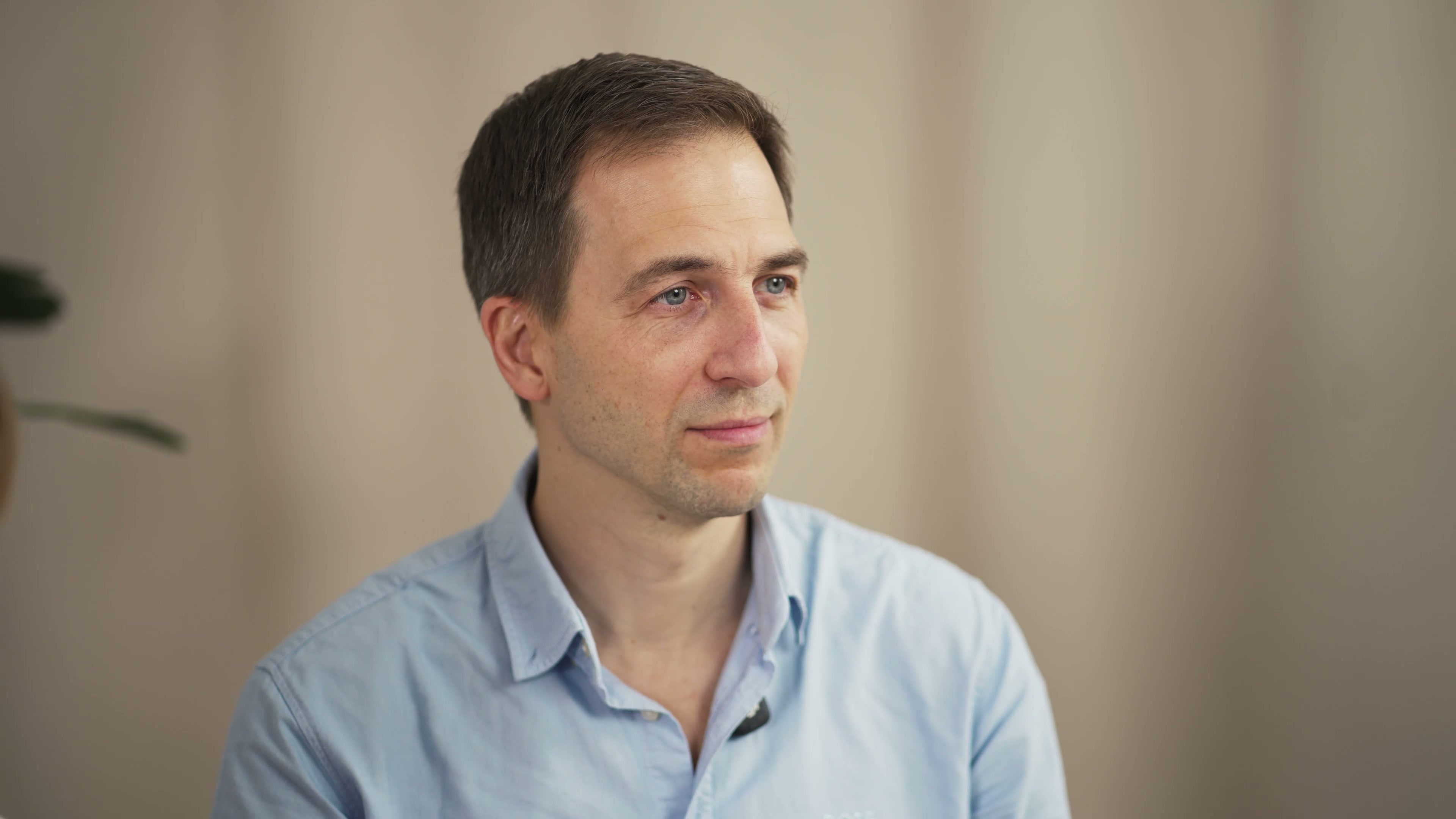
Dr. Alexander Rybakov
20+ years at leading European clinics, specializing in metabolic reset protocols and evidence-based lifestyle interventions.
Scientific References (5)
Based on 20+ years of clinical practice and the principles of Lifestyle Medicine (ACLM)
Complex systems and obesity: current status and future directions
2009
Insufficient sleep undermines dietary efforts to reduce adiposity
2010
Lifestyle Medicine: A Brief Review of Its Dramatic Impact on Health and Survival
2018
Nutrigenetics and Nutrigenomics: Viewpoints on the Current Status and Applications in Nutrition Research and Practice
2017
Transkingdom control of microbiota diurnal oscillations promotes metabolic homeostasis
2014
This program integrates evidence from metabolic research, endocrinology, and behavioral science as defined by the American College of Lifestyle Medicine (ACLM).
Reflect on This Lesson
Taking a moment to reflect helps your brain absorb what you just learned.
How are you feeling after this lesson?
Your reflections are private — just for you
Full Transcript
Why Your Body Isn't Broken
The language of symptoms — and why everything you've been told is incomplete
If you're watching this right now, you've already taken a crucial step. You've carved out time for yourself and made the decision: "I want to change something." That is truly amazing.
But let's be completely honest with each other. You're not here just for a flat stomach or toned glutes. Because at 35 or 45, almost no one comes to us just to "get fit."
The Real Story
Usually, the real story sounds more like this:
"I wake up already exhausted. By evening, I have zero energy left. I'm working out, but the weight just won't budge. I don't even eat that much, but my body feels like it's resisting me. I used to feel light, vibrant, and alive... and now it feels like something inside me is just broken. I'm constantly stressed. I'm doing everything right, but nothing is working. What is wrong with me?"
And very often, there's something much deeper going on. It's no longer just "I want to get in shape." It sounds more like: "Something always hurts. I'm constantly bloated, and my digestion has a mind of its own. My hormones are all over the place, my cycle is irregular, my thyroid is struggling. I hate the quality of my skin, my hair is falling out, my iron is low, and I have constant brain fog."
You go to doctors, and they tell you: "You're perfectly fine."
And that leaves you with this heavy, isolating feeling that something is fundamentally wrong with you.
Symptoms Are a Language, Not a Breakdown
This is the most important thing we need you to hear: symptoms are not your enemy. A symptom is not a breakdown. It is a language — the specific way your body is trying to communicate with you.
Any chronic discomfort, hormonal imbalance, digestive issue, or thyroid struggle — this is not your body fighting against you. Your body is actually fighting for you. It's simply saying: "Please, change my environment. It's too hard for me to function like this."
Our goal isn't to suppress these signals or mask them with a pill. Our goal is to teach you how to listen to them.
The Biology, Not Willpower
The very first thing you need to understand: you are perfectly normal. Truly, there is nothing wrong with you.
In 90% of cases, the problem isn't your willpower. It's not your character. It's not that you're "lazy." And your body isn't broken.
The issue is simply biology. Your body is not a calorie calculator. It is a highly complex system: your hormones, your nervous system, your sleep cycles, your microbiome, your stress levels. If just one of these elements falls out of balance, the whole system starts working against you. You can try twice as hard and get half the results.
And it is not your fault.
Our Background
We aren't sharing this as influencers or random people on your screen. Dr. Alexandra has been practicing medicine for over 15 years. Dr. Alexander has over 20 years of clinical practice, with experience in some of the top clinics in Europe and around the world. We've studied Western, evidence-based medicine in the UK, Germany, and the US. But we also traveled to the East to study traditional restorative systems. We researched, we tested, and we compared everything.
Because we kept seeing the exact same story: people trying so hard, taking medications, going on strict diets, trying extreme body resets, and their biological systems were still failing. We wanted to find a true foundation — not just another pill.
And it became incredibly clear: wellness isn't achieved with just one action. No diet will save you if you aren't sleeping. No amount of exercise can outwork chronic stress. And no vitamin or supplement can fix a chaotic lifestyle. The only thing that works is a holistic approach.
The 6 Pillars of Lifestyle Medicine
This led us to Lifestyle Medicine. This isn't about masking symptoms. It's about creating the exact conditions your body needs to support its own natural processes.
The system has six key pillars:
- Nutrition — food as biological signals, not calories
- Movement — strategic activity that resets your stress response
- Sleep — the recovery foundation everything else depends on
- Stress Management — breaking the cortisol cascade
- Positive Psychology — rewiring survival-mode thinking
- Toxin Minimization — reducing what burdens your renewal systems
When all these pillars work together, your body experiences a profound metabolic reset. Your energy returns, stubborn weight naturally drops, hormones stabilize, and digestion improves. You finally get that feeling back: "I feel alive again."
What Comes Next
But there is one specific pillar that impacts absolutely everything else. It dictates your hormones, your weight, your inflammation levels, your energy — even how your genes express themselves.
And 90% of people understand this pillar completely wrong.
That pillar is nutrition.
In the next lesson, for the very first time, you are going to look at food not as calories, but as biological signals that literally program your body. And that is likely where you'll experience your first massive "Aha!" moment.
Preparing for Your Reset
Before we dive into the pillars, there's practical preparation: what to remove from your kitchen, what to add, and how to set up your environment for the next 14 days.
What if the reason every diet failed wasn't the diet — but the conditions around it?
You just finished your first lesson
16 more lessons in Feel Alive Again: Your 14-Day Wellness Journey are waiting for you.