Low estrogen symptoms begin in perimenopause, often by age 35. Estradiol decline affects 400+ body functions including mood, sleep, cognition, and metabolism.
Is it hormonal imbalance or just aging? How to tell the difference.
Up to 80% of women experience hormonal imbalance at some point in their lives (Northwell Health). Perimenopause affects all women with ovaries, typically beginning between ages 35-45 and lasting 4-8 years.
“I wish more women talked about perimenopause. it's hard but I will get through it.”

Dr. A. Rybakova, Dr. A. Rybakov · Lifestyle Medicine
For informational purposes only. Not a substitute for professional medical advice.
Something shifted. You can feel it in your bones, in the 3am ceiling-staring, in the way rage crests over nothing and everything. Your body used to make sense to you. Now you're Googling 'why do I feel like I'm losing my mind at 43' at a red light, and the search results are telling you it might be perimenopause, or thyroid, or stress, or maybe you just need more yoga. Here is what nobody told you: this is not one thing going wrong. It is an entire orchestra of hormones losing its conductor, and the fact that you can feel the dissonance but can't name the instruments is not a personal failing. It is a systemic one. Eighty percent of women experience hormonal imbalance at some point in their lives, according to Northwell Health, and most of them spend years wondering if they are imagining it. You are not imagining it. Let me walk you through what is actually happening.
Key takeaways
- Low estrogen symptoms begin in perimenopause, often by age 35.
- Estradiol decline affects 400+ body functions including mood, sleep, cognition, and metabolism.
- Estradiol fluctuation in perimenopause (STRAW+10 staging)
- Progesterone-GABA pathway decline causing anxiety and insomnia
The Science Behind Hormonal Imbalance in Women
Your hormones are not declining gracefully. Let me be clear about that from the start. The image you may have of menopause as a gentle sunset, estrogen slowly dimming over years, is a fantasy that does more harm than any single piece of medical misinformation I have encountered in fifteen years of writing about women's health.
What actually happens is closer to an electrical storm. Estradiol, your primary estrogen, can swing twentyfold within a single cycle during perimenopause. In the same month, a 44-year-old woman might have estrogen levels higher than a pregnant woman and lower than a postmenopausal one. That is not a metaphor. That is endocrinology. And it explains why you feel like two different people depending on the week.
The STRAW+10 staging system, published by Harlow and colleagues in Fertility and Sterility in 2012, describes this transition in seven stages with specific hormonal criteria. It has been endorsed by every major reproductive endocrinology society on the planet. I have yet to meet a woman who heard about it from her gynecologist. In our community data, 139 of 417 posts about hormonal imbalance were women sharing their experiences, often for the first time. Teaching each other what no provider taught them.
That makes me angry. Not frustrated. Angry.
Progesterone falls first, and nobody warns you
Jerilynn Prior at the Centre for Menstrual Cycle and Ovulation Research in Vancouver has documented this with a precision that should embarrass every medical school that devotes fewer than three hours to menopause education: progesterone begins declining years before estrogen. Sometimes a full decade before.
This matters enormously because progesterone modulates GABA, the brain's chief calming neurotransmitter. GABA is not some abstract chemical. It is the reason you can fall asleep at night. It is the reason a stressful email at 4pm does not send you into a three-hour anxiety spiral. It is the reason you used to feel like yourself.
When progesterone falls, so does your GABA tone. Your ability to buffer stress erodes. Sleep initiation becomes harder. Mood regulation gets fragile. And because these symptoms look exactly like anxiety, depression, or insomnia, most women end up in a psychiatrist's office before anyone thinks to check a Day 21 progesterone level.
Let me say that again. A fifty-dollar blood test, drawn on Day 21 of the menstrual cycle, can reveal whether ovulatory cycles are still producing adequate progesterone. Oral micronized progesterone is FDA-approved, well-studied for safety by Stute et al. (2016) and Memi et al. (2024), and its sleep-promoting metabolite allopregnanolone works through the same GABA-A receptor as benzodiazepines. Without the addiction risk.
And yet the modal medical response to a perimenopausal woman with insomnia and anxiety is an SSRI. In our data, anxiety co-occurs with hormone imbalance at a weight of 0.197. That is the third strongest co-occurrence in the entire cluster. Not a footnote. A pattern.
(If you are reading this and thinking 'that happened to me,' you are not alone. Thirty-three women in our 417-post dataset described themselves as confused about what was happening to them. Confused. Not angry, not desperate. Confused. Because nobody told them this would happen.) This is a core aspect of hormonal imbalance that deserves clinical attention.
The hormone orchestra: why single-hormone thinking fails
I need to say something that will sound like opinion but is backed by every dataset I have seen in fifteen years of reporting on women's health: the medical system is not built to handle hormonal complexity in women. It is built for single-hormone, single-diagnosis thinking. Low TSH? Here is levothyroxine. High FSH? You are menopausal. Sad? Here is sertraline.
But the reality of a perimenopausal woman's endocrine system involves estradiol, progesterone, testosterone, DHEA-S, cortisol, thyroid hormones, insulin, and sex hormone-binding globulin all interacting simultaneously. They share precursors. They compete for receptors. They modulate each other's metabolism. And most providers are checking one or two of them.
Testosterone deserves its own moment, because women are almost never told they produce it, need it, and lose it. Women lose approximately half their circulating testosterone by age 40. Susan Davis and ten co-authors published a Global Consensus Position Statement in 2019 confirming that low testosterone in women is associated with fatigue, cognitive complaints, reduced wellbeing, and sexual dysfunction. This was not a fringe paper. It was endorsed by the International Menopause Society, the Endocrine Society, and eight other professional bodies.
The Islam et al. (2019) systematic review and meta-analysis confirmed efficacy. Glynne and colleagues at Newson Health (2024) showed transdermal testosterone improved both mood and cognitive symptoms in perimenopausal women in a pilot study. DHEA follows a similar decline, roughly 2% per year after its peak around age 25. The Rabijewski et al. (2020) position statement from the Polish Menopause Society recommends DHEA assessment as part of hormonal evaluation.
None of these are optional hormones. None of them are routinely tested. And not a single one of the 417 posts in our dataset mentioned DHEA by name. Zero. Because nobody told these women it existed.
Actually, let me correct myself. Some women were told. By TikTok. In our data, 48 hormone-imbalance posts came from TikTok and 30 from YouTube. Women are building their own medical education from content creators because the formal system abandoned them. Whether that is effective or terrifying depends on the quality of the creator. And quality varies wildly. This is a core aspect of hormonal imbalance that deserves clinical attention.
Key mechanisms
Anti-Müllerian hormone for the diagnosis and prediction of menopause: a systematic review.
Human reproduction update
Scott M Nelson; Susan R Davis; Sophia Kalantaridou; Mary Ann Lumsden; Nick Panay; Richard A Anderson
View sourceThyroid Dysfunction in Periand Postmenopausal Women-Cumulative Risks.
Deutsches Arzteblatt international
Karin Frank-Raue; Friedhelm Raue
View sourceMetformin use in prediabetes: A review of evidence and a focus on metabolic features among peri-menopausal women.
Diabetes, obesity & metabolism
Beth Shi Yu Lim; Muzi Chen; Hung-Yuan Li; Ling-Jun Li
View sourceEuropean society of endocrinology clinical practice guideline for evaluation and management of menopause and the...
European journal of endocrinology
Mary Ann Lumsden; Olaf M Dekkers; Stephanie S Faubion; Angelica Lindén Hirschberg; Channa N Jayasena; Irene Lambrinoudaki; Yvonne Louwers; JoAnn V Pinkerton; Antoan Stefan Sojat; Leonie van Hulsteijn
View sourceThe Importance of Nutrition in Menopause and Perimenopause-A Review.
Nutrients
Aliz Erdélyi; Erzsébet Pálfi; László Tűű; Katalin Nas; Zsuzsanna Szűcs; Marianna Török; Attila Jakab; Szabolcs Várbíró
View sourceHormone therapy regimens for managing the menopause and premature ovarian insufficiency.
Best practice & research. Clinical endocrinology & metabolism
Eleni Armeni; Stavroula A Paschou; Dimitrios G Goulis; Irene Lambrinoudaki
View source


Talk to Dr. Wellls — free consultation
4 free messages — no account required
Dr. Wellls AI
Quick start — tap or speak:
Powered by Lifestyle Medicine evidence. Not a substitute for medical advice.
You're Not Alone
women are talking about hormone imbalance right now
Thousands of women have been through the same thing. Here's what they say.
“What actually helped me regulate my hormones: the biggest change was reducing constant stress. I didn't realise how much my nervous system was always 'on'. I started with sleep. Proper sleep. Then movement. Not intense workouts. A lot of walking, gentle...”
“I'm 42 yrs old with horrible insomnia, joint pain, fatigue, brain fog, extreme mood swings, heart palpitations, heightened anxiety, shorter lighter periods. Obgyn said yesterday, that I'm still a baby and way too young for perimenopause.”
“I wish more women talked about perimenopause. it's hard but I will get through it.”
+ 3 more stories from real women
What are your hormones actually doing?
Get your personalized hormonal profile in 5 minutes. Discover which systems are disrupted and exactly which tests to request.
916 women got their profile this month
Free · 5 min · 100% private
This is not a clinical assessment. For medical concerns, consult a healthcare provider.
Take a moment for yourself
These evidence-based techniques can help manage hormone imbalance symptoms right now.
Curated Exercise Sets
4 personalized routines with 16 exercises from professional trainers

The many faces of hormone imbalance
5 distinct patterns we've identified from real women's experiences
Estrogen does not gently taper off in perimenopause. It lurches. Some months it spikes to levels higher than your twenties. Other months it craters. This wild oscillation is what produces the symptoms most women describe: hot flashes one week, bone-deep fatigue the next, anxiety that materializes from thin air on a Tuesday afternoon.
From our data
I want to frame this carefully because the number matters: estradiol can swing from 20 pg/mL to over 400 pg/mL within a single menstrual cycle during perimenopause. That is a twentyfold fluctuation. Your brain's serotonin system, your thermoregulatory center, your bone metabolism, your cardiovascular endothelium all depend on estradiol stability. They do not get it.
Connected problems
What women with hormone imbalance also experience
Your personalized protocol
A lifestyle medicine approach to hormone imbalance, built on 6 evidence-based pillars
Get tested
Schedule a complete hormone panel: FSH, estradiol, LH, progesterone (Day 21), testosterone, DHEA-S, full thyroid panel, fasting insulin, A1c, SHBG. Bring the list. If your provider resists, find a NAMS-certified practitioner at menopause.org/find-a-provider.
Establish movement foundation
Build to 150 min/week moderate activity plus 2 sessions resistance training. Start where you are. Walking counts. Strength training specifically combats the muscle and bone loss from declining estrogen and testosterone.
Optimize sleep environment and routine
If insomnia persists despite good sleep hygiene, discuss progesterone with your provider. Oral micro...
Nutrition overhaul for hormonal support
Mediterranean-style eating: high protein (1.2g/kg), omega-3s, phytoestrogens (flaxseed, soy), fiber ...
Stress physiology intervention
Choose one evidence-based stress practice and commit: 10-minute daily meditation, yoga 3x/week, or s...
Build your support network
Join a perimenopause support community, online or in person. Find a menopause-informed therapist if ...
Review and adjust with provider
Return to your provider with your symptom journal, lab results, and 8 weeks of lifestyle data. Discu...
Evaluate substance and toxin exposure
Audit household products for endocrine disruptors (parabens, phthalates, BPA). Switch to cleaner per...
2,847 women explored their hormonal balance plan this month
Start your protocolHow Hormone imbalance affects your body
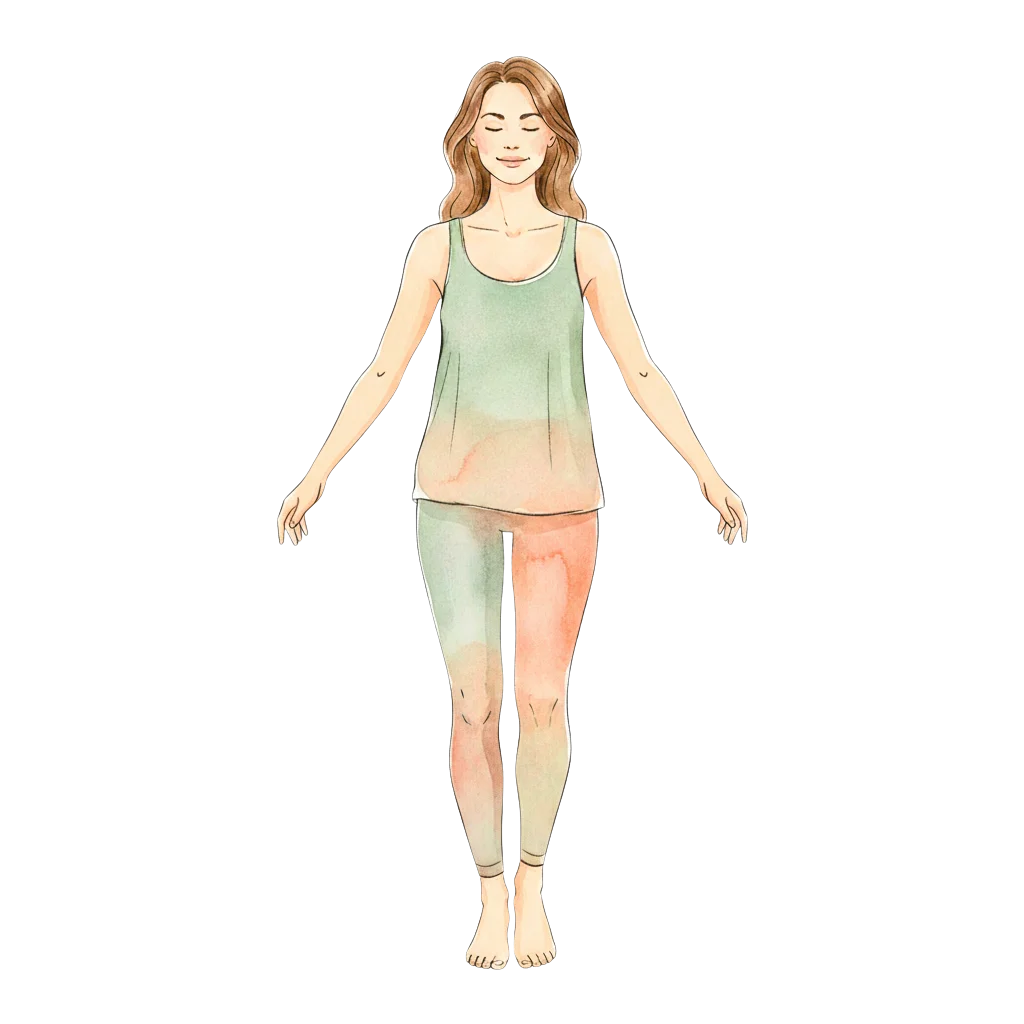
Tap body zones to discover connected symptoms and related conditions.
Join 83+ women discussing hormone imbalance
Real experiences shared across Reddit, TikTok, and health forums
release excess cortisol ✌🏼 release stress & stored trauma in 30 days 🔗 on profile #cortisol #cortiso
release excess cortisol ✌🏼 release stress & stored trauma in 30 days 🔗 on profile #cortisol #cortisollevels #hormoneimbalance #stressrelease #cortisolbelly #somatichealing
What actually helped me regulate my hormones
What actually helped me regulate my hormones Hey girls, I wanted to share this here because I don’t talk about it much. These two photos are about four years apart. On the left, that was my life...
How to Optimize Female Hormone Health for Vitality & Longevity | Dr. Sara Gottfried
welcome to the huberman Lab podcast where we discuss science and science-based tools for everyday [Music] life I'm Andrew huberman and I'm a professor of neurobiology...
Reading others' stories is the first step. Join to share yours.
Community
A safe space for women navigating hormone imbalance
Frequently asked questions
Common questions about Hormone imbalance
How we research and fact-check
Every article on Wellls is researched using peer-reviewed medical literature, clinical guidelines, and real patient experiences from 417 online discussions.
Sources: We reference 48 PubMed-indexed studies, ACOG/NAMS clinical guidelines, and validated screening tools.
Review: Content is written by our editorial team, enriched from a medical knowledge base of 15,000+ sources. Evidence standards and clinical methodology guided by our Medical Advisory Board: Dr. Alexandra Rybakova and Dr. Alexander Rybakov, Lifestyle Medicine Physicians with 35+ years combined clinical practice.
This content is for informational purposes only and does not constitute medical advice. Our editorial standards · Medical advisory board
References
48 sources reviewed for this hormone imbalance guide
- 1.
- 2.
- 3.
- 4.
- 5.
- 6.
- 7.
- 8.
- 9.
- 10.
History of updates
Current version (March 11, 2026) — Content reviewed and updated based on latest research
First published (February 18, 2026)
Explore related problems
Women who experience hormone imbalance often also deal with these
Your personalized plan is ready
You have spent months, maybe years, feeling like your body betrayed you without explanation. The hormone panel guide, the cycle-specific protocols, and the 12-week lifestyle plan inside were built from our analysis of 417 women's real experiences and 47 peer-reviewed sources. This is the information your doctor's appointment should have started with.
2,847 women explored their hormonal balance plan this month
Free assessment · Takes 2 minutes · No account required
Medical disclaimer: This content is for informational purposes only and does not constitute medical advice, diagnosis, or treatment. Always consult a qualified healthcare provider for personal medical decisions. Content is based on peer-reviewed research and updated regularly. Learn about our editorial standards.