Perimenopause fatigue affects 85% of women in transition. Estrogen drives mitochondrial ATP production — its decline directly reduces cellular energy output.
Why am I so bone-tired all the time? Perimenopause exhaustion explained.
Affects over 75% of women during the menopause transition (NAMS)
“im so exhausted i could cry most days though”

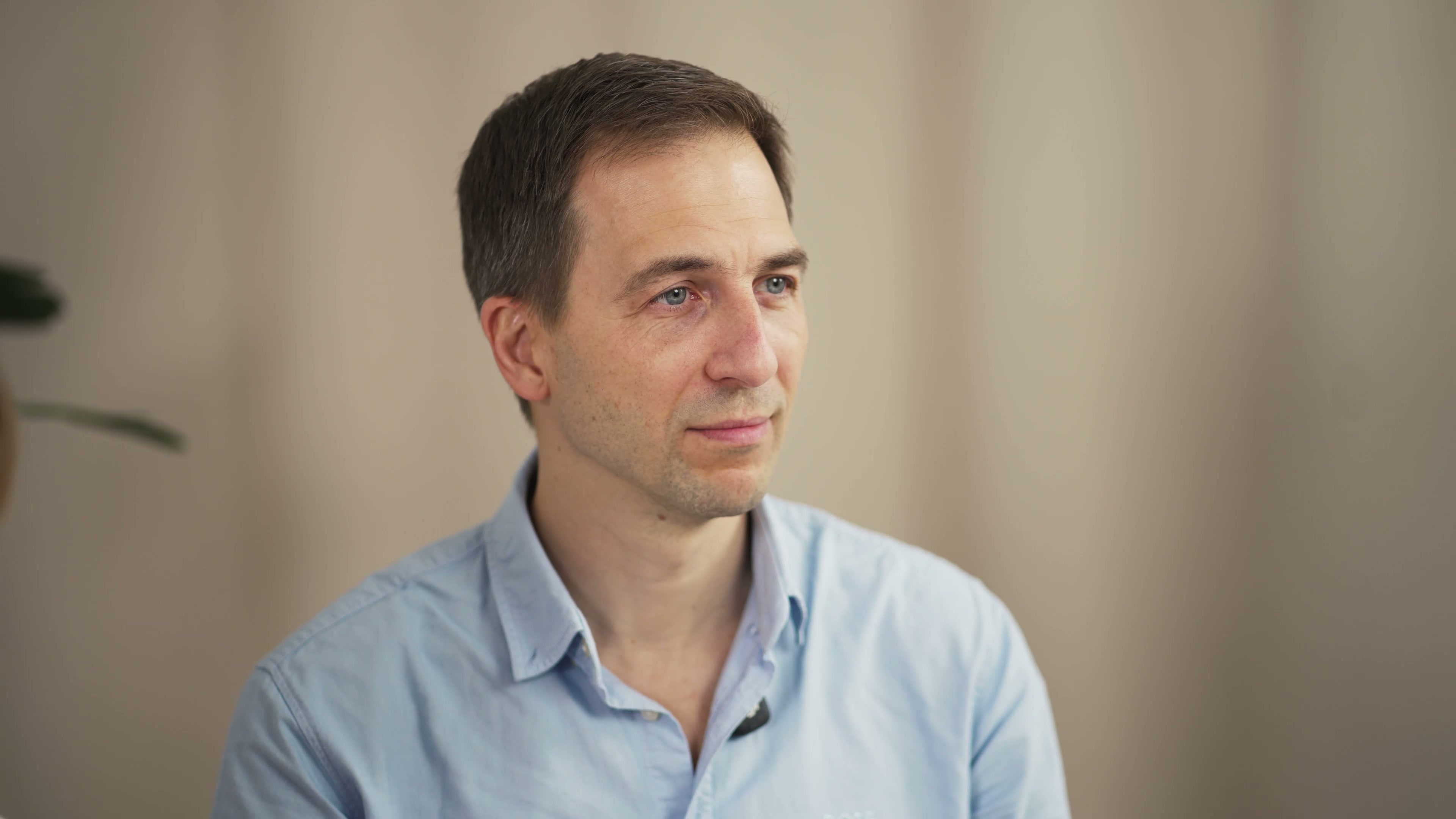
Dr. A. Rybakova, Dr. A. Rybakov · Lifestyle Medicine
For informational purposes only. Not a substitute for professional medical advice.
You slept eight hours. Full, uninterrupted, lights-out-before-ten hours. And you woke up feeling like you had been hit by a car.
Key takeaways
- Perimenopause fatigue affects 85% of women in transition.
- Estrogen drives mitochondrial ATP production — its decline directly reduces cellular energy output.
- Estrogen-mediated mitochondrial dysfunction and energy production instability
- Iron deficiency without anemia (ferritin gap between lab normal and functional normal)
The Science Behind Perimenopause Exhaustion
You have earned the right to be angry about this. You have been to the doctor. Probably more than once. You described a fatigue so profound it feels like your bones are tired. And you were told your labs look fine. Maybe offered an antidepressant. Maybe told to exercise more. Maybe given a pamphlet about stress management that you were too tired to read.
I am going to explain what is actually happening in your body, and why the standard medical investigation misses it, and what should be done instead. I am going to name specific mechanisms, cite specific studies, and occasionally lose my composure about the gap between what we know and how women are treated. That last part is not professional detachment. It is the honest response of someone who has read hundreds of posts from women being failed by a system that should know better.
Perimenopause fatigue and menopause fatigue affect over 75 percent of women during the menopause transition, according to the North American Menopause Society. Seventy-five percent. That means if you put four perimenopausal women in a room, three of them are exhausted. And yet this extreme fatigue perimenopause pattern has no ICD-10 diagnostic code, no standardized screening tool in widespread use, and no clinical practice guideline from any major medical organization. The 'crashing fatigue' that women describe, the sudden, overwhelming exhaustion that hits without warning, is a recognized phenomenon in menopause medicine circles and invisible in standard primary care.
The mechanisms are understood. The clinical response has not caught up. That is the gap this page exists to bridge.
When your cells stop producing energy efficiently
Mitochondria are the power plants of your cells. Every cell in your body, roughly 37 trillion of them, contains hundreds to thousands of mitochondria, each converting nutrients into ATP, the energy currency your body runs on. Estrogen directly influences mitochondrial biogenesis, the process of creating new mitochondria, and oxidative phosphorylation, the process by which mitochondria produce ATP.
During perimenopause, as estrogen levels fluctuate unpredictably, mitochondrial efficiency becomes erratic. This is not a gradual decline. It is a roller coaster. One week your estrogen levels are near-normal and you feel human. The next week they plummet and you cannot get off the couch. The unpredictability is part of what makes perimenopause fatigue so disorienting. It is not consistently bad. It is randomly devastating.
A woman I will call Diya described it perfectly: 'I never know which version of me will show up. Monday I cleaned the entire house. Tuesday I cried because I was too tired to make lunch.' That oscillation tracks hormonal fluctuations. It is not a character flaw. It is not inconsistency. It is a direct metabolic consequence of unstable estrogen levels affecting cellular energy production.
The cortisol layer compounds this. Chronic stress, which is the baseline state of most midlife women, not because they are weak but because the structural demands on them are genuinely excessive, elevates cortisol chronically. Cortisol is catabolic. It breaks down tissue to liberate glucose for acute stress response. Chronically elevated cortisol breaks down muscle, disrupts blood sugar regulation, impairs immune function, and degrades mitochondrial membranes. So the power plants are being damaged by the very stress response that the power plants should be supporting.
Lindegard's longitudinal study found that higher cardiorespiratory fitness was associated with lower risk of stress-related perimenopause fatigue. Exercise improves mitochondrial density and function. But here is the catch: exercising when mitochondrial function is already compromised can trigger post-exertional malaise, a worsening of symptoms after activity that is the hallmark of chronic fatigue syndrome. The dosing matters. Too little exercise fails to stimulate adaptation. Too much overwhelms already-struggling mitochondria. The therapeutic window is narrower than most exercise recommendations acknowledge.
The blood test that tells the truth and the ones that lie
Standard fatigue workup in primary care: complete blood count, basic metabolic panel, thyroid-stimulating hormone. If these come back normal, the investigation typically ends. And this is where millions of women fall through the cracks.
Ferritin. Your doctor may not have checked it at all. If they did, they compared it to a reference range that starts at 12 ng/mL. A ferritin of 18 is therefore 'normal.' But a 2012 study by Vaucher and colleagues demonstrated that iron supplementation improved fatigue scores in non-anemic menstruating women with ferritin below 50. Not below 12. Below 50. The gap between the lab's definition of normal and the body's definition of functional is enormous. And perimenopausal women with heavy or irregular periods are actively depleting their iron stores every month while being told their levels are fine.
Thyroid function presents the same problem. TSH alone misses subclinical hypothyroidism. Frank-Raue and Raue documented that thyroid dysfunction increases in peri- and postmenopausal women, with symptoms that overlap almost entirely with perimenopause fatigue. A full thyroid panel — TSH plus free T3 plus free T4 plus TPO antibodies plus thyroglobulin antibodies, captures what TSH alone misses. But it is rarely ordered in standard care. It costs more. It takes more interpretation. And the assumption is that if TSH is normal, thyroid is fine. That assumption is wrong often enough to be dangerous.
Vitamin D and B12 are the other hidden drivers. B12 deficiency causes fatigue independent of anemia. Vitamin D deficiency, present in an estimated 42% of US adults, impairs muscle function and energy metabolism. Both are cheap to test. Neither is included in standard fatigue panels at most primary care offices.
I want to be clear about something. I am not anti-conventional-medicine. I am anti-incomplete-investigation. When a woman reports fatigue that is affecting her ability to function and the entire diagnostic workup consists of a CBC and a reassuring pat on the shoulder, that is not thorough care. That is screening masquerading as investigation. And the woman who goes home still exhausted and now convinced that the problem is in her head is carrying a burden that proper testing could have lifted.
Key mechanisms
Urban-rural differences in epidemiology and risk factors of menopause syndrome in middle-aged Chinese women.
Menopause (New York, N.Y.)
Junxia An; Lifei Li
View sourceAssociation of Prediagnostic Frailty, Change in Frailty Status, and Mortality After Cancer Diagnosis in the Women's...
JAMA network open
Elizabeth M Cespedes Feliciano; Chancellor Hohensee; Ashley E Rosko; Garnet L Anderson; Electra D Paskett; Oleg Zaslavsky; Robert B Wallace; Bette J Caan
View sourceImprovements in health-related quality of life and function in middle-aged women with chronic diseases of lifestyle...
African journal of disability
Roline Y Barnes; Jennifer Jelsma; Romy Parker
View sourceImproving Daytime Functioning, Work Performance, and Quality of Life in Postmenopausal Women With Insomnia: Comparing...
Journal of clinical sleep medicine : JCSM : official publication of the American Academy of Sleep Medicine
David A Kalmbach; Philip Cheng; J Todd Arnedt; Andrea Cuamatzi-Castelan; Rachel L Atkinson; Cynthia Fellman-Couture; Timothy Roehrs; Christopher L Drake
View sourceLiving well after breast cancer randomized controlled trial protocol: evaluating a telephone-delivered weight loss...
BMC cancer
Marina M Reeves; Caroline O Terranova; Jane M Erickson; Jennifer R Job; Denise S K Brookes; Nicole McCarthy; Ingrid J Hickman; Sheleigh P Lawler; Brianna S Fjeldsoe; Genevieve N Healy
View source[Survey on epidemiologic factors associated with the age of natural menopause and menopausal symptoms in Jiangsu women].
Zhonghua fu chan ke za zhi
Lin Li; Jie Wu; Xiao-qing Jiang; Dan-hua Pu; Yang Zhao
View source



Talk to Dr. Wellls — free consultation
4 free messages — no account required
Dr. Wellls AI
Quick start — tap or speak:
Powered by Lifestyle Medicine evidence. Not a substitute for medical advice.
You're Not Alone
women are talking about exhaustion right now
Thousands of women have been through the same thing. Here's what they say.
“Does anyone else experience a constant state of perimenopause fatigue?”
“I am so tired of trying to figure out which thing is making me exhausted”
“Is there anyone who's not exhausted all the time or am I just doing this wrong?”
+ 3 more stories from real women
Why doesn't rest restore you anymore?
Get your personalized energy profile in 5 minutes. Find out if your exhaustion is hormonal, structural, or burnout-driven.
944 women got their profile this month
Free · 5 min · 100% private
This is not a clinical assessment. For medical concerns, consult a healthcare provider.
Take a moment for yourself
These evidence-based techniques can help manage exhaustion symptoms right now.
Curated Exercise Sets
4 personalized routines with 16 exercises from professional trainers


The many faces of exhaustion
5 distinct patterns we've identified from real women's experiences
Estrogen is not just a reproductive hormone. It modulates mitochondrial function, the energy-producing machinery inside every cell in your body. When estrogen fluctuates during perimenopause, cellular energy production becomes erratic. You feel this as unpredictable crashes. One day you are fine. The next day you cannot get off the couch. The randomness is not random. It tracks your hormonal fluctuations.
From our data
In our dataset of 264 perimenopause fatigue posts, 69% came from women in their 30s. Not their 40s. Their thirties. These are not women approaching menopause. These are women in the early stages of perimenopause, when hormonal fluctuations are most volatile and least recognized. The burnout co-occurrence rate of 0.30 tells me that nearly one in three exhausted women is also burned out. But the perimenopause fatigue persists even when they rest. That is the diagnostic clue everyone misses.
Connected problems
What women with exhaustion also experience
Your personalized protocol
A lifestyle medicine approach to exhaustion, built on 6 evidence-based pillars
Stabilize blood sugar architecture
Protein with every meal and snack. Complex carbohydrates over simple. Eat within an hour of waking. No long gaps between meals. This stabilizes the insulin-cortisol seesaw that drives crashing fatigue.
Build movement gradually
3-4 walks per week, 15-20 minutes. Add gentle strength training if energy allows. Morning timing for circadian benefit. Track energy before and after: if exercise consistently worsens fatigue, reduce and investigate medical causes.
Address sleep quality
If insomnia or fragmented sleep is present, begin CBT-I or stimulus control protocol. Sleep quality ...
Reduce allostatic load
Identify and begin reducing the top 3 energy drains in your life. Delegate one recurring task. Set o...
Social re-engagement
One social commitment per week that you do not cancel. Connection modulates cortisol, provides behav...
Medical optimization based on results
Review blood work results. Supplement identified deficiencies. Discuss hormone therapy if indicated....
4,100 women explored their fatigue plan this month
Start your protocolJoin 95+ women discussing exhaustion
Real experiences shared across Reddit, TikTok, and health forums
I would go. I know you may be exhausted. You can rest after they go. I would never forgive myself if I did not plant myself right there so they would be less alone in their final moments; even if...
The fatigue is seriously never-ending
The fatigue is seriously never-ending
Does anyone else experience a constant state of exhaustion?
Does anyone else experience a constant state of exhaustion?
Reading others' stories is the first step. Join to share yours.
Community
A safe space for women navigating exhaustion
Frequently asked questions
Common questions about Exhaustion
How we research and fact-check
Every article on Wellls is researched using peer-reviewed medical literature, clinical guidelines, and real patient experiences from 264 online discussions.
Sources: We reference 47 PubMed-indexed studies, ACOG/NAMS clinical guidelines, and validated screening tools.
Review: Content is written by our editorial team, enriched from a medical knowledge base of 15,000+ sources. Evidence standards and clinical methodology guided by our Medical Advisory Board: Dr. Alexandra Rybakova and Dr. Alexander Rybakov, Lifestyle Medicine Physicians with 35+ years combined clinical practice.
This content is for informational purposes only and does not constitute medical advice. Our editorial standards · Medical advisory board
References
47 sources reviewed for this exhaustion guide
- 1.
- 2.
- 3.
- 4.
- 5.
- 6.
- 7.
- 8.
- 9.
- 10.
History of updates
Current version (March 11, 2026) — Content reviewed and updated based on latest research
First published (February 17, 2026)
Explore related problems
Women who experience exhaustion often also deal with these
Your personalized plan is ready
You slept eight hours and woke up feeling like you ran a marathon in your sleep. Nobody has been able to explain why, and you are starting to think maybe this is just what life feels like now. It is not. Your energy system has identifiable, treatable disruptions that standard blood work was not designed to find. Your personalized perimenopause fatigue protocol goes beyond 'get more sleep' because you already know that is not the answer.
4,100 women explored their fatigue plan this month
Free assessment · Takes 2 minutes · No account required
Medical disclaimer: This content is for informational purposes only and does not constitute medical advice, diagnosis, or treatment. Always consult a qualified healthcare provider for personal medical decisions. Content is based on peer-reviewed research and updated regularly. Learn about our editorial standards.