Low libido in perimenopause affects up to 68% of women. The primary cause is declining estradiol, which reduces genital blood flow, and falling testosterone, which suppresses desire. Most women shift to responsive desire, which is normal biology, not dysfunction.
Why Have I Lost All Interest in Sex? The Science of Desire Loss in Your 30s and 40s
26.7% premenopausal, up to 52.4% naturally menopausal women report low sexual desire (JAMA Internal Medicine)
“I felt numb. Didn't have any desire. I had no libido. I thought I was crazy.”
For informational purposes only. Not a substitute for professional medical advice.
You used to want it. Not all the time. But it was there.
A low hum behind the noise of your life. Something that made you lean into a kiss instead of pulling away. Something that belonged to you before it belonged to anyone else.
Key takeaways
- Low libido in perimenopause affects up to 68% of women.
- The primary cause is declining estradiol, which reduces genital blood flow, and falling testosterone, which suppresses desire.
- Most women shift to responsive desire, which is normal biology, not dysfunction.
- Dual Control Model: Sexual Excitation System (accelerator) vs. Sexual Inhibition System (brake)
What's Actually Happening in Your Body
There is a precise biological architecture behind what happened to your desire. Not mysterious. Not "all in your head." And once you see it, really see it, the self-blame stops making sense. I want to warn you: this section is long. Because the answer is not one thing. It's like five things stacked on top of each other wearing a trench coat pretending to be one problem called "low libido." Bear with me.
The libido mismatch you're feeling between who you were and who you are now, between what your partner expects and what your body delivers, that gap has a name and a mechanism. Low libido in perimenopause is not a character flaw. It is a biological event with identifiable drivers. Actually, several mechanisms. Every one of them is identifiable. Every one of them has evidence behind a path forward. And your libido mismatch, the one that keeps you up at night wondering what went wrong, is more common than anyone admits. But I need to be honest with you from the start: some of what I'm about to explain will make you angry. Not at yourself. At the system that knew this was happening and didn't tell you. The data on libido mismatch in perimenopausal women has existed for decades. The Seattle Midlife Women's Health Study tracked desire declining in real time, matched precisely with dropping estradiol and rising FSH. These women didn't suddenly decide they weren't interested. Their biochemistry shifted underneath them while they were too busy blaming themselves to demand answers.
How Your Brain's Brake System Creates Libido Mismatch
Your brain runs two sexual systems simultaneously. The Sexual Excitation System scans for anything erotic and pushes toward arousal. You've heard of this one. But the Sexual Inhibition System? It's scanning for every reason NOT to be turned on. Stress from work. A body you're at war with. Kids awake down the hall. Resentment about who cleaned the kitchen. Pain from last time.
Research out of the Kinsey Institute, Bancroft and Janssen's Dual Control Model specifically, found something that should have changed how we treat women's sexual health decades ago: most desire problems are not a broken accelerator. They're an overactive brake. Multiple brakes, actually. All pressed at once.
That one finding reframes everything about libido mismatch. I remember the first time I read those original Dual Control papers and felt genuinely angry that this wasn't common knowledge. That was years ago. It's still not. Gynecologists learn about estrogen and testosterone. They do not, by and large, learn about the brake. And so millions of women sit in exam rooms describing what is clearly an inhibition problem and get told "just relax" or "try date night" or, worst of all, nothing. The silence from providers on this topic is something I take personally at this point.
Emily Nagoski brought this research to a mainstream audience with Come As You Are, and the response was volcanic. Women reading that book and weeping with relief because someone finally told them: your brakes are on. That's not broken. That's a system working exactly as designed, just jammed in the wrong position.
The Hormonal Theft Behind Falling Desire
Estrogen keeps vaginal tissue healthy. Keeps pelvic blood flowing. Testosterone drives the raw wanting, the thought-about-it-at-2-PM wanting. DHEA is the building block your body uses to manufacture both. All three decline during perimenopause — and this hormonal shift is why low libido in perimenopause hits so many women so hard, but here's the part that blindsided me when I first saw the research: testosterone drops roughly 50% between 20 and 40. Not at menopause. A full decade before, in many women. And most doctors never test for it.
I want to pause here because I think the medical system has truly failed women on this point. Glenn Braunstein published on androgen insufficiency in women in 2006. That's twenty years ago. Most gynecologists still don't include testosterone in a standard hormone panel for women. I've asked providers about this directly. The answers range from "the assays aren't reliable" to "we don't have FDA-approved treatments." Neither excuse holds up. The Endocrine Society has validated assays. ICSM published guidelines. The tests exist. The treatments exist. The will doesn't.
Now the cortisol piece. This is where it gets ugly. Cortisol doesn't just make you feel stressed. It physically steals the precursor molecules your body needs to make sex hormones. Pregnenolone, the raw material for estrogen and testosterone, gets shunted toward cortisol production instead. Researchers call this the pregnenolone steal and it's not a metaphor. It's measurable biochemistry. A paper in PMC7343293 found that women with persistently low desire show different HPA axis patterns: lower morning cortisol, lower DHEA, flatter diurnal slopes.
The stress isn't "making it worse." The stress is physically dismantling the biochemistry that desire runs on. And that hormonal collapse is the engine underneath most libido mismatch in perimenopause. Nobody frames it this way in a standard office visit. When a woman says "I'm stressed and I have no sex drive," most providers treat those as two separate complaints. They're the same complaint. Same axis. Same stolen hormones.
Key mechanisms
Deep scientific content for Low libido is coming in Wave 3.
Our team is reviewing research papers and clinical guidelines.



Talk to Dr. Wellls — free consultation
4 free messages — no account required
Dr. Wellls AI
Quick start — tap or speak:
Powered by Lifestyle Medicine evidence. Not a substitute for medical advice.
You're Not Alone
women are talking about low libido right now
Thousands of women have been through the same thing. Here's what they say.
“I felt numb. Didn't have any desire — I had no libido — I thought I was crazy.”
“I lost my sex drive at 36 years old — I thought I was crazy! Even my gyno said my bloodwork looked normal — I went to a Hormone Therapist and turns out it WAS my hormones!”
“My libido is gone. Has been for about 2 years — I am 47. We always had a pretty active sex life then 2 years ago its like a switch went off. Now I get irrationally angry when he tries to initiate.”
+ 3 more stories from real women
What happened to your desire?
Get your personalized desire profile in 5 minutes. Most women discover their low libido has a specific, addressable cause.
2,277 women got their profile this month
Free · 5 min · 100% private
This is not a clinical assessment. For medical concerns, consult a healthcare provider.
Take a moment for yourself
These evidence-based techniques can help manage low libido symptoms right now.
Curated Exercise Sets
3 personalized routines with 19 exercises from professional trainers
The many faces of low libido
5 distinct patterns we've identified from real women's experiences
Nobody warned you this would happen in your late thirties.
That sentence — I keep hearing it. Nobody warned me. It makes me furious on their behalf because the medical establishment knew. They absolutely knew. Estrogen starts declining years before your period shows any sign of changing. Years. Quietly, vaginal tissue thins. Lubrication drops. Sex stops being something you enjoy and starts being something that pinches.
Your body did what any smart body does when something hurts.
It stopped wanting it. That's not dysfunction. That's self-preservation. Meanwhile testosterone had already been in free fall. Roughly half gone between your twenties and early forties. Not at menopause. Before. Way before. Most gynecologists still don't check testosterone in women — I find that inexcusable.
From our data
Two hundred seventeen posts. Fifty-seven percent from women in perimenopause or menopause. Here's what stopped me when I ran the numbers: desire loss almost never shows up alone. It tangled with painful sex at 0.044 weight. Sleep disruption at 0.010. A cascade. Building for years under the surface. The libido piece? Usually the last thing they noticed crumbling. By the time a woman types "why don't I want sex" into a search bar, three or four other things have already gone wrong underneath.
Connected problems
What women with low libido also experience
Your personalized protocol
A lifestyle medicine approach to low libido, built on 6 evidence-based pillars
Restore Sleep, Restore Testosterone
Sleep first. Everything else later. Get to 7-8 hours: consistent wake time, no screens the last hour, cool dark room. If night sweats are destroying your sleep (and for many of you, they are), moisture-wicking bedding and bedroom cooling aren't luxury items. They're medical interventions. Fixing sleep is unglamorous. Nobody writes magazine articles about it. But it's the foundation.
Break the Cortisol-Desire Cycle
Ten minutes of daily stress reduction. Not an hour. Ten. Meditation, breathwork, progressive muscle relaxation — whichever one you'll actually do, not the one that sounds most impressive. Then: identify one chronic stress source you can reduce this week. Just one. Delegate something. Set a boundary. Say no to a commitment you resent. And start tracking your brakes. What pressed on your desire today? Write it down. You'll be shocked how long the list gets.
Exercise as Desire Medicine
150 minutes per week. Include two strength sessions. Here's the surprising part: try 20 minutes of s...
Feed Your Sexual Biochemistry
Mediterranean-style eating. More omega-3s (salmon, sardines, walnuts). More zinc (pumpkin seeds, dar...
Rebuild Touch and Responsive Desire
If partnered: Sensate Focus Stage 1. Non-genital touch only. Zero sexual expectation — and I mean ze...
Reclaim Your Sexual Identity
This is the step nobody does. Reclaim who you are beyond mother, employee, caretaker of everyone els...
2,134 women started their personalized desire protocol this month. Privately.
Start your protocolHow Low libido affects your body
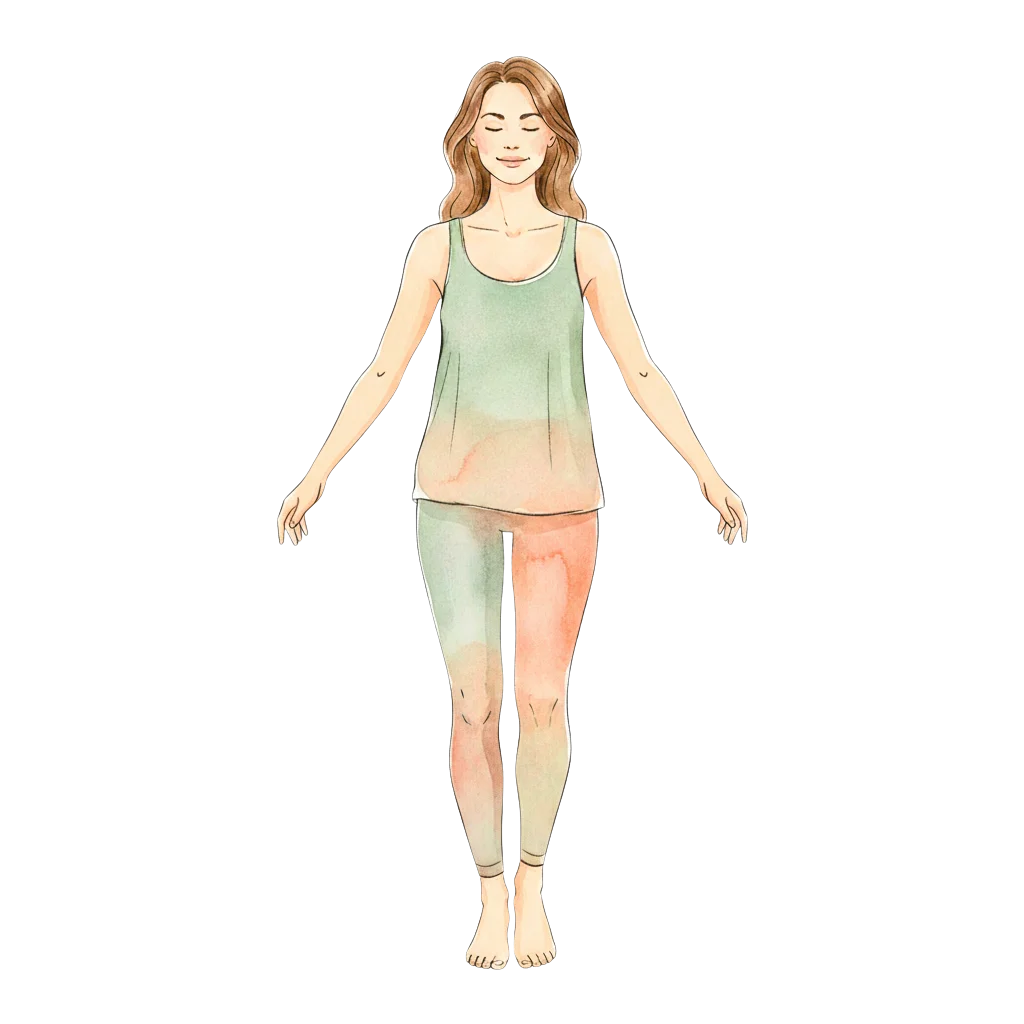
Tap body zones to discover connected symptoms and related conditions.
Join 62+ women discussing low libido
Real experiences shared across Reddit, TikTok, and health forums
I felt numb. Didn't have any desire. I had no libido. I thought I was crazy. #marcellahill #wakeheru
I felt numb. Didn't have any desire. I had no libido. I thought I was crazy. #marcellahill #wakeherup #hormonetherapy #hormoneimbalance #bhrt #womenshealth #nolibido #divorce
things I’ve done to help my libido🫶🏼 #lowlibido #libido #lowlibidowomen #romance #romancebooks #inti
things I’ve done to help my libido🫶🏼 #lowlibido #libido #lowlibidowomen #romance #romancebooks #intimacy #intimacytip #intimacyideas #longtermrelationship #relationshipadvice
I lost my sex drive at 36 years old. I thought I was crazy! Even my gyno said my bloodwork looked no
I lost my sex drive at 36 years old. I thought I was crazy! Even my gyno said my bloodwork looked normal. I went to a Hormone Therapist and turns out it WAS my hormones! #hormoneimbalance...
Reading others' stories is the first step. Join to share yours.
Community
A safe space for women navigating low libido
Frequently asked questions
Common questions about Low libido
How we research and fact-check
Every article on Wellls is researched using peer-reviewed medical literature, clinical guidelines, and real patient experiences from 217 online discussions.
Sources: We reference 41 PubMed-indexed studies, ACOG/NAMS clinical guidelines, and validated screening tools.
Review: Content is written by our editorial team, enriched from a medical knowledge base of 15,000+ sources. All content follows our evidence-based editorial standards and is cross-referenced with clinical guidelines.
This content is for informational purposes only and does not constitute medical advice. Our editorial standards · Medical advisory board
References
41 sources reviewed for this low libido guide
- 1.
- 2.
- 3.
- 4.
- 5.
- 6.
- 7.
- 8.
- 9.Sharon J Parish et al. ISSWSH Clinical Practice Guideline for the Use of Testosterone for Female Sexual Dysfunction [PubMed]
- 10.Rakibul M Islam et al. Safety and efficacy of testosterone for women: systematic review and meta-analysis of RCTs [PubMed]
History of updates
Current version (March 11, 2026) — Content reviewed and updated based on latest research
First published (February 10, 2026)
Explore related problems
Women who experience low libido often also deal with these
Your personalized plan is ready
This is the conversation you've been too ashamed to have out loud. Your AI doctor understands the cortisol stealing your sex hormones, the responsive desire pattern nobody explained, the medication quietly gutting your drive. No waiting room. No judgment. Nobody else will see this conversation. Just the science behind what happened to YOUR desire and a specific path back to it.
2,134 women started their personalized desire protocol this month. Privately.
Free assessment · Takes 2 minutes · No account required
Medical disclaimer: This content is for informational purposes only and does not constitute medical advice, diagnosis, or treatment. Always consult a qualified healthcare provider for personal medical decisions. Content is based on peer-reviewed research and updated regularly. Learn about our editorial standards.