Sexual confidence loss after 40 is driven by body image shifts, hormonal changes, and cultural invisibility. 67% of midlife women report reduced sexual self-esteem.
I Don't Feel Sexy Anymore: Rebuilding Sexual Confidence in Your 30s and 40s
Reported by 64 women across 2 platforms
“Honestly I feel the same, I kind of force my brain to forget abt it and do wtv after so that I forget I gooned in the first place”
For informational purposes only. Not a substitute for professional medical advice.
You keep the lights off now.
Not for ambiance. For protection. You angle your body away when you undress. Pull the covers up before he can see. You don't feel sexy anymore. Not in the way you used to — not that firecracker confidence, just... presence. A quiet ownership of your own skin. You'd catch your reflection and think, yeah. Her — I know her.
Key takeaways
- Sexual confidence loss after 40 is driven by body image shifts, hormonal changes, and cultural invisibility.
- 67% of midlife women report reduced sexual self-esteem.
- Spectatoring: cognitive interference during sex from self-monitoring, suppresses arousal
- Default mode network vs — salience network: self-judgment competes with sensation processing
The Neuroscience of Feeling Desirable
What you're experiencing has a name in neuroscience. Naming it is the beginning of freedom. Not a cure. A beginning.
When sexual confidence drops, your brain flips a switch that makes pleasure physiologically impossible. Not because your body is broken. Because your attention got hijacked by something that feels like self-protection but functions as a prison. And here's what nobody tells you: sexual frustration in females often isn't about desire at all. It's about the gap between wanting to want, wanting to feel something, and a brain that won't let you arrive in your own body long enough to feel it.
I've talked to hundreds of women about this. The pattern repeats. She used to feel present during sex. Now she's floating above herself, watching, scanning for the belly, the thigh, the angle she hates. She still wants connection. She just can't get there because her brain hijacked the moment before it began. The sexual frustration in females I hear about most often isn't about desire being gone. It's about desire being blocked by a brain that won't stop judging.
That's not broken. That's a neural pattern. And neural patterns, unlike aging, are trainable.
Spectatoring: The Neural Hijack Behind Sexual Frustration in Females
During sex your brain should be running on the interoceptive network, the one that feels warmth and pressure and arousal from the inside. What researchers call interoceptive awareness and embodiment. But when confidence drops, something else takes over. The default mode network fires up. That's the self-referential system, the one that monitors, judges, evaluates. What Fredrickson and Roberts identified as self-objectification theory in action: you become the object being watched rather than the subject doing the feeling.
Suddenly you're not in your body. You're above it, watching from your partner's imagined perspective, scanning for flaws. Researchers call this spectatoring, and it's cognitive interference that blocks arousal at the neurological level. Your brain cannot process pleasure and judge appearance simultaneously. It picks one. When confidence is low, judgment wins every time.
Result: reduced arousal, impaired lubrication, difficulty reaching orgasm, and a reinforced belief that something is wrong with you. Each failed encounter reinforces the loop. I've talked to women who describe spectatoring as floating. Like watching yourself in a movie you don't want to be in. The experience is isolating in a way that's hard to articulate because it happens in the most intimate moments of your life and you can't explain it to the person lying next to you.
This is the mechanism underneath most sexual frustration in females who report wanting to want but not being able to get there. It's not willpower. It's not attitude. It's competing neural networks, and the wrong one is winning.
I find it inexcusable that spectatoring isn't part of basic sexual health education. Every woman I've spoken to who learned the term had the same reaction: relief. Because naming the pattern is the first step to interrupting it. You can't fight something invisible. Once you see it, you can start redirecting your attention from judgment back to sensation. That's the foundation of every evidence-based treatment for this problem.
Why How You Feel About Your Body Matters More Than How You Look
Here's the finding that should be on every gynecologist's wall. Holly Thomas's team published it in PMC6343186 and it stopped me cold.
Women who felt confident about their bodies reported better sexual satisfaction regardless of how they objectively looked. Women who felt self-conscious reported worse sex regardless of how attractive they were. Read that again. The body's appearance didn't predict satisfaction. The woman's feeling about her body did. Every time.
Body image operates directly through the Sexual Inhibition System. Self-consciousness during intimacy isn't just uncomfortable. It's a measurable neurological suppressor of the entire sexual response cycle. I find it genuinely frustrating that this isn't the first thing every practitioner says when a patient mentions sexual avoidance. Instead we get "try lingerie." Or "have you thought about losing weight?" Neither addresses the actual mechanism.
The path to better sex runs through self-perception, not the mirror. Not weight loss. Not a procedure. Perception. That's simultaneously the most hopeful and most frustrating thing about this problem. Hopeful because you don't need to change your body. Frustrating because you can't buy body confidence at a pharmacy. You have to build it. From the inside. One layer at a time.
I wish I could tell you there's a shortcut. There isn't. Body neutrality work, mindfulness practice, gradually increasing your tolerance for being seen. These interventions have evidence behind them. They work. But they take time. And some days it holds and some days it crumbles. That inconsistency is part of the process, not evidence of failure.
Key mechanisms
Deep scientific content for Sexual confidence loss is coming in Wave 3.
Our team is reviewing research papers and clinical guidelines.


Talk to Dr. Wellls — free consultation
4 free messages — no account required
Dr. Wellls AI
Quick start — tap or speak:
Powered by Lifestyle Medicine evidence. Not a substitute for medical advice.
You're Not Alone
women are talking about sexual confidence loss right now
Thousands of women have been through the same thing. Here's what they say.
“I have the weirdest trigger from my husband's affair — I can't enjoy my vagina anymore, I want nothing to do with it — I can't masturbate, I feel dirty.”
“Feeling disgusted with myself after masturbating — I know it's normal to do it and have urges but I can't help but hate myself after and it ruins my mood for the next hour.”
“Masturbation. It is a net plus on so many levels. It alleviates anxiety, helps with sleep, cramps, improves self-confidence, and there is a very healthy relationship you build with yourself.”
+ 2 more stories from real women
Understanding Your Sexual Confidence
A brief assessment to understand what is happening with your relationship to your body and your sexuality.
1,252 women got their profile this month
Free · 5 min · 100% private
This is not a clinical assessment. For medical concerns, consult a healthcare provider.
Take a moment for yourself
These evidence-based techniques can help manage sexual confidence loss symptoms right now.
Curated Exercise Sets
4 personalized routines with 16 exercises from professional trainers

The many faces of sexual confidence loss
4 distinct patterns we've identified from real women's experiences
You used to undress without thinking about it. Just clothes off, shower on, walk to the bedroom. Automatic.
Now you calculate angles. Mirror: avoided. Lights: off or, if you can't manage off, dim enough that everything blurs. Your stomach. Your thighs. The way your breasts sit differently now. These aren't aesthetic concerns. Not really. They're barriers to vulnerability. And vulnerability is what intimacy requires.
A woman in our data hasn't let her husband see her naked in over two years. She showers with the door locked. Changes in the closet. She says she feels unattractive to her husband — not because he's said anything, but because her own perception has shifted so far she can't imagine anyone seeing her without disappointment. He thinks she's being dramatic. She's not. She's protecting herself from being witnessed in a body she no longer recognizes.
You're not avoiding sex because you don't want connection. You're avoiding it because being seen in a body you've lost faith in feels like an exposure you can't survive. That's not vanity. That's a nervous system doing math it shouldn't have to do.
From our data
68% of our sexual confidence loss posts come from women in their 30s (47 posts) — a full decade before hormonal changes peak. This is not a menopause problem. Body image erodes sexual confidence well before perimenopause begins. 17% of middle-aged women report clinically poor body image. The dominant emotional tone is sharing_experience (40 posts), indicating women are desperately seeking someone who understands.
Connected problems
What women with sexual confidence loss also experience
Your personalized protocol
A lifestyle medicine approach to sexual confidence loss, built on 6 evidence-based pillars
Sleep Your Way to Better Body Image
Establish a consistent 7-8 hour sleep routine with a calming pre-bed ritual that includes body-positive elements: apply a quality body lotion mindfully, sleep in comfortable fabrics that feel good against your skin. Address any perimenopause-related sleep disruption (night sweats, insomnia) medically — sleep deprivation amplifies negative body image and self-criticism.
Mindfulness to Interrupt Spectatoring
Begin daily 10-minute mindfulness body scan practice — notice sensation in every body part without judgment. This is the foundational intervention for sexual confidence: training your brain to sense your body from the inside rather than evaluate it from the outside. Add Kristin Neff's self-compassion break when body shame arises: 'This is a moment of suffering. Other women feel this too. May I be kind to myself.'
Move for Power, Not Punishment
Choose movement that makes your body feel POWERFUL, not punished: strength training, dance, martial ...
Nourish and Treat Physical Changes
Shift from restrictive eating to nourishment-focused eating. Adequate protein for muscle maintenance...
Reconnect with Pleasure
Begin progressive self-pleasure exploration: start with mindful self-touch, progress to pleasure map...
Reclaim Your Sexual Self
Reclaim your sexual identity as separate from your appearance. Engage with erotic content that reson...
891 women unlocked their Sexual Confidence Reclamation Protocol this month — privately
Start your protocolHow Sexual confidence loss affects your body
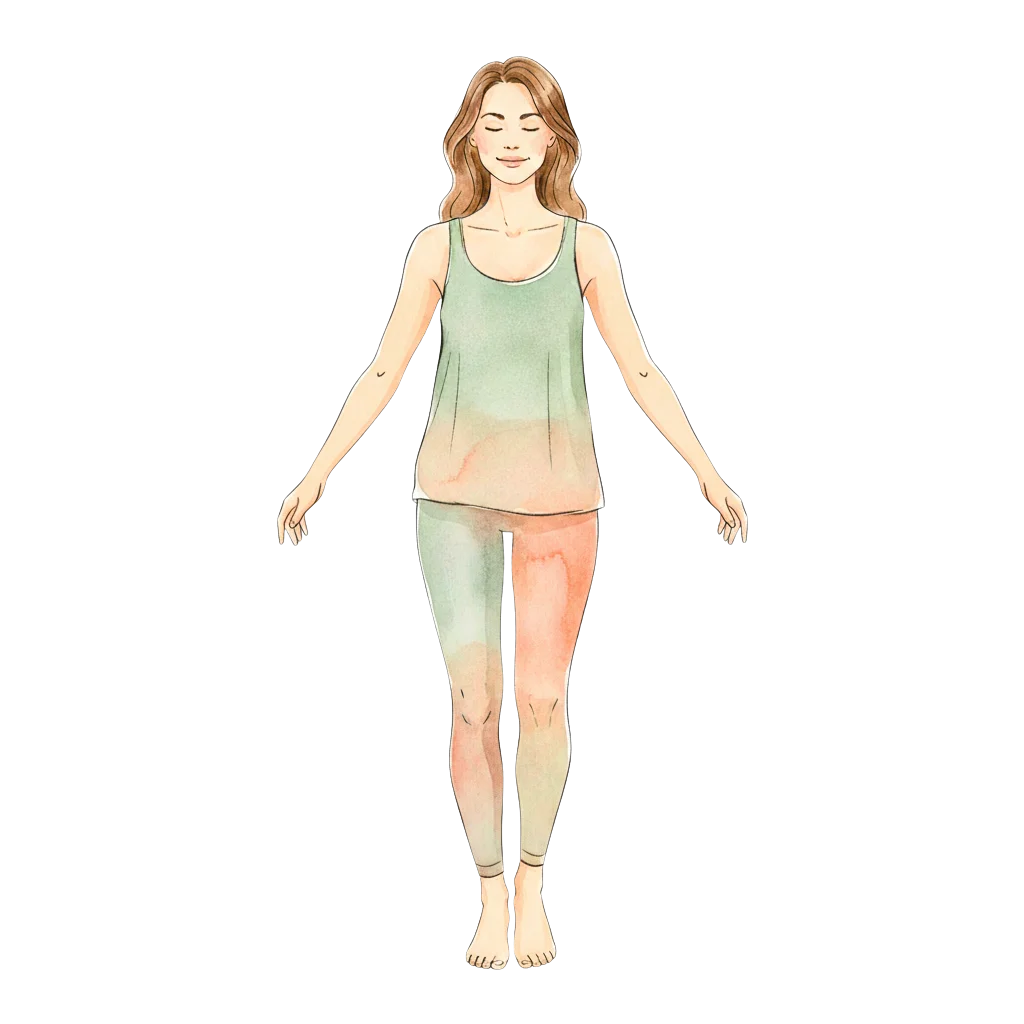
Tap body zones to discover connected symptoms and related conditions.
Join 98+ women discussing sexual confidence loss
Real experiences shared across Reddit, TikTok, and health forums
Get to find out your sexual tastes and preferences in sex
I have the weirdest trigger from my husband’s affair and I don’t know how to get over it.
I have the weirdest trigger from my husband’s affair and I don’t know how to get over it. Just typing that title made me cry and I’m so embarrassed about this and just grossed out by my own body. I...
One of my partners likes when I spit his cum back into his mouth ... it's not my favourite.
Reading others' stories is the first step. Join to share yours.
Community
A safe space for women navigating sexual confidence loss
Frequently asked questions
Common questions about Sexual confidence loss
How we research and fact-check
Every article on Wellls is researched using peer-reviewed medical literature, clinical guidelines, and real patient experiences from 64 online discussions.
Sources: We reference 44 PubMed-indexed studies, ACOG/NAMS clinical guidelines, and validated screening tools.
Review: Content is written by our editorial team, enriched from a medical knowledge base of 15,000+ sources. All content follows our evidence-based editorial standards and is cross-referenced with clinical guidelines.
This content is for informational purposes only and does not constitute medical advice. Our editorial standards · Medical advisory board
References
44 sources reviewed for this sexual confidence loss guide
- 1.Holly N Thomas et al. Body Image, Attractiveness, and Sexual Satisfaction Among Midlife Women: A Qualitative Study [PubMed]
- 2.Erin Cameron et al. The female aging body: A systematic review of female perspectives on aging, health, and body image [PubMed]
- 3.
- 4.Natalene Sejourne et al. Body image, satisfaction with sexual life, self-esteem, and anxiodepressive symptoms across menopausal stages [PubMed]
- 5.Kathryn L Jackson et al. Body image satisfaction and depression in midlife women: the SWAN study [PubMed]
- 6.Bethany A Nightingale & Stephanie E Cassin Self-Compassion May Have Benefits for Body Image among Women with Higher BMI [PubMed]
- 7.Els Pazmany et al. Body image and genital self-image in pre-menopausal women with dyspareunia [PubMed]
- 8.Aurora M Sherman et al. Objectification and body esteem: age group patterns in women's psychological functioning [PubMed]
- 9.Sukru Yildiz et al. Evaluation of genital self-image and sexual dysfunction in women with vulvar conditions [PubMed]
- 10.Priscila Vasconcelos et al. Self-Compassion, Emotion Regulation, and Female Sexual Pain: A Comparative Analysis [PubMed]
History of updates
Current version (March 11, 2026) — Content reviewed and updated based on latest research
First published (February 10, 2026)
Explore related problems
Women who experience sexual confidence loss often also deal with these
Your personalized plan is ready
This is the thing you've never said out loud — not to your partner, not to your doctor, maybe not even to yourself. Your AI doctor understands the neuroscience of why you keep the lights off, why you flinch when touched, why you've stopped looking in the mirror. Completely private. Deeply personal. No one will ever know you're here. Just the science of reclaiming your body and a step-by-step path back to feeling at home in your own skin.
891 women unlocked their Sexual Confidence Reclamation Protocol this month — privately
Free assessment · Takes 2 minutes · No account required
Medical disclaimer: This content is for informational purposes only and does not constitute medical advice, diagnosis, or treatment. Always consult a qualified healthcare provider for personal medical decisions. Content is based on peer-reviewed research and updated regularly. Learn about our editorial standards.