Vaginal dryness affects 50-70% of postmenopausal women. Vaginal estrogen cream restores tissue with minimal systemic absorption and is safe for most women.
Why Am I So Dry Down There? The Complete Guide to Vaginal Dryness in Perimenopause
Affects up to 84% of menopausal women
“I saw something about how our vaginas change in menopause and now I’m freaking out. Does it really change that much??”
For informational purposes only. Not a substitute for professional medical advice.
You Googled this at 2am because you can't say it out loud. The rawness when you sit. The wince during sex you hide from your partner. The third UTI this year that antibiotics barely touched. You thought it was aging. Or dehydration. Or something wrong with you. It's none of those things. Vaginal dryness in menopause affects 84% of postmenopausal women. A medical condition called Genitourinary Syndrome of Menopause. Only 7% ever get treated. Seven percent. Because nobody talks about it and most doctors never bring it up. Vaginal estrogen cream is the gold standard treatment and your tissue isn't broken. It's estrogen-deprived. And that's fixable, starting tonight.
Key takeaways
- Vaginal dryness affects 50-70% of postmenopausal women.
- Vaginal estrogen cream restores tissue with minimal systemic absorption and is safe for most women.
- Estrogen withdrawal causing vaginal epithelial thinning (20-30 layers to 3-4 layers)
- Glycogen depletion starving Lactobacillus bacteria
What Is Happening Inside Your Body
I want to tell you about a woman I'll call Diane. She sat in a urologist's office in Phoenix last March after her fourth UTI in eight months. She'd taken so many courses of antibiotics that she'd developed a yeast infection on top of the bacterial one. Her GP had never once mentioned the words "genitourinary syndrome of menopause." Diane is 52. She'd been dealing with burning, itching, and pain during sex for three years before anyone connected the dots.
Her story is not unusual. It's the norm. And that makes me furious.
If you're reading this because you Googled "best lube for menopause dryness," I need to tell you something before we go further. A lubricant might help tonight. It will not fix what's actually happening. What you're experiencing has a medical name: Genitourinary Syndrome of Menopause, or GSM. It has a known cause: estrogen deprivation. And it has treatments that go far beyond what you'll find in the feminine care aisle.
But understanding those treatments requires understanding the biology first. I'm going to walk you through what happens to your tissue, your microbiome, your vulva, and your urinary tract when estrogen leaves. Then I'm going to walk you through what actually fixes it, because finding the best lube for menopause dryness is a reasonable first step but it's only that, a first step. Some of this will make you angry. Good. It should. Bear with me.
The tissue architecture nobody explained to you
Here's what your gynecologist should have drawn on a napkin years ago. In your reproductive years, estrogen keeps your vaginal lining at 20 to 30 cell layers thick. Resilient. Elastic. Self-lubricating. Think of it like well-watered soil. When estrogen declines in perimenopause, that lining thins to as few as 3 or 4 cell layers — I need to say that number again because it deserves to land: from thirty layers to three. That's an 85% reduction in your tissue's protective barrier. (And most doctors never mention this is happening.) Collagen drops. Elastin disappears. Blood flow to the vaginal walls slows to a trickle. The mucous glands that kept everything moist shrivel. Nerve endings that were safely buried under all that tissue? Now they're exposed, raw, registering every seam of your underwear as an assault. This isn't dryness. This is a structural collapse that has a name, a cause, and a treatment. The name is GSM. The cause is estrogen deprivation. The treatment is estrogen replacement directly to the tissue. A 2024 meta-analysis by Ali et al — confirmed that intravaginal estrogen is both safe and effective for reversing atrophic vaginitis. The AUA/SUFU/AUGS 2025 guideline calls it a strong recommendation based on high-quality evidence. So why are only 7% of affected women getting it?
I've asked that question to providers, to researchers, to policy people. The answers circle around the same themes: patient embarrassment, provider discomfort, insufficient training, and a medical culture that treats women's sexual comfort as optional. I find every one of those answers unacceptable. The treatment exists. It works. It's safe. The barrier isn't science. It's stigma.
Your microbiome is starving and nobody told you
This part genuinely stopped me cold when I first understood it. Your vagina runs on bacteria. Good bacteria. Lactobacillus species that eat glycogen and produce lactic acid, keeping your pH between 3.5 and 5.0. Acidic enough to kill E. coli, Candida, Gardnerella, and most other pathogens before they get a foothold. Estrogen is what feeds the whole system. It stimulates your epithelial cells to produce the glycogen that Lactobacillus needs. Take away estrogen and the entire ecosystem collapses. Gliniewicz et al — showed that postmenopausal women have dramatically different vaginal microbiomes compared to premenopausal women, with reduced Lactobacillus dominance. Srinivasan et al — at JAMA Network Open demonstrated that topical vaginal interventions in postmenopausal women can shift the microbiome back toward a healthier composition. So your third UTI this year? Your BV that won't quit? Your yeast infection that clears and returns two weeks later? All the same root cause. You're treating invaders without restoring the fortress. Actually, let me correct myself. The fortress isn't broken. It's just unfed.
I've heard from women who've been through five, six, seven rounds of antibiotics for recurrent UTIs without anyone mentioning that their vaginal microbiome was the actual problem. Their doctors kept treating the infection without treating the cause of the infection. That's like mopping the floor while the faucet is running. Vaginal estrogen restores the glycogen supply, feeds the Lactobacillus, brings the pH back down, and rebuilds the immune barrier that keeps pathogens out. Nobody searching for the best lube for menopause dryness expects to learn about pH balance and bacterial ecosystems. But this is where the real answer lives.
Key mechanisms
Deep scientific content for Vaginal dryness is coming in Wave 3.
Our team is reviewing research papers and clinical guidelines.


Talk to Dr. Wellls — free consultation
4 free messages — no account required
Dr. Wellls AI
Quick start — tap or speak:
Powered by Lifestyle Medicine evidence. Not a substitute for medical advice.
You're Not Alone
women are talking about vaginal dryness right now
Thousands of women have been through the same thing. Here's what they say.
“Vaginal Estrogen Cream...USE IT! My husband calls it something memorable. Three months in and it's still getting better! I had no idea how dried up my tender bits were — I feel like it happened so gradually I just didn't notice how bad it had gotten.”
“This is the thing about our lack of education about peri and menopause that angers me the most. Atrophy can destroy sexual function for the rest of your life, and we are never told about it. When it started happening to me, I had no idea what was going on....”
“Good grief. Regular activity does not prevent atrophy. Classic 'use it or lose it' nonsense which has been disproven. Your doctor needs to update his info! And yes vaginal estrogen should help your issues!”
+ 3 more stories from real women
Understanding Your Vaginal Health
A brief assessment to understand what is happening with your tissue, what might be causing it, and what actually helps.
2,920 women got their profile this month
Free · 5 min · 100% private
This is not a clinical assessment. For medical concerns, consult a healthcare provider.
Take a moment for yourself
These evidence-based techniques can help manage vaginal dryness symptoms right now.
Curated Exercise Sets
4 personalized routines with 16 exercises from professional trainers
Vaginal Dryness — Quick Pelvic Circulation
Jessica Casalegno
Professional Trainer
The many faces of vaginal dryness
5 distinct patterns we've identified from real women's experiences
You're 38 and something has changed. Sex feels different. Rawer. Tighter. You chalk it up to stress or not drinking enough water. Your doctor says you're too young for vaginal dryness perimenopause treatment. But here's what she didn't tell you: estrogen fluctuations begin years before your last period, and the vaginal epithelium is only a few cell layers thick. It's exquisitely sensitive to these swings. Can vaginal dryness start in your 30s? Absolutely. That vague sense that things feel different down there? Not dehydration. It's the first sign of vaginal epithelium thinning and tissue losing its hormonal lifeline. And tissue that gets vaginal atrophy treatment before significant damage sets in is dramatically easier to restore.
From our data
This stopped me when I saw it in our data: 32 of 76 vaginal dryness posts come from women in perimenopause. The single largest group alongside menopause (36 posts). Dryness is NOT only a postmenopausal problem. It starts years earlier than most women or doctors expect.
Connected problems
What women with vaginal dryness also experience
Your personalized protocol
A lifestyle medicine approach to vaginal dryness, built on 6 evidence-based pillars
Restore Deep Sleep for Tissue Healing
Prioritize 7-9 hours of sleep nightly. Growth hormone released during deep sleep drives vaginal tissue regeneration. If night sweats disrupt sleep, use cooling pajamas and address with your provider.
Release Pelvic Floor Tension
Begin daily 10-minute pelvic floor relaxation practice: deep breathing with conscious release of pelvic muscles. Add progressive muscle relaxation before bed.
Build Pelvic Blood Flow
Start daily Kegel exercises (3 sets of 10, hold 5 seconds) plus 30 minutes of cardiovascular exercis...
Feed Your Tissue from the Inside
Add 2-3g daily omega-3 (fish oil or algae). Increase phytoestrogen-rich foods: soy, flaxseed, chickp...
Rebuild Intimate Connection
Have an honest conversation with your partner about GSM. Begin sensate focus exercises (non-genital ...
Lock In Long-Term Recovery
Schedule follow-up with menopause-trained provider. Establish long-term maintenance plan: vaginal es...
1,823 women accessed the GSM Treatment Guide this month
Start your protocolHow Vaginal dryness affects your body
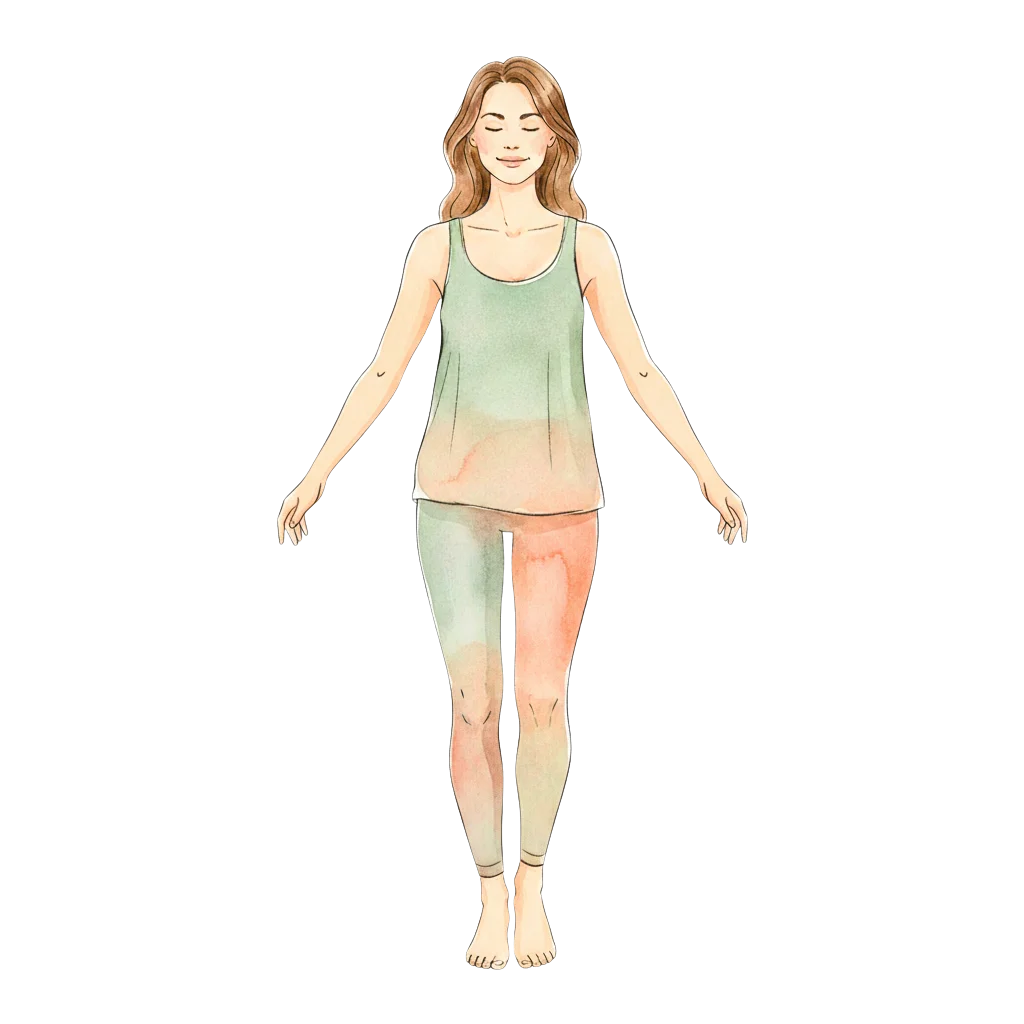
Tap body zones to discover connected symptoms and related conditions.
Join 77+ women discussing vaginal dryness
Real experiences shared across Reddit, TikTok, and health forums
I saw something about how our vaginas change in menopause and now I’m freaking out. Does it really change that much??
I saw something about how our vaginas change in menopause and now I’m freaking out. Does it really change that much??
Vaginal Estrogen Cream…USE IT!
Vaginal Estrogen Cream…USE IT! My husband calls it Juicy Pussy cream. 😂Three months in and it’s still getting better! I had no idea how dried up my tender bits were. I feel like it happened so...
This is the thing about our lack of education about peri and menopause that pisses me off the most. Atrophy can destroy sexual function for the rest of your life, and we are never told about it by...
Reading others' stories is the first step. Join to share yours.
Community
A safe space for women navigating vaginal dryness
Frequently asked questions
Common questions about Vaginal dryness
How we research and fact-check
Every article on Wellls is researched using peer-reviewed medical literature, clinical guidelines, and real patient experiences from 76 online discussions.
Sources: We reference 54 PubMed-indexed studies, ACOG/NAMS clinical guidelines, and validated screening tools.
Review: Content is written by our editorial team, enriched from a medical knowledge base of 15,000+ sources. All content follows our evidence-based editorial standards and is cross-referenced with clinical guidelines.
This content is for informational purposes only and does not constitute medical advice. Our editorial standards · Medical advisory board
References
54 sources reviewed for this vaginal dryness guide
- 1.
- 2.Melissa R Kaufman et al. Executive Summary: The AUA/SUFU/AUGS Guideline on Genitourinary Syndrome of Menopause [pdf_report]
- 3.
- 4.Elisheva R Danan et al. Hormonal Treatments and Vaginal Moisturizers for Genitourinary Syndrome of Menopause: A Systematic Review [PubMed]
- 5.David D Rahn et al. Vaginal estrogen for genitourinary syndrome of menopause: a systematic review [PubMed]
- 6.Nik Hussain Nik Hazlina & Mohd Noor Norhayati et al. Prevalence of Psychosomatic and Genitourinary Syndrome Among Menopausal Women: A Systematic Review and Meta-Analysis [PubMed]
- 7.Kristen E Ullman et al. Complementary and Alternative Therapies for Genitourinary Syndrome of Menopause: An Evidence Map [PubMed]
- 8.
- 9.Ayane Cristine Alves Sarmento & Ana Paula Ferreira Costa et al. Genitourinary Syndrome of Menopause: Epidemiology, Physiopathology, Clinical Manifestation and Diagnostic [PubMed]
- 10.David J Portman & Margery L S Gass Genitourinary syndrome of menopause: new terminology for vulvovaginal atrophy from ISSWSH and NAMS [PubMed]
History of updates
Current version (March 11, 2026) — Content reviewed and updated based on latest research
First published (February 10, 2026)
Explore related problems
Women who experience vaginal dryness often also deal with these
Your personalized plan is ready
This is the conversation you wish you could have with your gynecologist. Without the 8-minute appointment. Without the embarrassment. Without being told to just use lube. Your private AI doctor already knows about GSM, about vaginal estrogen, about the treatment hierarchy your pharmacy trip got wrong. Which estrogen to ask for. The exact script to make your doctor listen. A 12-week tissue restoration protocol backed by the 2025 AUA clinical guideline. 1,823 women stopped suffering in silence this month.
1,823 women accessed the GSM Treatment Guide this month
Free assessment · Takes 2 minutes · No account required
Medical disclaimer: This content is for informational purposes only and does not constitute medical advice, diagnosis, or treatment. Always consult a qualified healthcare provider for personal medical decisions. Content is based on peer-reviewed research and updated regularly. Learn about our editorial standards.