Anxiety in Perimenopause — Online Course
8-week evidence-based program for anxiety with perimenopause. 18 lessons backed by 91+ studies. CBT, movement, lifestyle medicine. Free first lesson. This is a 8-week evidence-based course with 18 lessons and 91 scientific citations designed for women. The course covers lifestyle medicine approaches including nutrition, movement, sleep optimization, stress management, and social connection.
Topics covered: why do i have anxiety all of a sudden, anxiety with perimenopause, progesterone anxiety, perimenopause anxiety.
Course Outline
Module 1: The Alarm That Will Not Stop
What perimenopause anxiety actually is, why it arrives suddenly in your 30s or 40s, and why your doctor called it stress.
- What Is Happening to Me (12 min)
- 51% of women experience clinically significant anxiety during menopausal transition, often starting in the 30s
- Progesterone metabolizes into allopregnanolone, your brain's natural benzodiazepine, and it declines first
- The physiological sigh (double inhale, long exhale) activates parasympathetic response in under 60 seconds
- This course uses CBT, MBSR, movement science, and hormonal education across 8 weeks
- Anxiety in midlife is not a character flaw. It is a measurable neurochemical shift.
- If you've been asking "why do I have anxiety all of a sudden" — progesterone decline may have started years before your period changed
- Anxiety with perimenopause affects women as early as their mid-thirties, driven by the collapse of your brain's built-in GABA sedative system
- The Alarm That Will Not Stop (12 min)
- The amygdala triggers fight-or-flight without distinguishing real threats from hormonal surges
- Allopregnanolone modulates GABA-A receptors with a U-shaped dose response; perimenopause drops you off the left side
- ER symptoms of anxiety are physiologically identical to early cardiac presentation in women
- CBT for generalized anxiety has an effect size of g=1.01, a large clinical effect (Hofmann, PMC5992015)
- The alarm is not broken. It lost its off switch. This course rebuilds it.
- Your Doctor Said Stress (11 min)
- NICE, CANMAT, and Maki consensus guidelines all identify perimenopause as a window of vulnerability for anxiety
- Day-21 progesterone, FSH, estradiol, and thyroid panel are the tests your doctor should order
- Anxiety in midlife exists on a spectrum from situational to hormonal to severe, each requiring different treatment
- Integrated approaches (lifestyle + medication when needed) are recommended by international guidelines
- If your doctor will not check hormones for new-onset anxiety after 35, find another doctor
Module 2: Nobody Told You Why
The progesterone cliff, the pregnenolone steal, and the cycle-anxiety connection your doctor never explained.
- The Progesterone Cliff (12 min)
- Progesterone converts to allopregnanolone, which modulates GABA-A receptors identically to how benzodiazepines work
- Progesterone decline starts in the late 30s, often before any menstrual cycle changes
- The pregnenolone steal creates a biochemical trap: stress depletes progesterone, which increases anxiety, which increases stress
- Allopregnanolone has a U-shaped dose response: too little or too much causes anxiety. HRT dose titration matters.
- Day-21 serum progesterone is the test that reveals whether your natural anxiolytic system is functioning
- The Pregnenolone Steal (11 min)
- The pregnenolone steal diverts hormone production from progesterone to cortisol under chronic stress
- Omega-3 (2g/day EPA-enriched) and magnesium glycinate (200-400mg bedtime) have the best evidence-to-risk ratio
- Caffeine after noon pushes cortisol in an already-activated HPA axis; cutting it produces noticeable benefit in 2 weeks
- Alcohol temporarily boosts GABA but the rebound crashes it and depletes progesterone, making anxiety worse
- Tracking anxiety against your cycle reveals the hormonal pattern in data, not just feelings
- Mapping Your Pattern (10 min)
- Converting anxiety from a feeling into data points transforms your relationship to it
- Most women find anxiety clusters in the late luteal phase (days 22-26) when progesterone is lowest
- The 3 AM cortisol spike is a measurable HPA axis disruption, not a random event
- Track: cycle day, anxiety level, sleep, caffeine, symptoms, and evening triggers for at least 7 days
- Bring your tracking data to your doctor as evidence, not as a complaint
Module 3: Your Body Knows How to Calm Down
Movement as anxiolytic, breathing practices, and the setback that tests everything.
- Your Body Knows How to Calm Down (11 min)
- Exercise reduces anxiety with effect sizes comparable to SSRIs (Stubbs 2017, SMD=-0.582)
- Yoga has the strongest non-meditation effect (g=-0.59), followed by tai chi and resistance training
- 150 minutes per week of moderate exercise reduces anxiety risk by 42%
- Movement works by completing the cortisol stress cycle and building vagal tone, not just endorphins
- Minimum effective dose is 21 minutes per session; avoid HIIT if cortisol is already elevated
- The Breathing You Have Been Doing Wrong (11 min)
- The physiological sigh is a rescue tool (10 seconds); extended breathing is training (5-10 minutes daily)
- Most breathing advice fails during acute panic because the prefrontal cortex is partially offline
- Extended exhale breathing (inhale 4, exhale 6-8) tips the autonomic balance toward calm
- Body-based grounding through skilled hand work (pottery, art) routes attention away from catastrophizing
- The real practice is returning attention after it wanders, not maintaining perfect focus
- When Everything Falls Apart Again (12 min)
- Maternal threat bypasses the cortex entirely; anxiety management tools have a scope and setbacks are outside that scope
- Setbacks are data, not failure. A screwdriver does not fail when you need a saw.
- The setback protocol: let it happen, find one sensation, wait (20-40 min peak), find a safe person, note it the next day
- Co-regulation (physical presence of someone safe) is the most powerful nervous system regulator
- The tools did not fail. You were outside their range. That distinction changes everything.
Module 4: The Night That Will Not End
The anxiety-insomnia loop, rebuilding after setback, and the quiet wins nobody notices.
- The Night That Will Not End (11 min)
- Anxiety and insomnia co-occur in 24% of cases; the bidirectional loop compounds nightly
- Sleep deprivation amplifies amygdala reactivity by 60%, neurologically priming higher anxiety
- The 3 AM waking is an early cortisol awakening response, not a random anxiety event
- Consistent wake time is the single most effective sleep intervention; it resets the cortisol curve
- The 4-7-8 bedtime breath signals the nervous system that the day is over
- Small Signals of Safety (10 min)
- Recovery is measured by functional improvement, not symptom elimination
- Recovery is quiet: making the bed, checking the lock once, sleeping an extra 90 minutes
- Co-regulation (safe person's presence) changes autonomic state below conscious awareness
- Avoid the checklist trap: pick two tools, let them become automatic, then expand gradually
- The trend matters more than any single data point on your tracker
- Rebuilding After the Spiral (10 min)
- A 5-day recovery (vs previous 5 weeks) is evidence the tools work, not that they failed
- ACT's goal is psychological flexibility: having anxiety without becoming anxiety (Hayes, 900+ RCTs)
- Write what you KNOW now vs. before the course. Knowledge, not feelings, shows progress.
- Nobody lives without anxiety. Progress is measured by how long it stays and how much it disrupts.
- The internal work of Modules 1-4 prepares you for the external connection of Module 5
Module 5: You Are Not Alone in This
The gut-brain connection, anti-anxiety nutrition, and the people who calm your nervous system.
- Your Second Brain (11 min)
- 70% of serotonin is manufactured in the gut, not the brain; the enteric nervous system has 500 million neurons
- Omega-3 EPA 1-2g daily has the strongest evidence for anxiety-nutrition connection (g=0.372)
- L. plantarum P8 reduced anxiety in an RCT, but not all probiotics are equal
- The anti-anxiety plate: omega-3 fish, dark greens, complex carbs, fermented food, olive oil
- Small nutritional changes (one addition, one subtraction) stick better than complete overhauls
- The People Who Calm Your Nervous System (11 min)
- Co-regulation is a biological need: safe human presence physically changes your autonomic state
- Social isolation co-occurred with anxiety in 16% of cases and is often unrecognized
- 'Me too' activates different neural circuits than 'I understand' because shared experience triggers oxytocin and cortisol reduction
- Start with proximity (same room), not depth (deep conversation). Your nervous system needs presence, not words.
- The silence around anxiety multiplies suffering. Breaking it activates the most powerful nervous system regulator you have.
- Saying It Out Loud (10 min)
- The breakthrough is quiet: 'me too' at a park bench, not a dramatic confession
- Connection does what no individual tool can: it tells your deepest nervous system you are not alone
- Saying 'me too' does not cure anxiety. It changes the architecture: the container gets bigger.
- The tools keep you functioning. Connection keeps you human. You need both.
- When you are ready, the practice is simple: say it out loud to someone who might understand
Module 6: I Know What This Is Now
Integration, advocacy, and the quiet steadiness that arrives not as a cure but as recognition.
- The Pharmacist Who Started Asking (11 min)
- Integration means the tools become part of how you operate, not separate techniques to remember
- Nadia's note on the prescription pad merges professional knowledge with personal experience
- The final stage is not absence of anxiety but a different relationship with it: curiosity instead of fear
- Write your own 5-item list of what you know now. Put it where you will find it on a bad night.
- The course changes you, not just your symptoms. The vessel, not just the contents.
- The Quiet That Does Not Terrify (10 min)
- Experiential avoidance (organizing life around not feeling anxiety) is the strongest predictor of chronicity
- Stillness shifts from enemy to tolerable to almost-enjoyable as the foundation builds through modules 1-5
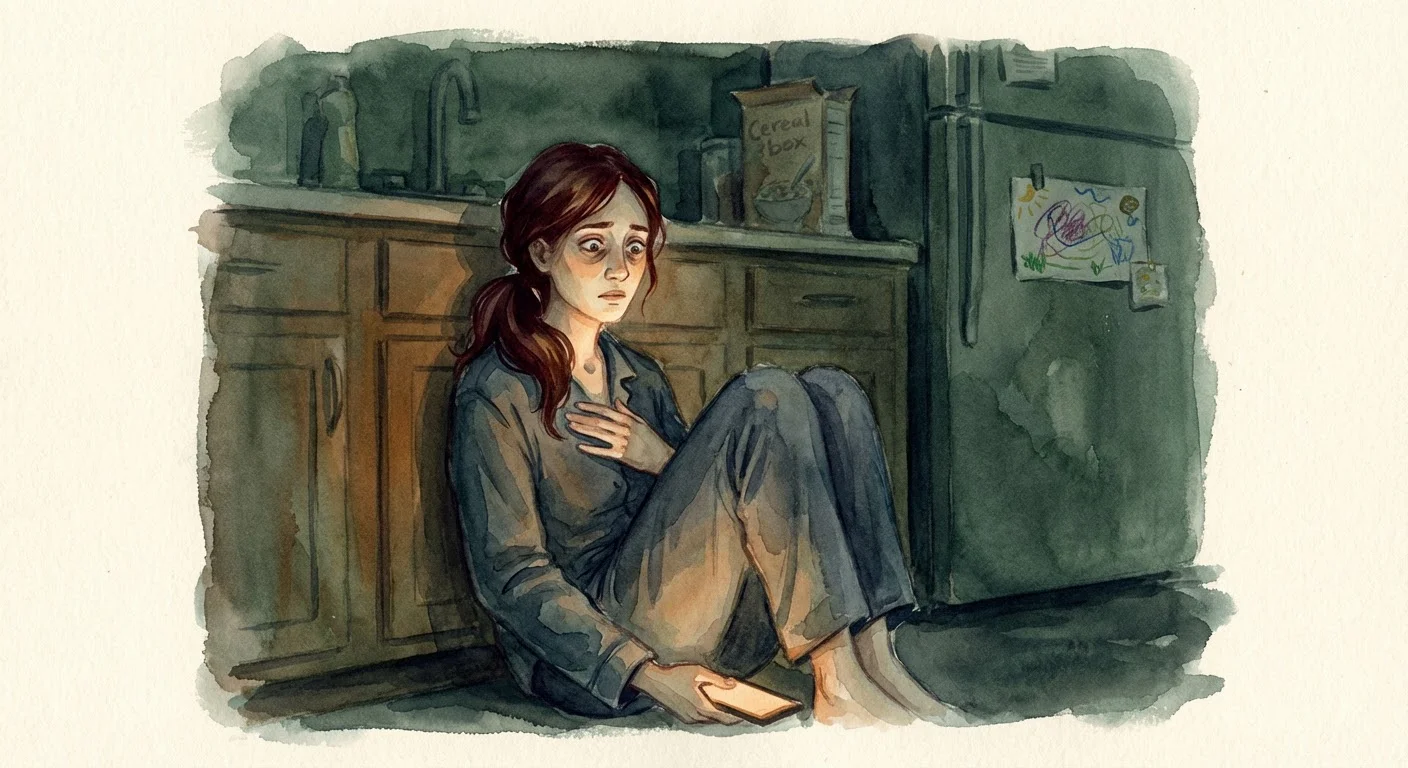
- Jolene has not been to the ER in 8 weeks. Not because anxiety is gone, but because she knows what it is.
- The bookend: same kitchen as 1.1, but morning light instead of phone glow. The kitchen did not change. You did.
- Try 5 minutes of doing nothing this week. The measure of the course is whether you can sit in quiet without fear.
- What I Would Tell Her (10 min)
- Nadia's letter: 'I know what this is now. That changes how I carry it.'
- Recovery is not dramatic. It is the difference between 5/5 and 3/5, between three lock checks and one.
- Weekly boosters and the Dr. Wellls provide ongoing support after the course ends
- The severity quiz measures progress quantitatively. If the score has not dropped, professional support may be needed.
- This course is the beginning, not the destination. The tools need maintenance, not perfection.

Anxiety in Perimenopause — 8-Week Evidence-Based Program
CBT, movement, and hormonal science for women whose alarm system lost its off switch
18
Lessons
4h 6min
Total Duration
140
Scientific Citations
6
Actionable Modules
Evidence-based lifestyle medicine from practicing doctors
Personalized AI companion (Dr. Wellls) included
Transform your energy, sleep, and hormones in 56 days
6 practical modules you can start using today
Choose your access level
Next charge: $49/month in 7 days. Cancel with 2 clicks anytime.
Free preview
No signup needed
Lesson 1: What Is Happening to Me
51% of women experience clinically significant anxiety during menopausal transition, often starting in the 30s
Read free lessonCourse Community
Women in this course
Other Mental Health Courses
View all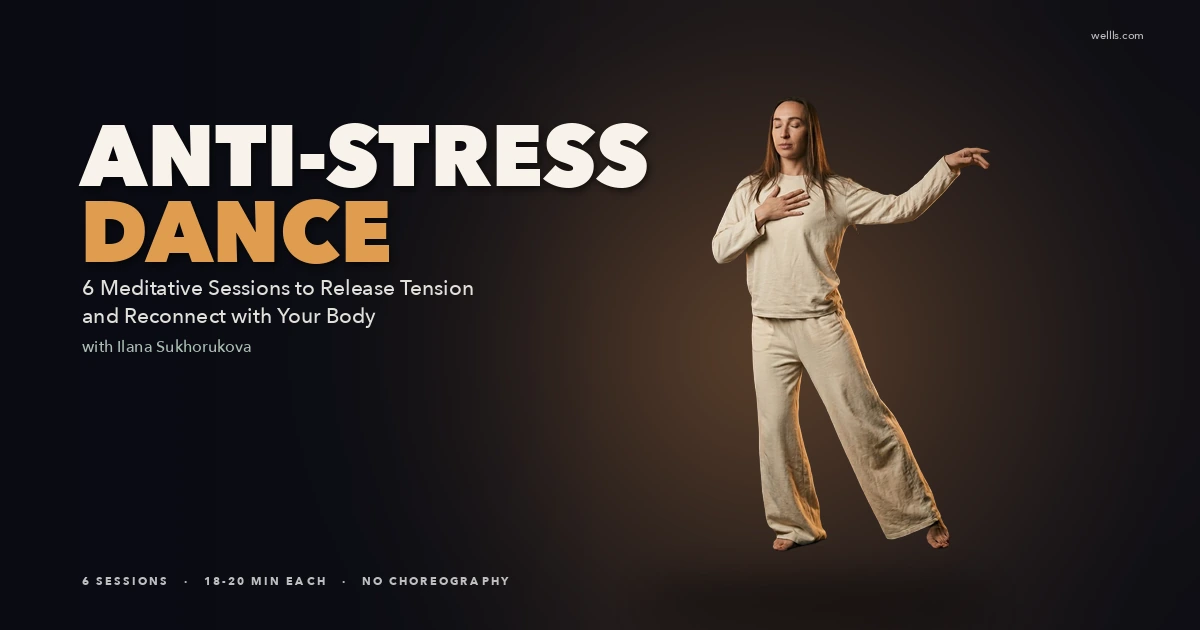
Anti-Stress Dance
6 Meditative Dance Sessions to Release Tension and Reconnect with Your Body
49 scientific sources
Start course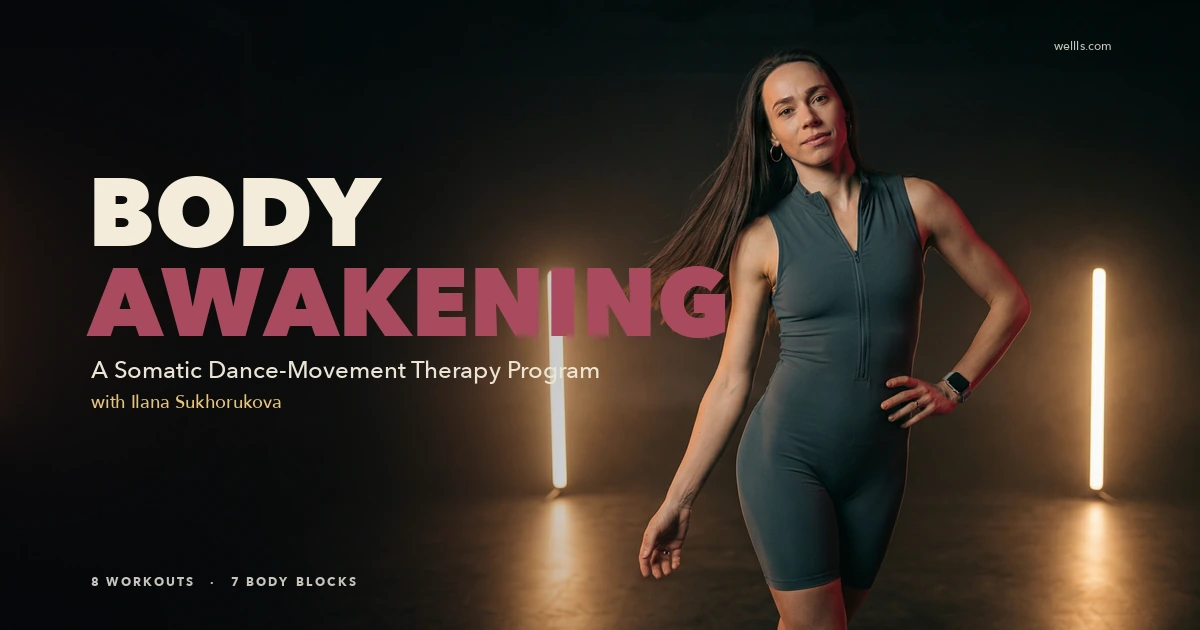
Body Awakening — An 8-Workout Dance-Movement Therapy Program for Releasing the Seven Body Blocks with Ilana Sukhorukova
Eight 15- to 20-minute somatic dance-movement sessions rooted in Wilhelm Reich's seven-segment theory of body-held emotional tension. Seven workouts release one block each — eyes, jaw, neck, chest, diaphragm, belly, pelvis — and the eighth integrates all seven.
49 scientific sources
Start course
Depression in Perimenopause — 8-Week Program
The window opens.
151 scientific sources
Start course