Depression in Perimenopause — 8-Week Course
Perimenopausal depression affects 28% of women. 8-week program: hormonal science, neuroinflammation, behavioral activation, and the Both/And framework. 18 lessons, 95+ citations. This is a 8-week evidence-based course with 18 lessons and 105 scientific citations designed for women. The course covers lifestyle medicine approaches including nutrition, movement, sleep optimization, stress management, and social connection.
Topics covered: is my depression caused by perimenopause or is it clinical depression, why does nothing taste good or feel fun anymore perimenopause, should I take antidepressants or try hormones for perimenopause depression, estrogen serotonin dopamine, neuroinflammation.
Course Outline
Module 1: Something Is Missing
What perimenopause depression actually is, why it doesn't look like the depression you expected, and why the woman who googled 'why don't I feel anything' at 11 PM is not broken.
- The Color Turned Down (12 min)
- Perimenopause increases depression risk 2.17x (SWAN study, Bromberger, University of Pittsburgh, 221 women over 10 years)
- 1 in 6 women with NO prior depression history develop it for the first time during perimenopause (Cohen, Harvard)
- Global prevalence: 28.6% of menopausal women (Jia et al., 2024, meta-analysis of 76,817 women)
- 63.3% of perimenopausal women report 'not feeling like myself' at least half the time (Women Living Better survey)
- 'I wouldn't mind not waking up' is a symptom of depleted neurotransmitters, not a truth about your future
- Writing Hope She Cannot Feel (11 min)
- Anhedonia (inability to experience pleasure) is the core symptom of depression — separate from sadness, and the DSM-5 diagnostic gateway
- The PHQ-9 was not designed for perimenopause — the Meno-D scale (Kulkarni, Monash University) captures hormonal mood disruption that standard tools miss
- Perimenopausal depression often presents as irritability, cognitive difficulty, and sensory flattening before classic sadness (Bromberger & Epperson)
- The Lancet 2024 review: women with NO prior depression still develop new-onset depression at 2x expected rate during perimenopause
- NAMS/NNDC guidelines (2019) require hormonal context in assessment — most encounters still skip the hormone panel
- The Fog That Settles Over Everything (11 min)
- Depression co-occurs with insomnia (0.55), fatigue (0.42), low libido (0.35), brain fog (0.28) — it dims everything simultaneously
- Depression impairs the faculty needed to identify it — the fog settles over self-awareness itself
- Vivian's story: 4 years, 3 providers, estradiol at 38 pg/mL — nobody checked hormones despite existing NAMS/NNDC guidelines
- The Doctor Visit Checklist (toolkit link) gives you the labs, the guideline reference, and the sentence you need
- The window metaphor: not locked, not broken — stuck. Each module cracks it open further.
Module 2: Oh. This Has a Name.
Three biological pathways — serotonin, progesterone-GABA, neuroinflammation — destabilized at the same time. The science that validates what you already knew was real.
- Three Systems, One Shift (12 min)
- Estrogen modulates serotonin receptor density (5-HT2A) — when it declines, SSRIs meet fewer receptors (Bethea, OHSU)
- Progesterone converts to allopregnanolone, your brain's natural benzodiazepine — it declines first, often years before estrogen (Backstrom, Umea University)
- Neuroinflammation diverts tryptophan from serotonin production via IDO enzyme — upstream of what SSRIs can reach (2024 J Neuroinflammation)
- Gordon RCT: estradiol + micronized progesterone nearly halved depression incidence (32.3% placebo vs 17.3% hormone, 172 women, 12 months)
- Three pathways disrupted simultaneously — yet standard assessment checks none of them
- The Inflammatory Pathway Nobody Mentions (11 min)
- Estrogen decline activates NF-kB → microglia shift M2→M1 → release TNF-alpha, IL-1-beta, IL-6 (Journal of Neuroinflammation, 2024)
- Inflammatory cytokines activate IDO, diverting tryptophan from serotonin → quinolinic acid (neurotoxic). Two insults, one mechanism.
- SSRI non-response explained: blocking reuptake of a neurotransmitter being manufactured at reduced capacity
- Raison & Miller (Emory): cytokines produce every classical depression symptom as a direct neurobiological mechanism
- Anti-inflammatory interventions (exercise, omega-3, Mediterranean diet) address a pathway SSRIs cannot reach
- Both/And (12 min)
- SMILE trial (Blumenthal, Duke): exercise comparable to sertraline for MDD — 46% remission, 1-year follow-up showed exercise as strongest predictor of maintained remission
- CANMAT guidelines list exercise as first-line for mild-to-moderate depression — not an add-on, first-line
- Five women: lifestyle-only, medication-only, HRT-only, all-three, and treatment-resistant — all exist and all are valid
- The floor rises (medication). The ceiling rises (lifestyle). Neither reaches the other's territory.
- Treatment-resistant depression is real — not failure, biology that has not yet yielded to available tools
Module 3: I Moved. I Noticed.
Behavioral activation, exercise science, and the hardest question in the course: what does the numbness protect you from? Movement as proof that the body is still in there.
- Action Before Motivation (12 min)
- Behavioral activation: action precedes motivation in depression — the order is inverted (Martell & Dimidjian, University of Wisconsin/Colorado)
- Exercise NNT = 4 for depression, adjusted for publication bias (Schuch et al., 2016) — lower than SSRIs (NNT ~7)
- 2024 BMJ meta-analysis: 218 studies, 14,170 participants — walking g=-0.62, yoga g=-0.55, strength training g=-0.49 (Noetel, University of Queensland)
- Strength training more effective for women than men — the least-recommended intervention has the strongest sex-specific evidence
- Greatest risk reduction comes from zero to any activity: 75 min/week = 18% lower depression risk
- The Body Remembers (11 min)
- The body stores emotion the mind cannot process — somatic experiencing and yoga access stored material (van der Kolk, Boston University)
- Yoga for depression: g=-0.55 across 33 studies (Noetel et al., 2024 BMJ). Hatha and Iyengar styles most effective (Cramer, University of Duisburg-Essen)
- Proprioceptive input regulates the autonomic nervous system — OT principle applied to adult depression (Vivian's sensory diet)
- Strength training more effective for women than men in depression (sex-specific finding, Noetel 2024)
- Avoid competitive formats, HIIT, body-focused comparison. Start below the resistance, not at it.
- What the Numbness Protects (12 min)
- Secondary gain of depression: pre-emptive defeat — the numbness protects from the terror of hoping and being disappointed again
- Nesse & Andrews (University of Michigan / VCU): depressive withdrawal as forced analytical pause — the brain shuts down pleasure to redirect resources
- The numbness is an adaptation, not a choice — the nervous system traded color for safety under cumulative threat
- Claudia goes to the dinner and feels nothing and is glad she went — both are true simultaneously
- The question is left open: what would it cost you to want things again? No resolution in this lesson.
Module 4: The Loop I Didn't See
The bidirectional sleep-depression loop. The school play: the day anhedonia takes the one thing you cannot afford to lose. Deciding to fight with everything available.
- The Loop (11 min)
- Depression and insomnia are bidirectionally linked — insomnia predicts depression more consistently than reverse (Fang et al., Zhejiang University, 2019)
- 80/80: depression present in 80%+ of insomniacs, insomnia in 80%+ of depressed. Near-total co-occurrence.
- CBT-I produces secondary depression improvements maintained at 1-year and 10-year follow-up (2024 systematic review)
- Three loop-breaking strategies: consistent wake time, morning light within 30 min, stimulus control (out of bed after 20 min awake)
- Gratitude practices while anhedonic measure the disease, not treat it — the gap between having and feeling IS the symptom
- The School Play (12 min)
- Anhedonia at its cruelest: inability to feel love when your child waves at you from a stage — the stolen moment depression cannot return
- The school play setback is quiet: no ER, no panic. Just the absence of feeling when feeling is required.
- Crisis resources re-presented: 988, Crisis Text Line 741741, SAMHSA. The thought 'my children would be better off without me' is a SYMPTOM, not a truth.
- Sleep deprivation paradox: one all-nighter lifts depression in ~50% (Northwestern, dopamine circuit remodeling) — 83% relapse after recovery sleep
- The compound effect: 3 weeks of the depression-insomnia loop accelerating without intervention
- Deciding to Fight With Everything (12 min)
- Starting an SSRI is not failure — it is a clinical decision supported by evidence, especially for moderate-severe depression
- Personalized treatment: SSRI + hormone panel + lifestyle, adjusted iteratively as data comes in (Both/And as treatment plan)
- The floor rises (medication), the ceiling rises (lifestyle medicine). Neither reaches the other's territory.
- Simplified sleep hygiene for depression: 3 rules only (wake time, morning light, bed = sleep). Executive function tax is real.
- Light therapy: antidepressant response within 1 week at 10,000 lux, comparable to fluoxetine (Campbell et al.)
Module 5: My Gut Knew Before I Did
Nutrition as neurochemistry. The SMILES trial. Omega-3 and the gut-brain axis. Food as an act of self-worth when self-worth has gone quiet.
- When the Floor Comes Up (12 min)
- The SMILES trial (Jacka 2017): 32.3% remission from dietary intervention alone, NNT of 4.1 — comparable to antidepressants for mild-to-moderate depression
- SSRI addresses serotonergic reuptake; Mediterranean diet addresses neuroinflammation, gut microbiome, tryptophan availability, and oxidative stress
- Depression drives comfort food cravings that increase inflammation that deepens depression — the loop has a door in the kitchen
- The medication raises the floor. The food raises the ceiling. They address different mechanisms.
- The Gut Knew First (11 min)
- 95% of serotonin is made in the gut. The tryptophan pathway requires dietary precursors (turkey, salmon, eggs, nuts) plus cofactors (B6, folate, iron, zinc)
- Estrogen decline reduces gut microbiome diversity via the estrobolome, compromising serotonin synthesis — a bidirectional loop
- EPA (not DHA alone) at 1-2g/day is recommended by ISNPR as adjunctive treatment for major depression. Anti-inflammatory mechanism.
- Feeding yourself well when you feel worthless is both neurochemistry and an act of self-worth. The two are not separate.
- The Return of Weather (11 min)
- The fear of losing feeling is itself evidence that feeling has returned — you cannot fear losing something you do not have
- Emotional granularity (Lisa Feldman Barrett): naming specific emotions builds a finer-grained emotional world and supports faster recovery
- Recovery from depression is not the return of happiness — it is the return of the full emotional spectrum, including the uncomfortable parts
- Three mechanisms working simultaneously: serotonergic stabilization (SSRI), neuroinflammatory reduction (diet), neuroplastic expansion (exercise + BDNF)
Module 6: I Told Someone
Vulnerability as medicine. The sister who already knew. The mirror that reflects someone she recognizes. And the maintenance plan for when the grey days return.
- Saying It Out Loud (11 min)
- Five words — 'I haven't been okay' — a year in the making. The first unperformed sound in twelve months.
- Social anhedonia: performing connection without feeling it. Socially active, emotionally absent. The quiet withdrawal nobody notices.
- Genuine disclosure activates oxytocin, reduces cortisol, modulates the HPA axis. One confiding relationship changes depression outcomes measurably.
- Social prescribing evidence (Muhl 2023, Morse 2024): community connection consistently reduces depression. But the studies miss the sister who says 'I know.'
- The Woman in the Mirror (11 min)
- Depression relapse rate: 50% after one episode, 80% after two or more. Maintenance is not optional — it is the most protective skill you can develop.
- MBCT (Barnhofer 2024): significantly lower depression and lower healthcare costs in non-responders. The principle: recognizing relapse signs before they consolidate.
- Claudia's maintenance plan: daily weather report, weekly 3 walks, monthly therapy, quarterly PHQ-9, and a rule — when the grey returns, do not wait.
- The bookend: same bathroom, different woman. Not cured. Here. The glass is gone. The window is open.
- Your Weather Report (10 min)
- The weather report: daily practice of naming one specific emotion. Early warning system for relapse — when 'fine' replaces specificity, act.
- Sustained lifestyle factors reduce the 50% relapse rate: exercise, diet, social connection, sleep, and ongoing therapy
- The word is 'present.' Not cured, not healed. Present — imperfectly, incompletely, with tools and people and a plan.
- The course ends. The weather does not. The empty space on the wall is yours.
Depression in Perimenopause — 8-Week Program
The window opens.
18
Lessons
4h 7min
Total Duration
151
Scientific Citations
6
Actionable Modules
Evidence-based lifestyle medicine from practicing doctors
Personalized AI companion (Dr. Wellls) included
Transform your energy, sleep, and hormones in 56 days
6 practical modules you can start using today
Choose your access level
Next charge: $49/month in 7 days. Cancel with 2 clicks anytime.

Free preview
No signup needed
Lesson 1: The Color Turned Down
Perimenopause increases depression risk 2.17x (SWAN study, Bromberger, University of Pittsburgh, 221 women over 10 years)
Read free lessonCourse Community
Women in this course
Other Mental Health Courses
View all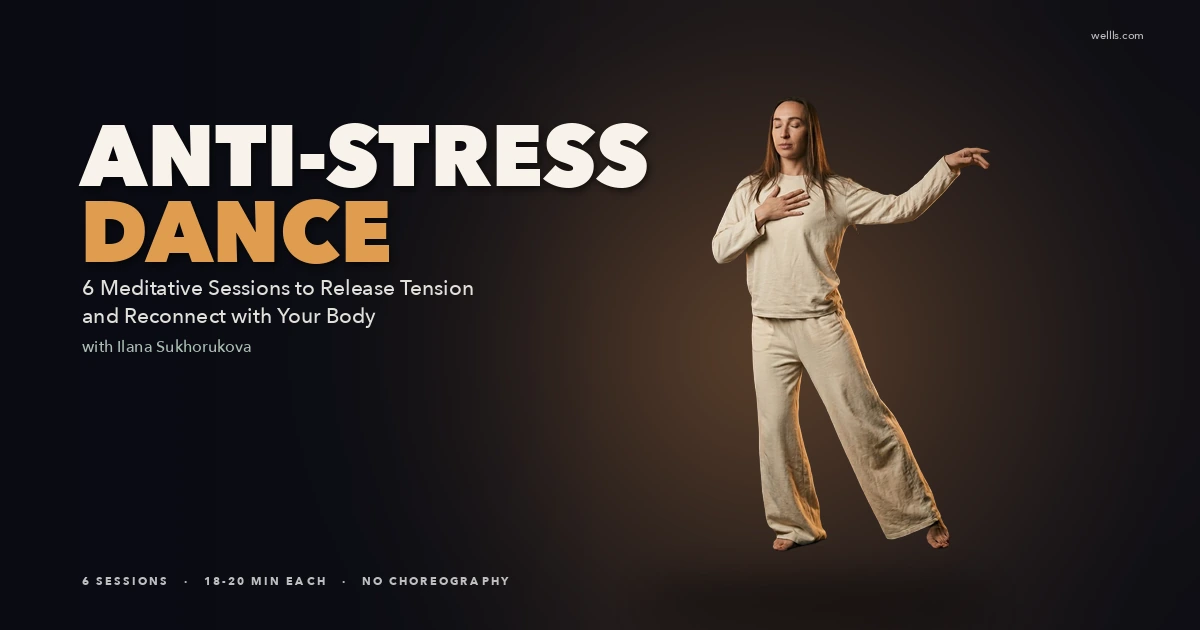
Anti-Stress Dance
6 Meditative Dance Sessions to Release Tension and Reconnect with Your Body
49 scientific sources
Start course
Anxiety in Perimenopause — 8-Week Evidence-Based Program
CBT, movement, and hormonal science for women whose alarm system lost its off switch
140 scientific sources
Start course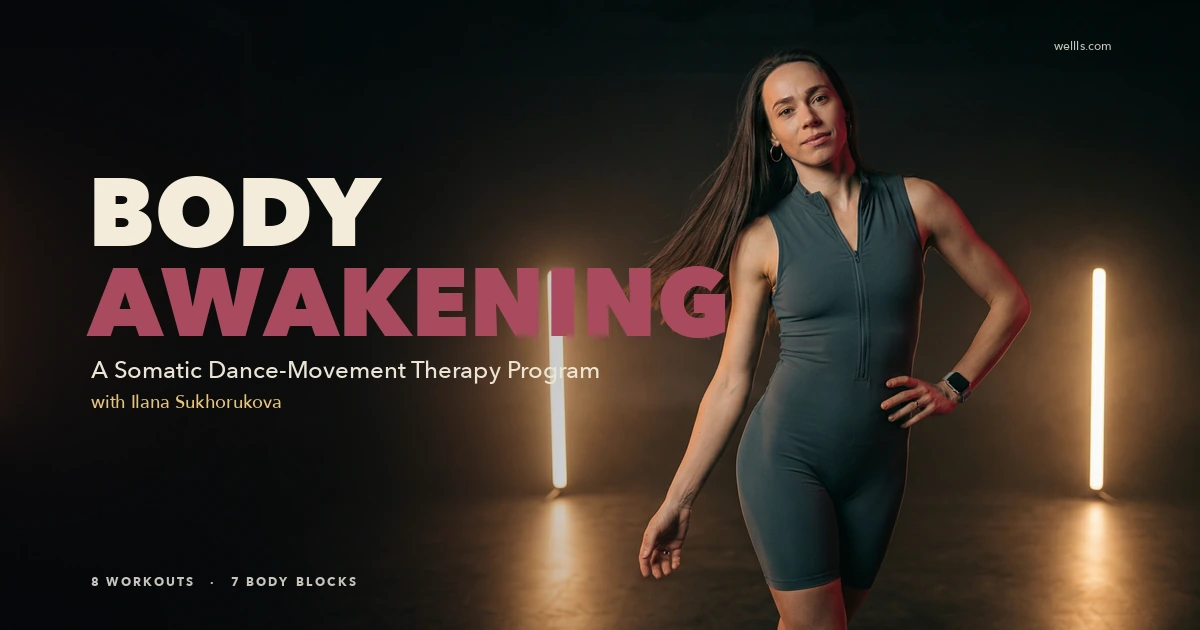
Body Awakening — An 8-Workout Dance-Movement Therapy Program for Releasing the Seven Body Blocks with Ilana Sukhorukova
Eight 15- to 20-minute somatic dance-movement sessions rooted in Wilhelm Reich's seven-segment theory of body-held emotional tension. Seven workouts release one block each — eyes, jaw, neck, chest, diaphragm, belly, pelvis — and the eighth integrates all seven.
49 scientific sources
Start course