Perimenopause insomnia affects 40-60% of women. Progesterone decline disrupts GABA sleep pathways while estrogen loss fragments REM architecture.
Why can't I sleep anymore? Perimenopause insomnia explained.
Affects 40-60% of women during the menopause transition (Baker et al., 2018)
“I want to sleep 8 hours like everyone else.”

Dr. A. Rybakova, Dr. A. Rybakov · Lifestyle Medicine
For informational purposes only. Not a substitute for professional medical advice.
Three in the morning. Again.
You know the exact pattern by now. Eyes open. Heart already running. Brain already cataloguing everything that could go wrong tomorrow, next week, ever. You lie there doing the math: if I fall asleep right now I can still get four hours. Then three. Then two. Then the sky starts to lighten and the math stops mattering.
Key takeaways
- Perimenopause insomnia affects 40-60% of women.
- Progesterone decline disrupts GABA sleep pathways while estrogen loss fragments REM architecture.
- Progesterone-allopregnanolone-GABA pathway decline
- Estrogen-mediated thermoneutral zone narrowing (KNDy neurons)
The Science Behind Perimenopause Insomnia
You used to be a good sleeper. That sentence contains a grief that most sleep articles never acknowledge. You were not always this way. Something changed, and the change was not behavioral. It was biological. If you can't sleep during perimenopause, you are not alone — and this is not a willpower problem.
I want to start there because every woman I have spoken to about perimenopause insomnia begins with the same bewildered tone. She describes what sleep used to be. Easy. Automatic. Something she never thought about. And then she describes what it is now: a nightly negotiation with a body that will not cooperate, a mind that will not quiet, and a medical system that keeps telling her to try chamomile tea.
Perimenopause insomnia affects 40 to 60 percent of women during the menopause transition. I want to repeat that number because it deserves to land. Not 10 percent. Not a rare side effect. Four to six out of every ten women going through this transition will develop clinically significant menopause sleep problems. And yet when I searched for perimenopause-specific insomnia treatment protocols, I found a handful of academic papers, a few Cleveland Clinic web pages, and a vast wasteland of generic sleep hygiene advice that was clearly written for people whose sleep systems are not being disassembled from the inside.
That gap between the prevalence of this problem and the quality of information available to the women experiencing it is what this page exists to address. Not with platitudes. With mechanism. With evidence. With the kind of specificity that lets you walk into your next doctor's appointment armed with knowledge instead of just desperation.
Three hormones drive perimenopause insomnia. Progesterone. Estrogen. Cortisol. Each one disrupts sleep through a distinct pathway, and in most women, all three pathways are compromised simultaneously. This is not a simple problem. The fact that it is treated as one is part of why so many women feel dismissed.
Your body used to make its own sleep medication
Progesterone is not just a reproductive hormone. I need you to know this because the framing matters. When your doctor says your progesterone is declining, you probably think about fertility. But progesterone metabolizes into allopregnanolone, a neurosteroid that binds directly to GABA-A receptors. The same receptor sites targeted by benzodiazepines. The same receptor sites targeted by Ambien.
Your body was manufacturing its own sedative. Every cycle. Every month. For decades. And now production is dropping, and nobody mentioned that your endogenous sleep medication was going to disappear.
Jerilynn Prior at the University of British Columbia has documented this pathway meticulously. Her work shows that progesterone decline begins in the mid-thirties, often while cycles still appear completely regular. The woman has no idea her anxiolytic and sedative system is being dismantled. She just knows she can't sleep. Perimenopause has quietly dismantled the system. She notices it at first as a minor annoyance, a night or two of difficulty. Then it becomes a pattern. Then it becomes a crisis.
The GABA connection matters clinically because it explains why standard sleep aids often fail for perimenopause insomnia. Melatonin, the supplement every well-meaning friend recommends, works on circadian timing. It shifts when you feel sleepy. It does not address the GABA deficit that is preventing your nervous system from downshifting. Antihistamines like diphenhydramine work through sedation, but they suppress REM sleep and leave you groggy. They are a hammer for a problem that requires a surgeon.
What actually addresses the GABA pathway is either micronized progesterone prescribed by a doctor who understands the mechanism, or CBT-I which retrains the conditioned arousal response. Or both. I find it telling that the two most effective interventions for perimenopause insomnia are the two that most women have never been offered. A 2025 systematic review by Moon and colleagues confirmed that CBT significantly improved both Pittsburgh Sleep Quality Index scores and Insomnia Severity Index scores in menopausal women. That is not a single trial. That is a meta-analysis. And yet the default prescription remains a sleeping pill and a pamphlet.
When your thermostat breaks at midnight
The hot flash that wakes you at 3 AM is not a random event. It is a thermoregulatory failure mediated by estrogen's effect on the hypothalamus, and understanding the mechanism turns an inexplicable symptom into a treatable one.
Your hypothalamus maintains a thermoneutral zone. Think of it as the temperature range within which your body does not need to actively heat or cool itself. In premenopausal women, this zone is roughly two degrees wide. During perimenopause, as estrogen fluctuates, the zone narrows. Sometimes to almost nothing. A temperature shift of half a degree that your body would previously have ignored now triggers a full vasomotor response:
- Vasodilation (blood vessel dilation to dump heat)
- Sweating
- Flushing
- Heart rate acceleration Your body's fire alarm is going off for what used to be background noise.
The KNDy neurons in the hypothalamus are at the center of this. KNDy stands for kisspeptin, neurokinin B, and dynorphin. These neurons regulate the hypothalamic thermostat, and they are exquisitely sensitive to estrogen levels. When estrogen drops, neurokinin B activity increases, the thermoneutral zone narrows, and the threshold for triggering a hot flash drops. This is why the new FDA-approved drug fezolinetant works by blocking the neurokinin 3 receptor directly. And why elinzanetant, approved in October 2025, reduces hot flashes by 74 percent while also improving sleep. It targets the mechanism, not the symptom.
But here is the piece that connects to insomnia specifically. The vasomotor event does not just wake you. It activates the sympathetic nervous system. Heart rate increases. Cortisol spikes. The body shifts from parasympathetic rest into sympathetic arousal. And returning to sleep after sympathetic activation is neurologically expensive. It takes time. It takes the cortisol to clear. It takes the core temperature to restabilize. Many women describe falling back asleep 60 to 90 minutes after a night sweat. That is not weakness or poor sleep habits. That is the time required for the autonomic nervous system to stand down.
So when your doctor tells you that hot flashes are uncomfortable but not dangerous, ask them about the downstream sleep architecture damage. Ask about the cumulative cortisol exposure. Ask about the cognitive effects of chronically fragmented slow-wave sleep. The flash itself lasts minutes. The consequences last all day. This thermoregulatory mechanism is one of the primary drivers of perimenopause insomnia, and understanding it changes the treatment approach entirely.
Key mechanisms
Effects of cognitive behavioral therapy on sleep quality and insomnia severity index in women with menopausal insomnia:...
Women's health nursing (Seoul, Korea)
Hee-Jin Moon; Se-Na Yu; Myung-Haeng Hur
View sourceEffectiveness of Acupuncture and Acupressure for Improving the Sleep Quality of Menopausal Women: A Meta-Analysis.
Iranian journal of medical sciences
Leila Eskandari; Afsaneh Keramat; Marzieh Rohani-Rasaf
View sourceAssociations of physical activity and sedentary behavior with insomnia in middle-aged and older adults: a...
Frontiers in public health
Yiying Lu; Min Liu; Sijing Chen; Xiujun Liu
View sourceHeart Rate Variability Biofeedback Training Can Improve Menopausal Symptoms and Psychological Well-Being in Women with...
Current oncology (Toronto, Ont.)
Karina Dolgilevica; Elizabeth Grunfeld; Nazanin Derakshan
View sourceExploring the Overlooked Depression, Anxiety, Insomnia and Fibromyalgia Syndrome Burden in Arab Women with Type 2...
Medicina (Kaunas, Lithuania)
Omar Gammoh; Abdelrahim Alqudah; Maysa Alswidan; Lamia Abu Shwiemeh; Hanan Abu Shaikh; Talal Massad; Sereene Al-Jabari; Abdel-Ellah Al-Shudifat; Jafar Alsheyyab; Ammena Y Binsaleh
View sourceEffect of Aerobic Exercise Training on Sleep and Core Temperature in Middle-Aged Women with Chronic Insomnia: A...
International journal of environmental research and public health
Pauline Baron; Éric Hermand; Valentin Bourlois; Thierry Pezé; Christophe Aron; Remi Lombard; Rémy Hurdiel
View source



Talk to Dr. Wellls — free consultation
4 free messages — no account required
Dr. Wellls AI
Quick start — tap or speak:
Powered by Lifestyle Medicine evidence. Not a substitute for medical advice.
You're Not Alone
women are talking about insomnia right now
Thousands of women have been through the same thing. Here's what they say.
“I'm so ill with insomnia. I've had enough. I just can't sleep night after night, it's been going on for years. It's debilitating and I'm literally disabled with it. How am I supposed to live and carry on during the day with no sleep?”
“I'm here and I'll be wide awake... Until 5:45 when I start to fall back asleep in time for the alarm at 6”
“The ice pack seems to have worked? I tried it last night, and I fell back asleep! I rarely fall back asleep. And I have had chronic insomnia all my life, getting worse with peri. This is kind of amazing.”
+ 3 more stories from real women
Why can't you sleep — and what will actually fix it?
Get your personalized sleep profile in 5 minutes. Discover the pattern behind your sleepless nights and what clinically works.
1,241 women got their profile this month
Free · 5 min · 100% private
This is not a clinical assessment. For medical concerns, consult a healthcare provider.
Take a moment for yourself
These evidence-based techniques can help manage insomnia symptoms right now.
Curated Exercise Sets
4 personalized routines with 17 exercises from professional trainers

The many faces of insomnia
5 distinct patterns we've identified from real women's experiences
Progesterone is your body's own sleep medication. Not a metaphor. Progesterone metabolizes into allopregnanolone, which binds directly to GABA-A receptors. The same receptors that Ambien targets. And it starts declining in your mid-thirties, often years before your period changes. So your built-in sedative disappears while your doctor tells you to try melatonin gummies.
From our data
In our dataset of 248 insomnia posts, 65% came from women in perimenopause or their 40s. The average severity rating was 3.59 out of 5. When I looked at the co-occurrence data, insomnia linked to sleep-quality-decline at 0.18 weight and early-waking at 0.15. Thirty-seven women described themselves as desperate. Not frustrated. Desperate. That word has clinical weight and we need to stop treating it as dramatic.
Connected problems
What women with insomnia also experience
Your personalized protocol
A lifestyle medicine approach to insomnia, built on 6 evidence-based pillars
Establish circadian anchors
Fixed wake time every day, including weekends. Morning outdoor light within 30 minutes. Evening dim lighting after 8 PM. These three anchors are the foundation of circadian rhythm regulation. Non-negotiable even when exhausted.
Build the exercise habit
3-4 sessions per week of moderate aerobic exercise. Walking, cycling, swimming. Timing matters: morning or early afternoon is best. Evening exercise can delay sleep onset. Target 30 minutes minimum. The sleep benefits take 6-8 weeks of consistency.
Nutrition for sleep architecture
Increase tryptophan-rich foods (turkey, eggs, nuts, seeds). Add magnesium-rich foods (dark leafy gre...
Stress deactivation protocol
10 minutes of body scan meditation before bed. Progressive muscle relaxation for the 3 AM waking. Jo...
Social rhythm alignment
Regular meal times, social interaction during daylight hours, evening winding-down rituals shared wi...
Medical evaluation and optimization
Request comprehensive hormone panel including progesterone, estradiol, FSH, thyroid. Discuss CBT-I r...
3,800 women explored their insomnia plan this month
Start your protocolHow Insomnia affects your body
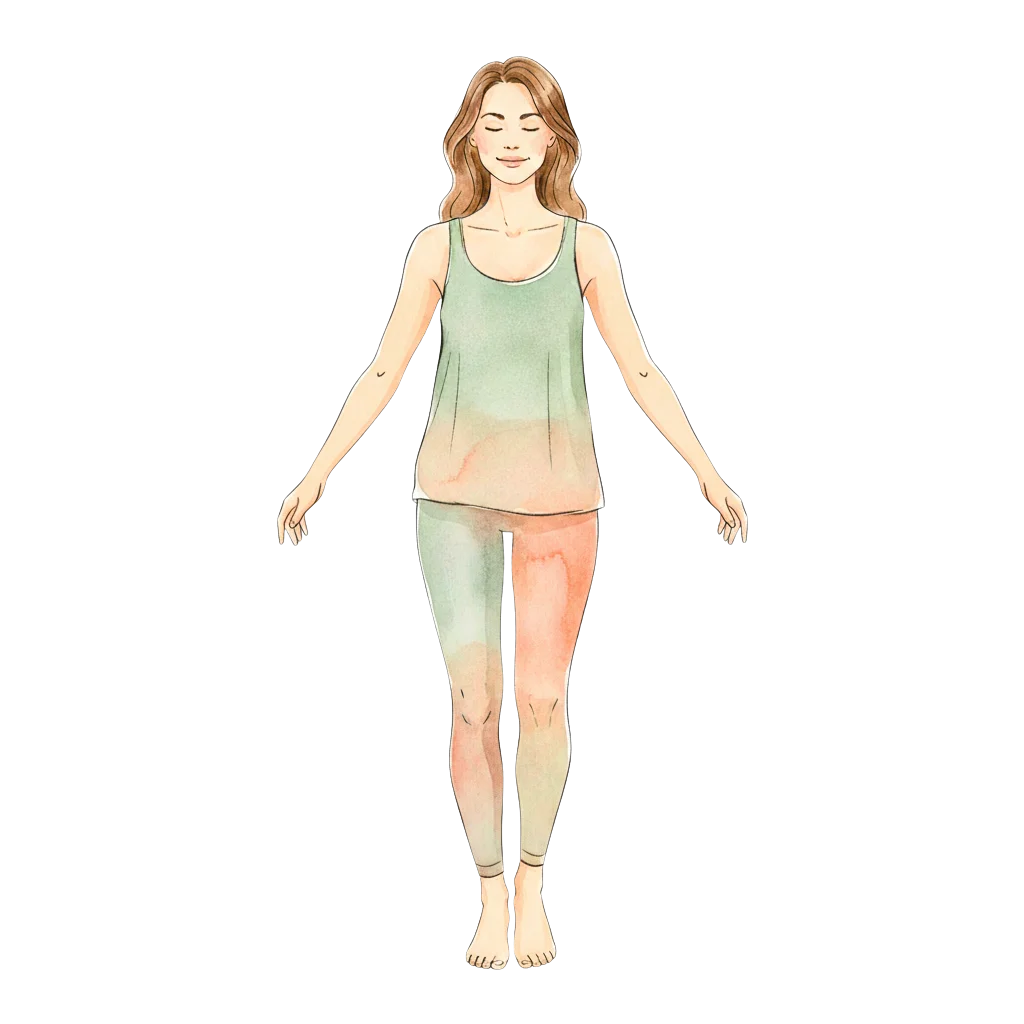
Tap body zones to discover connected symptoms and related conditions.
Join 56+ women discussing insomnia
Real experiences shared across Reddit, TikTok, and health forums
I was up at 2am scrubbing the kitchen floor on my hands and knees during my last pregnancy. My husband about lost his mind. I told him I needed to clean the kitchen floor before the baby came(sounds...
Sleep Hygiene: Train Your Brain to Fall Asleep and Sleep Better
When my clients come in for treatment for some of their challenges like depression anxiety or relational problems, one of the most common associated problems that they have is difficulty sleeping....
bruh i hate it #foryou #sleep #insomnia
bruh i hate it #foryou #sleep #insomnia
Reading others' stories is the first step. Join to share yours.
Community
A safe space for women navigating insomnia
Frequently asked questions
Common questions about Insomnia
How we research and fact-check
Every article on Wellls is researched using peer-reviewed medical literature, clinical guidelines, and real patient experiences from 248 online discussions.
Sources: We reference 48 PubMed-indexed studies, ACOG/NAMS clinical guidelines, and validated screening tools.
Review: Content is written by our editorial team, enriched from a medical knowledge base of 15,000+ sources. Evidence standards and clinical methodology guided by our Medical Advisory Board: Dr. Alexandra Rybakova and Dr. Alexander Rybakov, Lifestyle Medicine Physicians with 35+ years combined clinical practice.
This content is for informational purposes only and does not constitute medical advice. Our editorial standards · Medical advisory board
References
48 sources reviewed for this insomnia guide
- 1.
- 2.
- 3.
- 4.
- 5.
- 6.
- 7.
- 8.
- 9.
- 10.
History of updates
Current version (March 11, 2026) — Content reviewed and updated based on latest research
First published (February 17, 2026)
Explore related problems
Women who experience insomnia often also deal with these
Your personalized plan is ready
Three in the morning again. You already know the ceiling above your bed better than you know the inside of your eyelids. What you did not know, until right now, is that your body's built-in sedative has been disappearing for years while everyone told you to try melatonin. Your personalized insomnia protocol is based on the specific mechanism driving your sleeplessness, not generic advice you have already tried.
3,800 women explored their insomnia plan this month
Free assessment · Takes 2 minutes · No account required
Medical disclaimer: This content is for informational purposes only and does not constitute medical advice, diagnosis, or treatment. Always consult a qualified healthcare provider for personal medical decisions. Content is based on peer-reviewed research and updated regularly. Learn about our editorial standards.