Random panic attacks in women over 35 result from progesterone decline reducing neurosteroid allopregnanolone. 18% of midlife women report them.
Am I Having a Heart Attack or a Panic Attack? What Nobody Told You About Hormones and Terror
Affects approximately 1 in 10 adults; panic disorder is twice as common in women as in men, with peak onset between ages 30 and 50
“Insomnia due to severe anxiety, jolting awake, fearing death, nocturnal panic attacks CURE — watch my free recovery webinar in bio 🤍”

Dr. A. Rybakova, Dr. A. Rybakov · Lifestyle Medicine
For informational purposes only. Not a substitute for professional medical advice.
You were in the cereal aisle. Just standing there, comparing granola prices, and your heart detonated. Not a flutter. An explosion. Your vision narrowed, your hands went numb, and your brain screamed one word: dying. You weren't dying. But try telling that to a body that has decided, with absolute biochemical conviction, that the Trader Joe's on a Tuesday morning is a life-threatening emergency. Random panic attacks don't arrive with a warning or a reason you can point to. They just detonate. And if you're a woman between 35 and 50, there is a very specific, very measurable, very infuriating hormonal explanation that almost nobody bothers to mention.
Key takeaways
- Random panic attacks in women over 35 result from progesterone decline reducing neurosteroid allopregnanolone.
- 18% of midlife women report them.
- allopregnanolone_withdrawal_GABA_disruption
- dual_serotonergic_circuit_instability
The Biology of Random Panic Attacks in Women
Random panic attacks in women over 35 are not random. I need to say that again because the word matters. They feel random because the trigger is invisible: a hormonal shift that rewires your brain's threat detection system without your knowledge or consent. The science has been clear for over a decade. The clinical translation has been catastrophic.
I have read hundreds of posts from women describing random panic attacks that appeared in their late thirties or forties with no clear cause. No trauma. No life crisis. No history of anxiety disorders. Just a Tuesday afternoon in the Target parking lot when the heart started hammering, the vision tunneled, and the absolute certainty of dying descended like a curtain. Then the ER visit. The EKG that showed nothing. The doctor who said it was just anxiety and handed over a prescription with a shrug.
What happened was not random. It was progesterone.
Progesterone is the first hormone to decline in perimenopause, often years before your period changes noticeably. It metabolizes into allopregnanolone, a neurosteroid that functions as your brain's built-in benzodiazepine. When it drops, your brain's panic circuitry loses its primary inhibitor. The random panic attacks are actually predictable panic attacks with an invisible trigger.
My frustration with how the medical system handles this is significant. When I started tracking what women were being told about their random panic attacks, the pattern was consistent: cardiac workup (appropriate), psychiatric referral (reasonable), hormone evaluation (almost never). That third step is the one that would change everything for many of these women. But nobody orders it.
If you are a woman experiencing what feel like random panic attacks, especially if they started after 35, this page exists because you deserve the actual science of what is happening in your body. Not reassurance. Not breathing techniques packaged as solutions. The mechanism. The evidence. And the multi-layered treatment approach that actually works.
The research I am about to walk you through will make you angry. Not because the science is bad. Because the science is good and the implementation is absent.
Your brain's panic switch lost its off button
Progesterone converts to allopregnanolone, a neurosteroid that binds GABA-A receptors with potency rivaling prescription benzodiazepines. When progesterone drops rapidly during perimenopause, the periaqueductal grey, your brain's raw panic generator, loses its primary inhibitor. Lovick's 2014 research at the University of Birmingham demonstrated that this withdrawal triggers upregulation of extrasynaptic GABA-A receptors on inhibitory interneurons, making the panic circuit more excitable. The smoke detector loses its muffler. Every minor autonomic fluctuation, a heart rate blip, a temperature shift from a hot flash, gets read as an emergency.
I want to translate what that means for your lived experience. You are sitting at your desk. Your heart rate increases slightly because you stood up too fast. Normally, allopregnanolone would dampen the signal before it reached conscious awareness. But allopregnanolone is depleted. The signal reaches the periaqueductal grey unchecked. That brain region does not do nuance. It does full-scale threat response: adrenaline dump, cardiac acceleration, respiratory changes, tunnel vision, the conviction that death is imminent. That is the anatomy of your random panic attacks.
What makes this particularly cruel is the adrenaline surge itself causes physical symptoms that confirm the brain's false alarm. Your heart pounds harder. Your breathing becomes shallow. Your chest tightens. You interpret these as evidence of something catastrophically wrong. Which triggers more adrenaline. The cycle feeds itself.
And because nobody told you about progesterone and GABA receptors, you go to the ER convinced something is wrong with your heart. The ER does what it should: rules out cardiac events. But then it stops. Nobody mentions that the random panic attacks have a hormonal architecture. Nobody suggests that what your brain is missing is not courage or calm but a specific neurosteroid that used to be produced in abundance and no longer is.
Two panic pathways, both hormone-dependent
Donner and Lowry's 2013 review revealed two distinct serotonergic circuits in the dorsal raphe nucleus: one for generalized anxiety, one for raw panic. Both are modulated by CRF receptors (specifically crfr1 and crfr2) whose expression depends on reproductive steroid hormones. Both become unstable when estrogen and progesterone fluctuate. This is why random panic attacks in women present differently than in men, and why treatments targeting only serotonin through SSRIs often fail to address the GABA-mediated panic component.
I find this dual-pathway research essential because it explains something women tell me constantly: my anxiety medication helped the general worry but not the panic. That is not treatment failure. That is two different circuits. The SSRI is modulating one pathway while the GABA-mediated pathway, the one driving the acute terror, remains underserved.
Estrogen also plays a direct role. Estrogen modulates serotonin receptor sensitivity, and when estrogen becomes erratic in perimenopause, the serotonin system destabilizes alongside the GABA system. Two separate neurochemical disruptions, both hormone-dependent, both causing anxiety through different mechanisms, both landing on the same woman who is being treated as though she has a single, simple anxiety disorder.
The clinical implications should be obvious but rarely are. Random panic attacks in midlife women may require a combined approach: something that addresses the GABA deficit (progesterone, magnesium, certain forms of therapy), something that stabilizes serotonin (SSRIs, exercise, nutrition), and something that regulates the HPA axis stress response that amplifies everything (stress reduction, sleep optimization, cortisol management). The women who improve most are the ones whose providers address all three layers. The ones who do not improve are usually the ones whose providers addressed one.
This is why I refuse to call random panic attacks a simple anxiety disorder. It is at minimum a three-system disruption masquerading as a single diagnosis.
Key mechanisms
Deep scientific content for Panic attacks is coming in Wave 3.
Our team is reviewing research papers and clinical guidelines.


Talk to Dr. Wellls — free consultation
4 free messages — no account required
Dr. Wellls AI
Quick start — tap or speak:
Powered by Lifestyle Medicine evidence. Not a substitute for medical advice.
You're Not Alone
women are talking about panic attacks right now
Thousands of women have been through the same thing. Here's what they say.
“Is it normal to have panic attacks for no good reason when you're perimenopausal?”
“Went to the ER, diagnosed with a 'big' panic attack”
“Is there a hormonal fix for panic attacks in peri?”
+ 3 more stories from real women
Understanding Your Panic Attacks
A brief assessment to understand what your panic looks like, when it hits, and what might actually be driving it.
1,212 women got their profile this month
Free · 5 min · 100% private
This is not a clinical assessment. For medical concerns, consult a healthcare provider.
Take a moment for yourself
These evidence-based techniques can help manage panic attacks symptoms right now.
Curated Exercise Sets
4 personalized routines with 19 exercises from professional trainers
Panic Attacks — Emergency Relief (NO breath holds)

Linda Chambers
Professional Trainer
Panic Attacks — Breathwork Morning Practice

Petra Kapiciakova
Professional Trainer
The many faces of panic attacks
4 distinct patterns we've identified from real women's experiences
You bolt upright at 2 AM drenched in sweat, heart slamming against your ribs, absolutely certain something catastrophic is happening inside your chest. There's no nightmare you can remember. No loud noise. Just pure, sourceless dread that yanks you from deep sleep into a state of animal terror. Nocturnal panic attacks hit during the transition from stage 2 to stage 3 sleep, when your brain is at its most vulnerable to autonomic surges.
From our data
Here's what gutted me when I found it: Jordan Smoller's team at Harvard, studying 3,369 postmenopausal women in the Women's Health Initiative, found that 17.9% reported panic attacks in just the previous six months. Nearly one in five. And nocturnal attacks were the ones women described as the most terrifying, because you can't reason with a brain that's already in fight-or-flight before you're even conscious.
Connected problems
What women with panic attacks also experience
Your personalized protocol
A lifestyle medicine approach to panic attacks, built on 6 evidence-based pillars
Nervous system audit
Track panic triggers, sleep quality, cycle phase. Start daily cold water face immersion and 5-minute breathwork. Eliminate caffeine after noon.
Movement as medicine
Add 30 minutes of moderate aerobic exercise 4-5 days per week. Walking counts. The meta-analysis data shows anxiety reduction at this dose. Add yoga 1-2 times per week for vagal tone.
Sleep architecture repair
Fixed wake time within 30 minutes daily. No screens 60 minutes before bed. Bedroom temperature 65-68...
Nutritional GABA support
Increase foods high in magnesium (dark leafy greens, pumpkin seeds), B6 (chickpeas, salmon), and try...
Social nervous system co-regulation
Polyvagal theory shows that safe social connection regulates the autonomic nervous system. Schedule ...
Professional integration
If panic persists despite lifestyle changes, seek a menopause-informed clinician for hormonal evalua...
2,847 women explored their panic attack plan this month
Start your protocolHow Panic attacks affects your body
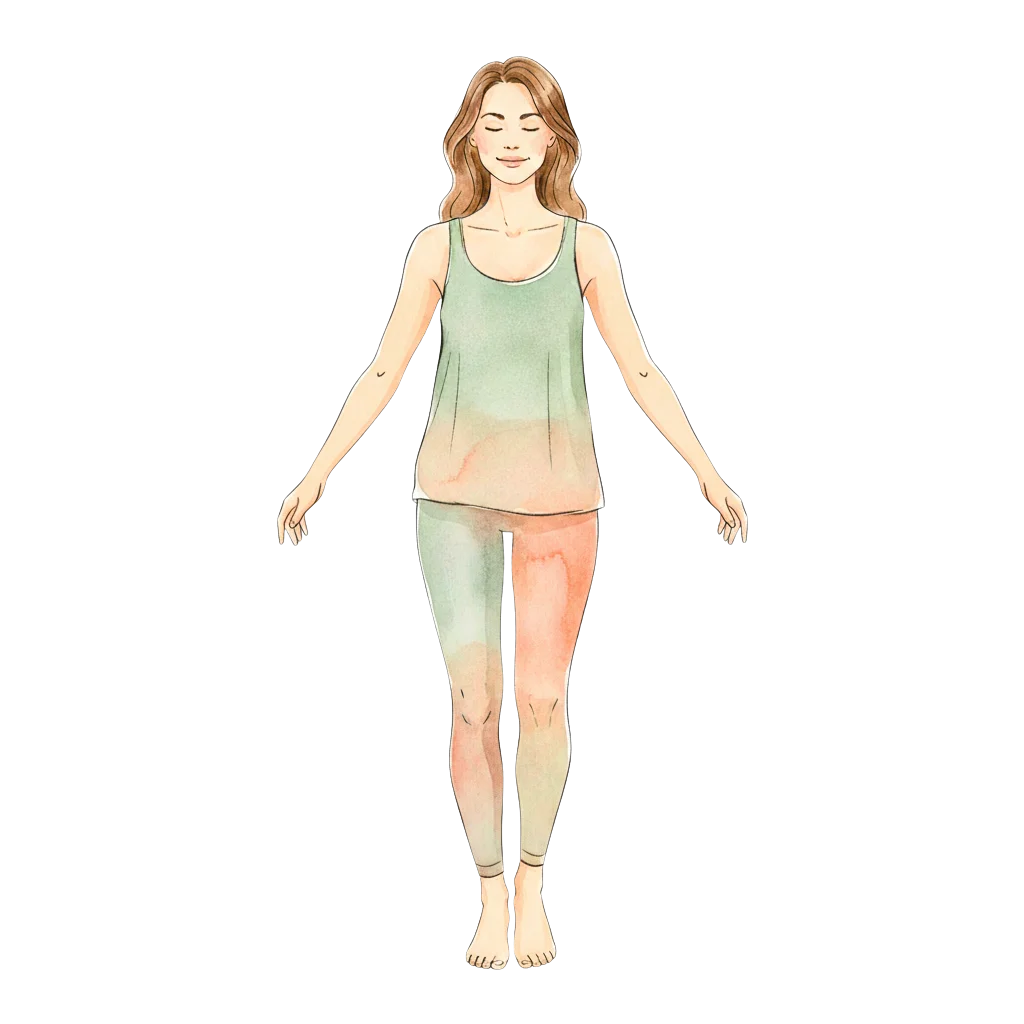
Tap body zones to discover connected symptoms and related conditions.
Join 71+ women discussing panic attacks
Real experiences shared across Reddit, TikTok, and health forums
this video will remove any anxiety or panic you're experiencing #anxiety #hypnosis #hypnotism #panic
this video will remove any anxiety or panic you're experiencing #anxiety #hypnosis #hypnotism #panicattack #anxietyrelief #anxietydisorder #fyp #foryou #foryoupage
You’re safe here, have you been through this? #foryou #anxiety #anxietydisorder #anxietyrelief #anxi
You’re safe here, have you been through this? #foryou #anxiety #anxietydisorder #anxietyrelief #anxietyattack #panicattack #MentalHealth
Be honest… What’s one physical symptom of anxiety that made you think something was seriously wrong
Be honest… What’s one physical symptom of anxiety that made you think something was seriously wrong with your health? Maybe it was: ❤️ A racing heart that felt like a heart attack 🌫️ Feeling...
Reading others' stories is the first step. Join to share yours.
Community
A safe space for women navigating panic attacks
Frequently asked questions
Common questions about Panic attacks
How we research and fact-check
Every article on Wellls is researched using peer-reviewed medical literature, clinical guidelines, and real patient experiences from 34 online discussions.
Sources: We reference 48 PubMed-indexed studies, ACOG/NAMS clinical guidelines, and validated screening tools.
Review: Content is written by our editorial team, enriched from a medical knowledge base of 15,000+ sources. Evidence standards and clinical methodology guided by our Medical Advisory Board: Dr. Alexandra Rybakova and Dr. Alexander Rybakov, Lifestyle Medicine Physicians with 35+ years combined clinical practice.
This content is for informational purposes only and does not constitute medical advice. Our editorial standards · Medical advisory board
References
48 sources reviewed for this panic attacks guide
- 1.
- 2.
- 3.
- 4.
- 5.
- 6.
- 7.
- 8.
- 9.Enomoto H et al. Independent association of palpitation with vasomotor symptoms and anxiety
- 10.Carpenter JS et al. MsFLASH analysis of diurnal salivary cortisol and palpitations
History of updates
Current version (March 11, 2026) — Content reviewed and updated based on latest research
First published (March 7, 2026)
Explore related problems
Women who experience panic attacks often also deal with these
Your personalized plan is ready
Seventeen point nine percent. Nearly one in five. That's the number of postmenopausal women reporting panic attacks in a six-month window. If your body has decided that Tuesday mornings are emergencies, you deserve more than a leaflet about deep breathing. Your personalized protocol is inside.
2,847 women explored their panic attack plan this month
Free assessment · Takes 2 minutes · No account required
Medical disclaimer: This content is for informational purposes only and does not constitute medical advice, diagnosis, or treatment. Always consult a qualified healthcare provider for personal medical decisions. Content is based on peer-reviewed research and updated regularly. Learn about our editorial standards.