What do heart palpitations feel like during perimenopause? They feel like a racing, fluttering, skipping, or pounding heart that comes on suddenly at rest. Up to 42% of perimenopausal women experience them due to estrogen decline affecting cardiac ion channels and autonomic balance.
Your Heart Is Not Broken. It Is Hormonal.
Affects up to 40% of perimenopausal women
“Heart palpitations and anxiety. My heart would start pounding out of my chest, even while I was resting.”
For informational purposes only. Not a substitute for professional medical advice.
It happened at 2:17 on a Tuesday afternoon. You were at your desk. Not exercising. Not panicking. Not doing anything that should make your heart slam against the inside of your ribs like it was trying to escape. But there it was. A thud. A skip. Then a flutter that lasted maybe four seconds and felt like forty. You pressed your hand to your chest and sat very still. Waited. It settled. You exhaled. And then the thought arrived: am I having a heart attack? You weren't. Probably. Almost certainly. But nobody had told you that what you just felt has a name, that up to 42% of perimenopausal women experience exactly this, and that the cardiologist who will tell you your EKG looks fine is not wrong but is also not giving you the full story. The full story involves estrogen.
Key takeaways
- What do heart palpitations feel like during perimenopause?
- They feel like a racing, fluttering, skipping, or pounding heart that comes on suddenly at rest.
- Up to 42% of perimenopausal women experience them due to estrogen decline affecting cardiac ion channels and autonomic balance.
Nobody warns you about this one. Hot flashes get the headlines. Insomnia gets the sympathy. Brain fog gets the memes. But the first time your heart lurches sideways at 2pm on a Tuesday, slams three times too hard, then settles back like nothing happened, you do not think "perimenopause." You think "cardiac arrest." You think "I am dying." And then, when the ER tells you everything looks fine, you think "I am going crazy." You are not going crazy. You are almost certainly not dying. And what do heart palpitations feel like during perimenopause? They feel like your heart has developed opinions. A flutter. A skip. A sudden hammering that makes you stop mid-sentence and press your palm flat against your sternum. Sometimes a feeling like a fish flopping in your chest. Sometimes just the eerie awareness that your heart is beating, which is a sensation most of us go decades without noticing. Up to 42% of perimenopausal women and 54% of postmenopausal women report these sensations. That is not rare. That is almost half. And yet this symptom remains what the research literature calls "relatively understudied." The MsFLASH investigators, who analyzed data from 759 midlife women, had to note in their own paper that "little is known about palpitation distress or its correlates." In 2026. Little is known. I find that unacceptable. So here is what is known.
I have read every study I can find. I have talked to cardiologists, endocrinologists, and the women who live with this daily. What follows is the most complete picture I can assemble of what is happening in your chest and why.
The electrical system your doctor forgot to mention
Your heart beats because of electricity, not muscle. Before the squeeze comes the spark. The sinoatrial node fires roughly 100,000 times per day, sending electrical impulses through a precisely choreographed pathway: SA node to atria, AV node pause, bundle of His to ventricles. Every heartbeat you have ever felt is the downstream effect of ions moving through channels in cell membranes. Potassium, sodium, calcium, flowing in and out according to voltage gradients that your body calibrates with extraordinary precision.
Estrogen has its hands on those channels. Not metaphorically. Literally. The systematic review by Gowd and colleagues examined the effect of female sex on cardiac electrophysiology and found that women have faster resting heart rates, longer QTc intervals, and shorter PR and QRS intervals than men. These differences, the authors noted, are "presumed to be due to the small heart size of women and hormonal effects on ion channels." Supraventricular tachycardia in women varies with the menstrual cycle and is more frequent in the luteal phase, inversely correlated with estrogen levels.
I want you to sit with that finding for a moment. Arrhythmia frequency changes with your menstrual cycle. Your heart rhythm is not independent of your hormones. It never was. You just never noticed because estrogen was steady. Now, in perimenopause, estrogen is anything but steady. It surges and plummets, sometimes producing levels higher than you had at 25, sometimes crashing to postmenopausal levels within the same week. Every time it swings, the ion channels in your cardiac cells get a different instruction. The electrical stability your heart relied on for three decades is being disrupted at the cellular level.
The Menopause Racing Heart Pilot Study, one of the first studies to put ambulatory ECG patches on women for 14 to 28 days and have them log palpitations in real time, found a critical difference: women with palpitations had significantly lower heart rate variability and longer runs of atrial tachycardia. Lower HRV means reduced parasympathetic control. Longer atrial tachycardia runs mean the electrical instability is not just perceived. It is measurable. And it tracks with something tangible: vasomotor symptoms and diabetes, not anxiety or somatosensory amplification. These women were not imagining their fluttering hearts. Their hearts were, in fact, electrically misbehaving.
How 42% of women got told it was anxiety
I've read this study three times because the implications are that important. The SWAN study tracked 3,276 women across the menopause transition and identified three distinct palpitation trajectories. Roughly 16% of women experienced a high probability of palpitations clustered around perimenopause and early postmenopause. About 34% had a moderate probability during the same window. And just under 50% maintained a sustained low probability throughout. That first group, the 16%, had a more adverse baseline profile: more vasomotor symptoms, higher depressive symptoms, more perceived stress, greater sleep problems, and higher blood pressure. They were, in the language of the study, "more symptomatic across the board."
But here is the finding that should reshape how you think about this: palpitation trajectories were not associated with subclinical cardiovascular disease. Not with carotid atherosclerosis. Not with arterial stiffness. The women whose hearts were racing and fluttering through perimenopause did not have sicker hearts. They had more symptomatic menopause transitions.
This is where it gets medically complicated and emotionally infuriating. Because the fact that palpitations are not associated with structural heart disease in this population is exactly the finding that allows a dismissive physician to say "it's just anxiety" and send you home. And yes, anxiety and palpitations are deeply entangled. In our post data, anxiety is the single strongest co-occurrence with heart palpitations (weight 0.019). Panic attacks are next. But the entanglement runs deeper than "you're anxious so your heart races."
The MsFLASH cortisol analysis tells a different story. Carpenter and colleagues measured diurnal salivary cortisol in 293 midlife women and found that those with palpitation distress had significantly blunted morning cortisol. Not elevated cortisol, which you would expect from simple anxiety. Blunted cortisol. A flattened cortisol awakening response. This pattern is characteristic of chronic HPA axis dysregulation, the kind you see in burnout, chronic stress exposure, and post-traumatic states. When every covariate was controlled, demographics, clinical variables, vasomotor symptoms, medications, depression, stress, insomnia, palpitation distress was the sole significant predictor of that blunted morning cortisol (P equals 0.02).
That is not anxiety. That is a body running on a depleted stress response system while simultaneously losing its primary cardiac-stabilizing hormone. Telling a woman with that physiology to "just calm down" is like telling someone with a broken thermostat to stop sweating.
Deep scientific content for Heart palpitations is coming in Wave 3.
Our team is reviewing research papers and clinical guidelines.


Talk to Dr. Wellls — free consultation
4 free messages — no account required
Dr. Wellls AI
Quick start — tap or speak:
Powered by Lifestyle Medicine evidence. Not a substitute for medical advice.
You're Not Alone
women are talking about heart palpitations right now
Thousands of women have been through the same thing. Here's what they say.
“After a stint in the ER with some scary heart palpitations at age 37, I started researching. It took me another 6 months, more palpitations, more doctor gaslighting, a million blood tests, and another ER visit, to figure out that I was not dying and it was...”
“Well hi, fellow survivor! I had my first at 38 when I was under a ton of work stress, and was probably in perimenopause too. Just had my second at 48 right before Christmas. First time, it was jaw tension and chest flutters.”
“Heart palpitations and anxiety. My heart would start pounding out of my chest, even while I was resting. My primary and cardio doc ran all sorts of tests. I was convinced I wasn't going to live for the next 6 months and they were missing something. The combo...”
+ 2 more stories from real women
Understanding Your Heart Palpitations
Up to 42% of perimenopausal women experience palpitations. This assessment helps you understand what is happening, identify your trigger pattern, and know when to breathe versus when to call your doctor.
1,974 women got their profile this month
Free · 5 min · 100% private
This is not a clinical assessment. For medical concerns, consult a healthcare provider.
Take a moment for yourself
These evidence-based techniques can help manage heart palpitations symptoms right now.
Curated Exercise Sets
4 personalized routines with 16 exercises from professional trainers
Heart Palpitations — Quick Vagal Reset

Petra Kapiciakova
Professional Trainer

The many faces of heart palpitations
5 distinct patterns we've identified from real women's experiences
Estrogen is not just a reproductive hormone. It modulates ion channels in cardiac cells, influences the QT interval, affects heart rate variability, and helps maintain autonomic nervous system balance. When estrogen fluctuates wildly in perimenopause or drops in menopause, your heart's electrical system loses a stabilizing force it has relied on for decades.
From our data
Women have faster resting heart rates but longer QTc intervals than men. Supraventricular tachycardia varies with the menstrual cycle and is more frequent in the luteal phase, inversely correlated with estrogen levels (Gowd et al.). The Menopause Racing Heart Pilot Study found women with palpitations had significantly lower heart rate variability and longer runs of atrial tachycardia.
Connected problems
What women with heart palpitations also experience
Your personalized protocol
A lifestyle medicine approach to heart palpitations, built on 6 evidence-based pillars
Baseline and Breathing Foundation
Establish 6-breaths-per-minute breathing practice twice daily (morning and before bed). Begin palpitation tracking. Eliminate caffeine after noon. Start magnesium glycinate 200mg before bed.
Movement Introduction
Add 30-minute brisk walks 5 times per week. If already active, add 2 sessions of resistance training. Avoid high-intensity training during weeks when palpitations are frequent. Continue breathing practice.
Sleep Architecture Reset
Set consistent wake time 7 days per week. Keep bedroom at 65-68F. No screens 60 minutes before bed. ...
Nutrition and Supplementation
Increase magnesium to 400mg if tolerated. Add potassium-rich foods (sweet potatoes, spinach, avocado...
Social and Medical Integration
Schedule cardiology workup if not already done. Request full thyroid panel and ferritin alongside st...
Substance Audit and Reassessment
Complete a 2-week alcohol elimination trial. Track palpitation frequency change. If significant impr...
How Heart palpitations affects your body
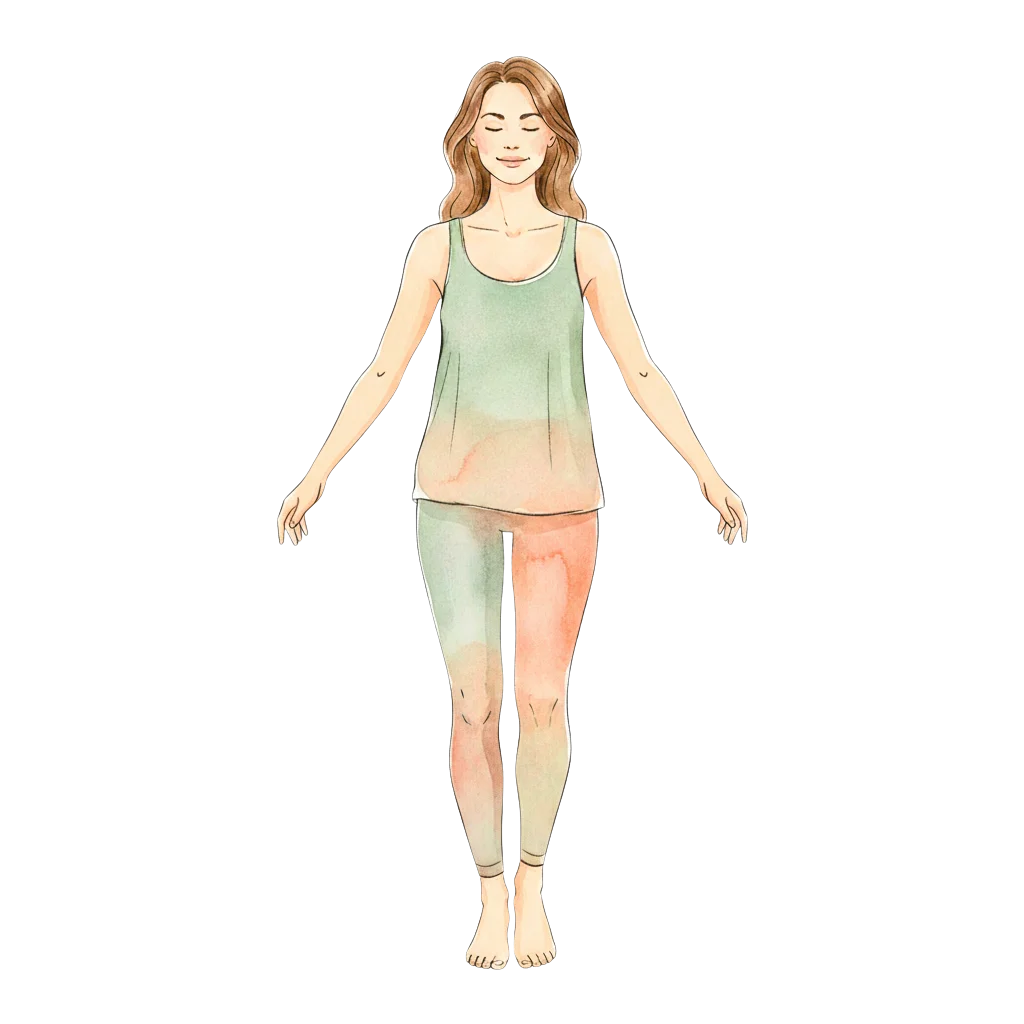
Tap body zones to discover connected symptoms and related conditions.
Join 86+ women discussing heart palpitations
Real experiences shared across Reddit, TikTok, and health forums
After a stint in the ER with some scary heart palpitations at age 37, I started researching. It took me another 6 months, more palpitations, more doctor gaslighting, a million blood tests, and...
Well hi, fellow survivor! I had my first at 38 (a smoker at the time but I quit cold turkey with the diagnosis) when I was under a ton of work stress, and was probably in perimenopause too. Just had...
Heart palpitations and anxiety. My heart would start pounding out of my chest, even while I was resting. My primary and cardio doc ran all sorts of tests. I was convinced I wasn't going to live for...
Community
A safe space for women navigating heart palpitations
Frequently asked questions
Common questions about Heart palpitations
How we research and fact-check
Every article on Wellls is researched using peer-reviewed medical literature, clinical guidelines, and real patient experiences from 3 online discussions.
Sources: We reference 49 PubMed-indexed studies, ACOG/NAMS clinical guidelines, and validated screening tools.
Review: Content is written by our editorial team, enriched from a medical knowledge base of 15,000+ sources. All content follows our evidence-based editorial standards and is cross-referenced with clinical guidelines.
This content is for informational purposes only and does not constitute medical advice. Our editorial standards · Medical advisory board
References
49 sources reviewed for this heart palpitations guide
- 1.Carpenter JS et al. Palpitations in midlife women: the Menopause Racing Heart Pilot Study [PubMed]
- 2.Carpenter JS et al. Review of menopausal palpitations measures [PubMed]
- 3.Carpenter JS et al. Effect of menopausal symptom treatment options on palpitations: a systematic review [PubMed]
- 4.Enomoto H et al. Palpitations across the menopause transition in SWAN: trajectories, characteristics, and associations [PubMed]
- 5.Gowd BMP et al. Effect of female sex on cardiac arrhythmias [PubMed]
- 6.Ciarambino T et al. Chest pain and palpitations in postmenopausal women with mitral valve prolapse [PubMed]
- 7.Carpenter JS et al. MsFLASH analysis of diurnal salivary cortisol and palpitations [PubMed]
- 8.Enomoto H et al. Independent association of palpitation with vasomotor symptoms and anxiety in middle-aged women [PubMed]
- 9.Carpenter JS et al. MsFLASH palpitation distress and its correlates [PubMed]
- 10.Carpenter JS et al. Correlates of palpitations during menopause: A scoping review [PubMed]
History of updates
Current version (March 11, 2026) — Content reviewed and updated based on latest research
First published (March 9, 2026)
Explore related problems
Women who experience heart palpitations often also deal with these
Your personalized plan is ready
Your 6-breaths-per-minute HRV training protocol, personalized trigger stack analysis, and cardiac-menopause integration checklist are inside the Wellls program.
Free assessment · Takes 2 minutes · No account required
Medical disclaimer: This content is for informational purposes only and does not constitute medical advice, diagnosis, or treatment. Always consult a qualified healthcare provider for personal medical decisions. Content is based on peer-reviewed research and updated regularly. Learn about our editorial standards.