Hot flashes at night affect up to 80% of perimenopausal women. KNDy neurons narrow the thermoneutral zone. Median duration: 7.4 years (SWAN).
Why Am I Waking Up Drenched in Sweat Every Night?
Affects up to 75-80% of perimenopausal and menopausal women; median duration 7.4 years (SWAN study)
“Night sweats yet being freezing cold. No one prepares you for this shit.”

Dr. A. Rybakova, Dr. A. Rybakov · Lifestyle Medicine
For informational purposes only. Not a substitute for professional medical advice.
You used to sleep through the night. Seven hours, maybe eight, and you woke up dry and rested and human. Now you surface at 3:30 AM in soaked sheets, heart pounding, skin on fire from collarbone to scalp, and by the time the chill hits you're so awake that sleep feels like something that happened to a different person. That contrast is the whole story. Not the sweat itself. The before and after.
Key takeaways
- Hot flashes at night affect up to 80% of perimenopausal women.
- KNDy neurons narrow the thermoneutral zone.
- Median duration: 7.4 years (SWAN).
- KNDy neuron hyperactivity and thermoneutral zone narrowing
The Science Behind Night Sweats
Hot flashes at night rob you of sleep, sanity, and the illusion that your body is still on your side. There are two versions of you, and they share a bed. The first version fell asleep at 10:30 PM in a cool room, wearing a cotton shirt, tired but comfortable. The second version wakes at 3:17 AM with her chest on fire, sheets damp from collar to hip, heart rate elevated, brain snapping to full alert as if someone flipped a switch labeled EMERGENCY. She throws off the duvet. Within four minutes, she's shivering. By 3:45 she's checked her phone, scrolled through three subreddits about night sweats, considered whether this is perimenopause or something worse, and resigned herself to a day running on cortisol and caffeine.
That contrast between the sleeping self and the drenched self is the whole clinical picture. And yet, when I look at how most medical resources explain night sweats, they flatten the experience into a paragraph about 'vasomotor symptoms' as if what's happening is a technical inconvenience rather than a nightly bodily takeover that fragments your sleep, erodes your cognitive function, and has been linked to increased cardiovascular risk in a 2021 analysis by Thurston and colleagues published in the Journal of the American Heart Association.
I've spent months inside the research on this. The mechanism is fascinating and infuriating in equal measure, because once you understand it, you realize how tractable the problem is and how little most women are told about their options. Hot flashes at night are not just uncomfortable. They are the primary driver of sleep disruption during the menopausal transition, and the downstream consequences of chronic sleep loss affect every system in your body.
Your brain's thermostat has been rewired
Let me walk you through what happens in your hypothalamus during a night sweat, because the precision of this mechanism is genuinely remarkable and I think you deserve to understand it rather than being handed platitudes about 'hormonal changes.'
Deep in your brain's hypothalamus sits the preoptic area, the region responsible for core body temperature regulation. It works like a thermostat, but instead of a single set point, it maintains a thermoneutral zone, a range of core body temperatures (roughly 36.4 to 36.8 degrees Celsius) within which no corrective action is needed. No sweating. No shivering. Just quiet maintenance.
This zone is calibrated, in part, by estradiol. Specifically, estradiol modulates a cluster of neurons called KNDy neurons (an acronym for kisspeptin, neurokinin B, and dynorphin, the three neuropeptides they produce). When estradiol is stable, KNDy neurons fire at a controlled rate. When estradiol fluctuates wildly, as it does in perimenopause, or drops precipitously, as it does after menopause, these neurons lose their regulatory brake. They become hyperactive. They flood the preoptic area with neurokinin B, a neuropeptide that screams at the brain: you are overheating.
The thermoneutral zone narrows. Where your brain once tolerated a 0.4-degree range without reaction, it now triggers a full heat-dissipation cascade from a 0.1-degree shift, something that occurs naturally during the transition between sleep stages. Peripheral blood vessels dilate. Sweat glands activate. Heart rate increases. Skin temperature spikes. You wake up drenched.
(Here is where I want to pause and say something that makes me genuinely angry: this mechanism was identified over a decade ago. KNDy neuron involvement was characterized by Rance and colleagues, refined by multiple labs, and directly led to the development of fezolinetant, an NK3 receptor antagonist FDA-approved in May 2023. The science is not new. The treatment is not new. And yet the median time from symptom onset to appropriate treatment for vasomotor symptoms in American women is still measured in years, not weeks. That gap between knowledge and practice is where women's suffering lives.)
The 2025 review by the Temperature journal confirmed that KNDy neuron hypertrophy during estrogen decline is now considered the primary driver of menopausal thermoregulatory dysfunction, with the narrowed thermoneutral zone as its clinical signature. This is measurable physiology, not a vague 'imbalance.' This is a core aspect of hot flashes at night that deserves clinical attention.
What one night sweat does to a full night of sleep
The sweat itself lasts three to five minutes. The damage to your sleep lasts all night.
Let me explain. Sleep moves through predictable 90-minute cycles: light NREM (stages 1-2), deep NREM (stage 3), and REM. The most restorative work happens in stage 3 and REM. Growth hormone is released during deep NREM. Immune repair runs during deep NREM. Memory consolidation happens during both deep NREM and REM. When a night sweat yanks you out of stage 3, you don't just lose those minutes. You lose the entire cycle. Your brain doesn't pick up where it left off. It restarts from stage 1, light sleep, and by the time you're approaching deep sleep again, another 60 to 90 minutes have passed. If a second episode hits before you complete the cycle, you've now lost two rounds of restorative sleep in a single night.
But it gets more insidious than simple interruption. Haufe, Baker, and Leeners published a systematic review in Sleep Medicine Reviews in 2022 that documented how ovarian hormone decline directly alters sleep EEG patterns independent of vasomotor symptoms. Estradiol promotes GABA-mediated sleep maintenance. Progesterone metabolites, particularly allopregnanolone, act as endogenous sedatives at GABA-A receptors. Both decline during perimenopause. So your brain is losing its thermal calibration and its chemical sleep aids simultaneously.
I cannot overstate how cruel this combination is. Your thermostat wakes you up. Your sedative system can't put you back down. That's not poor sleep hygiene. That's a neurochemical double bind.
A study by Kalmbach and colleagues at Henry Ford Health in 2019 compared CBT-I, sleep restriction therapy, and sleep hygiene education in postmenopausal women with insomnia. CBT-I outperformed both alternatives by substantial margins. Why? Because it addresses the hyperarousal that follows the cortisol spike triggered by each night sweat, not just the 'habits' around sleep. The cortisol piece matters: when a night sweat hits at 3 AM, it prematurely activates your cortisol awakening response, the hormonal signal designed to rise gradually starting around 4-5 AM. Once cortisol is up, willpower alone won't bring it back down. This is a core aspect of hot flashes at night that deserves clinical attention. The mechanism behind hot flashes at night is the same thermoregulatory dysfunction that produces daytime hot flashes, but the sleep disruption adds a compounding layer of harm.
Key mechanisms
Deep scientific content for Night sweats is coming in Wave 3.
Our team is reviewing research papers and clinical guidelines.

Talk to Dr. Wellls — free consultation
4 free messages — no account required
Dr. Wellls AI
Quick start — tap or speak:
Powered by Lifestyle Medicine evidence. Not a substitute for medical advice.
You're Not Alone
women are talking about night sweats right now
Thousands of women have been through the same thing. Here's what they say.
“Please help. I'm walking up several times a night DRENCHED in sweat. I can't regulate my own body temp.”
“Night sweats. WHAT THE FUCK?”
“I've hit perimenopause and let me tell you: night sweats and hot flashes. I will wake up just drenched. I've been going to all our christmas events in tee shirts and tank tops because I'm just so hot. My kids swear that one night when I had to run up to the...”
+ 2 more stories from real women
Understanding Your Night Sweats
A brief assessment to understand your night sweat pattern, what is driving it, and what might actually help you sleep through the night again.
3,929 women got their profile this month
Free · 5 min · 100% private
This is not a clinical assessment. For medical concerns, consult a healthcare provider.
Take a moment for yourself
These evidence-based techniques can help manage night sweats symptoms right now.
Curated Exercise Sets
4 personalized routines with 16 exercises from professional trainers
The many faces of night sweats
3 distinct patterns we've identified from real women's experiences
You know the sequence by now. Heat surges up your chest. Your shirt is wet before you're fully conscious. You throw off the covers, then five minutes later you're freezing. This is not random. Your hypothalamus has lost the ability to read a two-degree temperature shift without sounding a full-body alarm.
From our data
The SWAN study tracked over 3,300 women across 17 years and found that night sweats aren't some brief inconvenience. They persist for a median of 7.4 years. Let that land. Seven and a half years of broken sleep.
Connected problems
What women with night sweats also experience
Your personalized protocol
A lifestyle medicine approach to night sweats, built on 6 evidence-based pillars
Optimize your sleep fortress
Invest in a cooling mattress pad with active temperature control (water-circulating systems outperform passive gel). Set it to 60-64F. Use separate bedding from your partner if they run cold. Install blackout curtains. These changes alone reduce night sweat severity for many women, even without medical treatment.
Eliminate thermal triggers
Cut alcohol completely for 2 weeks and observe the effect on night sweat frequency. Alcohol dilates blood vessels and impairs thermoregulation for 4-6 hours after consumption, making it the single most modifiable trigger. Move dinner earlier, keep it lighter, and avoid capsaicin-heavy foods after 5 PM.
Build consistent movement
Start a 30-minute moderate exercise habit, ideally in the morning or early afternoon. Not within 3 h...
Address the stress amplifier
Chronic stress elevates baseline cortisol levels, which primes the cortisol awakening response to ac...
Nutritional inflammation reduction
Increase phytoestrogen intake through whole food sources: ground flaxseed (2 tbsp daily), edamame, t...
Build your support network and reassess
Connect with other women going through perimenopause. Online communities like r/Menopause and r/Peri...
2,847 women explored their night sweats plan this month
Start your protocolHow Night sweats affects your body
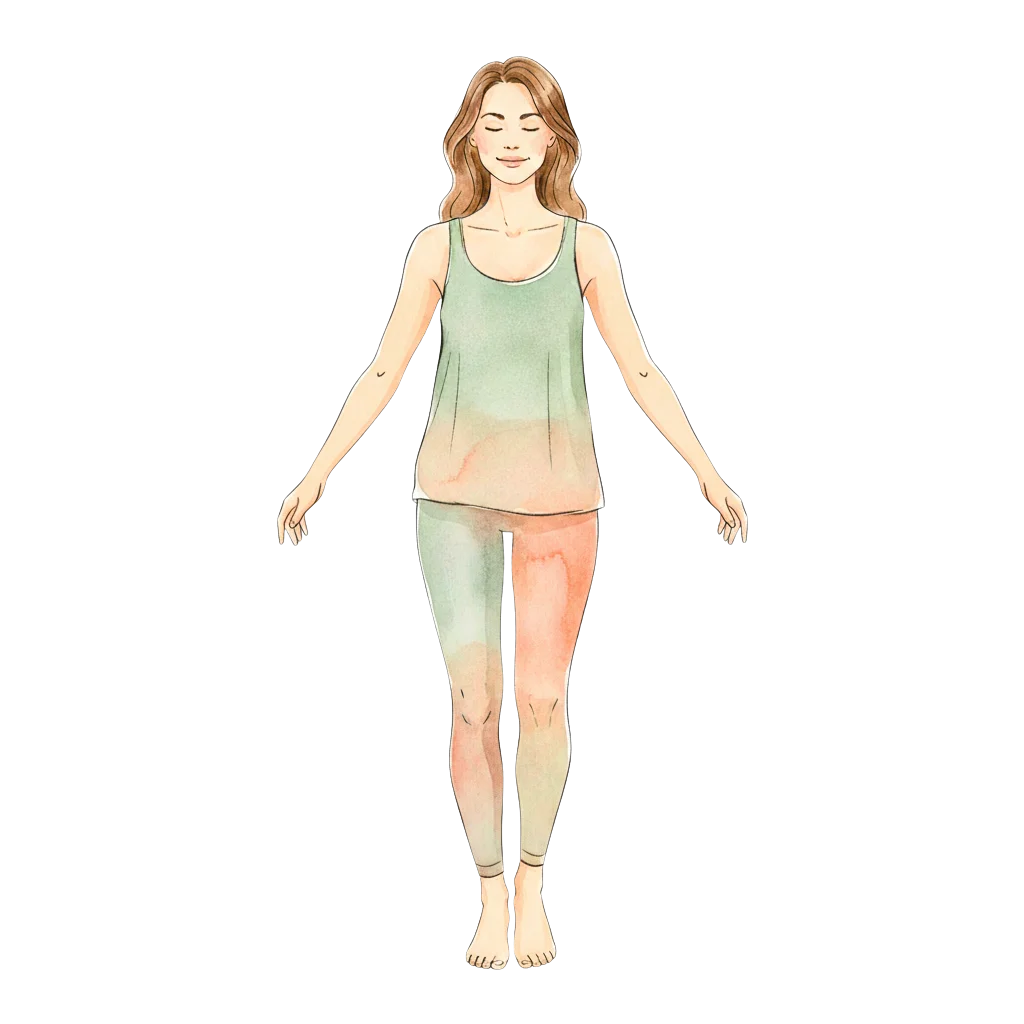
Tap body zones to discover connected symptoms and related conditions.
Join 68+ women discussing night sweats
Real experiences shared across Reddit, TikTok, and health forums
THIS is how I finally cured my night sweats curse 😎 #bed #sleep #foryoupage #hotflashes
THIS is how I finally cured my night sweats curse 😎 #bed #sleep #foryoupage #hotflashes
I heard a podcast about this recently! The journalists tried to get TSA and others in the know to reveal why certain travelers kept having their crotch set off the additional screening alarm. The...
Please help—I’m walking up several times a night DRENCHED in sweat. I can’t regulate my own body temp.
Please help—I’m walking up several times a night DRENCHED in sweat. I can’t regulate my own body temp.
Reading others' stories is the first step. Join to share yours.
Community
A safe space for women navigating night sweats
Frequently asked questions
Common questions about Night sweats
How we research and fact-check
Every article on Wellls is researched using peer-reviewed medical literature, clinical guidelines, and real patient experiences from 107 online discussions.
Sources: We reference 47 PubMed-indexed studies, ACOG/NAMS clinical guidelines, and validated screening tools.
Review: Content is written by our editorial team, enriched from a medical knowledge base of 15,000+ sources. Evidence standards and clinical methodology guided by our Medical Advisory Board: Dr. Alexandra Rybakova and Dr. Alexander Rybakov, Lifestyle Medicine Physicians with 35+ years combined clinical practice.
This content is for informational purposes only and does not constitute medical advice. Our editorial standards · Medical advisory board
References
47 sources reviewed for this night sweats guide
- 1.Physical activity and exercise for hot flashes: trigger or treatment? [PubMed]
- 2.Exercise for vasomotor menopausal symptoms (Cochrane) [PubMed]
- 3.Impact of Exercise on Perimenopausal Syndrome: Systematic Review of RCTs [PubMed]
- 4.Managing menopause (SOGC guidelines) [PubMed]
- 5.Hormone Therapy and Other Treatments for Symptoms of Menopause [PubMed]
- 6.Dietary intake and menopausal symptoms in postmenopausal women: systematic review [PubMed]
- 7.Safety of Fezolinetant: Pooled Analysis of Three Phase 3 Studies [PubMed]
- 8.Complementary therapies for menopausal symptoms: IMS update systematic review [PubMed]
- 9.Red Clover for Hot Flushes: Systematic Review and Meta-Analysis [PubMed]
- 10.Neurokinin 1/3 receptor antagonists for menopausal women: systematic review [PubMed]
History of updates
Current version (March 11, 2026) — Content reviewed and updated based on latest research
First published (March 1, 2026)
Explore related problems
Women who experience night sweats often also deal with these
Your personalized plan is ready
You've been managing this alone. Changing sheets at 3 AM, Googling 'why am I sweating' through bleary eyes, showing up exhausted to a life that doesn't know what you're going through. Our Dr. Wellls can help you build a personalized night-sweat management plan, identify your specific triggers, and prepare you for the medical conversation that gets you real treatment.
2,847 women explored their night sweats plan this month
Free assessment · Takes 2 minutes · No account required
Medical disclaimer: This content is for informational purposes only and does not constitute medical advice, diagnosis, or treatment. Always consult a qualified healthcare provider for personal medical decisions. Content is based on peer-reviewed research and updated regularly. Learn about our editorial standards.