The estrogen and cortisol relationship drives 40+ perimenopause symptoms. Estradiol loss dysregulates the HPA axis, hitting brain, bones, and mood.
What Is Estrogen Actually Doing to Every System in Your Body?
All women experience estrogen decline; perimenopause begins on average at age 47 but can start as early as mid-30s
“Always tired even when your labs come back “normal”? Estrogen dominance can disrupt energy, sleep, and stress hormones — leading to real, persistent fatigue. Your exhaustion is INFORMATION.”


Dr. A. Rybakova, Dr. A. Rybakov · Lifestyle Medicine
For informational purposes only. Not a substitute for professional medical advice.
What if I told you that one molecule protects your brain, your bones, your heart, your skin, your joints, your mood, your memory, your sleep, and your metabolism? And that starting sometime in your mid-thirties, your body begins producing less of it? No warning. No announcement. Just a slow, invisible withdrawal of the chemical scaffolding holding you together. That molecule is estrogen. And the fact that most women learn about its decline only when something breaks is, in my opinion, one of the great failures of preventive medicine.
Key takeaways
- The estrogen and cortisol relationship drives 40+ perimenopause symptoms.
- Estradiol loss dysregulates the HPA axis, hitting brain, bones, and mood.
- Estradiol volatility during perimenopause disrupts brain structure and neurotransmitter production
- Estrogen-cortisol bidirectional relationship amplifies symptoms through HPA axis dysregulation
The Science Behind Estrogen Decline
Estrogen is not one thing. Estradiol, estrone, and estriol serve different functions, and collapsing them into a single word has led to decades of confusion in both medicine and media. Estradiol, the primary and most potent form during reproductive years, begins its erratic decline during perimenopause, and the cascade that follows touches brain chemistry, bone density, cardiovascular function, skin integrity, joint health, and metabolic rate simultaneously. This is not a reproductive event. It is a whole-body systems transition that disrupts the estrogen and cortisol relationship at its foundation. I want to be specific about what that means, because vague language about hormonal changes has left millions of women guessing about what is happening inside their own bodies. When estradiol drops, it does not just cause hot flashes. It removes the regulatory brake on your stress response system, alters neurotransmitter production in your brain, and shifts your metabolic profile toward insulin resistance. Understanding this cascade is the difference between treating symptoms one at a time and addressing the hormonal root that connects all of them. And that understanding starts here.
Why volatility matters more than decline
Estradiol does not decline in a straight line during perimenopause. It swings wildly, sometimes spiking above premenopausal levels before crashing to postmenopausal ranges within the same week. Dr. Lisa Mosconi's neuroimaging research at Weill Cornell has shown these fluctuations physically alter brain structure: reduced gray matter volume, increased white matter lesions, decreased cerebral blood flow in regions governing memory and emotional regulation. I find Mosconi's imaging data genuinely alarming, and I think women deserve to see it rather than being told their brain fog is just stress. The volatility, not the ultimate low point, drives the most severe symptoms. This is why some women feel worse during perimenopause than after menopause. Once estradiol settles at its postmenopausal baseline, the brain adapts. It is the unpredictable swings that overwhelm the brain's capacity to recalibrate. The SWAN study tracked over 3,000 women through the menopausal transition and confirmed that symptom severity peaks during late perimenopause, when hormonal fluctuations are most extreme. After final menstrual period, many symptoms gradually improve. The worst part is the middle, not the end. And the middle can last years. And the clinical implications are not theoretical. A woman experiencing these swings may have blood drawn on a day when estradiol is at 400 pg/mL, producing a lab result that says everything is normal. Two days later her estradiol may drop to 30 pg/mL and she feels like she is losing her mind. Single-point blood tests during perimenopause are clinically misleading. They capture one frame of a wildly unstable movie. Serial testing, symptom tracking, and clinical judgment based on the full picture, not a single lab value, are what proper evaluation requires.
The estrogen-cortisol feedback trap
The estrogen and cortisol relationship is bidirectional, and understanding this feedback loop is essential for anyone experiencing the compounding symptoms of perimenopause. Estrogen normally suppresses the hypothalamic-pituitary-adrenal axis, keeping cortisol production within a healthy range. When estrogen drops, cortisol rises because the brake on the HPA axis has been released. But elevated cortisol then reduces the brain's sensitivity to whatever estrogen remains, amplifying every estrogen-withdrawal symptom in a vicious cycle. Hot flashes intensify. Mood instability worsens. Cognitive fog thickens. These are not purely functions of low estrogen. They are functions of low estrogen plus cortisol that has lost its regulatory constraint. I have seen this pattern described in the research as the stress-hormone amplification cascade, and it explains something that confuses many women: why their symptoms are dramatically worse during stressful periods. It is not your imagination. Stress elevates cortisol, which further suppresses estrogen sensitivity, which worsens symptoms, which increases stress. The estrogen and cortisol relationship creates a self-reinforcing loop that lifestyle medicine interventions, specifically stress reduction, sleep optimization, and adaptogenic support, can partially interrupt even before hormonal therapy enters the picture. But you cannot interrupt a loop you do not know exists, and most providers do not explain the estrogen and cortisol relationship to their patients. And that loop, once established, does not resolve on its own. It requires deliberate intervention at the hormonal, behavioral, or pharmacological level.
Key mechanisms
Deep scientific content for Estrogen decline is coming in Wave 3.
Our team is reviewing research papers and clinical guidelines.



Talk to Dr. Wellls — free consultation
4 free messages — no account required
Dr. Wellls AI
Quick start — tap or speak:
Powered by Lifestyle Medicine evidence. Not a substitute for medical advice.
You're Not Alone
women are talking about estrogen decline right now
Thousands of women have been through the same thing. Here's what they say.
“You know what? I'm totally down with my body not being able to produce children at a certain age anymore without dying. What I'm not okay with is the rest of the package that comes with it.”
“I posted a TikTok video talking about topical estrogen and how it relates to anti-aging and so many people were shocked they never knew this.”
“70 of patients with this condition are women and between the ages of 40 and 59. What do women between those ages have in common? Declining estrogen.”
+ 1 more stories from real women
Understanding Your Estrogen Decline
A brief assessment to map how estrogen decline is affecting your body, brain, and daily life, and which systems need attention first.
3,487 women got their profile this month
Free · 5 min · 100% private
This is not a clinical assessment. For medical concerns, consult a healthcare provider.
Take a moment for yourself
These evidence-based techniques can help manage estrogen decline symptoms right now.
Curated Exercise Sets
4 personalized routines with 16 exercises from professional trainers


The many faces of estrogen decline
4 distinct patterns we've identified from real women's experiences
Estrogen is not a reproductive hormone. Not primarily. It is a neurological hormone that happens to also regulate reproduction. When it declines, your brain changes first.
From our data
Dr. Lisa Mosconi at Weill Cornell Medicine has shown through neuroimaging that the menopausal transition physically alters brain structure. Gray matter volume decreases. White matter lesions increase. Cerebral blood flow drops. This is not aging. This is specific to estrogen withdrawal and it begins years before menopause.
Connected problems
What women with estrogen decline also experience
Your personalized protocol
A lifestyle medicine approach to estrogen decline, built on 6 evidence-based pillars
Sleep architecture repair
Consistent wake time. Cool bedroom. No screens 60 min before bed. Sleep is the foundation because cortisol regulation happens during sleep.
Resistance training introduction
2x per week. Bodyweight or light weights. A systematic review found this improves insulin sensitivity, bone density, and mood in postmenopausal women.
Hormonal evaluation
See a menopause-trained provider. Discuss whether HRT is appropriate for your risk profile. Timing m...
Sustained lifestyle integration
Build these into permanent habits. The metabolic, bone, and cardiovascular effects of estrogen decli...
3,412 women mapped their estrogen decline symptoms this month
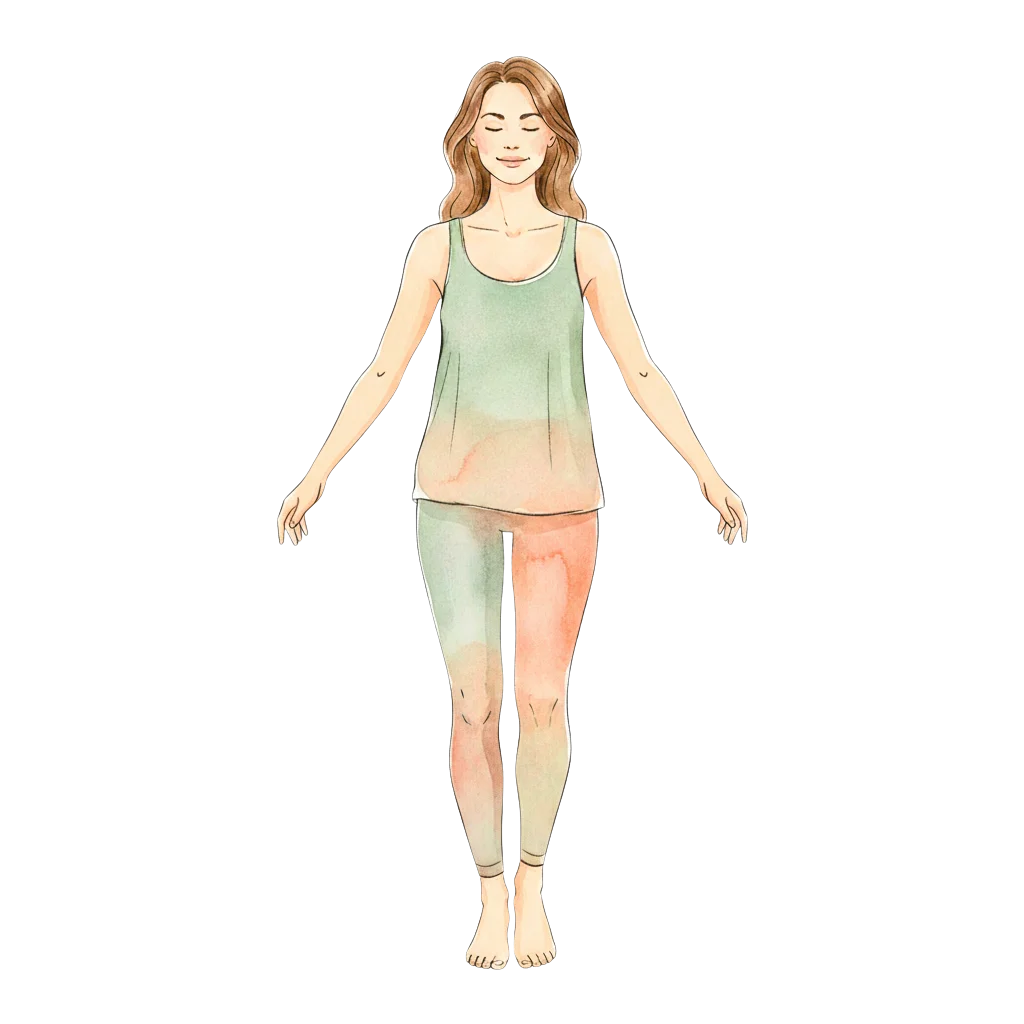
Start your protocolHow Estrogen decline affects your body
Tap body zones to discover connected symptoms and related conditions.
Join 80+ women discussing estrogen decline
Real experiences shared across Reddit, TikTok, and health forums
How to Use Topical Estrogen Cream For Aging Skin | Menopause + Skin | Dr. Sam Ellis
I posted a Tik Tok video talking about topical estrogen and how it relates to anti-aging and so many of you requested a deeper dive on the topic so that's what...
You know what? I’m totally down with my body not being able to produce children at a certain age anymore without dying. I think that’s an okay part of menopause and makes sense - our bodies can’t...
Signs Of Low Estrogen In Women: What Your Skin And Hair Are Trying To Tell You
signs of low estrogen in women in today's video we're going to be talking about the characteristic skin changes of low estrogen or estrogen deficient skin how declining...
Reading others' stories is the first step. Join to share yours.
Community
A safe space for women navigating estrogen decline
Frequently asked questions
Common questions about Estrogen decline
How we research and fact-check
Every article on Wellls is researched using peer-reviewed medical literature, clinical guidelines, and real patient experiences from 49 online discussions.
Sources: We reference 42 PubMed-indexed studies, ACOG/NAMS clinical guidelines, and validated screening tools.
Review: Content is written by our editorial team, enriched from a medical knowledge base of 15,000+ sources. Evidence standards and clinical methodology guided by our Medical Advisory Board: Dr. Alexandra Rybakova and Dr. Alexander Rybakov, Lifestyle Medicine Physicians with 35+ years combined clinical practice.
This content is for informational purposes only and does not constitute medical advice. Our editorial standards · Medical advisory board
References
42 sources reviewed for this estrogen decline guide
- 1.Dr. Lisa Mosconi The Menopause Brain
- 2.Fang Y et al. et al. Mapping global prevalence of menopausal symptoms
- 3.Systematic review Influence of menopause on mood: systematic review of 9 cohort studies
- 4.JAMA Women's Health Initiative 20-year follow-up
- 5.Rupa Health Cortisol and Estrogen: Their Role in Hormonal Imbalance
- 6.Dr. Anna Garrett The Cortisol Connection to Perimenopausal Hormone Imbalance
- 7.Nurses Health Study II (N=233) Habitual sleep quality and diurnal cortisol
- 8.Systematic review Network meta-analysis of 23 RCTs on physical activity
- 9.Systematic review of 5 RCTs Long-term physical activity in overweight postmenopausal women
- 10.Dr. Louise Newson The New Perimenopause
History of updates
Current version (March 11, 2026) — Content reviewed and updated based on latest research
First published (March 7, 2026)
Explore related problems
Women who experience estrogen decline often also deal with these
Your personalized plan is ready
Estrogen decline is one event with forty symptoms. Your personalized plan connects the dots between your brain fog, joint pain, mood changes, and metabolic shift, and gives you evidence-based protocols tailored to where you are in the transition.
3,412 women mapped their estrogen decline symptoms this month
Free assessment · Takes 2 minutes · No account required
Medical disclaimer: This content is for informational purposes only and does not constitute medical advice, diagnosis, or treatment. Always consult a qualified healthcare provider for personal medical decisions. Content is based on peer-reviewed research and updated regularly. Learn about our editorial standards.