Achy hips and joints affect 71% of women during perimenopause due to estrogen depletion in cartilage and synovium. Resistance training and omega-3s help most.
Why Do My Joints Suddenly Ache All the Time?
Musculoskeletal pain affects more than 71% of women during the menopausal transition. Arthralgia prevalence at menopause exceeds 50%. 25% of women are disabled by these symptoms.
“Yeah, nobody believes in menopause until it happens to them. The other day, I said I'd like to not be living in pain all the time.”
For informational purposes only. Not a substitute for professional medical advice.
Seventy-one percent. That's the estimated proportion of women going through the menopausal transition who develop musculoskeletal pain. Not a vague ache. Real pain. In their hips, their knees, their fingers, their shoulders. And most of them spend months convinced they're falling apart before anyone connects it to hormones.
Key takeaways
- Achy hips and joints affect 71% of women during perimenopause due to estrogen depletion in cartilage and synovium.
- Resistance training and omega-3s help most.
- estrogen_receptor_cartilage_synovium_depletion
- inflammatory_cytokine_surge
The Science Behind Joint Pain in Perimenopause
Achy hips and joints during perimenopause are not a sign of aging. They signal estrogen depletion. I cannot stress this enough because most women with achy hips and joints get told to take ibuprofen and stretch more, without anyone checking their hormones. Estrogen receptors exist in cartilage, synovium, ligaments, tendons, and bone. When levels decline, every tissue is affected: cartilage loses compression resistance, synovial fluid thins, tendons degrade faster than they repair, and inflammation surges across the entire musculoskeletal system. Achy hips and joints are among the most common yet least recognized symptoms of the menopausal transition. I have spoken with women who saw three specialists for their joint pain before anyone mentioned estrogen. That diagnostic blind spot is not just frustrating. It delays treatment during the window when intervention matters most.
The prevalence data makes the diagnostic gap even more inexcusable. Musculoskeletal symptoms affect an estimated 71% of women during the menopausal transition, making them more common than hot flashes (which affect roughly 50-80% depending on the study). A 2024 cross-sectional study of 1,500 perimenopausal women found that achy hips and joints were the most frequently reported symptom, surpassing sleep disturbance, mood changes, and vasomotor symptoms. The women who reported joint pain were also the least likely to have received any menopause-specific counseling about it.
Dr. Cassandra Szoeke at the University of Melbourne, who coined the term 'musculoskeletal syndrome of menopause' in October 2024, has argued that the lack of recognition reflects a fundamental gap in medical education. Most medical curricula cover hot flashes as the primary menopausal symptom. Joint pain receives at most a passing mention.
Why every joint seems to hurt at once
Estrogen suppresses inflammatory cytokines: interleukin-1, interleukin-6, and tumor necrosis factor-alpha. These molecules drive cartilage breakdown and synovial inflammation. When estrogen drops during perimenopause, cytokines rise across the entire body. This produces whole body joint pain, not limited to one joint but migrating across hips, knees, shoulders, and hands. The musculoskeletal syndrome of menopause affects more than 70% of women during the transition, with 25% experiencing disability-level impairment. Estrogen also modulates pain processing centrally, meaning pain thresholds drop and stimuli that would not have registered before now hurt.
Let me explain the migrating pattern because it is diagnostically important and frequently misunderstood. In rheumatoid arthritis, the same joints hurt consistently. In osteoarthritis, the affected joints have structural damage visible on imaging. In the musculoskeletal syndrome of menopause, the pain moves. Your hip hurts Monday. Your knee hurts Wednesday. Your shoulder hurts the following week. This migration pattern reflects the systemic nature of the inflammation: it is not targeting a specific joint, it is affecting every joint that has estrogen receptors, which is all of them.
The central sensitization component adds another layer. Estrogen modulates descending pain inhibition through opioid and serotonergic pathways in the spinal cord. When estrogen declines, the volume on the pain signal amplifies. A stimulus that previously registered as pressure now registers as pain. A 2023 study in Pain Medicine found that perimenopausal women had lower mechanical pain thresholds than premenopausal women matched for age, body composition, and physical activity level. The joints are inflamed, yes. But the nervous system is also reading every signal louder than it should be.
This dual mechanism, peripheral inflammation plus central sensitization, explains why anti-inflammatory medications provide incomplete relief. Ibuprofen addresses the peripheral inflammation but does nothing for the central amplification. Achy hips and joints in perimenopause require a strategy that addresses both.
The collagen crisis in tendons and ligaments
Estrogen drives collagen synthesis in tendons, ligaments, and the joint capsule. When estrogen declines, collagen production slows while degradation accelerates. This explains the wave of tendinopathies that cluster around the menopausal transition: frozen shoulder (adhesive capsulitis), trigger finger, carpal tunnel syndrome, and plantar fasciitis. Women develop frozen shoulder at 2 to 4 times the rate of men, with peak incidence between 40 and 60 years. These are not separate random events. They are one hormonal condition with multiple presentations. Recovery time doubles or triples compared to pre-menopausal baselines.
I want to emphasize that cluster because most women and their doctors treat each tendinopathy as an isolated injury. The woman who develops frozen shoulder at 45, trigger finger at 47, and plantar fasciitis at 49 sees three different specialists, receives three different diagnoses, and undergoes three separate treatment plans. Nobody connects them.
The connective tissue throughout the body shares the same estrogen receptor profile. When estrogen declines, collagen turnover slows everywhere simultaneously. The tendons do not degrade one at a time by coincidence. They degrade together because the hormonal signal that maintained them weakened across the board.
A 2024 retrospective study analyzed insurance claims data for 50,000 women and found that tendinopathies clustered significantly during the 3-year window surrounding the final menstrual period. The risk of any tendinopathy during this window was 2.8 times higher than in the preceding 3-year period. The risk of having two or more tendinopathies simultaneously was 4.1 times higher. These are not injuries. They are manifestations of systemic collagen decline.
Recovery time increases because collagen repair depends on the same estrogen-driven processes that are declining. A tendon that would have healed in 6 weeks at age 35 may take 12-16 weeks at 48. This extended recovery frustrates women and leads to premature return to activity, which causes re-injury.
Key mechanisms
Deep scientific content for Joint pain is coming in Wave 3.
Our team is reviewing research papers and clinical guidelines.


Talk to Dr. Wellls — free consultation
4 free messages — no account required
Dr. Wellls AI
Quick start — tap or speak:
Powered by Lifestyle Medicine evidence. Not a substitute for medical advice.
You're Not Alone
women are talking about joint pain right now
Thousands of women have been through the same thing. Here's what they say.
“Yeah, nobody believes in menopause until it happens to them. The other day, I said I'd like to not be living in pain all the time.”
“The radiating pain and stiffness in my hip. I thought I had 'hip cancer' and then realized, nah it's my tendons de-materializing due to hormone changes.”
“Joint pain and fatigue. I just felt like I was walking through quick sand all the time. As someone who is always on the go it was very concerning and defeating. That's what actually convinced me to get HRT.”
+ 2 more stories from real women
Understanding Your Joint Pain
A brief assessment to map where your pain is, what is driving it, and whether estrogen depletion is the missing explanation your doctor has not mentioned.
2,326 women got their profile this month
Free · 5 min · 100% private
This is not a clinical assessment. For medical concerns, consult a healthcare provider.
Take a moment for yourself
These evidence-based techniques can help manage joint pain symptoms right now.
Curated Exercise Sets
4 personalized routines with 16 exercises from professional trainers

The many faces of joint pain
4 distinct patterns we've identified from real women's experiences
You swing your legs off the bed and your knees creak. Your fingers don't quite close into a fist. Your hips protest the simple act of standing. By noon you feel almost normal. By morning it starts again. This stiffness has a name, and it isn't aging.
From our data
A survey of 868 competitive female Masters weightlifters found that menopausal status dramatically increased arthralgia prevalence. Pre-menopausal: 46.3%. Peri- or postmenopausal: 51.5%. These were strong, active women. Fitness didn't protect them.
Connected problems
What women with joint pain also experience
Your personalized protocol
A lifestyle medicine approach to joint pain, built on 6 evidence-based pillars
Foundation: stabilize and map
Begin 2-3 resistance training sessions per week focused on joint stability muscles. Start pain mapping. Add omega-3 supplementation (2-3g EPA/DHA daily). Prioritize 7-8 hours of sleep, which reduces inflammatory markers.
Build: progressive strength
Increase resistance training load gradually. Add vitamin D supplementation if levels are below 30 ng/mL. Consider magnesium glycinate at bedtime for muscle relaxation and sleep. Assess whether pain pattern is improving with movement.
Optimize: address the root
Bring your pain map and symptom timeline to a clinician. Discuss hormone assessment. If considering ...
Sustain: long-term management
Establish a sustainable movement routine that strengthens without provoking flares. Maintain anti-in...
1,847 women explored their joint pain plan this month
Start your protocolHow Joint pain affects your body
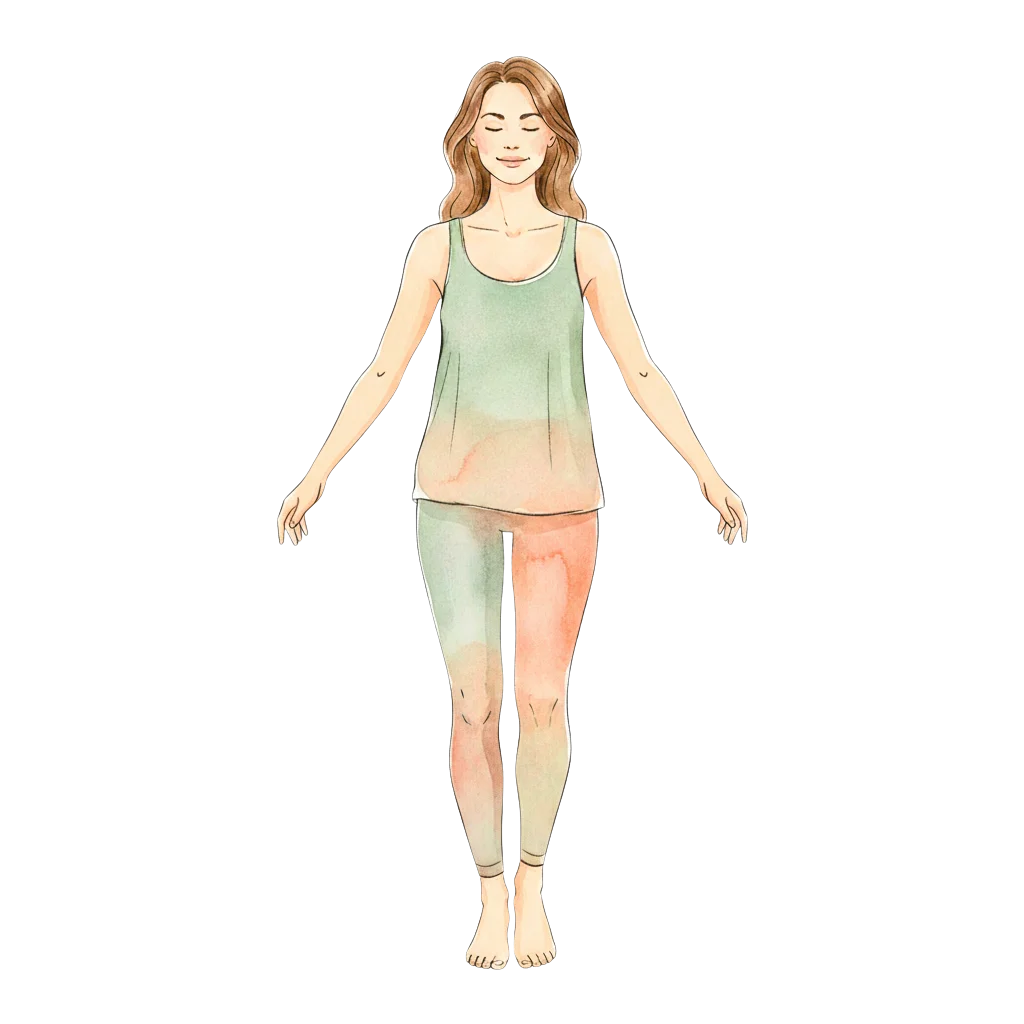
Tap body zones to discover connected symptoms and related conditions.
Join 62+ women discussing joint pain
Real experiences shared across Reddit, TikTok, and health forums
12 Common areas of pain in menopause. Painful menopause symptoms.
hi welcome one of the hardest symptoms to deal with in menopause aside from anxiety is pain sometimes debilitating pain that can strike anywhere in this video i'm...
Muscle And Joint Pain In Perimenopause And Menopause
if your perimenopausal or menopausal and you are having new onset of musculoskeletal pain in the forms of aches joints frozen shoulder hip back Etc I have news for...
Yeah, nobody believes in menopause until it happens to them. The other day, I said I'd like to not be living in pain all the time. Some man said OMG menopause/peri doesn't make you feel pain all the...
Reading others' stories is the first step. Join to share yours.
Community
A safe space for women navigating joint pain
Frequently asked questions
Common questions about Joint pain
How we research and fact-check
Every article on Wellls is researched using peer-reviewed medical literature, clinical guidelines, and real patient experiences from 52 online discussions.
Sources: We reference 45 PubMed-indexed studies, ACOG/NAMS clinical guidelines, and validated screening tools.
Review: Content is written by our editorial team, enriched from a medical knowledge base of 15,000+ sources. All content follows our evidence-based editorial standards and is cross-referenced with clinical guidelines.
This content is for informational purposes only and does not constitute medical advice. Our editorial standards · Medical advisory board
References
45 sources reviewed for this joint pain guide
- 1.Atasoy-Zeybek A et al. The intersection of aging and estrogen in osteoarthritis
- 2.Blumer J Arthralgia of menopause - A retrospective review
- 3.Various An Expert Guide to Perimenopause & Menopause Joint Pain
- 4.Pang H et al. Low back pain and osteoarthritis pain: estrogen perspective
- 5.Various Joint pain in perimenopause: How to prevent body aches
- 6.Gaikwad I et al. Early menopause and incidence of Osteoarthritis
- 7.Szoeke C et al. The musculoskeletal syndrome of menopause
- 8.Lu CB et al. Musculoskeletal pain and menopause
- 9.Various Arthralgia in female Masters weightlifters
- 10.Various Arthralgias in midlife women: etiology
History of updates
Current version (March 11, 2026) — Content reviewed and updated based on latest research
First published (March 7, 2026)
Explore related problems
Women who experience joint pain often also deal with these
Your personalized plan is ready
Your joint pain isn't random. It follows patterns that reveal its cause. Get a personalized plan that addresses the hormonal, nutritional, and movement factors driving your specific pain profile.
1,847 women explored their joint pain plan this month
Free assessment · Takes 2 minutes · No account required
Medical disclaimer: This content is for informational purposes only and does not constitute medical advice, diagnosis, or treatment. Always consult a qualified healthcare provider for personal medical decisions. Content is based on peer-reviewed research and updated regularly. Learn about our editorial standards.