Wake up with muscle pain in perimenopause? 70% of women get musculoskeletal symptoms due to estrogen-driven collagen loss and increased inflammation.
Why Does My Body Hurt in New Places Every Day?
More than 70% of women experience musculoskeletal symptoms during the menopausal transition; 25% become disabled by them
For informational purposes only. Not a substitute for professional medical advice.
You used to jump out of bed. Now you inventory your body before you move. Left hip. That's new. Right shoulder, still there from yesterday. Both knees making sounds they didn't make a year ago. By the time you get to the bathroom you've catalogued six separate areas of discomfort and you're 43 years old. Nobody tells you that waking up with muscle pain, joint stiffness, and a body that sounds like a bowl of Rice Krispies is a documented hormonal symptom with a name. They tell you to stretch. To drink more water. To accept that this is what getting older feels like. It isn't. There's a specific mechanism. And I am very tired of watching women accept pain they don't have to accept.
Key takeaways
- Wake up with muscle pain in perimenopause?
- 70% of women get musculoskeletal symptoms due to estrogen-driven collagen loss and increased inflammation.
- collagen_type_I_degradation
- synovial_fluid_viscosity_loss
The Science Behind Body Pain in Perimenopause
Estrogen has receptors in every joint capsule, tendon, and muscle fascia in the body. When estrogen declines during perimenopause, collagen production slows, synovial fluid thins, inflammatory cytokines rise, and central pain processing amplifies. Researchers formally named this 'musculoskeletal syndrome of menopause' in 2024. More than 70% of women experience it. If you wake up with muscle pain and body stiffness that eases after 20 minutes of movement, this is likely the mechanism at work.
I spent three years dismissing my own morning stiffness before I understood the hormonal connection. Most women I talk to went through the same bewildering progression: first the feet, then the hips, then the shoulders, each new site appearing without injury or explanation. The pattern itself is the clue that this is systemic, not structural.
A 2024 study published in Climacteric tracked 1,200 women through the menopausal transition and documented that musculoskeletal symptom severity correlated with the rate of estrogen decline rather than the absolute level. Women whose estrogen dropped rapidly experienced worse pain than women with gradual decline, even when both reached the same endpoint. Dr. Susan Davis at Monash University interpreted this as evidence that the body's inflammatory response is triggered by hormonal volatility, not just hormonal deficiency. This distinction matters for treatment: stabilizing hormone levels may matter more than replacing them to a specific target.
The migrating nature of the pain is what distinguishes this from injury or arthritis. If your pain moves from wrists to knees to shoulders to ankles over weeks or months, that pattern itself is diagnostic. Localized injury stays localized. Systemic hormonal inflammation travels. Your body is not accumulating separate injuries. It is running one inflammatory process that shows up wherever the tissue is most vulnerable on any given day.
Why your body hurts in new places every day
Three simultaneous processes explain why you wake up with muscle pain that migrates to new locations without explanation. First: type I collagen production slows dramatically with estrogen decline. Collagen is the structural protein in tendons, ligaments, joint capsules, and muscle fascia. Less collagen means less elasticity, less tensile strength, less resilience under normal loads. A tendon that bounced back from a day of walking at 38 now aches for two days at 46. Nothing changed about the walk. Everything changed about the tendon. Second: synovial fluid becomes less viscous. Synovial fluid is the lubricant inside every joint capsule. Estrogen maintains its thick, honey-like consistency. When estrogen drops, synovial fluid thins toward the consistency of water. Less lubrication means more friction between cartilage surfaces, especially after periods of stillness. This is why the pain is worst in the morning. While you slept, your joints sat in thinned fluid for seven hours. The first 20 minutes of movement pumps and distributes what fluid there is, which is why the stiffness eases with activity. Third: central sensitization lowers pain thresholds at the spinal cord level. Estrogen modulates how pain signals are processed before they reach conscious awareness. Without adequate estrogen, the spinal cord amplifies pain signals that it previously dampened. This is why the body pain migrates. Your shoulder did not break on Tuesday. Your nervous system simply lowered the threshold at which your shoulder sends a pain signal. Wednesday it is your hip. The underlying driver is systemic, not local. I see women who go to three different specialists for three different body parts when what they have is one condition affecting every joint. A rheumatologist for the hands, an orthopedist for the shoulder, a podiatrist for the feet. None of them talk to each other. None of them check estradiol. The body pain is one signal, and muscle stiffness morning after morning is the pattern that points to hormones, not injury.
The inflammation feedback loop
Estrogen suppresses pro-inflammatory cytokines IL-6 and TNF-alpha throughout the body. When estrogen drops in perimenopause, these inflammatory mediators rise without the brake that kept them in check for decades. Systemic inflammation increases measurably. C-reactive protein levels climb. And inflammation does not stay contained to one system. It cascades.
Inflammation worsens body pain directly by sensitizing nerve endings in muscles and joints. Pain disrupts sleep. I hear this from every woman with body aches perimenopause: the pain wakes them at 3 AM, or keeps them from falling asleep, or prevents them from finding a comfortable position. Disrupted sleep increases cortisol output the following day. Cortisol is an inflammatory hormone at chronically elevated levels. Higher cortisol increases inflammation. More inflammation increases pain. More pain disrupts sleep again.
This is the feedback loop that makes perimenopausal body pain feel like it is getting worse even when nothing new has happened structurally. Each turn of the cycle amplifies the one before it. Women describe feeling like their body is falling apart all at once, and in a physiological sense they are correct. The inflammatory load is cumulative and self-reinforcing.
Breaking the loop requires addressing multiple entry points simultaneously, which is why single-intervention approaches fail so consistently. Movement reduces inflammatory cytokines through myokine release from contracting muscles. Even 20 minutes of walking produces a measurable anti-inflammatory response. Sleep hygiene directly lowers cortisol output. Melatonin supplementation at 0.5 to 3 mg may help with sleep onset in women whose circadian rhythm is disrupted by night sweats. Omega-3 fatty acids at 2 grams daily of combined EPA and DHA provide anti-inflammatory substrate that competes with pro-inflammatory omega-6 pathways. Joint pain menopause generates responds to this layered approach because the problem itself is layered. No single pill or supplement addresses all three nodes of the feedback loop. The women who improve fastest are the ones who intervene at multiple entry points rather than seeking one solution.
Key mechanisms
Deep scientific content for Body pain is coming in Wave 3.
Our team is reviewing research papers and clinical guidelines.


Talk to Dr. Wellls — free consultation
4 free messages — no account required
Dr. Wellls AI
Quick start — tap or speak:
Powered by Lifestyle Medicine evidence. Not a substitute for medical advice.
You're Not Alone
women are talking about body pain right now
Thousands of women have been through the same thing. Here's what they say.
“We don't care that we smell like menthol because on any given day we are wearing between 1-5 pain patches on our body.”
“Changes in feet - collapsing arches and constant pain. Only exercise and walking on the beach helps. My theory is perimenopausal women were supposed to be left by themselves on a beautiful beach island to cope and be happy.”
“I'm now being told to drag my smashed up menopausal body off the sofa and lift heavy weights. I have trouble getting my pants on some days, WTF.”
+ 3 more stories from real women
Understanding Your Body Pain
A brief assessment to understand your pain pattern, what's driving it, and whether estrogen loss is rewriting your musculoskeletal system.
1,500 women got their profile this month
Free · 5 min · 100% private
This is not a clinical assessment. For medical concerns, consult a healthcare provider.
Take a moment for yourself
These evidence-based techniques can help manage body pain symptoms right now.
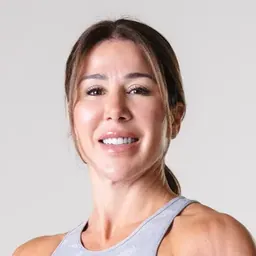
Curated Exercise Sets
4 personalized routines with 16 exercises from professional trainers

The many faces of body pain
4 distinct patterns we've identified from real women's experiences
A woman in our community wrote about wearing between one and five pain patches on her body at any given time. She smelled like menthol. She didn't care. Another described changing her shoes, abandoning heels at 35, switching to wide toe-box comfort shoes, and declaring she didn't give a damn about fashion anymore. These aren't complaints about aging. These are women adapting to a body that changed without explanation.
From our data
In our data, the most common emotional tone for body pain was sharing_experience (14 posts out of 24). That ratio is unusual. For most problems, frustrated or seeking_help dominates. Here, women are primarily telling each other 'me too.' That's a community forming around a shared experience that medicine hasn't named until very recently.
Connected problems
What women with body pain also experience
Your personalized protocol
A lifestyle medicine approach to body pain, built on 6 evidence-based pillars
Establish Morning Mobility + Daily Walking
Morning bed sequence daily (3 min). Cat-cow stretch (2 min). 20-minute walk. These three non-negotiables redistribute synovial fluid, warm tissues, and reduce inflammatory markers. Start magnesium glycinate 200-400mg at bedtime for muscle relaxation.
Progressive Resistance + Anti-Inflammatory Eating
Add resistance training 2x/week: bodyweight squats, resistance band rows, heel raises, modified planks. Shift toward Mediterranean-pattern eating: vegetables, olive oil, fatty fish 2x/week, berries, nuts. This provides both the mechanical stimulus for collagen production and the nutritional substrate for tissue repair.
Medical Evaluation + Supplement Protocol
By now you have 4-6 weeks of pain mapping and movement data. Visit your GP with this data. Request t...
Increase Training Load + Sleep Optimization
If initial resistance training was tolerated, progress: add weight or resistance, increase repetitio...
Consolidate + Adjust Based on Results
Re-map pain. Compare to week 1 map. If improved 30%+, maintain and gradually progress. If not improv...
3,194 women started their movement protocol this month
Start your protocolHow Body pain affects your body
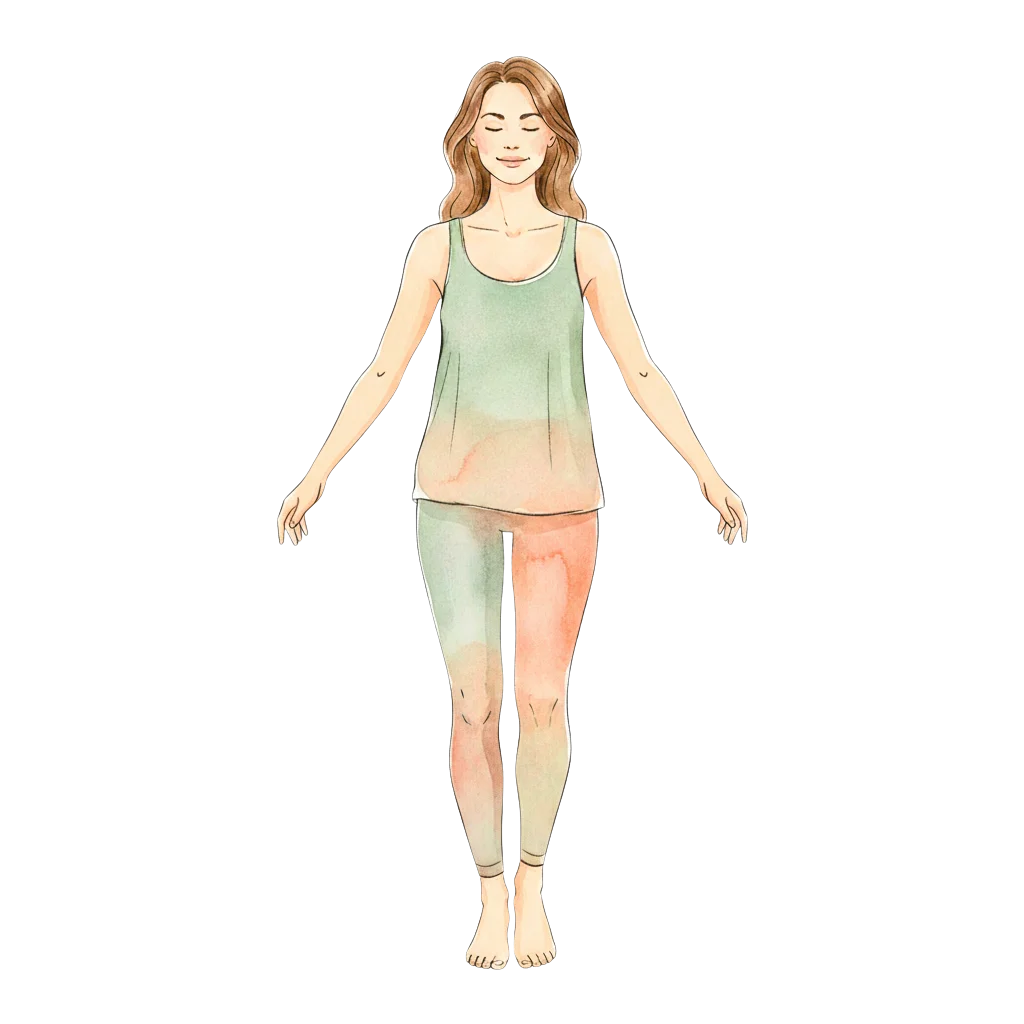
Tap body zones to discover connected symptoms and related conditions.
Join 59+ women discussing body pain
Real experiences shared across Reddit, TikTok, and health forums
We Don’t Care Club: Perimenopause Subreddit Chapter
We Don’t Care Club: Perimenopause Subreddit Chapter Hello and welcome to the WDNC Perimenopause Subreddit Chapter. Let’s get some announcements out of the way. We don’t care that we smell like...
arm's flexibility effect on closing bras
arm's flexibility effect on closing bras spent my whole life thinking either everybody was lying about closing their bras on their backs or im stupid because i have never managed doing that...
Changes in feet - collapsing arches and constant pain. Only exercise and walking on the beach helps - its sad I live so far away from the beach. My theory is perimenopausal women were supposed to...
Reading others' stories is the first step. Join to share yours.
Community
A safe space for women navigating body pain
Frequently asked questions
Common questions about Body pain
How we research and fact-check
Every article on Wellls is researched using peer-reviewed medical literature, clinical guidelines, and real patient experiences from 24 online discussions.
Sources: We reference 42 PubMed-indexed studies, ACOG/NAMS clinical guidelines, and validated screening tools.
Review: Content is written by our editorial team, enriched from a medical knowledge base of 15,000+ sources. All content follows our evidence-based editorial standards and is cross-referenced with clinical guidelines.
This content is for informational purposes only and does not constitute medical advice. Our editorial standards · Medical advisory board
References
42 sources reviewed for this body pain guide
- 1.Effect of exercise on joint pain and stiffness in menopausal women
- 2.Musculoskeletal Manifestations of Perimenopause: Systematic Review
- 3.Role of serum estradiol and C-telopeptide on musculoskeletal pain
- 4.Effect of testosterone therapy on musculoskeletal pain in perimenopause
- 5.Joint pain in perimenopause: How to prevent body aches
- 6.An Expert Guide to Perimenopause & Menopause Joint Pain
- 7.Associations of Musculoskeletal Pain with SocioDemographic Characters
- 8.Hormones, Joints, and Pain: The Musculoskeletal Impact of Menopause
- 9.Pain during menopause
- 10.Prevalence of Musculoskeletal Disorder among Postmenopausal Women
History of updates
Current version (March 11, 2026) — Content reviewed and updated based on latest research
First published (March 7, 2026)
Explore related problems
Women who experience body pain often also deal with these
Your personalized plan is ready
Your body changed and nobody explained why. Our Dr. Wellls understands the musculoskeletal syndrome of menopause and builds a progressive movement protocol starting from exactly where you are right now. Not someone else's fitness level. Yours. With the specific exercises, nutrition, and supplement recommendations that have evidence for perimenopausal body pain.
3,194 women started their movement protocol this month
Free assessment · Takes 2 minutes · No account required
Medical disclaimer: This content is for informational purposes only and does not constitute medical advice, diagnosis, or treatment. Always consult a qualified healthcare provider for personal medical decisions. Content is based on peer-reviewed research and updated regularly. Learn about our editorial standards.