Chronic pain depression affects 39% of pain patients. Declining estrogen in perimenopause degrades shared serotonin pathways, worsening both.
Why Does Everything Hurt and Why Won't Anyone Believe You?
Affects 1 in 5 Australians over 45, with women 54% of all chronic pain patients. 3.6 million affected nationally. Projected to reach 5.23 million by 2050.
“Replying to @chathuwa.voice NO ONE deserves to suffer this way or experience this much pain on a daily basis. Pain is certainly not a gift with CRPS.”


Dr. A. Rybakova, Dr. A. Rybakov · Lifestyle Medicine
For informational purposes only. Not a substitute for professional medical advice.
Day 1,847. That's how many mornings Mel has woken up already hurting. Before the alarm. Before the light. Before her feet hit the cold tiles in her Glendalough bathroom and she does the inventory she's done every morning since she was 38. Hips. Seven out of ten. Lower back. Six. Shoulders. Four today, not bad. Hands. She opens and closes them slowly, testing. Five. She's 43 now. A graphic designer. Mum to a nine-year-old who wants to play netball on Saturdays, which means Mel sits on a metal bench for two hours pretending the cold isn't turning her spine into a steel rod. Her doctor says her scans are unremarkable. Her rheumatologist says her bloods are fine. Her partner stopped asking how she's feeling because the answer is always the same and he doesn't know what to do with it. So she says she's okay. Day 1,847 of being okay.
Key takeaways
- Chronic pain depression affects 39% of pain patients.
- Declining estrogen in perimenopause degrades shared serotonin pathways, worsening both.
- Central sensitization: lowered pain thresholds from repeated nervous system activation, amplified by estrogen fluctuations
- Shared neurotransmitter pathways: serotonin, norepinephrine, GABA circuits running both pain and mood systems
The Science Behind Chronic Pain and Depression in Perimenopause
Chronic pain depression in women over 40 is a neurobiological convergence driven by declining estrogen during perimenopause. Estrogen modulates pain through opioid receptors, serotonin pathways, and spinal enkephalin levels. As estrogen becomes erratic during the menopausal transition, pain thresholds drop, mood regulation degrades, and central sensitization develops.
A 2024 JAMA Network Open meta-analysis of 376 studies found that 39.3% of adults with chronic pain have clinical depression, with higher prevalence in predominantly female samples. I want that number to register: nearly four in ten. And when the researchers looked specifically at chronic pain depression in women during the perimenopausal window, the rates climbed higher. More than 70% of women experience musculoskeletal symptoms during perimenopause, and 25% are functionally disabled by them.
What makes chronic pain depression in women different from the general chronic pain population? Hormones. Men's pain thresholds remain relatively stable across their lifespan. Women's pain thresholds track estrogen levels, rising when estrogen is high and crashing when estrogen drops. Perimenopause is the longest, most chaotic hormonal disruption most women will ever experience. And it coincides precisely with the age window when musculoskeletal conditions peak. That collision is not coincidence. It's biology nobody prepared you for.
The AAFP 2023 review of central sensitization found that repeated pain exposure during hormonal transitions extends pain beyond the primary disease site. A woman who started with knee pain ends up with whole-body pain. Not because she's catastrophizing. Because her nervous system learned from the knee pain and applied that learning everywhere.
How estrogen loss rewires the pain system
Estrogen modulates pain through at least four simultaneous pathways: it activates opioid receptors in the brainstem enhancing endogenous pain suppression, regulates serotonin synthesis which serves both mood and pain perception, increases spinal enkephalin levels through ERalpha receptor activation, and modulates GABA-mediated inhibition in the central nervous system.
When I first mapped out these four pathways, I understood for the first time why perimenopausal pain feels so all-encompassing. It's not one system failing. It's four systems failing simultaneously, and they're all connected. Lose the opioid receptor activation and your brain's natural painkillers weaken. Lose the serotonin modulation and your pain threshold drops while your mood deteriorates. Lose the enkephalin support and spinal cord pain gating collapses. Lose the GABAergic inhibition and every neural signal gets amplified.
The systematic review of HRT for musculoskeletal pain (2024) found consistent improvement across multiple trials when estrogen was restored. That's evidence level A. The mechanism is clear: you replace what's missing, and the four pathways partially recover. But 'partially' is important. By the time most women seek help for chronic pain depression, central sensitization has already developed. You can't just add estrogen back and expect the nervous system to immediately recalibrate.
The longer pain has persisted, the more the nervous system has adapted to producing it. HRT helps. But it helps most when it's started early, before central sensitization has had years to entrench itself. That's why the timing conversation matters so much, and why I keep pushing for earlier screening. Every year a woman spends in undiagnosed chronic pain is a year her nervous system spends learning to be better at producing pain. That learning is reversible. But reversal takes longer than prevention.
The shared neurotransmitter circuit behind pain and depression
Chronic pain and depression share overlapping neurotransmitter systems including serotonin, norepinephrine, GABA, and Substance P. Serotonin deficiency simultaneously increases pain sensitivity and depressive symptoms. Norepinephrine depletion reduces both pain suppression and emotional stability.
This overlap is why SNRIs (duloxetine, venlafaxine) treat both conditions simultaneously, and why they're often more effective for chronic pain depression than SSRIs, which target serotonin alone. The dual-pathway approach addresses both the mood and the pain components through the same pharmacological mechanism.
But here's what bothers me about how this gets discussed clinically. The shared neurotransmitter model is often used to imply that pain and depression are 'the same thing.' They're not. They share infrastructure the way two different fires share the same building's sprinkler system. When the sprinkler system fails (serotonin and norepinephrine depletion), both fires burn uncontrolled. But the fires themselves are different. Pain has peripheral drivers, tissue-level signals, mechanical causes. Depression has cognitive, social, and existential dimensions that pure neurotransmitter models don't capture.
The JAMA meta-analysis found that 39.3% of 347,000 chronic pain patients had clinical depression. But it also found that the relationship was dose-dependent: the worse the pain, the worse the depression, and vice versa. For women in perimenopause, where both systems are simultaneously destabilised by hormonal decline, the chronic pain depression convergence is not just additive. It's multiplicative. Each condition amplifies the other through shared pathways that are both weakened at the same time.
I want to add something that rarely gets discussed. The shared neurotransmitter model also explains why chronic pain depression in perimenopause can look different from either condition alone. Women describe it not as 'sad and hurting' but as 'flat and heavy.' The flattening of emotional range, the loss of motivation, the inability to feel pleasure, those are serotonin and norepinephrine signatures. When both are depleted by the same hormonal event, the clinical picture is a grey exhaustion that doesn't respond to the usual approaches. Not to cheerful suggestions. Not to willpower. Not even to the first antidepressant or the second.
Key mechanisms
Deep scientific content for Chronic pain is coming in Wave 3.
Our team is reviewing research papers and clinical guidelines.


Talk to Dr. Wellls — free consultation
4 free messages — no account required
Dr. Wellls AI
Quick start — tap or speak:
Powered by Lifestyle Medicine evidence. Not a substitute for medical advice.
You're Not Alone
women are talking about chronic pain right now
Thousands of women have been through the same thing. Here's what they say.
“How much pain women are in just regularly. And how we just have to ignore it and keep going. Its not just period pain but also back pain, headaches, shoulders, legs, feet, hips, ovulation pain, pain during sex, etc. Sometimes my skin just randomly hurts. No...”
“Why isn't it more widely known that low estrogen can cause actual pain, not just hot flashes and brain fog? I'm still in disbelief that my muscle and nerve pains were hormonal. After a year and half of sudden and then persistent glute, hip and pelvic pain I'm...”
“I'm a 40 year old mom of two, physically disabled with a condition that causes severe chronic pain and fatigue, I'm a full time student and work in a lab. I was up the night before Halloween until 4am revising a research project. I let them trick or treat...”
+ 3 more stories from real women
Understanding Your Chronic Pain
A brief assessment to understand your pain pattern, what's driving it, and whether your nervous system has changed the rules.
3,684 women got their profile this month
Free · 5 min · 100% private
This is not a clinical assessment. For medical concerns, consult a healthcare provider.
Take a moment for yourself
These evidence-based techniques can help manage chronic pain symptoms right now.
Curated Exercise Sets
4 personalized routines with 16 exercises from professional trainers


The many faces of chronic pain
4 distinct patterns we've identified from real women's experiences
You used to recover from pain. A rough week, a flare, a bad period. It passed. Then sometime around 40, the pain started lingering. Not because the injury got worse. Because your nervous system stopped turning off the alarm.
From our data
This number rewired how I think about chronic pain in midlife women: more than 70% of women going through the menopause transition experience musculoskeletal symptoms, and 25% are disabled by them. Not inconvenienced. Disabled. That's from a 2024 systematic review in Climacteric covering thousands of women across multiple countries. A quarter of perimenopausal women are functionally disabled by pain that most doctors still file under 'normal aging.'
Connected problems
What women with chronic pain also experience
Your personalized protocol
A lifestyle medicine approach to chronic pain, built on 6 evidence-based pillars
Anti-Inflammatory Nutrition Foundation
Shift toward a Mediterranean-style eating pattern: olive oil, fatty fish twice weekly (omega-3 at 2g/day reduces inflammatory markers), 7+ servings of vegetables, reduce ultra-processed foods by 50%. This is not a diet. It's reducing the neuroinflammatory load on your pain system.
Graded Activity Progression
Increase movement by 10% per week from your baseline. If you started at 5-minute walks, you're now at 7-8 minutes. Add one gentle strength session: bodyweight squats, wall push-ups, or reformer Pilates at minimal resistance. If you flare, go back to previous level for 2 weeks.
Social Reconnection Plan
Chronic pain isolates. Deliberately schedule one social interaction per week that doesn't require ex...
Specialist Navigation
Request referral to a multidisciplinary pain clinic or a physiotherapist specializing in pain neuros...
Consolidation and Long-Term Strategy
By week 9, you should have data from your pain journal, a movement baseline, nutrition changes, and ...
2,847 women explored their chronic pain plan this month
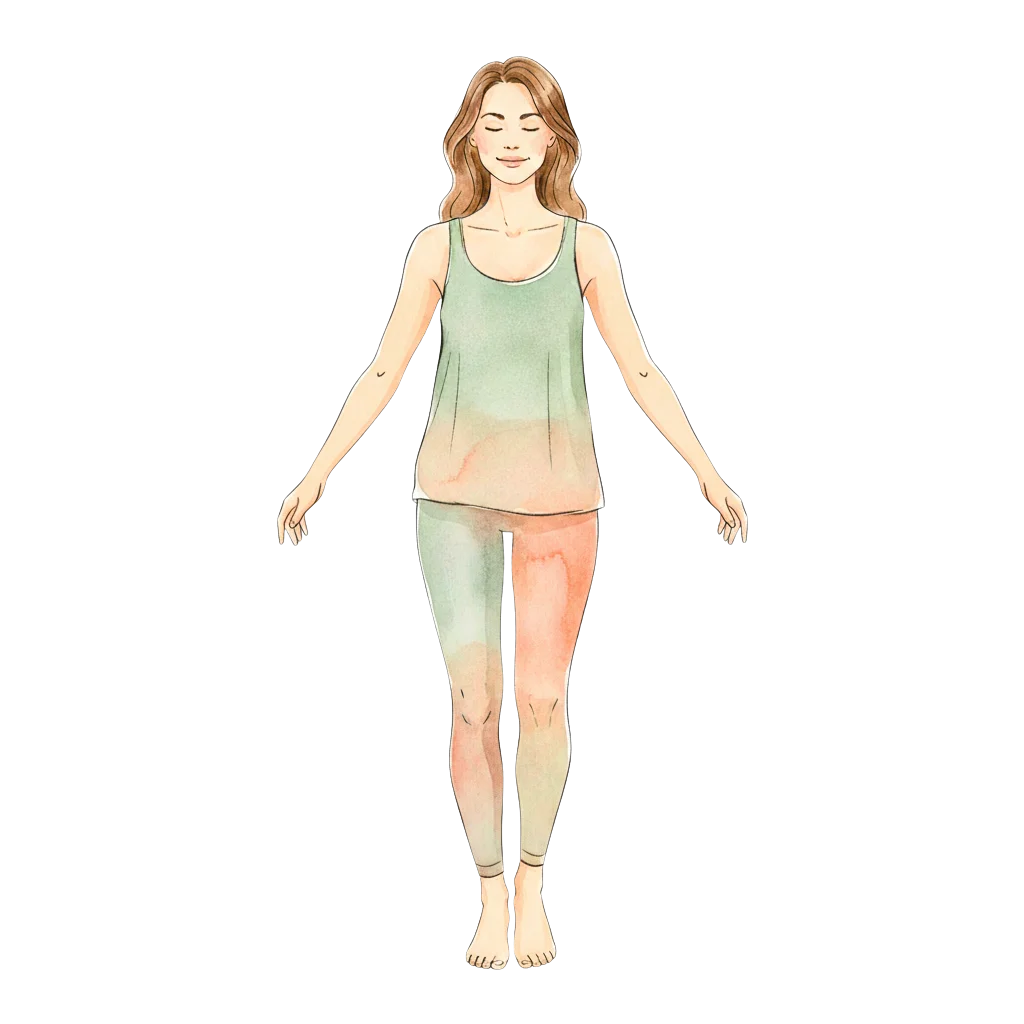
Start your protocolHow Chronic pain affects your body
Tap body zones to discover connected symptoms and related conditions.
Join 68+ women discussing chronic pain
Real experiences shared across Reddit, TikTok, and health forums
A guy tried to talk me out of a breast reduction saying I'm beautiful the way I am, as if though the only reason I'd want one is because I don't like how they look and not the crippling pain.
im 6 years younger than my brother. I grew up licking salt and pepper as a snack because him and my dad would fucking DEMOLISH everything. and the thing is, im a 6'1" woman, I was 5'11" when I was 13...
#duet with @laura_eds1 Tylenol is an option to start with for pain, but every patient is different a
#duet with @laura_eds1 Tylenol is an option to start with for pain, but every patient is different and for some tylenol might not be enough or even help at all #chronicpain #ehlersdanlos...
Reading others' stories is the first step. Join to share yours.
Community
A safe space for women navigating chronic pain
Frequently asked questions
Common questions about Chronic pain
How we research and fact-check
Every article on Wellls is researched using peer-reviewed medical literature, clinical guidelines, and real patient experiences from 103 online discussions.
Sources: We reference 50 PubMed-indexed studies, ACOG/NAMS clinical guidelines, and validated screening tools.
Review: Content is written by our editorial team, enriched from a medical knowledge base of 15,000+ sources. Evidence standards and clinical methodology guided by our Medical Advisory Board: Dr. Alexandra Rybakova and Dr. Alexander Rybakov, Lifestyle Medicine Physicians with 35+ years combined clinical practice.
This content is for informational purposes only and does not constitute medical advice. Our editorial standards · Medical advisory board
References
50 sources reviewed for this chronic pain guide
- 1.Musculoskeletal Manifestations of Perimenopause: Systematic Review and Meta-Analysis [PubMed]
- 2.The influence of sex hormones on musculoskeletal pain and osteoarthritis [PubMed]
- 3.Effect of testosterone therapy on musculoskeletal pain in perimenopausal and postmenopausal women [Article]
- 4.Biopsychosocial Approaches for Management of Female Chronic Pelvic Pain: Systematic Review [PubMed]
- 5.Pain neuroscience education combined with exercise for chronic low back pain: systematic review [PubMed]
- 6.Effectiveness of Pain Neuroscience Education in Women With Menstrual Pain [PubMed]
- 7.Inflammation, Autoimmunity, and Infection in Fibromyalgia: A Narrative Review [PubMed]
- 8.Fibromyalgia: Diagnosis and Management [PubMed]
- 9.Fibromyalgia: Review of Pathophysiological Mechanisms and Multidisciplinary Treatment [PubMed]
- 10.The gender difference in the comorbidity of chronic pain and depression, a longitudinal study [PubMed]
History of updates
Current version (March 11, 2026) — Content reviewed and updated based on latest research
First published (March 2, 2026)
Explore related problems
Women who experience chronic pain often also deal with these
Your personalized plan is ready
You've spent 1,847 mornings doing the pain inventory alone. The protocols section has the evidence-based steps that women with chronic pain depression in perimenopause are using to break the pain-sleep-mood cycle. Not a cure. A measurable reduction. The kind of improvement that means the number on the morning scale drops from seven to four, and Saturday netball isn't something you dread anymore.
2,847 women explored their chronic pain plan this month
Free assessment · Takes 2 minutes · No account required
Medical disclaimer: This content is for informational purposes only and does not constitute medical advice, diagnosis, or treatment. Always consult a qualified healthcare provider for personal medical decisions. Content is based on peer-reviewed research and updated regularly. Learn about our editorial standards.