The faces of fibromyalgia are 80-90% women. Central sensitization amplifies pain signals, causing widespread pain, fatigue, and cognitive fog.
Why Does Everything Hurt and Nobody Believes Me?
Affects 2-8% of the population globally; 80-90% of diagnosed patients are women. Peak onset between ages 30-50. Prevalence increases during perimenopause and after surgical menopause.
“Discover How Low Dose Naltrexone (LDN) Can Transform Fibromyalgia & Chronic Fatigue Relief!”


Dr. A. Rybakova, Dr. A. Rybakov · Lifestyle Medicine
For informational purposes only. Not a substitute for professional medical advice.
You stopped trying to explain it. Not because the pain stopped. Because the look on people's faces when you said 'everything hurts' was worse than the hurting itself. You learned to smile through days that felt like someone had beaten you in your sleep, and you learned to stop saying 'I'm tired' because tired doesn't cover it, not even close, not even in the same universe as what this is. Fibromyalgia stole your vocabulary before it stole your energy. And the cruelest part? You look fine. The faces of fibromyalgia rarely show anything wrong on the outside.
Key takeaways
- The faces of fibromyalgia are 80-90% women.
- Central sensitization amplifies pain signals, causing widespread pain, fatigue, and cognitive fog.
- central_sensitization
- hormonal_pain_modulation
The Science Behind Fibromyalgia
The faces of fibromyalgia are not what most people imagine. They are women in their thirties and forties who smile through meetings and collapse in their cars afterward. Women who have stopped mentioning the pain because mentioning it changed nothing. Fibromyalgia affects 2 to 8 percent of the global population, with 80 to 90 percent of diagnosed patients being women. That ratio alone should have triggered a revolution in women's pain research. It didn't.
I've been covering women's health for long enough to recognise a pattern: when a condition primarily affects women, research funding drops, diagnostic timelines stretch, and the default clinical response becomes 'have you tried managing your stress?' Fibromyalgia sits at the intersection of every failure in how medicine treats women's pain. The faces of fibromyalgia are not dramatic. They're quiet. They're your colleague who never takes sick leave but can't remember what she had for breakfast. They're your friend who cancelled dinner again, not because she doesn't want to see you, but because the effort of getting dressed felt like climbing a mountain in wet concrete. And they're you, maybe, reading this at 2 AM because the pain woke you up and Google was the only thing that would listen.
Here's what I want this page to do. I want it to give you the science that validates what you already know: that the pain is real, that it's neurological, that perimenopause makes it worse, and that the medical system's failure to take the faces of fibromyalgia seriously is not a reflection of your credibility. It's a reflection of theirs.
Your nervous system turned the volume up and broke the knob
Central sensitization is the core mechanism of fibromyalgia. The dorsal horn of the spinal cord and the brain's pain processing networks become hypersensitive. Excitatory neurotransmitters like glutamate and substance P are elevated while inhibitory serotonin and norepinephrine are depleted. Normal sensory input gets amplified into genuine pain.
I need you to understand what this means practically, because 'central sensitization' sounds academic until you're living it. It means the bedsheet touching your shin hurts. It means the shower spray feels like needles. It means someone tapping your shoulder in a meeting sends a bolt of pain down your arm that makes you flinch, and they look at you like you're overreacting. You're not. Your spinal cord has literally turned up the gain on every sensory signal it receives, and the dial is stuck.
Functional MRI studies confirm this: identical pressure stimuli produce dramatically greater activation in pain-processing brain regions in fibromyalgia patients compared to healthy controls. The pain is not imagined. It is neurologically measurable. According to the ACR diagnostic criteria (2016 revision), the diagnosis no longer requires physical examination of tender points but uses the Widespread Pain Index and Symptom Severity Scale, making clinical assessment more reliable and less subjective.
Woolf's 2011 landmark paper described central sensitization as 'an amplification of neural signaling within the central nervous system that elicits pain hypersensitivity.' That single sentence explains why a woman with fibromyalgia can have a normal MRI, normal X-rays, normal blood work, and still be in more pain than someone with a broken bone. The problem isn't in her tissues. It's in her nervous system's interpretation of signals. And until medicine fully embraces this concept, every one of the faces of fibromyalgia will keep hearing 'we can't find anything wrong.'
There's something else that makes me furious about the diagnostic delay. Substance P levels in cerebrospinal fluid are measurably elevated in fibromyalgia patients. We've known this since the 1990s. Researchers at the University of Alabama and elsewhere have demonstrated it repeatedly. But a spinal tap isn't practical for routine diagnosis, so the finding gets shelved. The biomarker exists. It's just inconvenient. Meanwhile, the clinical reality is that diagnosis still rests on a questionnaire, a good listener, and the willingness of a doctor to believe a woman's pain.
Why perimenopause makes everything worse
Estrogen is not merely a reproductive hormone. It modulates pain through receptors in the spinal cord's descending inhibition pathways. When estrogen drops during perimenopause, those natural pain-dampening circuits weaken. An open study of 69 menopausal women with fibromyalgia found that 12 weeks of transdermal estradiol plus micronized progesterone reduced FIQ-R scores by 30 percent. Thirty percent. From a hormone patch.
That study stopped me cold when I first read it, because it suggested that a significant portion of fibromyalgia suffering in midlife women might be directly tied to hormonal decline that nobody screens for. The sleep-pain-hormone triangle compounds the damage: alpha wave intrusion into delta sleep, already a hallmark of fibromyalgia, worsens with perimenopausal night sweats and cortisol disruption. You can't heal pain without deep sleep. You can't get deep sleep when your hormones are in freefall.
I've talked to women in their late thirties whose fibromyalgia was manageable for years before suddenly escalating. When I ask 'did anything change?' the answer is almost always perimenopause. Hot flashes. Erratic periods. Insomnia that came from nowhere. And their rheumatologist never connected it to their hormone status because rheumatologists don't think in hormones. Gynaecologists don't think in pain pathways. Nobody holds the whole picture.
The Climacteric 2024 review documented that over 70 percent of women in the menopause transition experience musculoskeletal symptoms, with 25 percent reporting functional disability. For women who already have fibromyalgia, perimenopause isn't a transition. It's an amplification. And the faces of fibromyalgia at 45 look different from the faces at 35, not because the disease changed, but because the hormonal floor was pulled out from underneath it.
EULAR's updated recommendations now acknowledge that hormone status should be considered in the management of fibromyalgia in perimenopausal women. That's progress. But I've yet to meet a woman whose rheumatologist proactively discussed HRT as a fibromyalgia management strategy. The evidence sits in journals. The women sit in waiting rooms. And the gap between those two places is measured in years of preventable suffering.
Key mechanisms
Deep scientific content for Fibromyalgia is coming in Wave 3.
Our team is reviewing research papers and clinical guidelines.



Talk to Dr. Wellls — free consultation
4 free messages — no account required
Dr. Wellls AI
Quick start — tap or speak:
Powered by Lifestyle Medicine evidence. Not a substitute for medical advice.
You're Not Alone
women are talking about fibromyalgia right now
Thousands of women have been through the same thing. Here's what they say.
“Started LDN (Low Dose Naltrexone) about 6 months ago. My fatigue has decreased, my pain levels have gone from an 8 to maybe a 4 on most days. Not a cure but the first thing that's actually helped in 10 years.”
“25 years with fibro. The progression from 'I can work full time if I rest all weekend' to 'I can't work more than 20 hours' to 'I'm filing for disability' happened so gradually I didn't see it until I was already drowning.”
“Getting diagnosed with Fibromyalgia involves: widespread pain index, checking for 18 tender points, ruling out other conditions. It took me 3 doctors and 2 years. The first two told me I was depressed.”
+ 2 more stories from real women
Understanding Your Fibromyalgia
A brief assessment to understand your pain amplification pattern, its impact on your life, and how perimenopause may be changing the equation.
900 women got their profile this month
Free · 5 min · 100% private
This is not a clinical assessment. For medical concerns, consult a healthcare provider.
Take a moment for yourself
These evidence-based techniques can help manage fibromyalgia symptoms right now.
Curated Exercise Sets
4 personalized routines with 16 exercises from professional trainers

The many faces of fibromyalgia
4 distinct patterns we've identified from real women's experiences
You walk into a room and nobody knows. That's the thing about fibromyalgia. There's no cast. No bruise. No visible marker that screams 'this person is in agony right now.' And so the doubt starts. From family. From coworkers. From doctors who should know better but don't.
From our data
This number should make every rheumatologist pause: it takes an average of 2.3 years from first symptom to fibromyalgia diagnosis. Two years of being told it's stress, it's depression, it's in your head. Clauw and colleagues at the University of Michigan found that 66% of patients had seen three or more physicians before anyone named what was happening.
Connected problems
What women with fibromyalgia also experience
Your personalized protocol
A lifestyle medicine approach to fibromyalgia, built on 6 evidence-based pillars
Foundation: sleep and gentle movement
Prioritize sleep hygiene. Begin with 10-minute daily walks at your own pace. On 2 days, try warm water immersion if accessible. Track pain daily using 1-10 scale to establish baseline.
Add structured movement
Introduce aquatic exercise OR gentle yoga 2x per week. Keep intensity at 3-4/10 perceived effort. This is not about fitness. This is about teaching your nervous system that movement is safe. If pain increases 24 hours post-exercise, you went too hard.
Nutritional foundations
Test vitamin D levels. If deficient, supplement 2000-4000 IU daily. Add magnesium glycinate 400mg/da...
Psychological support
Begin CBT or ACT with a practitioner experienced in chronic pain. If unavailable, online programs ex...
Build and sustain
Gradually increase resistance training if tolerating aquatic exercise. Add social connection deliber...
1,247 women explored their fibromyalgia plan this month
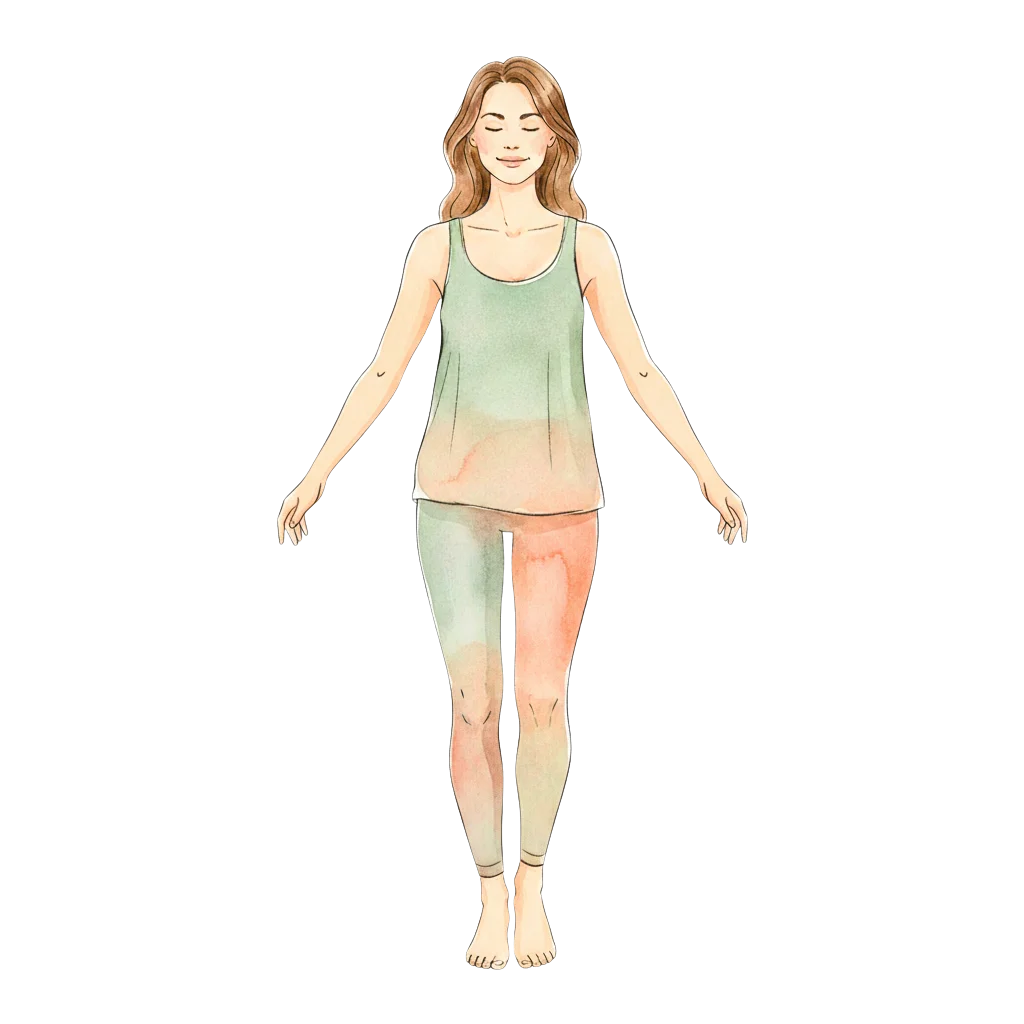
Start your protocolHow Fibromyalgia affects your body
Tap body zones to discover connected symptoms and related conditions.
Join 68+ women discussing fibromyalgia
Real experiences shared across Reddit, TikTok, and health forums
Discover How Low Dose Naltrexone (LDN) Can Transform Fibromyalgia & Chronic Fatigue Relief! 🌟 #ldn #
Discover How Low Dose Naltrexone (LDN) Can Transform Fibromyalgia & Chronic Fatigue Relief! 🌟 #ldn #fibromyalgia #chronicfatigue #pharmacy #healthtips #wellness #fyp #viral #magnoliarx #foryoupage...
Although more women than men are diagnosed with Fibromyalgia, it's not rare for men to have it. There's no test for fibromyalgia. There are 200 possible symptoms and comorbidities that...
I've had fibro atleast 25 yrs. I'm 48 and thankfully my husband makes enough now to allow me to stay home. I've been saying for some time I feel like I'll be lucky to make it to 50, and if I do I...
Reading others' stories is the first step. Join to share yours.
Community
A safe space for women navigating fibromyalgia
Frequently asked questions
Common questions about Fibromyalgia
How we research and fact-check
Every article on Wellls is researched using peer-reviewed medical literature, clinical guidelines, and real patient experiences from 11 online discussions.
Sources: We reference 48 PubMed-indexed studies, ACOG/NAMS clinical guidelines, and validated screening tools.
Review: Content is written by our editorial team, enriched from a medical knowledge base of 15,000+ sources. Evidence standards and clinical methodology guided by our Medical Advisory Board: Dr. Alexandra Rybakova and Dr. Alexander Rybakov, Lifestyle Medicine Physicians with 35+ years combined clinical practice.
This content is for informational purposes only and does not constitute medical advice. Our editorial standards · Medical advisory board
References
48 sources reviewed for this fibromyalgia guide
- 1.Fibromyalgia: A Review of the Pathophysiological Mechanisms and Multidisciplinary Treatment Strategies
- 2.Exercise and chronic pain: mechanisms of pain reduction through physical activity
- 3.Relieving Chronic Pain: Psychosomatic Mechanisms and Psychological Interventions
- 4.Genetic Characteristics and Determinants of Central Sensitization of Nociception in Fibromyalgia
- 5.The neurobiology of central sensitization
- 6.Psychological and physical interdependence between fibromyalgia syndrome and menopause
- 7.Effect of Naltrexone on Spinal and Supraspinal Pain Mechanisms in Fibromyalgia
- 8.Safety and Efficacy of Naltrexone in the Treatment of Chronic Pain: A Meta-Analysis
- 9.Art as a Therapeutic Tool in Rehabilitation of Patients With Fibromyalgia
- 10.Correlations between the Central Sensitization Inventory and measures of endogenous pain modulation
History of updates
Current version (March 11, 2026) — Content reviewed and updated based on latest research
First published (March 7, 2026)
Explore related problems
Women who experience fibromyalgia often also deal with these
Your personalized plan is ready
You've been managing this alone for long enough. Understanding why your body amplifies pain, why perimenopause makes it worse, and exactly which movement protocols have the strongest evidence is the difference between surviving fibromyalgia and learning to live with it. Your personalized plan starts here.
1,247 women explored their fibromyalgia plan this month
Free assessment · Takes 2 minutes · No account required
Medical disclaimer: This content is for informational purposes only and does not constitute medical advice, diagnosis, or treatment. Always consult a qualified healthcare provider for personal medical decisions. Content is based on peer-reviewed research and updated regularly. Learn about our editorial standards.