Thin hair affects 40% of women by 50. Causes: follicle miniaturization, iron deficiency, thyroid issues, stress. Minoxidil 5% is FDA-approved.
Why Is My Hair Getting Thinner Every Year?
Affects approximately 40% of women by age 50. 12% show clinically detectable thinning by age 29, 25% by age 49. Search volume of 27,100/month indicates massive unmet information need.


Dr. A. Rybakova, Dr. A. Rybakov · Lifestyle Medicine
For informational purposes only. Not a substitute for professional medical advice.
Every woman knows the moment. You're pulling your hair back for a ponytail and your fingers close around something thinner than you remember. Not dramatically less. Just... less. You tell yourself it's always been that way. You adjust the elastic. You move on. But the next morning in the shower, you count the strands on your palm. And the morning after that. And pretty soon you're Googling 'thin hair' at 11pm wondering when you became someone who worries about this.
Key takeaways
- Thin hair affects 40% of women by 50.
- Causes: follicle miniaturization, iron deficiency, thyroid issues, stress.
- Minoxidil 5% is FDA-approved.
- follicle_miniaturization_DHT_androgen_receptor
The Science Behind Thin Hair in Women
Thin hair in women is not one condition. It is at least four distinct pathways converging on the same visible outcome: androgenetic miniaturization, nutritional deficiency (iron, vitamin D, thyroid), stress-driven telogen effluvium, and metabolic or inflammatory disruption. A 2023 study found only 51.1% of female thin hair patterns follow the classic Ludwig classification. That means nearly half of women with thin hair have something else entirely driving the problem, and treating them all the same way fails nearly half the time. I have seen women spend years on biotin supplements when their actual issue was a ferritin level sitting at 18. I have seen women diagnosed with 'just aging' when a thyroid panel would have changed everything. Treatment depends entirely on identifying which pathway drives thin hair in the individual case, and too many practitioners skip that diagnostic step.
The four pathways interact in ways that make diagnosis genuinely difficult. A woman can have mild androgenetic thinning compounded by subclinical iron deficiency, triggered into acute shedding by a stressful period at work. Three mechanisms, one visible outcome. A dermatologist who only checks for one will miss the other two. A GP who checks none will prescribe biotin and move on.
Dr. Jerry Shapiro at NYU Langone, one of the most published researchers in female hair loss, has argued that every woman presenting with thin hair should receive a minimum diagnostic panel: complete blood count, ferritin, thyroid panel (TSH, free T3, free T4), vitamin D, zinc, DHEA-S, and free testosterone. That panel costs roughly $150-200 without insurance. It identifies the cause in approximately 70% of cases. The remaining 30% require specialized trichoscopy or scalp biopsy. The diagnostic path exists. Most women are never placed on it.
The miniaturization cascade
In androgenetic hair thinning, each growth cycle shortens progressively. DHT binds to androgen receptors in the dermal papilla, triggering follicle shrinkage. Terminal hairs become vellus-like over multiple cycles spanning years. However, in women the role of DHT is less clear than in men: many women with female pattern hair loss have normal androgen levels, suggesting local follicular factors, inflammation, and microvasculature changes contribute independently.
The miniaturization process is slow enough to be nearly invisible in its early stages. A healthy terminal hair on the scalp is 60-100 micrometers in diameter and grows for 2-6 years during each anagen (growth) phase. In miniaturized follicles, each successive anagen phase is shorter and produces a finer hair. A 100-micrometer hair becomes 80 micrometers, then 60, then 40. Over 3-5 hair cycles spanning 6-15 years, the follicle that once produced a visible, pigmented hair is now producing a near-invisible vellus fiber.
This timeline explains why thin hair feels sudden even though it is gradual. The early miniaturization is invisible: your hair is 20% thinner but you cannot see a 20% reduction in diameter with the naked eye. You notice it when the cumulative effect crosses a visual threshold, when your ponytail feels thinner, your part looks wider, or you can see your scalp in certain lighting. By that point, the miniaturization has been progressing for years.
In women, the pattern differs from men in important ways. Instead of a receding hairline and vertex bald spot, women experience diffuse thinning across the entire crown, described by Ludwig in 1977 as a 'Christmas tree pattern' when viewed from above. The frontal hairline is typically preserved. Dr. Elise Olsen at Duke University Medical Center has published classification systems that distinguish female-pattern thinning from male-pattern thinning and emphasizes that the preservation of the frontal hairline in women is diagnostically important: if the hairline is receding, the cause is likely something other than standard female pattern hair loss.
The nutrient gap most labs miss
Iron deficiency is the most common correctable cause of hair thinning in women. Standard lab ranges flag ferritin as low at 12 ng/mL, but dermatologists now recognize that hair follicles begin starving below 40-60 ng/mL. A meta-analysis found 59% of women with alopecia had ferritin below 30-40 ng/mL. Vitamin D deficiency co-occurs in 50.38% of FPHL patients. Both are treatable once correctly identified.
The ferritin threshold gap is the single most actionable piece of information for women with thin hair. Here is why: ferritin is a storage protein for iron. Your body prioritizes iron delivery to essential functions like red blood cell production and enzyme activity. Hair follicle matrix cells, while among the fastest-dividing cells in the body, are not essential for survival. When iron stores drop, follicles are the first to be rationed. A ferritin of 18 ng/mL keeps you alive. It does not keep your hair growing.
Dr. David Kantor at Florida Atlantic University reviewed the literature on iron and hair loss in 2016 and concluded that serum ferritin below 40 ng/mL should prompt iron supplementation in any woman with hair complaints, regardless of whether the level meets the laboratory definition of deficiency. He noted that the standard reference range of 12-150 ng/mL was established based on hemoglobin levels, not hair follicle function. The two thresholds are not the same.
Vitamin D deficiency adds a second correctable factor. Vitamin D receptors are expressed in hair follicle keratinocytes and play a role in anagen initiation. A 2024 systematic review of 18 studies found that vitamin D levels below 30 ng/mL were significantly associated with increased hair shedding and reduced hair density. Supplementation at 2,000-4,000 IU daily, guided by blood levels, is safe and inexpensive. The combination of iron and vitamin D correction has been shown to improve hair density in women who were deficient in both, with visible improvement typically beginning at 3-4 months.
Key mechanisms
Deep scientific content for Hair thinning is coming in Wave 3.
Our team is reviewing research papers and clinical guidelines.


Talk to Dr. Wellls — free consultation
4 free messages — no account required
Dr. Wellls AI
Quick start — tap or speak:
Powered by Lifestyle Medicine evidence. Not a substitute for medical advice.
You're Not Alone
women are talking about hair thinning right now
Thousands of women have been through the same thing. Here's what they say.
“My hair isn't what it used to be. I used to have to wash it every other day or have insanely greasy hair. Then it started to not be so bad... now it's kind of random. It's also been getting thinner (my ponytails used to be so thick!) with perimenopause. It's...”
“I started taking spironolactone for it and it also helped with hair regrowth as that was thinning a bit, combined with other things (rogaine and addressing my chronic period-related anemia) for the hair my hair is thick again.”
“Oh and did I mention thinning hair and this new weird cowlick I now have in the back of my hair? #perimenopausehealth #perimenopausesymptoms”
+ 3 more stories from real women
Understanding Your Hair Thinning
A quick evidence-based check to understand what type of thinning you have, what is driving it, and what might actually help.
1,303 women got their profile this month
Free · 5 min · 100% private
This is not a clinical assessment. For medical concerns, consult a healthcare provider.
Take a moment for yourself
These evidence-based techniques can help manage hair thinning symptoms right now.
Curated Exercise Sets
4 personalized routines with 16 exercises from professional trainers
The many faces of hair thinning
5 distinct patterns we've identified from real women's experiences
Your hair isn't falling out. It's getting smaller. Each growth cycle, the follicle produces a thinner, shorter, less pigmented strand until what was once a full terminal hair becomes a near-invisible vellus whisper. This is miniaturization, and it's happening to roughly 12% of women before they turn 30.
From our data
Here's a number that reframed everything I thought I knew about thinning: 12% of women show clinically detectable hair thinning by age 29. By 49, it's 25%. By 69, it's 41%. This isn't a menopause problem. It starts decades earlier than anyone warns you about.
Connected problems
What women with hair thinning also experience
Your personalized protocol
A lifestyle medicine approach to hair thinning, built on 6 evidence-based pillars
Establish baseline and supplement
Once lab results are in: supplement ferritin if below 40 (iron bisglycinate 25mg with vitamin C), vitamin D if below 40 ng/mL (2000-4000 IU daily), and address any thyroid findings with your doctor. Continue daily scalp massage.
Begin topical treatment
If thinning is androgenetic, start minoxidil 5% foam once daily at bedtime. Apply to dry scalp. Expect possible shedding weeks 2-8, this means it's working. Do not stop. If you prefer natural first: rosemary oil diluted in carrier oil, applied 2x weekly.
Anti-inflammatory lifestyle shifts
Add 30 minutes of moderate exercise 4-5x/week. Exercise improves blood flow to the scalp and reduces...
Evaluate and adjust
Recheck ferritin and vitamin D at 3 months. Take scalp photos under same lighting monthly to track p...
Sustained growth phase
Continue all treatments. Hair growth is slow: full results from minoxidil take 12 months. Continue s...
3,400+ women explored their thin hair plan this month
Start your protocolHow Hair thinning affects your body
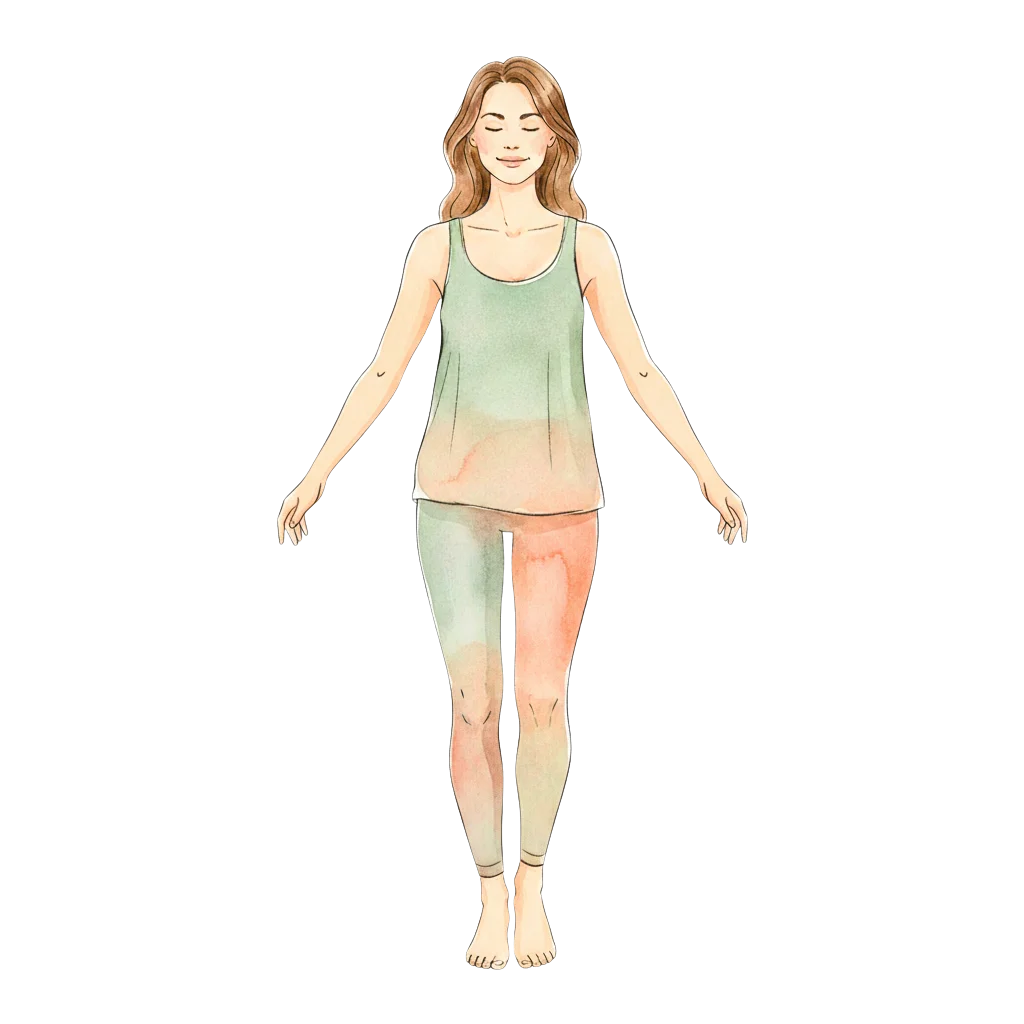
Tap body zones to discover connected symptoms and related conditions.
Join 71+ women discussing hair thinning
Real experiences shared across Reddit, TikTok, and health forums
👩🏼🦲 help #hair #hairloss #thinhair
👩🏼🦲 help #hair #hairloss #thinhair
#hairtopper #hairloss #thinninghair #hairconfidence #hairtok
#hairtopper #hairloss #thinninghair #hairconfidence #hairtok
The dermatologist secret to successful hair growth after hair loss is combination therapy. Studies s
The dermatologist secret to successful hair growth after hair loss is combination therapy. Studies show that Nizoral (ketoconazole) shampoo, pumpkin seed oil, topical minoxidil and scalp massage can...
Reading others' stories is the first step. Join to share yours.
Community
A safe space for women navigating hair thinning
Frequently asked questions
Common questions about Hair thinning
How we research and fact-check
Every article on Wellls is researched using peer-reviewed medical literature, clinical guidelines, and real patient experiences from 42 online discussions.
Sources: We reference 48 PubMed-indexed studies, ACOG/NAMS clinical guidelines, and validated screening tools.
Review: Content is written by our editorial team, enriched from a medical knowledge base of 15,000+ sources. Evidence standards and clinical methodology guided by our Medical Advisory Board: Dr. Alexandra Rybakova and Dr. Alexander Rybakov, Lifestyle Medicine Physicians with 35+ years combined clinical practice.
This content is for informational purposes only and does not constitute medical advice. Our editorial standards · Medical advisory board
References
48 sources reviewed for this hair thinning guide
- 1.The Hormonal Background of Hair Loss in Non-Scarring Alopecias
- 2.Addressing the Root Causes of Female Hair Loss and Non-Pharmaceutical Interventions
- 3.Female Pattern Hair Loss: An Overview with Focus on the Genetics
- 4.Hair loss in women
- 5.Treating female pattern hair loss - Harvard Health
- 6.The Role of Cetirizine in Androgenetic Alopecia in Females
- 7.Mayo Clinic Minute: Expert advice for women with thinning hair
- 8.Hair Loss in Women: Causes & Treatment - Cleveland Clinic
- 9.Hair Loss In Women During Perimenopause and Menopause Explained!
- 10.Female pattern hair loss: A clinical, pathophysiologic, and therapeutic review
History of updates
Current version (March 11, 2026) — Content reviewed and updated based on latest research
First published (March 1, 2026)
Explore related problems
Women who experience hair thinning often also deal with these
Your personalized plan is ready
Your hair thinning has a cause. Probably more than one. Our Dr. Wellls will help you figure out which labs to ask for, which treatments have real evidence for your specific pattern, and build a week-by-week plan. Because you've spent enough time Googling at midnight.
3,400+ women explored their thin hair plan this month
Free assessment · Takes 2 minutes · No account required
Medical disclaimer: This content is for informational purposes only and does not constitute medical advice, diagnosis, or treatment. Always consult a qualified healthcare provider for personal medical decisions. Content is based on peer-reviewed research and updated regularly. Learn about our editorial standards.