Signs of childhood trauma in adulthood surface in 61% of women. Perimenopause can reactivate trauma through hormonal disruption of the stress response system.
Why Is My Trauma Coming Back Now? The Midlife PTSD No One Prepared You For
Women are twice as likely as men to develop PTSD (10-12% lifetime prevalence in women versus 5-6% in men). Over 70% of adults globally report at least one traumatic event exposure.
“I struggled with this on and off for 7 years. I had no idea there was a name for what I was experiencing - derealization, depersonalization. It's your brain's defense mechanism, even when there's no actual danger present.”


Dr. A. Rybakova, Dr. A. Rybakov · Lifestyle Medicine
For informational purposes only. Not a substitute for professional medical advice.
You thought you were over it.
You built a life. You have a career. Maybe children. You function. You are not the kind of person who falls apart. You handled it. You moved on. You told yourself the story so many times it almost sounded true.
Key takeaways
- Signs of childhood trauma in adulthood surface in 61% of women.
- Perimenopause can reactivate trauma through hormonal disruption of the stress response system.
- Amygdala-hippocampal dissociation in traumatic memory storage
- HPA axis permanent alteration by early trauma (ACE dose-response)
The Science Behind PTSD Symptoms in Women
Trauma rewires the brain. I need to start there because everything else flows from it.
During a traumatic event, the amygdala fires hard and the hippocampus goes offline. The memory gets encoded as fragments: sensory snapshots, body states, emotional flooding. Not as narrative. This is why PTSD flashbacks feel like the event is happening now rather than being remembered as something from the past. The hippocampus timestamps memories. Without it, the trauma memory exists outside of time.
Bessel van der Kolk at Boston University has been documenting this for decades. The body keeps the score. That is not a metaphor. The trauma lives in the brainstem, the vagus nerve, the muscle tension patterns you cannot explain, the startle response that fires when a door closes too hard. And for women, especially women approaching or entering perimenopause, the neurobiological picture gets significantly more complicated.
I have spent years reading the literature on how to help with PTSD flashbacks in women, and what consistently emerges is a hormonal dimension that mainstream treatment largely ignores. Estrogen modulates fear extinction. Progesterone buffers the stress response through GABA. When both become erratic during the menopausal transition, women with trauma histories often experience a reactivation of symptoms they thought they had processed years ago. The PTSD flashbacks that were manageable at 35 become overwhelming at 43. Not because the trauma got worse. Because the neurochemical protection against it got thinner.
If you are a woman whose PTSD flashbacks have returned or intensified in midlife, this is not a relapse of weakness. This is endocrinology. And understanding how to help with PTSD flashbacks requires understanding the hormonal vulnerability window that nobody warns you about.
The severity rating for PTSD symptoms in our research data is 4.23 out of 5. The highest of any problem in the mental health cluster. Higher than anxiety. Higher than depression. This is not a minor clinical concern. This is an epidemic hiding in plain sight.
Why perimenopause is pulling the lid off old wounds
Arnold and colleagues showed the relationship is bidirectional: trauma changes your hormones, and hormonal changes reactivate trauma. During perimenopause, when estrogen and progesterone become volatile, women with trauma histories are uniquely vulnerable to symptom reactivation.
Here is the mechanism. Estrogen supports fear extinction through the prefrontal cortex-amygdala circuit. When estrogen is stable and adequate, the prefrontal cortex can signal the amygdala to stand down when the threat is not real. PTSD flashbacks involve this circuit failing: the amygdala fires, the prefrontal cortex cannot override it, and the body mobilizes for a threat that is actually a memory.
During perimenopause, estrogen fluctuates wildly before declining. On low-estrogen days, fear extinction is impaired. The prefrontal cortex loses apply over the amygdala. PTSD flashbacks become more frequent, more intense, and harder to interrupt. This is not psychological regression. This is a cellular-level change in the brain's ability to distinguish past from present.
I find it unconscionable that most trauma therapists do not track their patients' menstrual cycles or hormonal status. Understanding how to help with PTSD flashbacks in midlife requires knowing where the woman is in her hormonal cycle, and whether perimenopause has altered the neurochemical field that her previous treatment was built on.
Rasmusson's research at the VA showed that women veterans with PTSD have lower allopregnanolone levels than women veterans without PTSD. The very neurosteroid that buffers the stress response is depleted by trauma itself. Add perimenopause to that equation, and the woman's stress-buffering capacity is being attacked from two directions simultaneously. The PTSD flashbacks are not coming back because she failed at therapy. They are coming back because her neurochemistry can no longer hold what therapy helped her contain.
The progesterone-fear extinction connection nobody discusses
Green and Graham's systematic review confirmed that PTSD symptoms in women fluctuate with the menstrual cycle. Low-progesterone phases worsen everything: intrusion, avoidance, hyperarousal. High-progesterone phases provide relative calm. The menstrual cycle is literally modulating trauma symptom severity on a monthly basis. And nobody told you. I find that failure inexcusable.
Progesterone converts to allopregnanolone, which is a potent GABA-A receptor agonist. GABA is the brain's primary inhibitory neurotransmitter. It is what keeps the fear circuits from firing indiscriminately. When progesterone drops, allopregnanolone drops, GABA-A receptor activity diminishes, and the amygdala runs unchecked. PTSD flashbacks during the luteal phase dip? Progesterone is high. PTSD flashbacks worsen premenstrually? Progesterone crashed.
Now multiply that monthly pattern by perimenopause, when progesterone drops permanently and never returns to its previous levels. The woman who had PTSD flashbacks only premenstrually now has them continuously. Because the progesterone that was providing cyclical relief has stopped cycling.
Understanding how to help with PTSD flashbacks requires understanding this progesterone-fear extinction connection. Treatment that does not account for it is treating half the problem. An SSRI can help stabilize serotonin. CBT can help reprocess the trauma narrative. But if the GABA-mediated inhibition is compromised because progesterone is depleted, the flashback circuit retains its hair trigger.
This is why some women report that HRT helped their PTSD symptoms. Micronized progesterone directly restores allopregnanolone production. It is not treating the trauma. It is restoring the neurochemical environment in which trauma treatment can actually work. Without adequate allopregnanolone, the brain cannot consolidate the fear extinction learning that therapy is trying to create. The therapy session goes well. The brain cannot hold the gains. The PTSD flashbacks return by evening.
Key mechanisms
Deep scientific content for Ptsd symptoms is coming in Wave 3.
Our team is reviewing research papers and clinical guidelines.



Talk to Dr. Wellls — free consultation
4 free messages — no account required
Dr. Wellls AI
Quick start — tap or speak:
Powered by Lifestyle Medicine evidence. Not a substitute for medical advice.
You're Not Alone
women are talking about ptsd symptoms right now
Thousands of women have been through the same thing. Here's what they say.
“When I had a total mental breakdown and lashed out a bit (trauma thing, was not used to feeling safe, tried to sabotage everything) and he patiently hugged me and held my hands and helped me breathe. I do not think I had ever felt that safe in any other point...”
“I did not know it was trauma until I was 36 and a therapist used the word. I always thought trauma was war or car accidents. Not the things that happened to me.”
“I asked a girl if she had ever been harassed and she said: Not really, just normal stuff. Catcalling, being followed, groped. That response broke me. This is how normalized rape culture is.”
+ 2 more stories from real women
Understanding Your Trauma Symptoms
A brief, trauma-informed assessment to understand what your body and mind are telling you right now. You are in control of this. Skip anything that feels like too much.
1,782 women got their profile this month
Free · 5 min · 100% private
This is not a clinical assessment. For medical concerns, consult a healthcare provider.
Take a moment for yourself
These evidence-based techniques can help manage ptsd symptoms symptoms right now.
Curated Exercise Sets
4 personalized routines with 20 exercises from professional trainers


The many faces of ptsd symptoms
4 distinct patterns we've identified from real women's experiences
Bessel van der Kolk titled his book "The Body Keeps the Score" and that phrase has entered common language. But what most people miss is the mechanism underneath. Traumatic memories are stored differently from ordinary memories. They bypass the hippocampus (which timestamps and contextualizes) and lodge directly in the amygdala as sensory fragments. No narrative. No timeline. Just raw threat response waiting for a matching trigger.
In your thirties and forties, the triggers multiply. Hormonal shifts destabilize the HPA axis. Sleep deteriorates. Children reach ages that echo your own childhood. And the amygdala does not know it is 2026. It fires like it is still back there.
From our data
In our dataset of 194 PTSD-related posts, 51 came from women in their 30s describing experiences of trauma resurfacing. The severity rating of 4.23 out of 5 is the highest in our entire mental health cluster. Higher than anxiety (3.28). Higher than depression (3.92). The desperation ratio in the emotional tones is striking: women posting about PTSD symptoms are more likely to express desperation than any other emotional tone we tracked.
Connected problems
What women with ptsd symptoms also experience
Your personalized protocol
A lifestyle medicine approach to ptsd symptoms, built on 6 evidence-based pillars
Find a trauma-specialized therapist
Look for someone trained in EMDR, somatic experiencing, or CPT (Cognitive Processing Therapy). Specifically ask about trauma training, not just general therapy credentials. If cost is a barrier, SAMHSA\'s helpline (1-800-662-4357) can help locate reduced-cost options.
Build nervous system regulation practices
Daily: 10 minutes of bilateral movement, breathwork, or body scan. These are not relaxation techniques. They are nervous system regulation. The distinction matters because trauma survivors often cannot relax on command.
Address sleep architecture
Trauma disrupts REM sleep, which is essential for emotional memory processing. Pace-Schott et al. do...
Hormonal assessment
Request progesterone, estradiol, and cortisol testing from your doctor. Tell them about your trauma ...
Social nervous system activation
Polyvagal theory tells us that safe social connection activates the ventral vagal system, which is t...
Consider body-based intervention
If talk therapy alone has not resolved your symptoms, explore trauma-sensitive yoga, EMDR, or somati...
1,800 women explored their trauma recovery plan this month
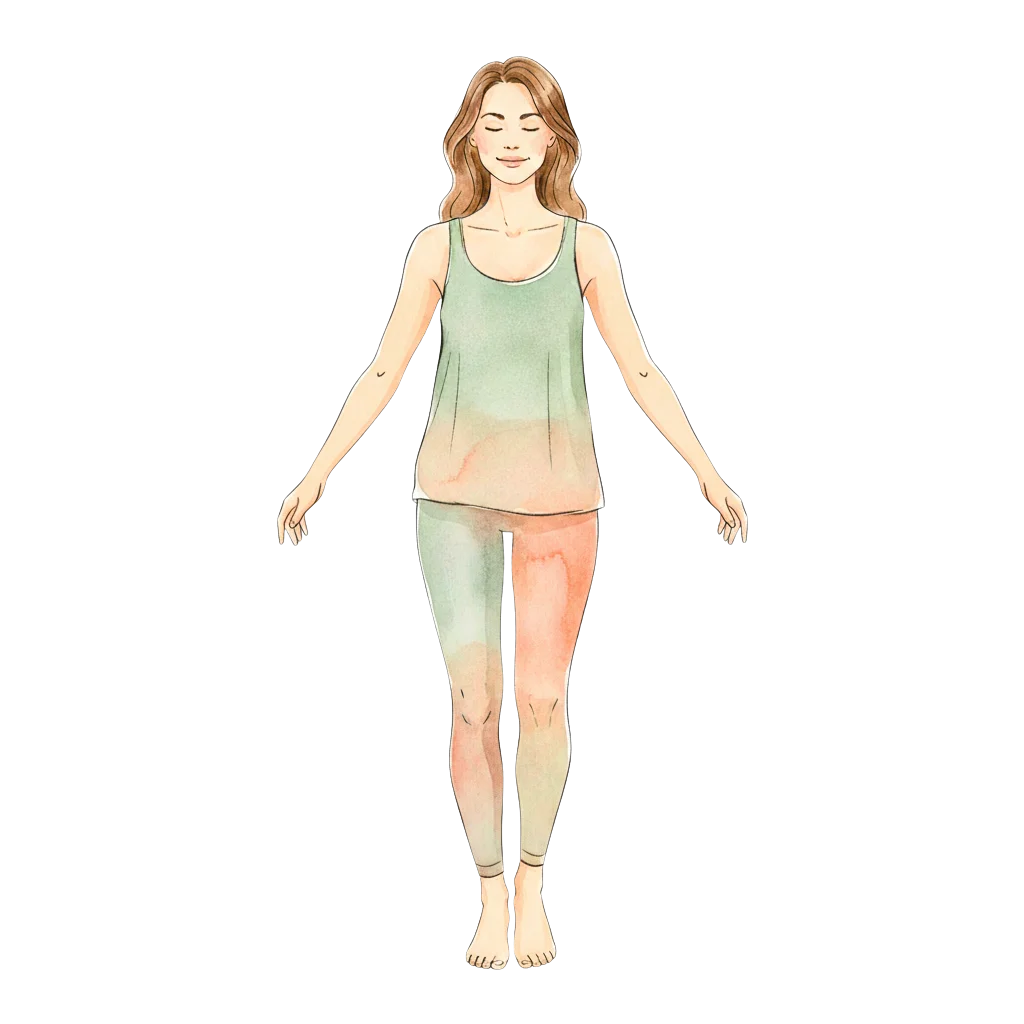
Start your protocolHow Ptsd symptoms affects your body
Tap body zones to discover connected symptoms and related conditions.
Join 71+ women discussing ptsd symptoms
Real experiences shared across Reddit, TikTok, and health forums
Conversation with therapist left me rattled
Conversation with therapist left me rattled So this conversation happened on January 13, so after Renee Good was killed, but before Alex Pretti was killed. (I don’t want this to turn into an argument...
When I had a total mental breakdown and lashed out a bit (trauma thing, wasn't used to feeling safe, tried to sabotage everything) and he patiently hugged me and held my hands and helped me breathe...
9 signs YOU experienced childhood emotional neglect
sign number one and this one is going to hurt when children are emotionally neglected they most likely struggle to process feelings as they grow into adults these...
Reading others' stories is the first step. Join to share yours.
Community
A safe space for women navigating ptsd symptoms
Frequently asked questions
Common questions about Ptsd symptoms
How we research and fact-check
Every article on Wellls is researched using peer-reviewed medical literature, clinical guidelines, and real patient experiences from 194 online discussions.
Sources: We reference 45 PubMed-indexed studies, ACOG/NAMS clinical guidelines, and validated screening tools.
Review: Content is written by our editorial team, enriched from a medical knowledge base of 15,000+ sources. Evidence standards and clinical methodology guided by our Medical Advisory Board: Dr. Alexandra Rybakova and Dr. Alexander Rybakov, Lifestyle Medicine Physicians with 35+ years combined clinical practice.
This content is for informational purposes only and does not constitute medical advice. Our editorial standards · Medical advisory board
References
45 sources reviewed for this ptsd symptoms guide
- 1.
- 2.
- 3.
- 4.
- 5.
- 6.
- 7.
- 8.
- 9.
- 10.
History of updates
Current version (March 11, 2026) — Content reviewed and updated based on latest research
First published (February 17, 2026)
Explore related problems
Women who experience ptsd symptoms often also deal with these
Your personalized plan is ready
Your trauma is not weakness. The flashbacks, the startle response, the way your body freezes in situations that should feel safe. These have a neurobiological explanation and they are treatable. Your personalized trauma recovery plan includes evidence-based approaches matched to your specific symptoms and your hormonal reality.
1,800 women explored their trauma recovery plan this month
Free assessment · Takes 2 minutes · No account required
Medical disclaimer: This content is for informational purposes only and does not constitute medical advice, diagnosis, or treatment. Always consult a qualified healthcare provider for personal medical decisions. Content is based on peer-reviewed research and updated regularly. Learn about our editorial standards.