Hot flashes affect 75-80% of perimenopausal women. They're caused by hypothalamic thermoregulatory dysfunction from estrogen withdrawal, not "just hormones."
Hot flashes out of nowhere? Here's what your body is telling you.
Up to 80% of women experience hot flashes during the menopause transition
“It's hot in this body temp always 105° no one understands it.... The Candle has been Lit ! almost 10 years now....”


Dr. A. Rybakova, Dr. A. Rybakov · Lifestyle Medicine
For informational purposes only. Not a substitute for professional medical advice.
It started in a Zoom meeting. Forty-three years old, presenting quarterly results, and suddenly her face was on fire. Not warm. On fire. She described it later as someone holding a blowtorch two inches from her skin while the rest of the room went about their business. Sweat pooling at the base of her neck. Heart slamming. And the thing that gutted her most was the absolute certainty that everyone could see it happening.
Key takeaways
- Hot flashes affect 75-80% of perimenopausal women.
- They're caused by hypothalamic thermoregulatory dysfunction from estrogen withdrawal, not "just hormones."
- KNDy neuron pathway and thermoneutral zone narrowing
- Neurokinin B signaling dysregulation
The Thermostat That Lost Its Range
I need to tell you something that should make you angry. Hot flashes are the most common symptom of the menopause transition. They affect up to 80% of women. They have been documented in medical literature for centuries. And the mechanism was not properly understood until 2007, when Rance and colleagues identified the KNDy neuron pathway in the hypothalamus.
Two hundred years of women describing their bodies catching fire, and the basic neurological mechanism was worked out seventeen years ago. The first targeted medication — fezolinetant — was not approved until 2023. The second — elinzanetant — until 2025. We are living in the first decade of history where women have a non-hormonal pharmaceutical option designed specifically for the mechanism that causes their symptoms.
That context matters because it explains why so much of the information available to women about hot flashes is either outdated, vague, or wrong. The doctor who told you it is 'just hormones' was not lying. But they were using a framework from 1990 when the science is from 2025. The specificity of what we now know — KNDy neurons, neurokinin B signaling, thermoneutral zone narrowing — should be available to every woman experiencing these symptoms. It changes how you understand what is happening and, more importantly, what you can do about it. Hot flashes perimenopause affects the majority of women in the menopausal transition, and the mechanism behind them is more complex and more treatable than most women have been told.
Your thermostat is broken — the KNDy neuron explanation
The hypothalamus is a structure about the size of an almond sitting at the base of your brain. Among its many functions, it serves as your body's thermostat. I find this particularly telling.. It maintains core body temperature within a narrow range by balancing heat production against heat dissipation. When you are too hot, it triggers cooling responses: vasodilation to move warm blood to the skin surface, sweating to dissipate heat through evaporation, and behavioral cues to seek cooler environments.
In a premenopausal woman, the thermoneutral zone — the range of core temperatures the hypothalamus considers normal — is approximately 0.4 degrees Celsius. Within this range, no heating or cooling response is triggered. You are comfortable. Temperature fluctuates slightly with activity, circadian rhythm, and ambient conditions, and your body handles it silently.
During perimenopause, the thermoneutral zone narrows. In severe cases, it narrows to virtually zero. The mechanism is the KNDy neuron pathway. These neurons produce three neuropeptides: kisspeptin, neurokinin B, and dynorphin. Estrogen normally modulates these neurons, keeping neurokinin B signaling within a range that maintains a functional thermoneutral zone. When estrogen declines or fluctuates, neurokinin B signaling increases, and the thermoneutral zone collapses.
The result is that a core temperature fluctuation of 0.1 degrees Celsius — something your body previously ignored — now triggers a full emergency cooling response. Peripheral blood vessels dilate rapidly, particularly in the face, neck, and chest. Sweat glands activate. Heart rate increases by 10-15 beats per minute. You experience a wave of heat, flushing, sweating, and often anxiety or palpitations. The episode is not imagined. It is a genuine physiological response to a genuine neurological signal. The signal is just wrong.
One detail that rarely appears in patient-facing materials: the subjective experience of heat during a hot flash does not correlate perfectly with actual skin temperature changes. Some women have dramatic temperature rises of 2-3 degrees Celsius at the skin surface. Others show minimal objective changes despite reporting intense subjective heat. This mismatch has historically been used to dismiss women's symptoms as exaggerated. It should not be. The subjective experience is driven by central nervous system signaling, not peripheral temperature alone. The hypothalamus is telling the body it is overheating, and the body believes it. This is a core aspect of hot flashes perimenopause that deserves clinical attention. Hot flashes perimenopause represents the most visible symptom of a thermoregulatory system that has lost its calibration.
Hot flashes and your heart — the cardiovascular connection
The cardiovascular dimension of hot flashes deserves more attention than it gets. Thurston's research program at the University of Pittsburgh has established that vasomotor symptoms are not just a quality-of-life issue. I want to be direct about this.. Women with more frequent and severe hot flashes show measurably higher carotid intima-media thickness, more aortic calcification, and worse endothelial function compared to women with fewer symptoms.
This does not mean hot flashes cause heart disease. The relationship is more tangled than that. Hot flashes may be a biomarker for underlying cardiovascular vulnerability — the same estrogen withdrawal that narrows the thermoneutral zone also removes estrogen's protective effects on blood vessels. Alternatively, the repeated vasodilation-constriction cycling may directly stress vascular endothelium over time. Or both mechanisms may contribute simultaneously.
The practical implication is that hot flashes should be taken seriously by both women and their healthcare providers, particularly when they are severe or persistent. This is not about catastrophizing. It is about recognizing that a symptom affecting 80% of women for an average of seven years might have systemic health implications worth monitoring.
I have to say this directly because I have read too many posts from women whose doctors dismissed their hot flashes as trivial. Four women in our dataset mentioned frustration with medical dismissal. They were told to 'just deal with it.' When a doctor says that about a symptom linked to cardiovascular risk markers, increased cortisol, and chronic sleep disruption, that doctor is not practicing evidence-based medicine. They are practicing avoidance.
The nocturnal component makes the cardiovascular connection even more concerning. Hot flashes that occur during sleep, which account for roughly half of all episodes in most women, are associated with larger spikes in sympathetic activity and more dramatic blood pressure fluctuations than daytime episodes. The woman who wakes up drenched at 3 AM is not just losing sleep. Her cardiovascular system is being repeatedly stressed at the time when it should be recovering. Thurston's group found that nocturnal vasomotor symptoms were more strongly associated with subclinical atherosclerosis than daytime symptoms, suggesting that the timing matters as much as the frequency.
This is why the cascade framework is not just a theoretical model. When hot flashes disrupt sleep, they create a double cardiovascular burden: the direct vascular stress of the flash itself plus the downstream effects of chronic sleep deprivation on blood pressure, inflammation, and metabolic function. This is a core aspect of hot flashes perimenopause that deserves clinical attention. I have read the KNDy neuron research extensively, and it represents one of the most significant advances in menopause science in the last decade.
Key mechanisms
Deep scientific content for Hot flashes is coming in Wave 3.
Our team is reviewing research papers and clinical guidelines.


Talk to Dr. Wellls — free consultation
4 free messages — no account required
Dr. Wellls AI
Quick start — tap or speak:
Powered by Lifestyle Medicine evidence. Not a substitute for medical advice.
You're Not Alone
women are talking about hot flashes right now
Thousands of women have been through the same thing. Here's what they say.
“Me: sweating, freezing, melting, repeat. Him: calmly turning pages like nothing's happening. Anyone else?”
“Hot flashes? Mood swings? Can't sleep? WHAT THE HELL is going on?! It might be perimenopause. You're not alone.”
“Hot flashes that last over an hour normal? Please don't tell me I'm crazy. Everything online says that they only last a few minutes, but I just timed one lasting over an hour. Why does everything online say it's just a few minutes?”
+ 3 more stories from real women
Understanding Your Hot Flashes
A quick assessment to understand your hot flashes and night sweats — how severe they are, what triggers them, and what they are doing to the rest of your life.
3,036 women got their profile this month
Free · 5 min · 100% private
This is not a clinical assessment. For medical concerns, consult a healthcare provider.
Take a moment for yourself
These evidence-based techniques can help manage hot flashes symptoms right now.
Curated Exercise Sets
4 personalized routines with 16 exercises from professional trainers

The many faces of hot flashes
5 distinct patterns we've identified from real women's experiences
Hot flashes are not random. They are the result of a specific malfunction in the hypothalamus, your brain's temperature regulation center. When estrogen declines during perimenopause, the thermoneutral zone — the range of core body temperatures your body considers normal — narrows dramatically. A temperature shift that your body would have ignored five years ago now triggers a full emergency cooling response: blood vessel dilation, sweating, heart rate increase, and that distinctive wave of heat that makes you want to rip your clothes off in the middle of a meeting.
From our data
In our dataset, 87 out of 198 women were sharing their experience with hot flashes, making it the most communal of all R8 symptoms. Twenty-four women expressed frustration, and 19 were confused. The confusion rate tells a story: hot flashes in perimenopause can start years before periods change, leaving women in their late 30s and early 40s blindsided. One woman wrote: 'Hot flashes? Mood swings? Can't sleep? WHAT THE HELL is going on?!' That post got 2.5 million likes on TikTok. The confusion is universal.
Connected problems
What women with hot flashes also experience
Your personalized protocol
A lifestyle medicine approach to hot flashes, built on 6 evidence-based pillars
Establish thermoregulatory foundation
Daily trigger tracking. Bedroom cooling protocol. Layered clothing strategy for daytime. Cold water always accessible. These environmental modifications address the narrowed thermoneutral zone directly.
Build aerobic exercise habit
150 minutes per week moderate aerobic exercise: walking, swimming, cycling. Add resistance training 2x per week. Exercise improves thermoregulatory capacity and can reduce flash frequency by 40-60% over 8-12 weeks.
Nutrition and substance optimization
Mediterranean diet pattern with phytoestrogen-rich foods. Eliminate or reduce alcohol, caffeine afte...
Sleep protection and cascade prevention
If nocturnal hot flashes persist, implement full sleep protocol: consistent wake time, CBT-I princip...
Mind-body practice integration
Add yoga or tai chi 2x per week. Focus on breath-regulated movement targeting sympathetic downregula...
Social support and medical advocacy
Connect with menopause community. If symptoms remain moderate-severe, discuss pharmacological option...
198 women in our community shared their hot flash experiences. Join 2,500+ who are tracking triggers and finding what works.
Start your protocolHow Hot flashes affects your body
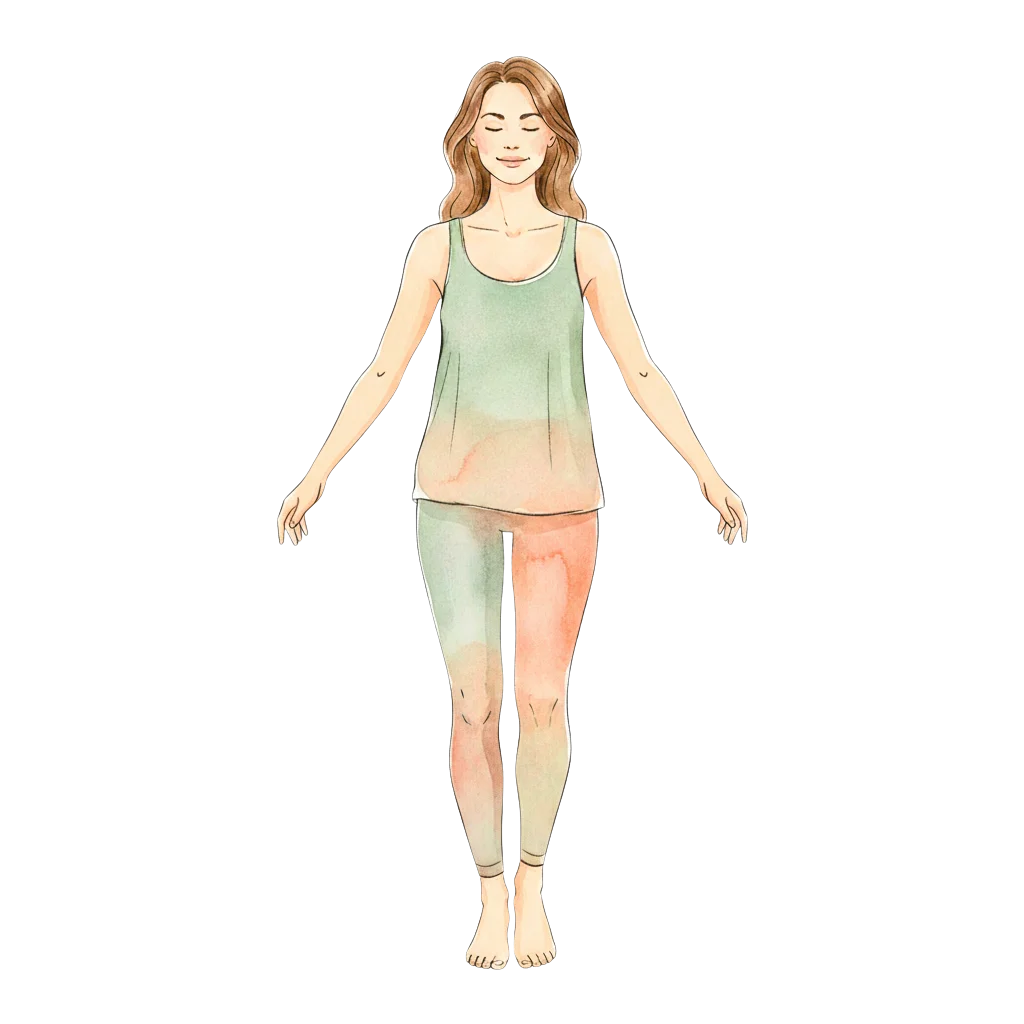
Tap body zones to discover connected symptoms and related conditions.
Join 65+ women discussing hot flashes
Real experiences shared across Reddit, TikTok, and health forums
She couldn’t believe how freezing cold it was😭🤯 #coolingblanket #coolingblankets #hotsleeper #nights
She couldn’t believe how freezing cold it was😭🤯 #coolingblanket #coolingblankets #hotsleeper #nightsweats #hotflashes #menopause
When Satan decides you’re not hot enough when mowing the lawn, so he gives you a flashback from home
When Satan decides you’re not hot enough when mowing the lawn, so he gives you a flashback from home 🤣#hotflashes #menopause #perimenopause
Do you know how many of us are going to be taking an ice pack to bed with us tonight? All of us. I hope I have the same results as you!
Reading others' stories is the first step. Join to share yours.
Community
A safe space for women navigating hot flashes
Frequently asked questions
Common questions about Hot flashes
How we research and fact-check
Every article on Wellls is researched using peer-reviewed medical literature, clinical guidelines, and real patient experiences from 195 online discussions.
Sources: We reference 48 PubMed-indexed studies, ACOG/NAMS clinical guidelines, and validated screening tools.
Review: Content is written by our editorial team, enriched from a medical knowledge base of 15,000+ sources. Evidence standards and clinical methodology guided by our Medical Advisory Board: Dr. Alexandra Rybakova and Dr. Alexander Rybakov, Lifestyle Medicine Physicians with 35+ years combined clinical practice.
This content is for informational purposes only and does not constitute medical advice. Our editorial standards · Medical advisory board
References
48 sources reviewed for this hot flashes guide
- 1.
- 2.
- 3.
- 4.
- 5.
- 6.
- 7.
- 8.
- 9.
- 10.
History of updates
Current version (March 11, 2026) — Content reviewed and updated based on latest research
First published (February 17, 2026)
Explore related problems
Women who experience hot flashes often also deal with these
Your personalized plan is ready
Get your personalized hot flash trigger protocol, movement plan, and treatment roadmap from our Dr. Wellls — built on 48 research sources specific to vasomotor symptoms.
198 women in our community shared their hot flash experiences. Join 2,500+ who are tracking triggers and finding what works.
Free assessment · Takes 2 minutes · No account required
Medical disclaimer: This content is for informational purposes only and does not constitute medical advice, diagnosis, or treatment. Always consult a qualified healthcare provider for personal medical decisions. Content is based on peer-reviewed research and updated regularly. Learn about our editorial standards.