How to deal with perimenopause: it starts ages 35-45, lasts 4-10 years. HRT cuts hot flashes 75%. Exercise and CBT have strong evidence.
Is This Perimenopause or Am I Going Crazy?
Perimenopause affects all women, typically beginning ages 35-45. 55.4% of women aged 30-35 already report moderate to severe symptoms.
“Going through perimenopause + work+ getting very comfortable with being divorced and living life on my own terms + being an introvert = dating on pause till further notice.”


Dr. A. Rybakova, Dr. A. Rybakov · Lifestyle Medicine
For informational purposes only. Not a substitute for professional medical advice.
Something changed. You cannot pinpoint when. Maybe it was the night you woke drenched at 3am and thought the heating was broken. Or the Tuesday you forgot the word for 'kettle' mid-sentence and stood there, mouth open, terrified. Or the period that lasted fourteen days and then vanished for two months. You Googled your symptoms at midnight and the internet said perimenopause. You are thirty-seven. That cannot be right. Except it can. And it is.
Key takeaways
- How to deal with perimenopause: it starts ages 35-45, lasts 4-10 years.
- HRT cuts hot flashes 75%.
- Exercise and CBT have strong evidence.
- estrogen_erratic_fluctuation_not_simple_decline
The Science Behind Perimenopause
Perimenopause is not menopause. I need to say that clearly because the confusion between these two terms has led millions of women to dismiss their symptoms as either premature or impossible. Perimenopause is the hormonal transition that precedes menopause by anywhere from 2 to 12 years. It can begin as early as your mid-30s. It produces symptoms that overlap with anxiety, depression, thyroid disease, and chronic fatigue. And most women navigating it have no idea that is what is happening. If you are trying to figure out how to deal with perimenopause, the first thing to know is that your symptoms are not random. They are not aging. They are not stress. They are the predictable result of a hormonal transition that affects every system in your body, and they have a name even if nobody has given it to you yet. How to deal with perimenopause should not require the level of independent research that it currently demands. The fact that it does tells you everything you need to know about how seriously the medical system takes this transition.
The Estrogen Roller Coaster Nobody Warned You About
The defining feature of perimenopause is not low estrogen. It is volatile estrogen. Estradiol does not decline gradually like a sunset. It swings erratically, sometimes reaching levels higher than peak reproductive years before crashing to postmenopausal ranges within the same cycle. The SWAN study, tracking 3,302 women longitudinally, documented that these fluctuations produce the most severe symptoms during late perimenopause, years before the final menstrual period. Dr. Lisa Mosconi's neuroimaging research at Weill Cornell has shown that these swings physically alter brain structure and function: reduced gray matter volume, decreased cerebral blood flow, changes in white matter connectivity. Understanding how to deal with perimenopause requires accepting a counterintuitive truth: the worst part is often not menopause itself. It is the transition leading to it, when your brain and body are trying to adapt to a hormonal environment that changes direction daily. A single blood test during this period captures one frame of an unstable movie and may read normal even on a day you feel terrible. Symptom-based clinical assessment, not lab-dependent diagnosis, is what NICE guidelines recommend for women over 45 with perimenopausal symptoms. The practical implication is this: if you are trying to figure out how to deal with perimenopause and your doctor orders a blood test that comes back normal, that normal result may mean nothing. It captured a snapshot of a wildly fluctuating hormone at one particular moment. NICE guidelines in the UK explicitly state that blood tests are not needed to diagnose perimenopause in women over 45 with typical symptoms. Symptom-based clinical assessment is the recommended approach. If your doctor insists on testing before discussing treatment options, know that this is not evidence-based practice for straightforward perimenopausal presentation.
What Perimenopause Actually Does to Your Brain Chemistry
I find it remarkable that we call perimenopause a reproductive transition when its most impactful effects are neurological. Estradiol modulates serotonin production in the dorsal raphe nuclei, dopamine receptor density in the prefrontal cortex, and GABA receptor sensitivity throughout the brain. When estradiol fluctuates wildly, every one of these neurotransmitter systems destabilizes. Serotonin disruption produces mood instability and sleep fragmentation. Dopamine changes affect motivation, reward processing, and the ability to concentrate. GABA receptor downregulation, driven by declining progesterone and its metabolite allopregnanolone, strips away the brain's calming mechanism. This is not psychology. This is neuropharmacology. And knowing how to deal with perimenopause starts with understanding that the anxiety, the rage, the insomnia, and the brain fog are not character flaws or personal failures. They are the downstream effects of identified receptor changes in your central nervous system. When I read women's accounts of feeling like they are losing their minds during perimenopause, and then learning that estradiol is literally a neuroactive steroid, the anger I feel at the information gap is intense. These women were told to manage their stress. They needed neurochemical support. The clinical evidence supports what these women describe. A study published in Menopause found that perimenopausal women with the most dramatic estradiol fluctuations had the highest rates of depressive symptoms, independent of absolute estradiol levels. It was the instability, not the quantity, that predicted suffering.
Key mechanisms
Deep scientific content for Perimenopause is coming in Wave 3.
Our team is reviewing research papers and clinical guidelines.


Talk to Dr. Wellls — free consultation
4 free messages — no account required
Dr. Wellls AI
Quick start — tap or speak:
Powered by Lifestyle Medicine evidence. Not a substitute for medical advice.
You're Not Alone
women are talking about perimenopause right now
Thousands of women have been through the same thing. Here's what they say.
“I didn't realise how small the gap was between period and menopause when you suffer perimenopause in the middle of it. Basically. You don't get a break. One nightmare stops and the next begins. It's so unreasonable that so many women basically spend nearly...”
“Going through perimenopause + work + getting very comfortable with being divorced and living life on my own terms + being an introvert = dating on pause till further notice.”
“Could this be the beginning of menopause? How did you know when you were going through it?”
+ 2 more stories from real women
Understanding Your Perimenopause
A brief assessment to understand where you are in the perimenopausal transition and what your body is actually telling you.
1,842 women got their profile this month
Free · 5 min · 100% private
This is not a clinical assessment. For medical concerns, consult a healthcare provider.
Take a moment for yourself
These evidence-based techniques can help manage perimenopause symptoms right now.
Curated Exercise Sets
4 personalized routines with 16 exercises from professional trainers


The many faces of perimenopause
4 distinct patterns we've identified from real women's experiences
A University of Virginia study found that 55.4% of women aged 30-35 already have moderate to severe perimenopausal symptoms. Read that number again. More than half of women in their early thirties. The average age of perimenopause onset is somewhere between 40 and 44, but 'average' means plenty of women start earlier. If you are 35 and wondering whether this is perimenopause or anxiety or burnout or all three at once, the answer is probably all three. Because perimenopause does not arrive in isolation.
From our data
The STRAW+10 staging system defines early perimenopause as beginning when there are persistent differences in cycle length of seven or more days between consecutive cycles. But here is what no one tells you: the hormonal shifts that cause symptoms can begin years before your period changes at all. You can have textbook-regular periods and still be in early perimenopause. That is why so many women in their thirties are told nothing is wrong.
Connected problems
What women with perimenopause also experience
Your personalized protocol
A lifestyle medicine approach to perimenopause, built on 6 evidence-based pillars
Build resistance training habit
Start with bodyweight exercises or light weights, 2 sessions per week. Squats, lunges, push-ups, rows. Resistance training is the single most impactful intervention for perimenopausal body composition, bone density, and mood.
Nutrition overhaul
Increase protein to 0.5g per pound body weight. Add 2+ servings of omega-3 rich foods daily. Reduce ultra-processed foods and added sugar. Mediterranean diet pattern has the strongest evidence for menopausal health.
Sleep protocol
Implement consistent wake time (even weekends). If night sweats disrupt sleep, consider moisture-wic...
Stress remodeling
Identify your top 3 stress sources. Which can be eliminated? Which need a boundary? Daily mindfulnes...
Medical advocacy
Book an appointment with a NAMS-certified menopause practitioner. Bring your symptom log. Ask specif...
4,200 women explored their perimenopause plan this month
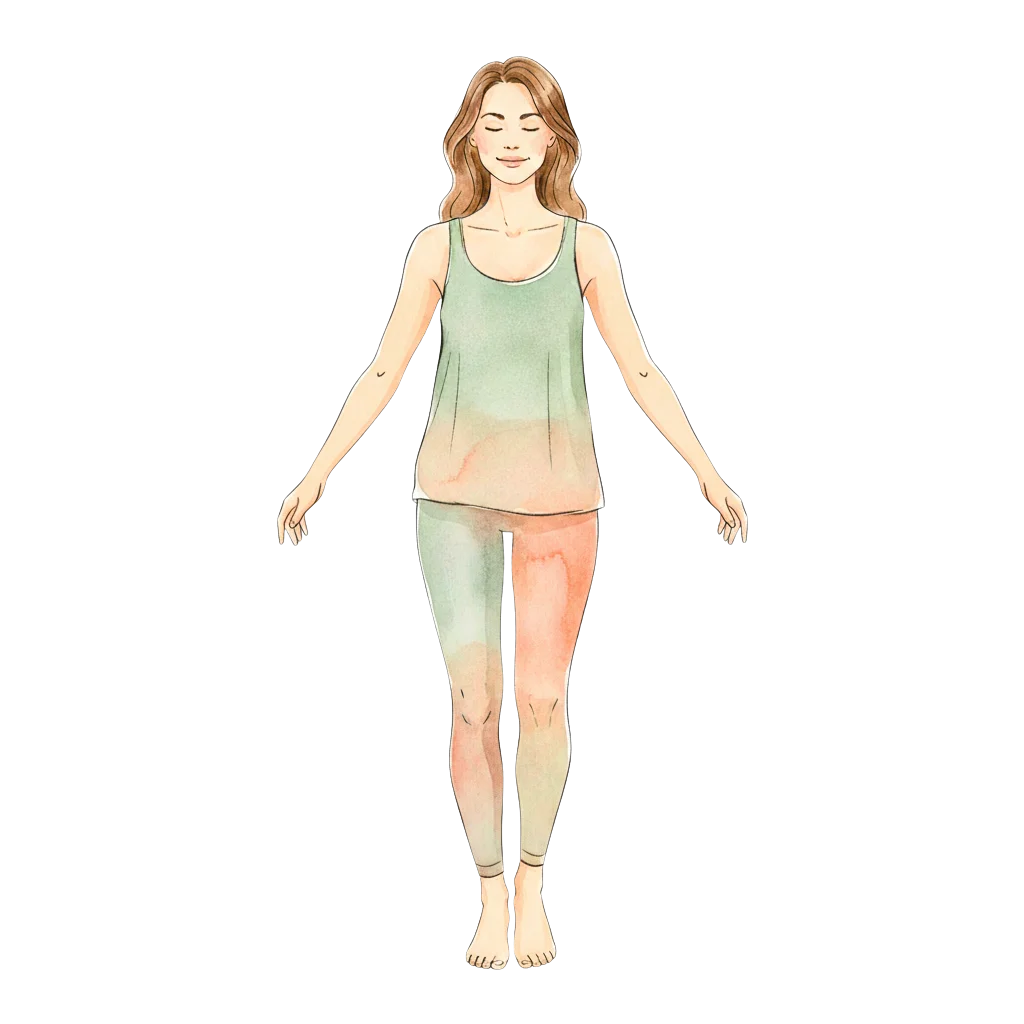
Start your protocolHow Perimenopause affects your body
Tap body zones to discover connected symptoms and related conditions.
Join 71+ women discussing perimenopause
Real experiences shared across Reddit, TikTok, and health forums
All About Perimenopause - Symptoms, Diet, Weight Loss and More!
[Music] we are talking about perimenopause i have had so many questions about this lately that i felt i had to address it here so i'm going to tell you my personal...
Could this be the beginning of menopause? How did you know when you were going through it?
Could this be the beginning of menopause? How did you know when you were going through it?
Perimeno empty nester Get off work, workout if I havent already, eat dinner, catch a bz or 3, play with my furbabies while i troll reddit. Go to bed. Add Law & Order and SVU on Thursday nights.
Reading others' stories is the first step. Join to share yours.
Community
A safe space for women navigating perimenopause
Frequently asked questions
Common questions about Perimenopause
How we research and fact-check
Every article on Wellls is researched using peer-reviewed medical literature, clinical guidelines, and real patient experiences from 17 online discussions.
Sources: We reference 47 PubMed-indexed studies, ACOG/NAMS clinical guidelines, and validated screening tools.
Review: Content is written by our editorial team, enriched from a medical knowledge base of 15,000+ sources. Evidence standards and clinical methodology guided by our Medical Advisory Board: Dr. Alexandra Rybakova and Dr. Alexander Rybakov, Lifestyle Medicine Physicians with 35+ years combined clinical practice.
This content is for informational purposes only and does not constitute medical advice. Our editorial standards · Medical advisory board
References
47 sources reviewed for this perimenopause guide
- 1.Vohra A & Kaur TJ Transforming Perimenopausal Health: Nutritional and Movement-Based Interventions
- 2.Kushwaha V et al. Pharmacotherapy of Perimenopausal and Menopausal Symptoms: An Overview
- 3.Various Perimenopause or Menopausal Transition Information Sheet
- 4.Burnet S How Perimenopause Affects Sleep - Stanford Lifestyle Medicine
- 5.Various The Importance of Nutrition in Menopause and Perimenopause
- 6.Dr. Louise Newson The Definitive Guide to the Perimenopause and Menopause
- 7.Dr. Stephanie Faubion The New Rules of Menopause
- 8.Various Management of the Perimenopause - PMC
- 9.Various The Perimenopause Solution
- 10.Various Exercise adaptations in perimenopause: physiological changes and training recommendations
History of updates
Current version (March 11, 2026) — Content reviewed and updated based on latest research
First published (March 7, 2026)
Explore related problems
Women who experience perimenopause often also deal with these
Your personalized plan is ready
Perimenopause does not have to be something you just survive. There are evidence-based strategies that actually work, and a guide who understands both the science and the experience. Our program connects you with the information your doctor may not have given you and the support you deserve.
4,200 women explored their perimenopause plan this month
Free assessment · Takes 2 minutes · No account required
Medical disclaimer: This content is for informational purposes only and does not constitute medical advice, diagnosis, or treatment. Always consult a qualified healthcare provider for personal medical decisions. Content is based on peer-reviewed research and updated regularly. Learn about our editorial standards.