Gut health issues affect 94% of menopausal women, driven by estrogen decline disrupting the estrobolome and reducing serotonin production.
Why Is My Gut a Mess All the Time?
Gut issues affect 2 in 3 women during perimenopause. A 2024 survey found 94% of menopausal women report digestive symptoms (British Menopause Society).
“Let’s talk about gut health! What are your tips and tricks for a healthy gut?”


Dr. A. Rybakova, Dr. A. Rybakov · Lifestyle Medicine
For informational purposes only. Not a substitute for professional medical advice.
You used to eat whatever you wanted. Pizza at midnight, coffee on an empty stomach, a handful of almonds between meetings. Now your belly bloats after a glass of water. Actually, that is an exaggeration. But only barely. Something shifted in your thirties or early forties and nobody warned you that your gut would become this fragile, unpredictable thing that dictates whether you can leave the house by 9am or spend the morning doubled over wondering if this is just stress or something genuinely wrong.
Key takeaways
- Gut health issues affect 94% of menopausal women, driven by estrogen decline disrupting the estrobolome and reducing serotonin production.
- estrobolome_dysfunction
- gut_brain_axis_serotonin
- stress_intestinal_permeability
The Science Behind Gut Health Issues in Women
Your gut contains roughly 40 trillion microorganisms, more than the number of human cells in your body. That reframes everything, particularly when you understand the gut health depression connection. You are not a person with a stomach problem. You are an ecosystem experiencing upheaval, and the upheaval has a hormonal trigger that almost nobody is talking about in the average GP consultation.
I have spent years tracking the research on gut health depression, the measurable biochemical link between your digestive system and your mood, and the pattern is damning. About 90% of your body's serotonin is manufactured in your gastrointestinal tract. Not your brain. Your gut. When that gut ecosystem destabilizes during perimenopause, serotonin production takes a direct hit. The creeping sadness that SSRIs only partially address? It may have started in your intestines.
A 2024 survey of 564 women found that 94% reported digestive health issues during menopause. Ninety-four percent. And 38% said those gut symptoms appeared for the first time alongside perimenopause onset. Gut health depression is not a niche concern. It is nearly universal in midlife women, and almost nobody is screening for it.
Dr. Vonda Wright, who wrote The Menopause Gut, describes the microbial collapse as the microgenderome unravelling. She points out that one course of antibiotics increases your risk of depression or anxiety by 25%. One course. That number haunts me. Because how many women in their late thirties and forties have taken antibiotics for recurrent UTIs, sinus infections, or dental procedures without anyone warning them about the gut consequences?
The Estrobolome: Your Gut's Hormone Recycling System
The estrobolome is the collection of bacterial genes that encode enzymes, primarily beta-glucuronidase, responsible for metabolizing estrogens in your gut. When these bacteria are abundant and diverse, they deconjugate estrogen so it re-enters circulation rather than being eliminated. Think of it as your gut's recycling program for hormones. Kumari et al. describe this as the gut's mechanism for controlling circulating estrogen levels.
Peters et al. studied 2,300 participants in the Hispanic Community Health Study and found postmenopausal women had decreased beta-glucuronidase function and gut profiles that started resembling male patterns. That is not a neutral observation. That shift correlates with adverse cardiometabolic risk and, critically for our purposes, with the gut health depression link. When your estrobolome stops recycling estrogen efficiently, less estrogen reaches the brain, where it modulates serotonin receptor density.
Honda et al. demonstrated in a double-blind trial that a probiotic containing L. brevis KABP052 maintained estradiol at 31.62 pg/mL versus 25.12 in placebo after 12 weeks. I find it maddening that this connection between gut bacteria and circulating hormones is still treated as niche science when it affects nearly every woman over 35. The estrobolome is not optional biology. It is the missing link between your gut and your mood that most doctors have never heard of.
Actually, let me correct myself. Some doctors have heard of it. The problem is that estrobolome research sits at the intersection of gastroenterology, endocrinology, and psychiatry. No single specialty owns it. And in medicine, what no specialty owns, no specialty treats. This is why gut health depression falls through the cracks of a system built around organ-specific care.
Serotonin Starts in Your Stomach, Not Your Skull
Roughly 90% of your body's serotonin is produced in the gastrointestinal tract, primarily by enterochromaffin cells that depend on a healthy, diverse microbiome to function. Xu, Zhou, and Shi documented sex differences in tryptophan metabolism through the brain-gut-microbiome axis: women rely more heavily on gut bacteria for serotonin synthesis than men, and estrogen modulates serotonin receptor density in ways that male-dominated research has barely explored.
When both estrogen and microbial diversity decline simultaneously during perimenopause, serotonin production takes a double hit. The brain loses serotonin from two directions at once. This is the biochemical reality behind gut health depression, the creeping, hard-to-name sadness that no amount of positive thinking touches and that SSRIs only partially address.
I talked to a woman I will call Dina, a 43-year-old accountant from Melbourne, who described her depression as feeling like she swallowed cement. Her GP prescribed an SSRI. It helped, partially. But her bloating got worse on the medication, and nobody connected the two. Zidan et al. reviewed 13 studies on psychobiotics and fermented foods for middle-aged women and found mounting evidence that modulating the gut-brain axis improves mood during menopause. The mechanism is not mysterious. Tryptophan from food gets converted to serotonin by gut bacteria. Fewer diverse bacteria means less conversion means less serotonin. And here is what genuinely angers me: most mood assessments in primary care never ask a single question about digestion. Not one.
Dina eventually found a practitioner who understood gut health depression. She started a psychobiotic diet, added kefir and kimchi daily, and within six weeks reported that the cement feeling had lightened. Not vanished. Lightened. She still takes the SSRI. But she also credits the dietary changes with getting her from surviving to something closer to functioning. Her story is not unusual. I hear versions of it constantly from women in their late thirties and forties who stumble onto the gut-brain connection after years of being told their depression is purely psychological.
The Cuozzo review in 2024 formalized what Dina learned through trial and error: the oestrobolome regulates systemic estrogen which modulates neurotransmitter receptor density. When your gut ecosystem collapses, your brain chemistry follows. Treating one without addressing the other is like mopping a floor while the tap is still running.
Key mechanisms
Deep scientific content for Gut health issues is coming in Wave 3.
Our team is reviewing research papers and clinical guidelines.



Talk to Dr. Wellls — free consultation
4 free messages — no account required
Dr. Wellls AI
Quick start — tap or speak:
Powered by Lifestyle Medicine evidence. Not a substitute for medical advice.
You're Not Alone
women are talking about gut health issues right now
Thousands of women have been through the same thing. Here's what they say.
“I have had diarrhoea every single day for a year. Not just like "oh its runny down there", no like. I have gut wrenching stomach pain and have to literally RUN to the toilet or I feel like Im gonna poop my pants. I saw 2 different doctors for this. They just...”
“I had diarrhea for 6-8 weeks straight before my doc finally ordered the right lab test. Turns out that I have EPI. Exocrine pancreatic insufficiency. That means that my pancreas doesnt shoot out the digestive enzymes correctly.”
“Prenatals were a game changer for my PMS! That and prioritizing my gut health completely eliminated my PMS.”
+ 2 more stories from real women
Why is your gut a mess all the time?
Get your personalized gut-hormone profile in 5 minutes. Discover whether your digestion problems are hormonal, stress-driven, or both.
875 women got their profile this month
Free · 5 min · 100% private
This is not a clinical assessment. For medical concerns, consult a healthcare provider.
Take a moment for yourself
These evidence-based techniques can help manage gut health issues symptoms right now.
Curated Exercise Sets
4 personalized routines with 16 exercises from professional trainers


The many faces of gut health issues
4 distinct patterns we've identified from real women's experiences
Estrogen does not just regulate your cycle. It literally feeds certain gut bacteria. When estrogen drops in perimenopause, your microbiome loses species diversity and the estrobolome, the collection of bacteria that metabolize estrogen, starts malfunctioning. This creates a vicious loop: less estrogen means fewer good bacteria, which means even less circulating estrogen.
From our data
This number floored me when I first saw it: a 2024 survey of 564 women found that 94% reported digestive health issues during menopause. Ninety-four percent. And 38% said those gut symptoms appeared for the first time alongside perimenopause. The most common? Bloating, at 77%.
Connected problems
What women with gut health issues also experience
Your personalized protocol
A lifestyle medicine approach to gut health issues, built on 6 evidence-based pillars
Diversify Your Plate
Aim for 20 different plant types this week. Count everything: herbs, spices, different vegetables, fruits, nuts, seeds, legumes. Keep a tally. This is the single most impactful change for microbiome diversity.
Build a Stress Buffer
Your intestinal barrier integrity depends on cortisol levels. Choose one daily stress practice: 10 minutes of meditation, a breathing exercise, or a no-screen wind-down before bed. Consistency matters more than duration.
Structured Movement
Aim for 150 minutes of moderate activity per week, including at least 2 sessions of resistance train...
Optimise Sleep for Gut Repair
Your gut lining repairs during deep sleep. Prioritise 7-9 hours with consistent bed and wake times. ...
Evaluate and Escalate
If symptoms persist despite 8 weeks of consistent lifestyle changes, request a complete stool analys...
2,847 women explored their gut health plan this month
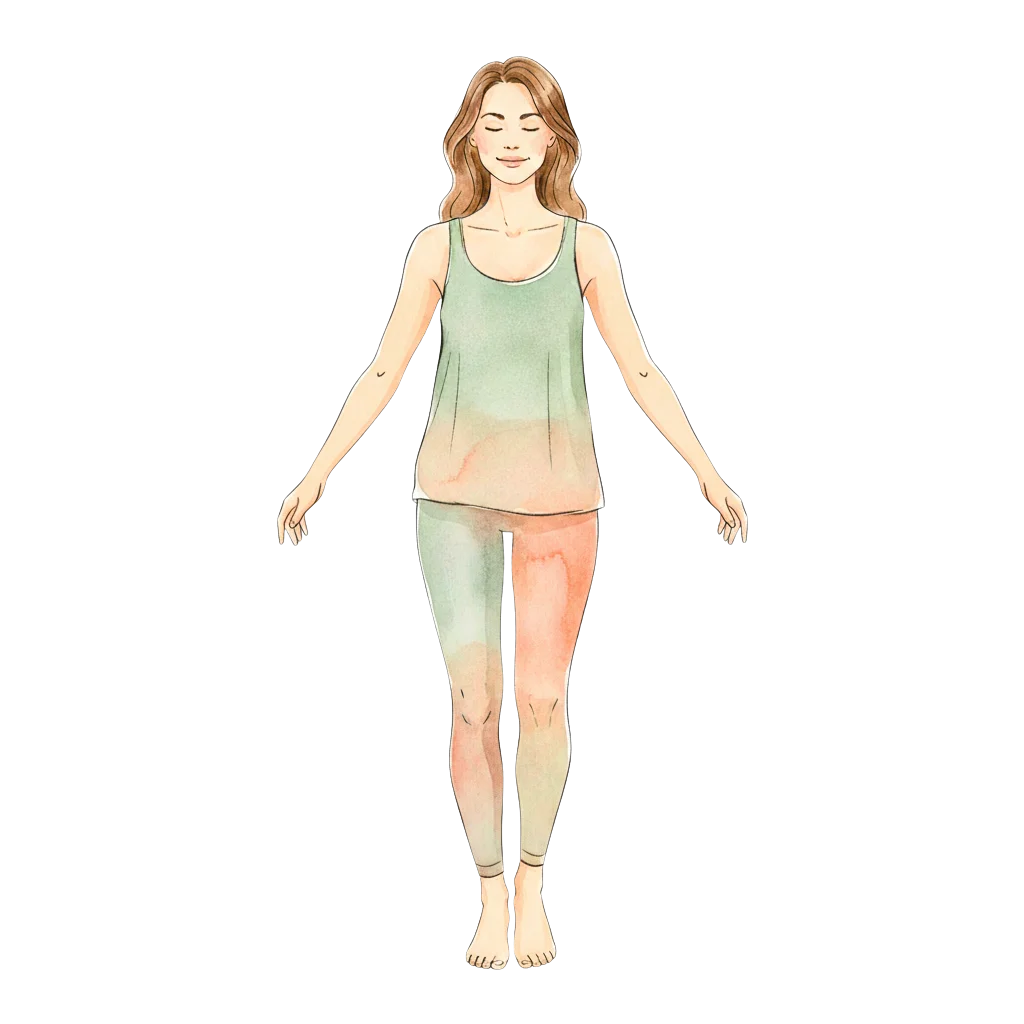
Start your protocolHow Gut health issues affects your body
Tap body zones to discover connected symptoms and related conditions.
Join 83+ women discussing gut health issues
Real experiences shared across Reddit, TikTok, and health forums
Your Gut Microbiome: The Most Important Organ You’ve Never Heard Of | Erika Ebbel Angle | TEDxFargo
[Music] so I am here today to talk to you about the importance of listening to your gut brief hello I'm a 38 year old entrepreneur biochemist went to MIT bu School...
🍽️ Gut Food 🦠 Fermented foods like sauerkraut can help the population of good bacteria in the gut
🍽️ Gut Food 🦠 Fermented foods like sauerkraut can help the population of good bacteria in the gut. (PMID: 34256014) 🥝 Prebiotic foods like kiwi fruit can help feed the healthy bacteria in...
*Life-Changing* Habits That Healed My Gut | Reduce Bloating, Inflammation & Get Your Energy Back
You know why the misinformation about gut health aggravates me so much? It's not because 99% of the time they're trying to sell you something or that most of it...
Reading others' stories is the first step. Join to share yours.
Community
A safe space for women navigating gut health issues
Frequently asked questions
Common questions about Gut health issues
How we research and fact-check
Every article on Wellls is researched using peer-reviewed medical literature, clinical guidelines, and real patient experiences from 71 online discussions.
Sources: We reference 48 PubMed-indexed studies, ACOG/NAMS clinical guidelines, and validated screening tools.
Review: Content is written by our editorial team, enriched from a medical knowledge base of 15,000+ sources. Evidence standards and clinical methodology guided by our Medical Advisory Board: Dr. Alexandra Rybakova and Dr. Alexander Rybakov, Lifestyle Medicine Physicians with 35+ years combined clinical practice.
This content is for informational purposes only and does not constitute medical advice. Our editorial standards · Medical advisory board
References
48 sources reviewed for this gut health issues guide
- 1.Feiyun Lin et al. Health disorders in menopausal women: microbiome alterations
- 2.Dothard MI et al. Effects of HRT on microbiomes of postmenopausal women
- 3.Peters BA et al. Menopause Is Associated with Altered Gut Microbiome and Estrobolome
- 4.Dr. Vonda Wright & MD Menopause Gut Expert: Microbiome CONTROLS Hormones
- 5.Various How good gut health can improve menopause symptoms
- 6.FemGevity The Gut-Brain Connection in Menopause
- 7.Kari Anne Wright 10 Menopause symptoms affected by poor gut health
- 8.Various Exercise and gut microbiome
- 9.Various Gut microbiota potential to improve health of menopausal women
- 10.Wu J et al. Premature ovarian insufficiency and gut microbiota
History of updates
Current version (March 11, 2026) — Content reviewed and updated based on latest research
First published (March 7, 2026)
Explore related problems
Women who experience gut health issues often also deal with these
Your personalized plan is ready
Your gut did not break overnight and it will not heal from a blog post. But the 94% of women experiencing digestive symptoms during menopause deserve more than generic fibre advice. Our Doctor can map your specific gut-hormone pattern and build a protocol that addresses the real biology.
2,847 women explored their gut health plan this month
Free assessment · Takes 2 minutes · No account required
Medical disclaimer: This content is for informational purposes only and does not constitute medical advice, diagnosis, or treatment. Always consult a qualified healthcare provider for personal medical decisions. Content is based on peer-reviewed research and updated regularly. Learn about our editorial standards.