Healthy weight loss plans for women over 40 must address metabolic adaptation. Calorie cutting backfires. Strength training and sleep come first.
Difficulty Losing Weight in Perimenopause: The Real Reasons the Scale Won't Move
Metabolism drops 1-2% per year after 30
“I eat what I want and just try to ensure I consciously think about getting my protein in and keeping calories low, which is a hard one for me.”


Dr. A. Rybakova, Dr. A. Rybakov · Lifestyle Medicine
For informational purposes only. Not a substitute for professional medical advice.
I know you've tried everything. The calorie apps. The 5 AM workouts when sleep felt like the only mercy left. Smoothies that taste like lawn clippings and broken promises. You did the work. More than the work. And the scale sat there, immovable, or it crept up. Two pounds. Five. Ten. While you ate less than your teenager. So you Googled it. Some cheerful article told you to eat less, move more, and you wanted to throw your phone through the wall. Because you'd been doing that. Nobody told you that after 40 your body rewrote the rules. That hormones you didn't know were shifting had quietly overhauled everything. This page is for you. Not the you who needs another diet plan. The you who needs to understand what happened.
Key takeaways
- Healthy weight loss plans for women over 40 must address metabolic adaptation.
- Calorie cutting backfires.
- Strength training and sleep come first.
- Estradiol decline → reduced insulin sensitivity → hyperinsulinemia → visceral fat storage
The Hormonal Machinery Behind Weight Loss Resistance After 40
Most healthy weight loss plans ignore what happens to a woman's metabolism after 40. And I mean truly ignore it. Not downplay. Not underestimate. Ignore. The entire framework of eat less, move more was built on metabolic research conducted primarily on young men. It does not account for what estradiol does to insulin receptors, mitochondrial function, or fat distribution. Even the most popular healthy weight loss plans marketed to women in midlife skip the cortisol load of a woman juggling caregiving, careers, sleep disruption, and a hormonal system in active transition. I have spent years investigating why these programs fail women over 40 at such staggering rates. The pattern is the same: generic calorie advice repackaged with a pastel scheme. That is marketing, not science. What actually drives weight loss resistance after 40 is four converging hormonal shifts that no amount of willpower fixes. Conventional healthy weight loss plans never address these shifts. Declining estradiol reduces insulin sensitivity and shifts fat storage to the abdomen. Rising insulin resistance promotes fat storage over fat burning. Chronic cortisol elevation from stress and calorie restriction compounds visceral fat accumulation. And progressive muscle loss from sarcopenia lowers your resting metabolic rate every single year. These mechanisms form a self-reinforcing feedback loop. That is why the scale does not budge. Not because you lack discipline. Because your endocrine system rewrote the rules and nobody handed you the new edition.
Why Estrogen Loss Quietly Sabotages Healthy Weight Loss Plans
Estradiol modulates insulin receptor sensitivity, mitochondrial bioenergetics, and leptin signaling. During perimenopause, estradiol decline reduces cellular insulin sensitivity, leading to compensatory hyperinsulinemia. Chronically elevated insulin promotes fat storage, particularly visceral adipose tissue, and suppresses lipolysis. This insulin resistance can develop 5 to 10 years before fasting glucose abnormalities appear on standard blood work. I want you to sit with that for a moment. Your fasting glucose can look perfectly normal while your insulin is already elevated and your body is already in fat-storage mode. The test your doctor runs, fasting glucose, is the last domino to fall. The first one, fasting insulin, almost never gets ordered. Mauvais-Jarvis and colleagues published a landmark review in Endocrine Reviews documenting how estradiol directly enhances insulin signaling in skeletal muscle, liver, and adipose tissue. When estradiol drops, those tissues become progressively resistant to insulin. Your pancreas compensates by producing more insulin. More insulin means more fat storage. More fat means more inflammation. More inflammation means worse insulin resistance. It is a vicious loop, and it starts quietly, years before anyone notices anything on a blood panel. I have spoken to endocrinologists who call this the invisible metabolic shift. Women feel it in their bodies long before any lab confirms it. If your healthy weight loss plans are not accounting for this estrogen-insulin connection, they are treating a 2026 problem with a 1990s framework.
The Study of Women's Health Across the Nation, known as SWAN, followed 3,302 women over 10 years through the menopause transition. I consider this the most important dataset in menopause research, and I find it genuinely shocking how rarely it gets cited in popular weight loss content. SWAN documented an average gain of 1.5 kg in fat mass during perimenopause among women who maintained stable caloric intake and physical activity levels. Same food. Same exercise. More fat. Greendale and colleagues published these findings in JCI Insight. The weight gain was not explained by behavioral changes. It was explained by hormonal changes. Visceral fat, the metabolically dangerous kind stored around your organs, increased at an even steeper rate. Women in the study saw their visceral fat percentage climb from roughly 5 to 8 percent to 15 to 20 percent of total body fat during the transition. That redistribution happened regardless of diet or exercise habits. This is the data that should have upended every weight loss plan marketed to women over 40. It did not. The diet industry kept selling calorie counts. The fitness industry kept selling cardio. And millions of women kept blaming themselves for a biological process that was never within their behavioral control. I have read the SWAN papers multiple times and every time I come back to the same question: why is this not printed on the front page of every women's health magazine? My answer: because it contradicts a multi-billion dollar industry built on the premise that weight is a choice. SWAN proves it is not. Not fully. Not for this population.
Key mechanisms
Deep scientific content for Difficulty losing weight is coming in Wave 3.
Our team is reviewing research papers and clinical guidelines.


Talk to Dr. Wellls — free consultation
4 free messages — no account required
Dr. Wellls AI
Quick start — tap or speak:
Powered by Lifestyle Medicine evidence. Not a substitute for medical advice.
You're Not Alone
women are talking about difficulty losing weight right now
Thousands of women have been through the same thing. Here's what they say.
“There's two things that worked for me: 1. Lifestyle change. Focus on being healthy and active and not on losing weight. Having some kind of fitness goal to work towards until it becomes a habit helps. 2. Unpopular but counting calories helped me after I'd...”
“Walking! 10k steps a day and I lost 20 pounds in six months. I don't lose anymore but I still do it, to maintain.”
“As a 51 year old woman I understand that menopause changes things and while it doesn't prevent fat loss it does require a unique strategy.”
+ 3 more stories from real women
Understanding Your Weight Resistance
A brief assessment to understand why the scale stopped responding and what your metabolism actually needs now.
2,862 women got their profile this month
Free · 5 min · 100% private
This is not a clinical assessment. For medical concerns, consult a healthcare provider.
Take a moment for yourself
These evidence-based techniques can help manage difficulty losing weight symptoms right now.
Curated Exercise Sets
4 personalized routines with 16 exercises from professional trainers
Difficulty Losing Weight — Quick Relief
Bonnie Lyall
Professional Trainer
Difficulty Losing Weight — Morning Activation
Jessica Casalegno
Professional Trainer
The many faces of difficulty losing weight
4 distinct patterns we've identified from real women's experiences
You're eating 1,400 calories. You're walking 10,000 steps. And you're gaining weight. This is not a moral failure. This is metabolic adaptation meeting hormonal change, and almost nobody in the medical establishment is connecting these two dots for women in their 40s.
From our data
The Biggest Loser study (Fothergill et al., 2016) tracked contestants 6 years post-show and found their resting metabolic rates had dropped by an average of 499 calories per day below what would be expected for their body size. Their bodies had learned to burn dramatically less fuel. Now layer perimenopause on top: estrogen decline reduces resting metabolic rate by an additional 50-100 calories daily (Greendale et al., 2019). A 40-year-old woman who dieted in her 30s may be working against a metabolic deficit of 200-400 calories that no calorie-counting app will flag.
Connected problems
What women with difficulty losing weight also experience
Your personalized protocol
A lifestyle medicine approach to difficulty losing weight, built on 6 evidence-based pillars
Get the right labs
Request fasting insulin (not just fasting glucose), HbA1c, full thyroid panel including free T3 and T4, estradiol, and progesterone. If your doctor orders only fasting glucose and TSH, that's a screening panel, not a diagnostic one. You need the full picture. Print this list and bring it to the appointment.
Build the resistance training habit
Three sessions per week. Compound movements: squats, deadlifts, rows, overhead press. Start light, focus on form, and progressively add weight. If you need guidance, a single session with a trainer who works with women over 40 is worth more than a month of YouTube videos. This is the highest-impact change you can make.
Fix your protein math
Calculate 1.2-1.6g protein per kg of body weight. For a 70kg woman, that's 84-112g daily. Most women...
Address sleep first, diet second
If you're sleeping fewer than 6 consolidated hours, fix that before restricting calories. Treat nigh...
Moderate calorie adjustment (not crash dieting)
Only after sleep, protein, and strength training are in place. A modest 250-calorie daily reduction ...
Evaluate and adjust with data
Recheck labs at 12 weeks. Has fasting insulin improved? How's HbA1c? Track body measurements (waist ...
3,800 women explored their metabolic health plan this month
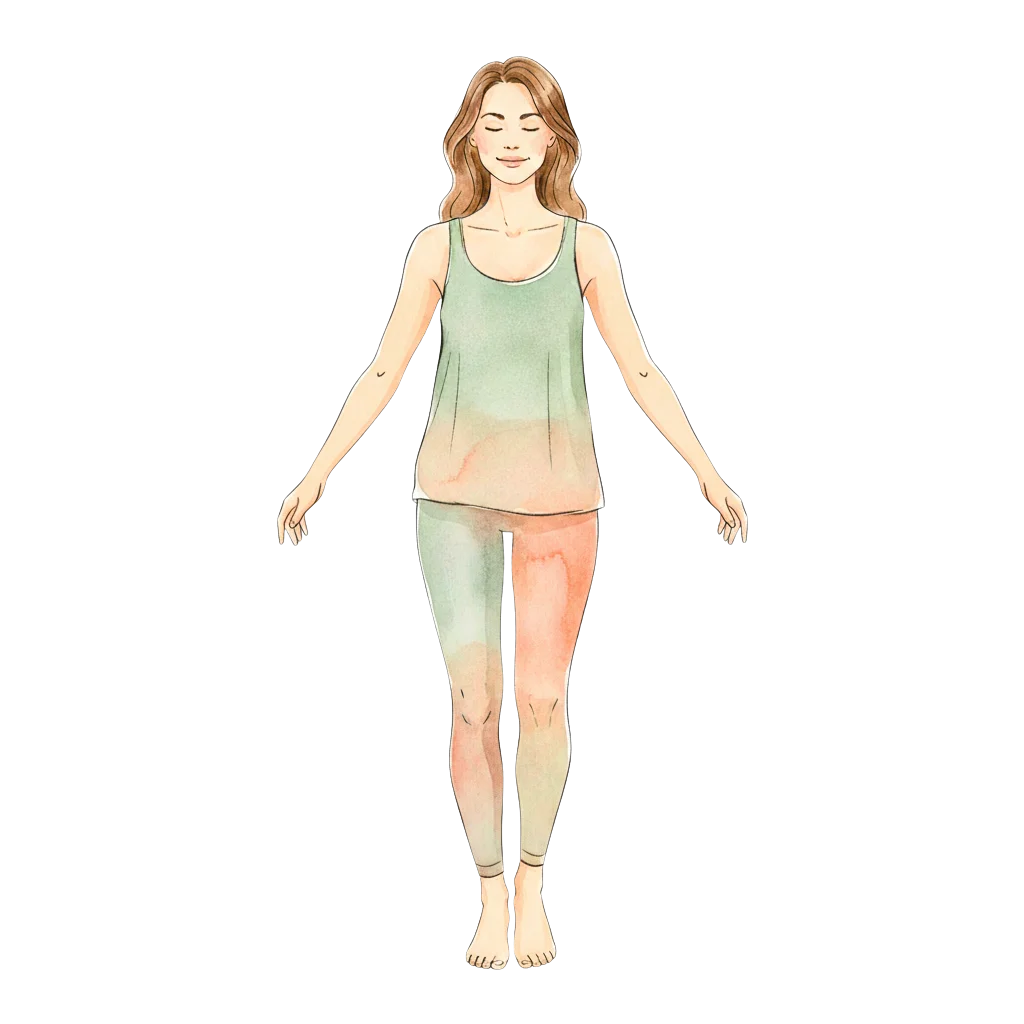
Start your protocolHow Difficulty losing weight affects your body
Tap body zones to discover connected symptoms and related conditions.
Join 104+ women discussing difficulty losing weight
Real experiences shared across Reddit, TikTok, and health forums
9 Things NO ONE TELLS YOU about Losing Weight
we're told that reducing our body fat is going to improve our lives make us healthier and help us feel more confident and even though all of this can be true there...
There's two things that worked for me: 1. Lifestyle change. Focus on being healthy and active and not on losing weight. Having some kind of fitness goal to work towards until it becomes a habit...
For women who struggled to lose weight, what's something you started doing differently that worked?
For women who struggled to lose weight, what's something you started doing differently that worked?
Reading others' stories is the first step. Join to share yours.
Community
A safe space for women navigating difficulty losing weight
Frequently asked questions
Common questions about Difficulty losing weight
How we research and fact-check
Every article on Wellls is researched using peer-reviewed medical literature, clinical guidelines, and real patient experiences from 138 online discussions.
Sources: We reference 47 PubMed-indexed studies, ACOG/NAMS clinical guidelines, and validated screening tools.
Review: Content is written by our editorial team, enriched from a medical knowledge base of 15,000+ sources. Evidence standards and clinical methodology guided by our Medical Advisory Board: Dr. Alexandra Rybakova and Dr. Alexander Rybakov, Lifestyle Medicine Physicians with 35+ years combined clinical practice.
This content is for informational purposes only and does not constitute medical advice. Our editorial standards · Medical advisory board
References
47 sources reviewed for this difficulty losing weight guide
- 1.
- 2.
- 3.
- 4.
- 5.
- 6.
- 7.
- 8.
- 9.
- 10.
History of updates
Current version (March 11, 2026) — Content reviewed and updated based on latest research
First published (March 1, 2026)
Explore related problems
Women who experience difficulty losing weight often also deal with these
Your personalized plan is ready
You've been told it's willpower. It's not. You've been told to eat less. That backfires. For the first time, someone is showing you the actual hormonal machinery that changed the rules after 40, and the evidence-based strategies that work within those rules. Your personalized weight loss resistance plan includes lab recommendations, a strength training protocol, sleep optimization steps, and the medication conversation guide your doctor should have given you years ago.
3,800 women explored their metabolic health plan this month
Free assessment · Takes 2 minutes · No account required
Medical disclaimer: This content is for informational purposes only and does not constitute medical advice, diagnosis, or treatment. Always consult a qualified healthcare provider for personal medical decisions. Content is based on peer-reviewed research and updated regularly. Learn about our editorial standards.