Hormonal belly shape is caused by estrogen decline shifting fat storage from hips to abdomen during perimenopause, not by diet changes.
Hormonal Belly Shape: Why Your Body Is Storing Fat Differently After 40
Approximately 68% of women experience measurable increases in abdominal fat during the menopause transition, with visceral adipose tissue increasing by approximately 8% per year during perimenopause (SWAN study, n=3,302)
“So you want to get rid of that belly fat, just don’t know how? Tried everything?”


Dr. A. Rybakova, Dr. A. Rybakov · Lifestyle Medicine
For informational purposes only. Not a substitute for professional medical advice.
There is a drawer in your bedroom. Maybe the second one down, the deep one. That is where the jeans live now. The dark wash pair from Country Road that used to fit perfectly on a Tuesday morning in Braddon when you grabbed a flat white at Lonsdale Street Roasters and felt like yourself. Six months ago. Maybe eight. You folded them carefully the last time because you are not ready to donate them. Donating means admitting something changed. And something did change. But nobody warned you it would settle here, in the middle of your body, in the place you cannot hide with a longer top or a different bra.
Key takeaways
- Hormonal belly shape is caused by estrogen decline shifting fat storage from hips to abdomen during perimenopause, not by diet changes.
- Estrogen receptor deactivation in peripheral adipose tissue shifts fat storage from gynoid (hips/thighs) to android (abdominal) distribution
- Declining estradiol reduces insulin receptor sensitivity in skeletal muscle and liver, driving compensatory hyperinsulinemia
- Chronic cortisol elevation triggers hepatic gluconeogenesis and promotes visceral fat deposition
The Science Behind Hormonal Belly Shape
Hormonal belly shape describes the shift from gynoid (hip and thigh) to android (abdominal) fat distribution caused by declining estrogen during perimenopause. I want to be precise about what that means, because precision matters when the internet is full of misinformation about how to lose belly fat. This redistribution is hormonally driven, not calorie-driven. It occurs independently of changes in diet or exercise. The jeans stopped fitting not because you ate more, but because your estradiol levels dropped and your body started storing fat in an entirely different pattern. The result is increased visceral adipose tissue packed around organs, metabolically active fat that raises cardiovascular and metabolic disease risk significantly. When I first encountered the research on hormonal belly shape in perimenopausal women, what struck me was the disconnect between the science and the advice. Millions of women experiencing this shift, and the dominant advice still being eat less and do more crunches. That advice is not just useless. For the hormonal belly shape mechanism, it is scientifically wrong. Juppi and colleagues published a review in 2025 calling menopause and body composition a complex field. I would call it a field where the science is clear but the public messaging is decades behind. Your body changed its fat storage blueprint. The old rules do not apply anymore. Everything that follows on this page explains why, and what the evidence says you can actually do about it.
The Estrogen-Cortisol-Insulin Triangle Behind Hormonal Belly Shape
The hormonal belly shape pattern is driven by three interlocking hormonal shifts, not one. This distinction matters because most advice targets a single lever while the actual mechanism involves a triangle of dysfunction that feeds itself. First, declining estradiol reduces insulin receptor sensitivity in skeletal muscle and liver. Mauvais-Jarvis published a landmark 2017 paper showing that estrogen signaling directly modulates how your cells respond to insulin. When estradiol drops, your cells stop responding efficiently. Your pancreas compensates by producing more insulin. More insulin circulating means more fat storage signals, preferentially directed to your abdomen. Second, chronic cortisol elevation triggers hepatic glucose dumping and compensatory hyperinsulinemia. This is not just about emotional stress. Sleep disruption from night sweats, the physical stress of perimenopause itself, and yes, aggressive calorie restriction all elevate cortisol chronically. Epel and colleagues at UCSF demonstrated that women with high cortisol reactivity stored 47 percent more visceral fat than women with low cortisol reactivity. That number stopped me the first time I read it. Nearly half again as much belly fat, driven entirely by stress hormones. Third, elevated insulin suppresses lipolysis and promotes visceral fat deposition. Each hormone amplifies the effects of the other two, creating a self-reinforcing cycle that calorie restriction alone cannot interrupt. I have spoken to endocrinologists who call this the metabolic trifecta. They see it in their clinics daily: women eating 1,200 calories, exercising five days a week, and watching their waistline expand. The mechanism is not mysterious. It is just not what anyone is looking for.
The SWAN Cardiovascular Fat substudy used CT imaging to measure visceral adipose tissue across the menopause transition and found an 8 percent annual increase in visceral fat during perimenopause. I need you to read that carefully. Independent of total body fat changes. The scale could stay perfectly still while visceral fat tripled underneath. Women in early perimenopause had visceral fat comprising 5 to 8 percent of total abdominal fat. By late perimenopause, this rose to 15 to 20 percent. That represents a tripling of metabolically active abdominal fat even when the bathroom scale showed no change. El Khoudary and colleagues published these findings and they should have rewritten every belly fat article on the internet. They did not. The diet industry does not profit from telling women their hormonal belly shape is a biological event requiring hormonal solutions. It profits from selling meal plans and waist trainers and detox teas. I find that enraging, and I think you should too. What the SWAN data tells us is that belly fat accumulation in perimenopause is not a lifestyle disease in the conventional sense. It is a hormonal event with metabolic consequences. The women in this study did not eat more. They did not exercise less. Their endocrine system shifted and their fat distribution followed. Any intervention that does not address the hormonal driver is treating the symptom and ignoring the cause. That distinction between hormonal event and lifestyle disease is not semantic. It determines whether the solution is another diet plan or a fundamentally different approach.
Key mechanisms
Deep scientific content for Belly fat accumulation is coming in Wave 3.
Our team is reviewing research papers and clinical guidelines.


Talk to Dr. Wellls — free consultation
4 free messages — no account required
Dr. Wellls AI
Quick start — tap or speak:
Powered by Lifestyle Medicine evidence. Not a substitute for medical advice.
You're Not Alone
women are talking about belly fat accumulation right now
Thousands of women have been through the same thing. Here's what they say.
“I woke up one morning and my stomach was just there. Like someone inflated me overnight. I hadn't changed anything. Same food. Same walks. My GP said 'eat less' and I wanted to cry because I was already eating less than my 15 year old daughter.”
“The hardest part isn't the belly itself. It's that nothing in your wardrobe fits the same way and nobody tells you that your body just redistributes fat after 40. I thought I was doing something wrong for two years before someone explained estrogen and...”
“What is your PCOS belly fat type? For many, stubborn belly fat can be due to hormonal imbalances with insulin and cortisol. By focusing on these hormones you can reverse these symptoms and lose that stubborn belly fat for good.”
+ 2 more stories from real women
Understanding Your Body Composition Change
A brief assessment to understand what is happening with your body shape, why it changed, and what the evidence says actually works. This is not about weight loss. It is about understanding a hormonal event.
1,189 women got their profile this month
Free · 5 min · 100% private
This is not a clinical assessment. For medical concerns, consult a healthcare provider.
Take a moment for yourself
These evidence-based techniques can help manage belly fat accumulation symptoms right now.
Curated Exercise Sets
4 personalized routines with 16 exercises from professional trainers
Belly Fat Accumulation — Quick Relief
Jessica Casalegno
Professional Trainer
Belly Fat Accumulation — Morning Activation
Jessica Casalegno
Professional Trainer
The many faces of belly fat accumulation
3 distinct patterns we've identified from real women's experiences
The first thing women notice is not a number on the scale. It is the shape. The way their body redistributes fat from hips and thighs to their abdomen during perimenopause. This is not weight gain in the conventional sense. It is a hormonal rerouting of fat storage that can happen at the same weight, the same diet, the same exercise routine. And the shame attached to belly fat specifically is enormous, culturally loaded, and medically misunderstood.
From our data
A 2023 study in the journal Menopause and Body Composition (Juppi et al., 2025) confirmed that fat redistribution from peripheral (gluteofemoral) to central (abdominal) depots occurs independently of total weight change during the menopause transition. The SWAN Cardiovascular Fat substudy (El Khoudary et al., 2015) used CT imaging to measure visceral adipose tissue and found that women's visceral fat increased by 8% per year during perimenopause, even after adjusting for total body fat. Meanwhile, a 2025 study on body image (Mitchell et al.) found that 68% of midlife women reported their body shape as a greater source of distress than their actual weight.
Connected problems
What women with belly fat accumulation also experience
Your personalized protocol
A lifestyle medicine approach to belly fat accumulation, built on 6 evidence-based pillars
Baseline and assessment
Measure waist circumference, waist-to-hip ratio, and request blood work (fasting insulin, HbA1c, lipid panel, estradiol, FSH). Begin tracking sleep duration and quality. No dietary changes yet.
Resistance training foundation
Begin resistance training 3x/week with compound movements. Start with bodyweight or light weights and progress to challenging loads. Add a daily 20-minute post-meal walk for insulin sensitivity.
Nutrition and stress
Shift toward Mediterranean-style eating: increase fibre, protein (25-30g per meal), olive oil, fish....
Assessment and HRT conversation
Re-measure waist circumference and reassess blood work. If visceral fat has not responded to lifesty...
Over 3,000 women have used Wellls to understand their perimenopause symptoms and build evidence-based protocols.
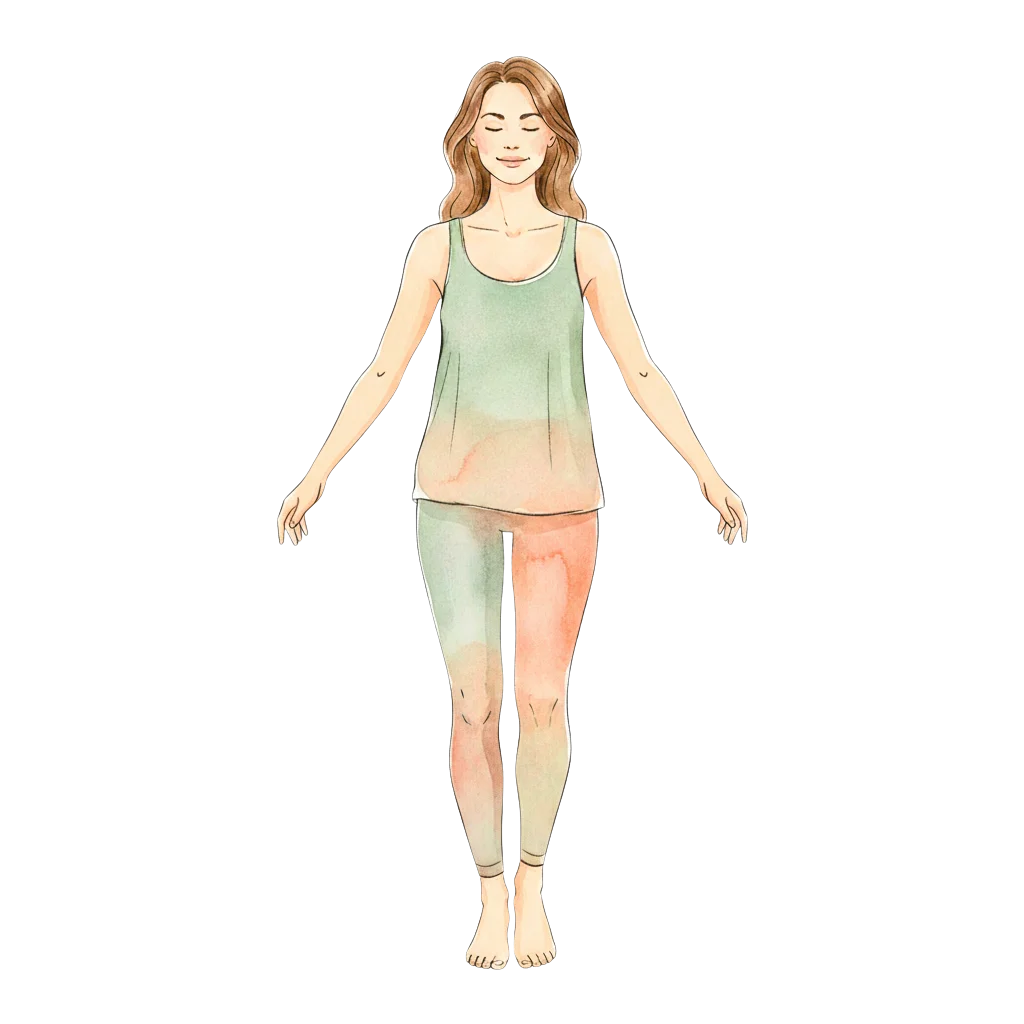
Start your protocolHow Belly fat accumulation affects your body
Tap body zones to discover connected symptoms and related conditions.
Join 98+ women discussing belly fat accumulation
Real experiences shared across Reddit, TikTok, and health forums
What is your PCOS belly fat type? For many, stubborn PCOS belly fat can be due to hormonal imbalance
What is your PCOS belly fat type? For many, stubborn PCOS belly fat can be due to hormonal imbalances with insulin and cortisol. Having insulin resistance or high cortisol with PCOS can cause PCOS...
How does your belly fat look? . . . . #tummyshape #bellyfat #bellyfatburner #postparttum #corestreng
How does your belly fat look? . . . . #tummyshape #bellyfat #bellyfatburner #postparttum #corestrength #strengthtraining #fatloss #fatlossjourney #pregnancyfatloss
The #1 Menopause Doctor: How to Lose Belly Fat, Sleep Better, & Stop Suffering Now
hey I'm so glad you're here I promised you I'd be in the studio today Shay all day she's here too you can't see Maddie but she's right behind you so we are about...
Reading others' stories is the first step. Join to share yours.
Community
A safe space for women navigating belly fat accumulation
Frequently asked questions
Common questions about Belly fat accumulation
How we research and fact-check
Every article on Wellls is researched using peer-reviewed medical literature, clinical guidelines, and real patient experiences from 98 online discussions.
Sources: We reference 48 PubMed-indexed studies, ACOG/NAMS clinical guidelines, and validated screening tools.
Review: Content is written by our editorial team, enriched from a medical knowledge base of 15,000+ sources. Evidence standards and clinical methodology guided by our Medical Advisory Board: Dr. Alexandra Rybakova and Dr. Alexander Rybakov, Lifestyle Medicine Physicians with 35+ years combined clinical practice.
This content is for informational purposes only and does not constitute medical advice. Our editorial standards · Medical advisory board
References
48 sources reviewed for this belly fat accumulation guide
- 1.Belly fat and exercise: visceral adipose tissue reduction through physical activity
- 2.A prospective study of relationships between change in body composition and cardiovascular risk factors
- 3.Estrogen supplementation deteriorates visceral adipose function in aged postmenopausal women
- 4.Pathophysiologic importance of visceral adipose tissue in women with heart failure
- 5.Epicardial fat thickness is increased in menopausal patients
- 6.The New Rules of Menopause
- 7.Mayo Clinic: Menopause Weight Gain - Causes and Prevention
- 8.Midlife Weight Gain - The Menopause Society
- 9.Resistance training decreased abdominal adiposity in postmenopausal women
- 10.General and Central Obesity Are Associated With Increased Severity of VMS
History of updates
Current version (March 11, 2026) — Content reviewed and updated based on latest research
First published (March 2, 2026)
Explore related problems
Women who experience belly fat accumulation often also deal with these
Your personalized plan is ready
Your body changed the rules and nobody handed you the new playbook. The drawer of jeans that do not fit is not evidence of failure. It is evidence of a hormonal shift that has a name, a mechanism, and a specific set of interventions. The protocol above is the playbook.
Over 3,000 women have used Wellls to understand their perimenopause symptoms and build evidence-based protocols.
Free assessment · Takes 2 minutes · No account required
Medical disclaimer: This content is for informational purposes only and does not constitute medical advice, diagnosis, or treatment. Always consult a qualified healthcare provider for personal medical decisions. Content is based on peer-reviewed research and updated regularly. Learn about our editorial standards.