Perimenopause weight gain affects 60-70% of women. Estrogen decline triggers insulin resistance and cortisol-driven visceral fat storage.
Why Am I Gaining Weight Without Changing Anything?
60-70% of women experience weight gain during the menopausal transition, with an average gain of 5-8 pounds. The rate of fat mass gain nearly doubles during perimenopause.
“This is so fucked up. Bothers me immensely.”


Dr. A. Rybakova, Dr. A. Rybakov · Lifestyle Medicine
For informational purposes only. Not a substitute for professional medical advice.
Last September, the black jeans fit. You wore them to your daughter's back-to-school night, tucked in a striped shirt, felt good. By November, you couldn't button them. By January, you'd moved them to the back of the closet and bought a size up. Nothing changed. Not the food. Not the walking. Not the wine (okay, maybe a glass on Fridays). Your doctor shrugged: "It's just aging." That word, "just." As if your body decided overnight to betray twenty years of consistency. It didn't. Something very specific happened inside you, and nobody told you it was coming.
Key takeaways
- Perimenopause weight gain affects 60-70% of women.
- Estrogen decline triggers insulin resistance and cortisol-driven visceral fat storage.
- estrogen_decline_insulin_resistance
- cortisol_visceral_fat_redistribution
The Science Behind Perimenopause Weight Gain
Perimenopause weight gain is not caused by eating too much or exercising too little. I am going to say that again because you need to hear it: this is not about your discipline. The SWAN study followed 3,302 women over a decade and demonstrated that fat mass gain rate doubles during the menopause transition, while lean mass simultaneously declines. Same food. Same activity levels. More fat. Less muscle. These changes are driven by declining estradiol, which regulates insulin sensitivity, cortisol balance, leptin signaling, and where your body stores fat. Understanding the hormonal mechanism behind perimenopause weight gain is essential because the interventions that work at 30 fail at 43. Every calorie-counting app, every generic meal plan, every eat less move more lecture is working from a metabolic model that does not apply to your body anymore. I have watched women spend years, sometimes a decade, blaming themselves for a biological process that was never within their behavioral control. The science on perimenopause weight gain is clear and it has been clear for years. The failure is not in the research. It is in the communication of that research to the women who need it most. This is personal for me. I have watched too many women lose years to shame that should have been directed at a medical system that failed to explain what was happening inside their bodies.
The Estrogen-Insulin Connection
Estradiol directly enhances insulin sensitivity in skeletal muscle and liver tissue. When I say directly, I mean estradiol binds to receptors on those cells and literally changes how they respond to insulin. As estradiol declines during perimenopause, insulin resistance develops progressively. The pancreas compensates by producing more insulin, and elevated circulating insulin signals the body to store fat, particularly in the abdominal region as visceral fat. Mauvais-Jarvis and colleagues published a landmark 2017 paper documenting that estrogen loss produces metabolic syndrome features including insulin resistance, dyslipidemia, and central adiposity. This is not rare. It affects up to 40 percent of women over 40. Here is what makes this particularly insidious: insulin resistance can begin 5 to 10 years before fasting glucose becomes abnormal on standard blood tests. Your doctor runs a fasting glucose. It comes back normal. They tell you your metabolism is fine. But your fasting insulin, which nobody ordered, is already elevated, and your body is already in fat-storage mode. HOMA-IR testing catches the problem years earlier than a standard metabolic panel. The fact that it is not routine for perimenopausal women is, in my opinion, one of the most consequential gaps in preventive medicine. Ask for the test. Do not accept a normal glucose result as the final word on your metabolic health. It is not.
Cortisol and the Visceral Fat Parking Lot
Declining estrogen loosens its regulatory control over the hypothalamic-pituitary-adrenal axis, allowing cortisol levels to rise. Cortisol has a specific affinity for visceral adipose tissue. I think of it as a parking attendant with one favorite lot: your belly. Epel and colleagues at UCSF showed that women with higher cortisol reactivity stored 47 percent more abdominal fat than women with normal cortisol responses. Not slightly more. Nearly half again as much. During perimenopause, this creates a double hit: more cortisol is produced because the estrogen brake is gone, and more of it is directed to visceral storage because that is where cortisol receptors are most dense. Visceral fat increases from 5 to 8 percent of total body fat in premenopausal women to 15 to 20 percent in postmenopausal women. This is not cosmetic. Visceral fat is metabolically active tissue that secretes inflammatory cytokines including IL-6 and TNF-alpha, which then further worsen insulin resistance. You see the loop? Cortisol drives visceral fat. Visceral fat drives inflammation. Inflammation drives insulin resistance. Insulin resistance drives more fat storage. And the woman in the middle of this cascade is told to eat less. I find that infuriating. The woman who sleeps 5 hours, runs on stress, restricts calories, and wonders why she is gaining weight around her middle is not lacking willpower. She is trapped in a cortisol loop that makes fat loss biochemically impossible.
Key mechanisms
Deep scientific content for Unexplained weight gain is coming in Wave 3.
Our team is reviewing research papers and clinical guidelines.



Talk to Dr. Wellls — free consultation
4 free messages — no account required
Dr. Wellls AI
Quick start — tap or speak:
Powered by Lifestyle Medicine evidence. Not a substitute for medical advice.
You're Not Alone
women are talking about unexplained weight gain right now
Thousands of women have been through the same thing. Here's what they say.
“This weight gain is ridiculous! I eat healthy, I exercise, and the scale just keeps going up. Nobody believes me when I say I haven't changed anything.”
“The weight gain during Perimenopause is no joke.”
“37 and weight ballooning. I feel like I'm watching my body change in fast forward and nothing I do stops it.”
+ 3 more stories from real women
Understanding Your Weight Changes
A brief assessment to understand why your body is changing and what the research says about regaining control.
1,945 women got their profile this month
Free · 5 min · 100% private
This is not a clinical assessment. For medical concerns, consult a healthcare provider.
Take a moment for yourself
These evidence-based techniques can help manage unexplained weight gain symptoms right now.
Curated Exercise Sets
4 personalized routines with 17 exercises from professional trainers
Unexplained Weight Gain — Morning Activation

Mish Naidoo
Professional Trainer
The many faces of unexplained weight gain
4 distinct patterns we've identified from real women's experiences
There is a specific morning for every woman. The jeans, the mirror, the scale that jumped five pounds in what felt like a week. For most women in their late 30s and 40s, this moment arrives without warning. And the cruelest part is that nothing in their behavior changed.
From our data
I want this number to land the way it landed on me: the SWAN study tracked 3,302 women for over a decade and found that during the menopause transition, fat gain nearly doubles in rate, from 1% to 1.7% per year. That is not a willpower problem. That is a biological event happening in your body whether you eat kale or cake.
Connected problems
What women with unexplained weight gain also experience
Your personalized protocol
A lifestyle medicine approach to unexplained weight gain, built on 6 evidence-based pillars
Foundation: protein, sleep, labs
Increase protein to 1.6g per kg bodyweight (calculate your target). Establish a sleep hygiene routine. Get metabolic labs drawn. Begin 2x per week bodyweight resistance sessions (20 min each).
Build resistance training habit
Progress to 3x per week resistance sessions. Add weights if available. Focus on compound movements: squats, deadlifts, rows, presses. These recruit the most muscle fiber and have the biggest insulin sensitivity impact.
Address cortisol and inflammation
Add stress reduction practice: 10 min daily (meditation, yoga, breathing exercises). Shift toward Me...
Optimize and sustain
Evaluate progress with waist circumference, energy levels, and how clothes fit (not just the scale)....
3,200+ women explored their perimenopause weight plan this month
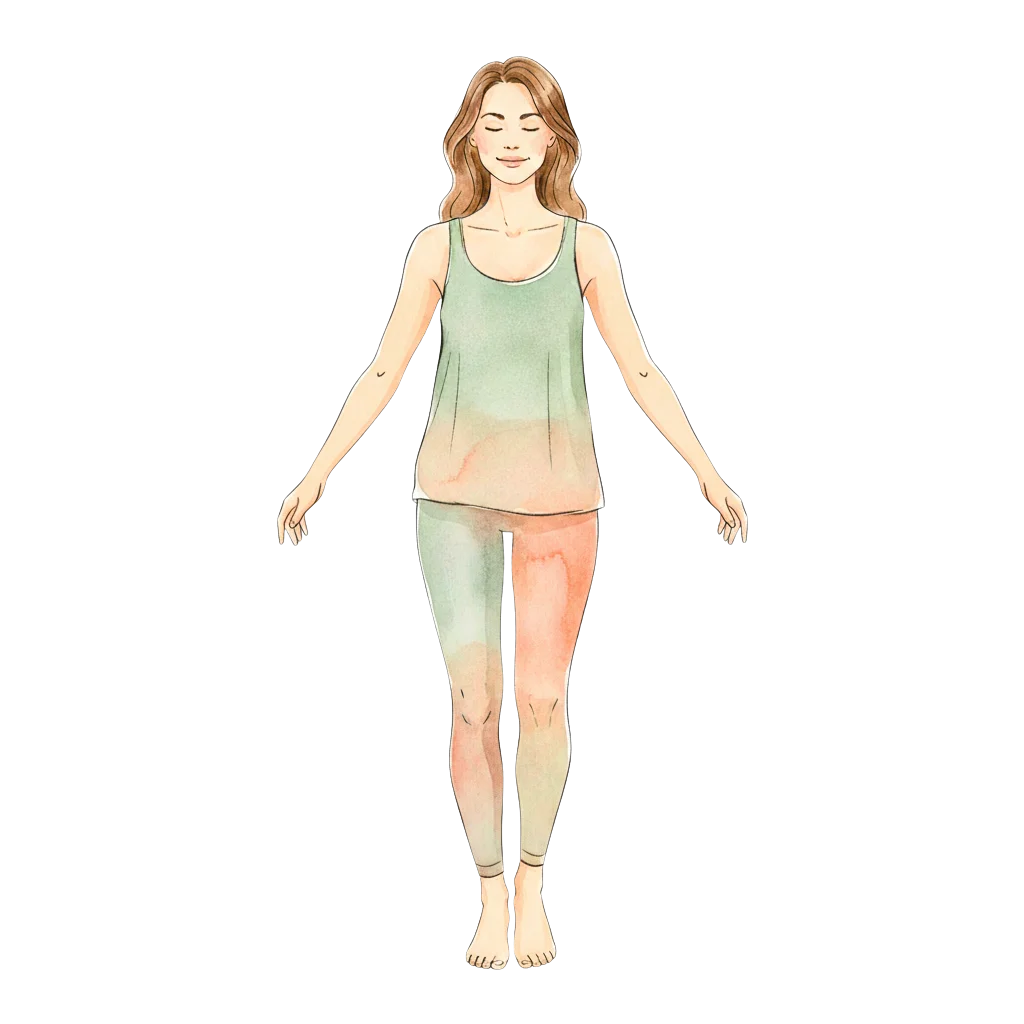
Start your protocolHow Unexplained weight gain affects your body
Tap body zones to discover connected symptoms and related conditions.
Join 101+ women discussing unexplained weight gain
Real experiences shared across Reddit, TikTok, and health forums
What Defines Health? Fit Women vs. Overweight Women | Middle Ground
if you see me you consider me obese I wouldn't say that you're obese but it's like like medically you know so like for examp so you're medically obese though no yes...
My wife keeps gaining weight and I’m genuinely scared for her.
My wife keeps gaining weight and I’m genuinely scared for her.
Is there anyone here who is not freaking out about weight gain?
Is there anyone here who is not freaking out about weight gain?
Reading others' stories is the first step. Join to share yours.
Community
A safe space for women navigating unexplained weight gain
Frequently asked questions
Common questions about Unexplained weight gain
How we research and fact-check
Every article on Wellls is researched using peer-reviewed medical literature, clinical guidelines, and real patient experiences from 122 online discussions.
Sources: We reference 58 PubMed-indexed studies, ACOG/NAMS clinical guidelines, and validated screening tools.
Review: Content is written by our editorial team, enriched from a medical knowledge base of 15,000+ sources. Evidence standards and clinical methodology guided by our Medical Advisory Board: Dr. Alexandra Rybakova and Dr. Alexander Rybakov, Lifestyle Medicine Physicians with 35+ years combined clinical practice.
This content is for informational purposes only and does not constitute medical advice. Our editorial standards · Medical advisory board
References
58 sources reviewed for this unexplained weight gain guide
- 1.(2023). Obesity in perimenopause - current treatment options [PubMed]
- 2.(2024). Body composition analysis: A snapshot across the perimenopause [PubMed]
- 3.Prescription of Exercise in the Perimenopause and Menopause [pdf_report]
- 4.(2023). Association Between Hormone Therapy and Weight Gain in the Menopause Transition [Article]
- 5.(2025). Menopause and Body Composition: A Complex Field [PubMed]
- 6.(2023). The Importance of Nutrition in Menopause and Perimenopause [Article]
- 7.Menopause Weight Gain: Why It Happens and Ways to Manage [Website]
- 8.Menopause and Weight Gain: Understanding the Connection | UPMC [Website]
- 9.Midlife Weight Gain - The Menopause Society MenoNote [pdf_report]
- 10.(2012). Understanding weight gain at menopause [PubMed]
History of updates
Current version (March 11, 2026) — Content reviewed and updated based on latest research
First published (March 2, 2026)
Explore related problems
Women who experience unexplained weight gain often also deal with these
Your personalized plan is ready
Your weight gain has a name, a mechanism, and a solution. The labs your doctor never ordered. The exercise that actually works for your hormonal stage. The protein targets your body needs right now. Your free Wellls assessment maps all of it to your specific situation in under 5 minutes.
3,200+ women explored their perimenopause weight plan this month
Free assessment · Takes 2 minutes · No account required
Medical disclaimer: This content is for informational purposes only and does not constitute medical advice, diagnosis, or treatment. Always consult a qualified healthcare provider for personal medical decisions. Content is based on peer-reviewed research and updated regularly. Learn about our editorial standards.