BMI vs body fat: a 2025 study found body fat predicted mortality (HR 2.01) while BMI showed no significant link. Perimenopause drives simultaneous muscle loss and visceral fat gain.
Why Is My Body Completely Reshaping Itself?
Body composition shifts affect virtually all women during the menopausal transition. Approximately 45% of postmenopausal women meet criteria for sarcopenia.
““Nobody warned me about the hips spreading in your 40s… I thought it was just gonna be wisdom 😭””
For informational purposes only. Not a substitute for professional medical advice.
You haven't changed a thing. Same meals. Same routine. Same woman who used to zip those jeans without thinking about it. But the mirror tells a different story now, and the scale has become a liar you can't stop consulting. Something shifted. Not your discipline. Your biology.
Key takeaways
- BMI vs body fat: a 2025 study found body fat predicted mortality (HR 2.01) while BMI showed no significant link.
- Perimenopause drives simultaneous muscle loss and visceral fat gain.
- estrogen_decline_muscle_satellite_cell_impairment
- visceral_fat_redistribution_estrogen_withdrawal
The Science Behind Body Composition Changes
Your body is not broken. It is responding to the most significant hormonal recalibration since puberty. But if you are still using BMI to measure your health, you are using the wrong tool. The distinction between BMI vs body fat percentage becomes critical during the menopausal transition because your scale weight can stay identical while your body fat percentage climbs by 8 or more points. Estradiol, the primary estrogen, maintains muscle satellite cell activation and directs fat storage toward subcutaneous depots. When estradiol declines during perimenopause, both systems unravel simultaneously: muscle fibers thin, fat migrates centrally, and the body reshapes itself from the inside out. Understanding BMI vs body fat is not an academic exercise. It is the difference between catching a serious metabolic shift early and being told you are fine because you weigh the same as last year.
This is the health paradox of midlife that nobody explains clearly enough. A woman can weigh exactly what she weighed at 35, wear the same size clothes, and still have undergone a profound metabolic deterioration. The DEXA scan would show it: less muscle, more fat, especially visceral fat wrapped around her organs. Her BMI would show nothing. A 2024 analysis in the American Journal of Clinical Nutrition found that 28% of women classified as 'normal weight' by BMI had body fat percentages in the obese range. They called this 'normal weight obesity,' and it carries cardiovascular risk comparable to traditional obesity. You cannot see it on a scale. You can feel it in how your clothes fit differently, how your energy crashes after meals, and how the body you thought you knew has quietly reorganized itself.
The muscle-fat swap nobody warned you about
Women lose approximately 1% of lean body mass per year starting in their mid-thirties. During the menopausal transition, the rate accelerates. Estrogen decline impairs muscle satellite cell function, the repair crew that rebuilds fibers after every physical effort. Meanwhile, fat tissue expands to fill the space muscle leaves behind. Your scale weight can stay identical while your body fat percentage climbs from 28% to 36%. This is why BMI, which cannot distinguish muscle from fat, fails midlife women so completely. A 2025 study in the Annals of Family Medicine found body fat percentage predicted 15-year mortality (HR 2.01) while BMI showed no statistically significant relationship with all-cause mortality in adults aged 20-49.
I want to explain what is happening at the cellular level because the mechanism matters for treatment. Muscle satellite cells are stem cells that sit dormant on the surface of muscle fibers until they are needed for repair. Exercise damages muscle fibers in microscopic ways. Satellite cells activate, divide, and fuse into the damaged fiber, making it stronger. Estrogen is a key regulator of this process. It promotes satellite cell proliferation through estrogen receptor alpha signaling. When estrogen declines, satellite cells become less responsive to exercise-induced damage. You still exercise. The damage still happens. But the repair is slower and less complete. Over time, muscle fibers are not fully rebuilt after each bout of activity. They shrink.
This is why many women in their mid-forties describe feeling weaker despite maintaining the same exercise routine. The routine is the same. The hormonal support for recovery is not. Dr. Marni Boppart at the University of Illinois at Urbana-Champaign has published extensively on this mechanism, documenting that estrogen receptor knockout mice show dramatically impaired muscle regeneration after injury. The translation to human women is direct: your muscles are losing their repair capacity because the hormone that drives repair is declining.
Where your fat goes when estrogen leaves
I need to explain something about fat distribution that changed how I think about body composition entirely. Before menopause, estrogen directs fat toward subcutaneous depots in the hips and thighs. Annoying, perhaps. But metabolically safe. When estrogen drops, fat migrates to visceral compartments around organs. The SWAN Heart study of 362 midlife women showed that visceral fat increases during the menopausal transition directly predicted carotid atherosclerosis progression, independent of total body fat. This happens even when weight stays the same. The gut microbiome amplifies the problem: menopausal estrogen loss alters the estrobolome, a collection of bacteria that metabolize estrogen, creating a feedback loop where microbial shifts further reduce circulating estrogen levels.
This is what worries me most. Visceral fat is not just fat stored in a different location. It is metabolically active tissue that behaves like an endocrine organ. Visceral adipocytes secrete inflammatory cytokines (IL-6, TNF-alpha), resistin, and excess estrogen metabolites that create a pro-inflammatory, insulin-resistant metabolic environment. A 2023 study in Diabetes Care found that visceral fat area, measured by CT scan, predicted type 2 diabetes risk with three times the accuracy of BMI in women aged 45-60.
The redistribution happens quickly. The SWAN study documented that visceral fat accumulation accelerated during the 2-3 years surrounding the final menstrual period, with an average increase of 8.6% in visceral fat independent of total weight change. Dr. Lynda Lysne at the University of Pittsburgh, who analyzed the SWAN body composition data, described it as a 'metabolic switch' that flips during the transition. The subcutaneous-to-visceral ratio changes in a way that alters cardiovascular risk even when the scale reads the same number it did five years ago. This is why BMI vs body fat matters so urgently in midlife. The external measurements tell you nothing about the internal reorganization that determines your cardiometabolic future.
Key mechanisms
Deep scientific content for Body composition changes is coming in Wave 3.
Our team is reviewing research papers and clinical guidelines.


Talk to Dr. Wellls — free consultation
4 free messages — no account required
Dr. Wellls AI
Quick start — tap or speak:
Powered by Lifestyle Medicine evidence. Not a substitute for medical advice.
You're Not Alone
women are talking about body composition changes right now
Thousands of women have been through the same thing. Here's what they say.
“Rapid changes after 40 are scary.”
“42 and realizing my body just doesn't respond the same way anymore”
“The one upside to this horrible transition: I DO NOT CARE. I don't care about other people's opinions. I don't care if baggy clothes make me look bigger. I don't care if my grey hair makes me look older.”
+ 2 more stories from real women
Understanding Your Body Composition Changes
A private assessment to map what is actually shifting in your body, why the scale is lying to you, and what the research says works.
2,781 women got their profile this month
Free · 5 min · 100% private
This is not a clinical assessment. For medical concerns, consult a healthcare provider.
Take a moment for yourself
These evidence-based techniques can help manage body composition changes symptoms right now.
Curated Exercise Sets
4 personalized routines with 16 exercises from professional trainers

The many faces of body composition changes
4 distinct patterns we've identified from real women's experiences
Starting around 35, your body quietly dismantles muscle at roughly 1% per year. You won't feel it at first. Your arms still work, your legs still carry you. But the furnace that burned through breakfast is cooling down, and nobody told you the fire was going out.
From our data
I want you to sit with this number for a second. Forty-five percent. That's how many postmenopausal women in a 2024 cross-sectional study already had sarcopenia, according to Sriramaneni and colleagues. Nearly half. And most of them felt strong.
Connected problems
What women with body composition changes also experience
Your personalized protocol
A lifestyle medicine approach to body composition changes, built on 6 evidence-based pillars
Foundation: move and measure
Establish 2 to 3 resistance training sessions per week. Get baseline body composition measurement. Track protein intake. Replace scale with waist circumference and functional markers.
Build: progressive overload
Increase resistance training load by 5 to 10% weekly. Add 10 to 15 grams more protein per day. Begin walking 20 minutes after meals to improve insulin sensitivity and glucose clearance.
Optimize: sleep and stress
Address sleep quality: consistent bedtime, cool room, no screens 30 min before bed. Consider cortiso...
Sustain: recomposition tracking
Repeat body composition measurement. Compare waist circumference, lean mass trends, and functional s...
2,847 women explored their body composition plan this month
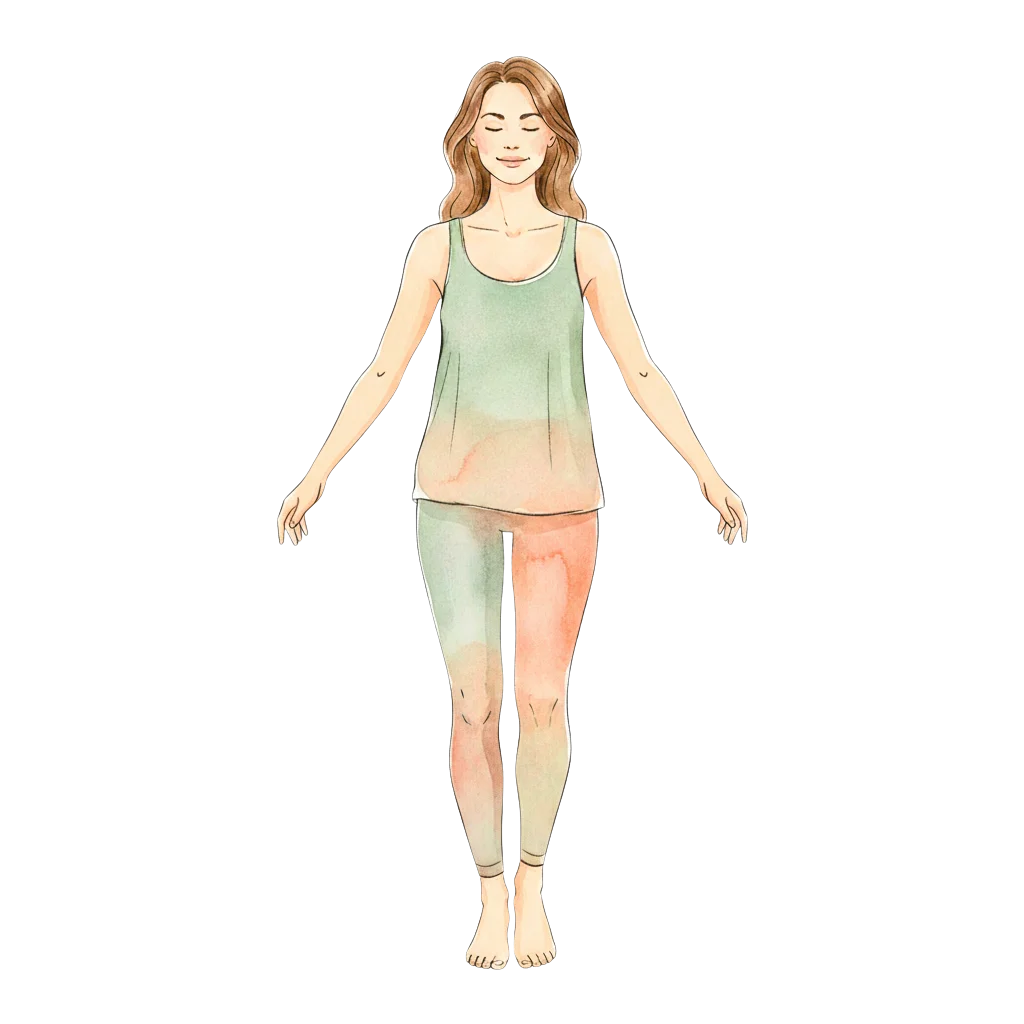
Start your protocolHow Body composition changes affects your body
Tap body zones to discover connected symptoms and related conditions.
Join 104+ women discussing body composition changes
Real experiences shared across Reddit, TikTok, and health forums
Rapid changes after 40 are scary.
Rapid changes after 40 are scary.
42 and realizing my body just doesn't respond the same way anymore
42 and realizing my body just doesn't respond the same way anymore
How I Remove Skin After Massive Weight Loss! #shorts #abdominoplasty
this beautiful 40 year old woman lost 80 pounds by diet and exercise but unfortunately you can see it left her with a lot of loose skin hanging from her tummy so i...
Reading others' stories is the first step. Join to share yours.
Community
A safe space for women navigating body composition changes
Frequently asked questions
Common questions about Body composition changes
How we research and fact-check
Every article on Wellls is researched using peer-reviewed medical literature, clinical guidelines, and real patient experiences from 85 online discussions.
Sources: We reference 50 PubMed-indexed studies, ACOG/NAMS clinical guidelines, and validated screening tools.
Review: Content is written by our editorial team, enriched from a medical knowledge base of 15,000+ sources. All content follows our evidence-based editorial standards and is cross-referenced with clinical guidelines.
This content is for informational purposes only and does not constitute medical advice. Our editorial standards · Medical advisory board
References
50 sources reviewed for this body composition changes guide
- 1.Karaflou M & Goulis DG Body composition analysis: A snapshot across the perimenopause
- 2.Marlatt KL et al. Body composition and cardiometabolic health across the menopause transition
- 3.Juppi HK et al. Menopause and Body Composition: A Complex Field
- 4.Erdélyi A et al. The Importance of Nutrition in Menopause and Perimenopause
- 5.Various Weight, Shape, and Body Composition Changes at Menopause
- 6.Collins BC et al. Estrogens maintain skeletal muscle and satellite cell functions
- 7.Various Postmenopausal muscle loss: mechanisms and exercise countermeasures
- 8.Sriramaneni N et al. Quality of life in postmenopausal women and its association with sarcopenia
- 9.Farhana F et al. Postmenopausal sarcopenia and Alzheimer's disease
- 10.Various Prescription of Exercise in the Perimenopause and Menopause
History of updates
Current version (March 11, 2026) — Content reviewed and updated based on latest research
First published (March 7, 2026)
Explore related problems
Women who experience body composition changes often also deal with these
Your personalized plan is ready
Your body is telling you something specific, and generic advice about eating less isn't going to decode it. Get a personalized body composition plan that addresses your hormonal stage, your muscle preservation needs, and your actual biology.
2,847 women explored their body composition plan this month
Free assessment · Takes 2 minutes · No account required
Medical disclaimer: This content is for informational purposes only and does not constitute medical advice, diagnosis, or treatment. Always consult a qualified healthcare provider for personal medical decisions. Content is based on peer-reviewed research and updated regularly. Learn about our editorial standards.