Bloating perimenopause affects 77% of women due to estrogen fluctuations that alter gut motility, water retention via aldosterone, and microbiome composition.
6 AM Flat. 6 PM Pregnant. The Bizarre Daily Cycle of Bloating in Perimenopause
Affects 77% of perimenopausal women according to the 2025 Menopause Society survey of 564 women. Bloating is the single most commonly reported digestive symptom during the menopausal transition.
“The bloat, ugh! I don't even recognise my body anymore”


Dr. A. Rybakova, Dr. A. Rybakov · Lifestyle Medicine
For informational purposes only. Not a substitute for professional medical advice.
6 AM: flat. You stand sideways in the bathroom mirror and think, okay, not bad. 6 PM: you look five months pregnant. Same food. Same water. Same body. Except it isn't the same body anymore, and nobody warned you that bloating in perimenopause would become your nightly companion. Not a little puffiness. The kind where you unbutton your jeans at your desk and pray nobody notices. The kind where your partner asks if you're okay and you want to scream because you don't know.
Key takeaways
- Bloating perimenopause affects 77% of women due to estrogen fluctuations that alter gut motility, water retention via aldosterone, and microbiome composition.
- estrogen_aldosterone_water_retention
- progesterone_smooth_muscle_gut_transit
- estrobolome_microbiome_fermentation_shift
The Science Behind Bloating in Perimenopause
Why Estrogen Fluctuations Cause Water Retention and Bloating
Bloating perimenopause. Two words that 77% of women in midlife type into search engines, trying to understand why their abdomen balloons by evening when it was flat at dawn. I have tracked this research for years, and the mechanism is clearer than most doctors acknowledge.
Estradiol stimulates the liver to produce angiotensinogen, which converts to angiotensin II, triggering aldosterone release from the adrenal glands. Aldosterone causes renal sodium reabsorption, and water follows sodium. During perimenopause, estrogen can spike to levels exceeding peak reproductive years before crashing within the same week, causing dramatic fluid shifts. Stachenfeld and colleagues at the John B. Pierce Laboratory demonstrated that estrogen lowers the osmotic threshold for arginine vasopressin release, meaning the body retains water at concentrations it normally would not.
This mechanism explains why bloating perimenopause follows that characteristic flat-morning, bloated-evening pattern, with measurable weight fluctuations of 2 to 4 pounds within a single day. You are not gaining fat overnight. Your body is shifting fluid in response to hormones that have lost their predictable rhythm. I find it maddening that most women are told this is about what they ate for dinner rather than what their estrogen did that morning.
The Menopause Society's 2025 survey of 564 perimenopausal and menopausal women found that 94% reported digestive symptoms, with bloating perimenopause the most commonly reported at 77%. Of those, 82% reported that digestive symptoms either began or worsened specifically during perimenopause or menopause. Over half experienced daily or weekly symptoms, and 55% reported significant or regular impact on quality of life.
Despite this high prevalence, only 33% had received a formal IBS diagnosis, and 58% of those who sought professional help found it inadequate. I want to sit with that 58% figure. More than half of the women who bothered to seek help were told something useless or dismissive.
Sarnoff and colleagues used the Rome Foundation Global Epidemiology Survey across 26 countries, analysing 14,570 participants, and confirmed that women exceeded men in virtually every gut-brain disorder symptom. Premenopausal women reported the greatest visceral perception, while postmenopausal women showed increased pelvic floor dysfunction. The scale of bloating perimenopause is not niche. It is nearly universal in midlife women, and the medical establishment has barely begun to take it seriously.
How the Estrobolome Reshapes Your Gut in Perimenopause
The estrobolome is the collection of gut bacteria that metabolize estrogen through beta-glucuronidase enzyme activity. Peters and colleagues at NYU demonstrated in 2022 that menopause is associated with significant alterations in both the gut microbiome and estrobolome composition. As estrogen declines, bacterial populations that ferment dietary fiber shift, altering gas production patterns and fermentation capacity.
This explains why women in their 40s suddenly develop intolerances to foods they previously consumed without issue. The food itself has not changed. The gut microbiome's capacity to process fermentable carbohydrates, known as FODMAPs, has decreased due to hormonal restructuring of the bacterial community.
I cannot overstate how often I hear this from women dealing with bloating perimenopause: they eat the same foods they have eaten for twenty years, and suddenly their gut rebels. They blame the food. They blame themselves. But the Firmicutes to Bacteroidetes ratio has shifted, diversity has dropped, and the estrobolome is no longer recycling estrogen efficiently. Baker, Al-Nakkash, and Herbst-Kralovetz mapped this in 2017: dysbiosis directly impairs estrogen deconjugation, creating a vicious cycle where less diversity leads to less estrogen leads to more bloating.
Key mechanisms
Deep scientific content for Bloating is coming in Wave 3.
Our team is reviewing research papers and clinical guidelines.


Talk to Dr. Wellls — free consultation
4 free messages — no account required
Dr. Wellls AI
Quick start — tap or speak:
Powered by Lifestyle Medicine evidence. Not a substitute for medical advice.
You're Not Alone
women are talking about bloating right now
Thousands of women have been through the same thing. Here's what they say.
“The bloat, ugh! I don't even recognise my body anymore”
“No matter what I ate, I was always bloated right after. I had zero energy and the worst mood swings. My skin was breaking out for no reason.”
“NO MORE TIGHT PANTS!!!”
+ 3 more stories from real women
Understanding Your Bloating Pattern
A brief assessment to understand what is driving your bloating, why it changed, and which of three hormonal mechanisms is most active in your body.
1,143 women got their profile this month
Free · 5 min · 100% private
This is not a clinical assessment. For medical concerns, consult a healthcare provider.
Take a moment for yourself
These evidence-based techniques can help manage bloating symptoms right now.
Curated Exercise Sets
4 personalized routines with 16 exercises from professional trainers


The many faces of bloating
4 distinct patterns we've identified from real women's experiences
Your belly isn't betraying you. Your hormones are. Estrogen fluctuations during perimenopause trigger a cascade that most women never learn about: water retention through aldosterone stimulation, slowed gut motility through progesterone, and altered gas production through a shifting microbiome. All three hit at once. All three get worse as the day goes on. That's why the morning-to-evening transformation feels so dramatic.
From our data
This is the part that made me furious when I first found it buried in an endocrinology textbook. Estradiol stimulates the liver to produce angiotensinogen, which converts to angiotensin II, which triggers the adrenal glands to release aldosterone. Aldosterone tells your kidneys to hold onto sodium. Sodium holds onto water. That's bloating. Stacey Sims at the University of Auckland has been hammering this point for years. And a 2014 review by Wenner and Stachenfeld in the Journal of Applied Physiology confirmed that sex hormones directly modulate fluid regulation, with estrogen decreasing the osmotic threshold for vasopressin release. In plain language: when estrogen surges during perimenopause, your body hoards water at levels it wouldn't have tolerated at 30. When estrogen crashes the following week, the water dumps. You're not imagining the three-pound overnight swing. It's measurable.
Connected problems
What women with bloating also experience
Your personalized protocol
A lifestyle medicine approach to bloating, built on 6 evidence-based pillars
Identify your hormonal pattern
Track bloating severity alongside your cycle using an app or the diary from the 7-day protocol. Most women discover a clear progesterone-related pattern within two cycles. This tells you which weeks to implement dietary changes.
Guided FODMAP elimination
Work with a FODMAP-trained dietitian to complete a 2-week strict elimination phase. This identifies your specific triggers. Do not self-direct this; the reintroduction phase is critical and often done incorrectly alone.
Strain-specific probiotic trial
Start Lactobacillus plantarum 299v or Bifidobacterium infantis 35624. Give it a minimum 4-week trial...
Stress-gut intervention
Add a daily 10-minute vagus nerve practice: diaphragmatic breathing, cold water on wrists, or hummin...
Cycle-synced maintenance
Using your data from weeks 1-8, build your personalized protocol: which foods to limit during high-p...
4,200+ women explored their bloating plan this month
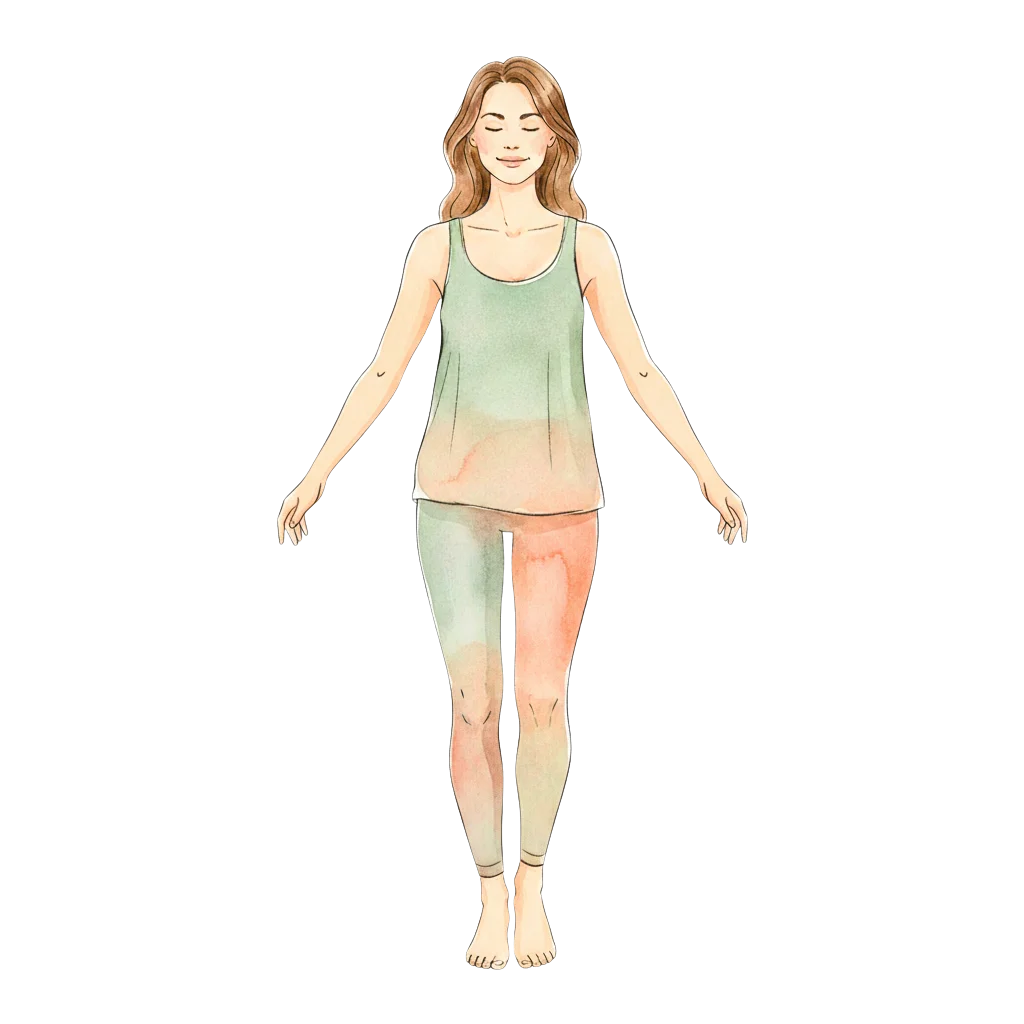
Start your protocolHow Bloating affects your body
Tap body zones to discover connected symptoms and related conditions.
Join 56+ women discussing bloating
Real experiences shared across Reddit, TikTok, and health forums
How fixing my GUT HEALTH changed my life | bloating, acne, fatigue
Hot girls have stomach problems is the propaganda I fell for on social media. But why are we normalizing body dysfunction? Like, why did no one warn us about this...
We do not care that our farts can peel paint off the walls and shatter ear drums. We do not care that we wear our most stretched out bra every single day. We do not care that our kitchen counter...
The bloat, ugh! I don't even recognise my body anymore
The bloat, ugh! I don't even recognise my body anymore
Reading others' stories is the first step. Join to share yours.
Community
A safe space for women navigating bloating
Frequently asked questions
Common questions about Bloating
How we research and fact-check
Every article on Wellls is researched using peer-reviewed medical literature, clinical guidelines, and real patient experiences from 28 online discussions.
Sources: We reference 48 PubMed-indexed studies, ACOG/NAMS clinical guidelines, and validated screening tools.
Review: Content is written by our editorial team, enriched from a medical knowledge base of 15,000+ sources. Evidence standards and clinical methodology guided by our Medical Advisory Board: Dr. Alexandra Rybakova and Dr. Alexander Rybakov, Lifestyle Medicine Physicians with 35+ years combined clinical practice.
This content is for informational purposes only and does not constitute medical advice. Our editorial standards · Medical advisory board
References
48 sources reviewed for this bloating guide
- 1.Digestive health and menopause - Women's Health Concern factsheet
- 2.Digestive Health Issues More Common During Perimenopause and Menopause - The Menopause Society
- 3.Sex Differences, Menses-Related Symptoms and Menopause in Disorders of Gut-Brain Interaction
- 4.Impact of progesterone on the gastrointestinal tract: a comprehensive literature review
- 5.Menopause Is Associated with an Altered Gut Microbiome and Estrobolome
- 6.Gut-Brain Communication in Menopause: Neuroendocrine and Microbiome Interactions
- 7.The Gut-Brain Connection in Menopause: Hormones, Health, and Digestion
- 8.Gut Check: Digestive Issues During Menopause - Joylux
- 9.Menopause Constipation | How Estrogen Affects Digestion
- 10.Menopause Monday: Menopause related flatulence, bloating and constipation
History of updates
Current version (March 11, 2026) — Content reviewed and updated based on latest research
First published (March 2, 2026)
Explore related problems
Women who experience bloating often also deal with these
Your personalized plan is ready
You've spent months Googling 'why am I so bloated' and getting the same useless advice. Drink water. Cut gluten. Try yoga. The reason nothing worked is because nobody told you the bloating is hormonal. Your personalized plan starts with understanding your specific pattern, and the Wellls Dr. Wellls can help you map it.
4,200+ women explored their bloating plan this month
Free assessment · Takes 2 minutes · No account required
Medical disclaimer: This content is for informational purposes only and does not constitute medical advice, diagnosis, or treatment. Always consult a qualified healthcare provider for personal medical decisions. Content is based on peer-reviewed research and updated regularly. Learn about our editorial standards.