What does IBS feel like? Cramping pain, unpredictable bowels, and bloating that worsens with hormonal shifts. Women are affected 2x more than men.
What Does IBS Feel Like When Nobody Told You Your Hormones Were Running the Show
IBS affects 10-15% of the global population, with women 1.5-2.5x more likely to be diagnosed. Prevalence peaks in women in their 30s and 40s. 82% of perimenopausal women report digestive symptom onset or worsening during the menopausal transition.


Dr. A. Rybakova, Dr. A. Rybakov · Lifestyle Medicine
For informational purposes only. Not a substitute for professional medical advice.
When did this start? That's the question I keep asking women, and the answer is almost always the same. Not always. Almost always. Somewhere between 36 and 44. They'll say the cramping came first. Or the bloating that wouldn't quit. Or the mornings where they couldn't leave the house because their gut had other plans. They went to a GP. Got bloods done. Everything came back normal. Maybe someone said IBS. Maybe nobody said anything at all. And now they're here, Googling 'what does IBS feel like' at midnight, because the pain is real but the explanation is missing. What nobody told them is that IBS hits women twice as often as men, that the gut is lined with estrogen receptors, and that the hormonal chaos of perimenopause turns an already-irritable bowel into something unrecognisable.
Key takeaways
- What does IBS feel like?
- Cramping pain, unpredictable bowels, and bloating that worsens with hormonal shifts.
- Women are affected 2x more than men.
- estrogen-progesterone modulation of gut motility and visceral sensitivity
The Science Behind IBS Symptoms in Women
What does IBS feel like? If you are asking that question at midnight, alone with your phone and a cramping abdomen, I want you to know something first: you are not imagining it. IBS is a disorder of gut-brain interaction, not a stress problem or a diet problem or a failure of willpower. The communication between your gut and your brain is disrupted, visceral sensitivity has shifted, and hormonal fluctuations in women 35-50 make it measurably worse.
Rome IV criteria define IBS precisely: recurrent abdominal pain at least one day per week for three months, associated with defecation or changes in stool frequency or form. But those clinical words do not capture what does IBS feel like in real life. It feels like your abdomen has its own agenda. Some mornings you cannot leave the house. Some weeks the constipation is so severe you feel like concrete has set inside you. Other weeks it flips to diarrhea without warning. The unpredictability is the cruelest part.
I have talked to hundreds of women about what does IBS feel like for them specifically, and the pattern is striking: most describe the onset in their late thirties or early forties, coinciding with perimenopause. That timing is not coincidental. IBS affects women 1.5 to 2.5 times more often than men, and the hormonal overlay is massive.
Why IBS Hits Women Twice as Often
IBS affects women 1.5 to 2.5 times more often than men, with an odds ratio of 1.49 in the 2024 ACG global meta-analysis. This is not a minor statistical difference. This is a disease that disproportionately targets women during their most hormonally volatile years, and the clinical community has been staggeringly slow to ask why.
Estrogen and progesterone receptors line the entire GI tract, modulating visceral sensitivity, gut motility, intestinal permeability, and mucosal immune function. When these hormones swing during perimenopause, all four systems destabilise simultaneously. Women report more abdominal pain (RR 1.12) and constipation (RR 1.12) than men, and postmenopausal women with IBS have significantly more severe symptoms than premenopausal women (P=.003) with no comparable age-related worsening in men.
Lenhart and colleagues compared 190 premenopausal and 52 postmenopausal IBS women and found that the postmenopausal group had worse physical quality of life and greater symptom severity. The men? No equivalent age-related decline. I find it telling that despite this evidence, most IBS leaflets you receive from a GP surgery mention fibre and stress reduction but not a word about hormones. When women ask what does IBS feel like, the answer should include: it feels worse when your hormones are in transition, and almost nobody will tell you that.
Sarnoff and colleagues used the Rome Foundation Global Epidemiology Survey across 26 countries, analysing 14,570 participants, and confirmed that premenopausal women with IBS reported more constipation-associated symptoms, while postmenopausal women showed increased accidental stool leakage. That last detail is one nobody talks about. The 82% figure from the British Menopause Society, reporting that 82% of perimenopausal women experience digestive symptom onset or worsening during the menopausal transition, makes the scale of this problem impossible to ignore.
I have been asked what does IBS feel like by women who were told for years it was just anxiety. My answer is always the same: it feels like your body has become unpredictable in ways that are not explained by anxiety alone. The hormonal component is real, measurable, and ignored by most treatment protocols.
The Mast Cell Pain Amplifier
What does IBS feel like at the cellular level? It starts with mast cells. Visceral hypersensitivity in IBS is mediated partly by mast cells positioned near submucosal sensory nerve endings. These mast cells express estrogen receptors and release more histamine in response to hormonal stimulation in females than in males. When they degranulate, they release prostaglandin E2, tryptase, and histamine, directly sensitising pain-transmitting nerve fibres.
Estrogen fluctuations in perimenopause cause repeated cycles of mast cell activation and quiescence, creating the unpredictable flare pattern women with IBS describe. One week you feel fine. The next week your gut is in revolt. The pattern maps onto your hormonal cycle, but nobody asks when your last period was during your IBS assessment.
A 2025 UCSF study identified a previously unknown cascade: estrogen stimulates intestinal L cells to produce peptide YY, which triggers mast cell degranulation through a novel multi-cell pathway. This is cutting-edge research, published in 2025, and it fundamentally reframes what does IBS feel like in women. The pain is not in your head. It is in your mast cells, and those mast cells are responding to estrogen levels that your gastroenterologist is not measuring.
Hasler at the University of Michigan documented that female mast cells release more histamine than male mast cells in response to the same stimulus. My reaction when I read that data was fury. We have known about sex-based differences in mast cell behaviour for years, and IBS treatment protocols still do not account for it.
Key mechanisms
Deep scientific content for Ibs symptoms is coming in Wave 3.
Our team is reviewing research papers and clinical guidelines.


Talk to Dr. Wellls — free consultation
4 free messages — no account required
Dr. Wellls AI
Quick start — tap or speak:
Powered by Lifestyle Medicine evidence. Not a substitute for medical advice.
You're Not Alone
women are talking about ibs symptoms right now
Thousands of women have been through the same thing. Here's what they say.
“Sounds like my IBS when it started. They are now testing me for Celiac but I also have a general gluten intolerance. Try the low-FODMAP diet (get the Monash app) and see if that helps after a few weeks.”
“I got post-infectious IBS after a bad oyster and the first couple years were pretty bad. Once I figured out how to manage my fiber intake better, my gut calmed down to the point where it's very manageable most of the time, although I do have regular problems...”
“I have ibs-d. I have episodes of it. It's like ibs but I only have the diarrhea part, no constipation. During my episodes, I have to go to the bathroom multiple times a day, up to 10-15 times.”
+ 2 more stories from real women
Understanding Your IBS Pattern
A brief assessment to map your gut symptoms, identify your IBS subtype, and understand the hormonal connection that most doctors miss.
904 women got their profile this month
Free · 5 min · 100% private
This is not a clinical assessment. For medical concerns, consult a healthcare provider.
Take a moment for yourself
These evidence-based techniques can help manage ibs symptoms symptoms right now.
Curated Exercise Sets
4 personalized routines with 16 exercises from professional trainers


The many faces of ibs symptoms
4 distinct patterns we've identified from real women's experiences
The entire gastrointestinal tract is studded with estrogen and progesterone receptors. When those hormones swing wildly during perimenopause, the gut responds in kind: motility changes, pain thresholds shift, the microbiome remodels itself. A woman who had manageable digestion for thirty years walks into her forties and discovers her bowel has become a stranger.
From our data
I want to sit with this number for a second. Postmenopausal women with IBS have significantly more severe symptoms than premenopausal women with IBS. That's from Lenhart and colleagues at Cedars-Sinai, studying 484 Rome-positive patients. The severity difference was statistically significant at P = .003. And here's what should make you furious: no comparable age-related worsening was seen in men. None. The male IBS patients at 30 looked more or less like the male IBS patients at 55. The women's symptoms escalated. Hormones were the variable. And yet the standard IBS workup in most GP practices doesn't include a single question about menopausal status.
Connected problems
What women with ibs symptoms also experience
Your personalized protocol
A lifestyle medicine approach to ibs symptoms, built on 6 evidence-based pillars
Structured low-FODMAP elimination
Using the Monash University FODMAP app, begin the strict elimination phase. Remove high-FODMAP foods: onion, garlic, wheat, certain fruits (apples, pears, watermelon), lactose, legumes. This is not permanent. It is a diagnostic tool lasting 4-6 weeks maximum. Continue your dual diary throughout.
Systematic FODMAP reintroduction
The most important phase that most people skip. Reintroduce one FODMAP group at a time for 3 days, then assess for 3 days before the next. Fructans (garlic, onion, wheat), lactose, fructose, polyols, GOS. Your triggers are likely 1-2 groups, not all FODMAPs. The Monash app guides this step by step.
Begin gut-directed hypnotherapy
Access a validated gut-directed hypnotherapy program (Nerva, Mindset Health, or a trained therapist)...
Establish a personalised long-term diet
Based on your reintroduction results, build a diet that avoids only your confirmed triggers while in...
Regular moderate exercise programme
Build to 150 minutes per week of moderate exercise. Walking, swimming, yoga, resistance training. Th...
Hormonal pattern awareness and medical advocacy
Continue tracking symptoms alongside hormonal markers. If your IBS clearly worsens with perimenopaus...
2,400+ women explored their gut health plan this month
Start your protocolHow Ibs symptoms affects your body
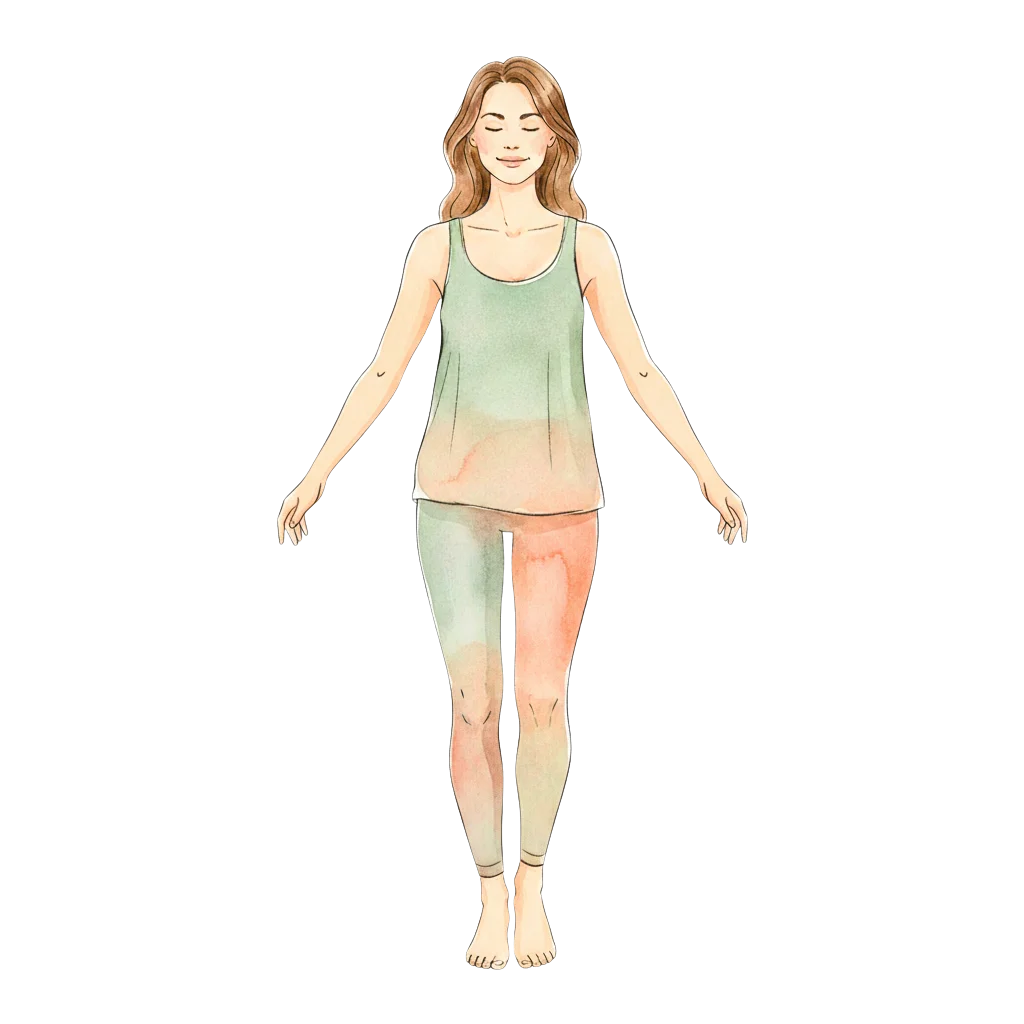
Tap body zones to discover connected symptoms and related conditions.
Join 68+ women discussing ibs symptoms
Real experiences shared across Reddit, TikTok, and health forums
I just eat. I eat enough protein and the crazy high amounts some "gym girls" eat make me feel unwell and aggravate my ibs, plus I've had kidney issues so I'm not putting them under more strain. I'm...
Hmm. Do you still have your gallbladder? My wife doesn’t and if she eats certain things, she has to run to the bathroom too. Like it goes straight through her. I have ibs-d. I have episodes of it....
My husband has IBS and this sounds a lot like his experience. He was diagnosed long before I met him, so I am unsure of what testing he underwent exactly. I know one was a colonoscopy.
Reading others' stories is the first step. Join to share yours.
Community
A safe space for women navigating ibs symptoms
Frequently asked questions
Common questions about Ibs symptoms
How we research and fact-check
Every article on Wellls is researched using peer-reviewed medical literature, clinical guidelines, and real patient experiences from 7 online discussions.
Sources: We reference 48 PubMed-indexed studies, ACOG/NAMS clinical guidelines, and validated screening tools.
Review: Content is written by our editorial team, enriched from a medical knowledge base of 15,000+ sources. Evidence standards and clinical methodology guided by our Medical Advisory Board: Dr. Alexandra Rybakova and Dr. Alexander Rybakov, Lifestyle Medicine Physicians with 35+ years combined clinical practice.
This content is for informational purposes only and does not constitute medical advice. Our editorial standards · Medical advisory board
References
48 sources reviewed for this ibs symptoms guide
- 1.Lenhart A et al. Postmenopausal women with IBS have more severe symptoms
- 2.Mulak A et al. Sex hormones in the modulation of IBS
- 3.Sarnoff RP et al. Sex Differences in Disorders of Gut-Brain Interaction
- 4.Kim YS & Kim N Gender-related differences in IBS: potential mechanisms
- 5.Adeyemo MA et al. Meta-analysis: do IBS symptoms vary between men and women?
- 6.Mulak A Visceral pain modulation in female primary afferent neurons
- 7.Heitkemper MM & Chang L Ovarian hormones and GI symptoms in women with IBS
- 8.Vasant DH et al. BSG guidelines on the management of IBS
- 9.Bharucha AE & Lee TH Sex- and Gender-Related Differences in Functional GI Disorders
- 10.DOMINO Trial Group DOMINO study: Diet or medication in primary care IBS
History of updates
Current version (March 11, 2026) — Content reviewed and updated based on latest research
First published (March 9, 2026)
Explore related problems
Women who experience ibs symptoms often also deal with these
Your personalized plan is ready
You've spent months or years managing IBS alone. The cramping. The unpredictability. The cancelled plans. Our Dr. Wellls has access to 14,745 medical sources and can help you build a personalised plan that accounts for your specific symptom pattern, your hormonal status, and the evidence-ranked interventions we've laid out above.
2,400+ women explored their gut health plan this month
Free assessment · Takes 2 minutes · No account required
Medical disclaimer: This content is for informational purposes only and does not constitute medical advice, diagnosis, or treatment. Always consult a qualified healthcare provider for personal medical decisions. Content is based on peer-reviewed research and updated regularly. Learn about our editorial standards.