What does constipation feel like in perimenopause? 54% of women report it: heaviness, bloating, unpredictable bowels. Caused by progesterone slowing gut muscle.
What Does Constipation Feel Like When Your Hormones Are the Ones Slowing Everything Down
54% of perimenopausal/menopausal women report constipation according to the 2025 Menopause Society survey of 564 women. Chronic idiopathic constipation affects approximately 14% of the general population, with women disproportionately affected. Prevalence increases with age, hormonal fluctuations, and common perimenopausal medications.
“Pls tell how you eat chia seeds? Like, how to prepare them? In what foods? I need help ASAP!!!!”


Dr. A. Rybakova, Dr. A. Rybakov · Lifestyle Medicine
For informational purposes only. Not a substitute for professional medical advice.
Here's a joke nobody tells at dinner parties: perimenopause gave you hot flashes, brain fog, and the inability to poop. The hot flashes got a Vogue article. The brain fog got a TED talk. Your bowels got nothing. Not a pamphlet. Not a whisper from your doctor. Just you, sitting on the toilet at 6 AM scrolling through your phone, wondering if three days without a bowel movement is the kind of thing you should mention to someone or just absorb quietly like every other indignity of midlife.
Key takeaways
- What does constipation feel like in perimenopause?
- 54% of women report it: heaviness, bloating, unpredictable bowels.
- Caused by progesterone slowing gut muscle.
- Progesterone binds intestinal smooth muscle receptors, reducing peristalsis
The Science Behind Perimenopause Constipation
How Progesterone Slows Your Gut
What does constipation feel like during perimenopause? I get asked this question more often than you might expect, and the real answer is nothing like what you will find on a generic medical website. What does constipation feel like when hormones are the driver? The answer is not just "difficulty going to the bathroom." It is a heaviness that sits in your pelvis. A bloated, tight abdomen that makes your jeans unwearable by 2pm. Days without a bowel movement followed by urgency that arrives at the worst possible moment.
Progesterone binds to receptors on intestinal smooth muscle cells, reducing the wave-like contractions called peristalsis that push food through the digestive tract. During perimenopause, progesterone levels fluctuate wildly rather than following the predictable curves of a regular menstrual cycle, causing unpredictable alternation between constipation and normal motility. The landmark 1981 Wald study in Gastroenterology demonstrated that gastrointestinal transit time was significantly prolonged during the luteal phase when progesterone is highest. A 2022 review by Rao and Patcharatrakul confirmed progesterone directly affects the enteric nervous system.
I find it telling that this mechanism was documented in 1981, over forty years ago, and yet most women going through perimenopause are never told that their constipation has a hormonal cause. When women search for what does constipation feel like, they deserve an answer that includes the hormonal dimension. Not just a list of symptoms but an explanation of why those symptoms appeared in their late thirties or forties specifically.
The Coquoz review in 2022 mapped progesterone's effect across the entire GI tract: reduced gastric emptying, slowed small intestinal transit, and decreased colonic motility. The effect is systemic. Your entire digestive tube slows down when progesterone surges, which is why perimenopause constipation often comes with bloating, acid reflux, and early satiety as well. It is not three separate problems. It is one hormone affecting one system.
A 2025 survey of 564 women presented at The Menopause Society Annual Meeting found that 94% of perimenopausal and menopausal women reported gastrointestinal symptoms. Constipation specifically affected 54% of respondents. Let me say that again. More than half.
The majority, 82%, reported that symptoms either began or worsened at perimenopause or menopause. Over half experienced symptoms daily or weekly, and 55% said these symptoms significantly impacted their quality of life. Despite this prevalence, only 33% had received a formal IBS diagnosis.
I keep coming back to that gap between 54% prevalence and 33% diagnosis. It means roughly one in five women with constipation severe enough to affect their daily life is walking around without any clinical recognition of the problem. What does constipation feel like for those women? It feels like nobody is listening. It feels like being told to drink more water by a doctor who spent three minutes with you.
The Callan study from the Seattle Midlife Women's Health Study, which followed 291 women across 23 years, found that both constipation and diarrhea increased in frequency during the late reproductive stage and early menopausal transition. This is longitudinal data. Not cross-sectional snapshots. Not self-reported surveys. Twenty-three years of tracking bowel symptoms alongside hormonal changes. The evidence base for perimenopause constipation is solid. What is missing is the clinical will to use it.
The gut-brain axis is a bidirectional communication pathway connected by the vagus nerve. About 90-95% of the body's serotonin is produced in the gut, and serotonin regulates both mood and intestinal motility. When estrogen declines in perimenopause, gut serotonin production drops, simultaneously worsening mood and slowing transit.
Constipation itself generates visceral discomfort signals that travel up the vagus nerve and amplify anxiety, which increases cortisol, which further suppresses peristalsis. This self-reinforcing loop was documented by Mayer, Knight, Mazmanian, Cryan, and Tillisch in their 2015 review in the Journal of Clinical Investigation.
What does constipation feel like when the anxiety loop kicks in? It feels like you cannot tell whether the knot in your stomach is emotional or physical. My experience is that most women describe it as both. The constipation causes anxiety about leaving the house, and the anxiety about leaving the house worsens the constipation. Breaking the loop at any point helps. Movement, breathing, even naming the pattern out loud. But first you have to understand that the loop exists, and nobody explains this in a standard GP consultation.
Xu, Zhou, and Shi documented in their 2025 review that women have distinct vulnerabilities in tryptophan metabolism through the gut-brain-microbiome axis. Women rely more heavily on gut bacteria for serotonin synthesis than men. So the question what does constipation feel like becomes inseparable from the question what does anxiety feel like, because the same serotonin deficit is driving both. I have watched this realisation hit women like a wave. Not relief. Something closer to rage at a system that treats these as separate problems.
Key mechanisms
Deep scientific content for Constipation is coming in Wave 3.
Our team is reviewing research papers and clinical guidelines.



Talk to Dr. Wellls — free consultation
4 free messages — no account required
Dr. Wellls AI
Quick start — tap or speak:
Powered by Lifestyle Medicine evidence. Not a substitute for medical advice.
You're Not Alone
women are talking about constipation right now
Thousands of women have been through the same thing. Here's what they say.
“To whoever recommended chia for constipation THANK YOU from the bottom of my...well, bottom! Between iron pills and perimenopause, I haven't pooped this well in literally months.”
“I had a bowel resection last year and developed a deep fear of busting the surgical site open. To keep everything transiting nicely I make a super healthy chia seed pudding. I combine chia seeds, ground flax seeds, inulin powder, vanilla protein powder, mixed...”
“I take psyllium husk and slippery elm capsules. But I think you've finally convinced me to try chia seeds.”
+ 3 more stories from real women
Understanding Your Constipation
A brief assessment to understand what is driving your digestive changes and whether hormones are the missing piece of the puzzle.
1,156 women got their profile this month
Free · 5 min · 100% private
This is not a clinical assessment. For medical concerns, consult a healthcare provider.
Take a moment for yourself
These evidence-based techniques can help manage constipation symptoms right now.
Curated Exercise Sets
4 personalized routines with 16 exercises from professional trainers


The many faces of constipation
4 distinct patterns we've identified from real women's experiences
Progesterone is the muscle relaxer nobody warned you about. It doesn't just relax your uterus. It relaxes every smooth muscle in your body, and your intestines are one long tube of smooth muscle. When progesterone spikes during certain phases of perimenopause, your colon literally slows down. When it crashes, things speed up. You've probably noticed the pattern without connecting it. The week before your period arrives eight days late, you're bloated and backed up. Then your period shows up and suddenly everything moves. That's not coincidence. That's biochemistry.
From our data
This fact made me rethink everything I knew about gut health in women: Wald and colleagues at the University of Pittsburgh published the original study in Gastroenterology back in 1981 showing that gastrointestinal transit time was significantly prolonged during the luteal phase, when progesterone levels are highest. Forty-four years later, most OB-GYNs still don't mention it. A 2022 review by Rao and Patcharatrakul in the European Journal of Gastroenterology confirmed that progesterone directly affects the enteric nervous system, modulates smooth muscle contractions, and binds to progesterone receptors on intestinal smooth muscle cells. The wild fluctuations of perimenopause turn your colon into a stop-start traffic jam.
Connected problems
What women with constipation also experience
Your personalized protocol
A lifestyle medicine approach to constipation, built on 6 evidence-based pillars
Build your core gut routine
Establish daily: psyllium husk (build to 1 tablespoon with 250ml+ water), 2L water minimum, 30-minute walk. Start bowel diary with Bristol scale tracking. Audit medications and supplements for constipating effects. These are foundational, not optional.
Add targeted interventions
Add abdominal massage technique (5 minutes, morning, following colon path). Introduce magnesium citrate 200-400mg before bed if still struggling (osmotic effect softens stool overnight). Add fermented foods: kefir, sauerkraut, or kimchi 1 serving daily for microbiome support. Begin cat-cow stretches or yoga twists for mechanical gut stimulation.
Address the gut-brain axis
Constipation and anxiety amplify each other through the vagus nerve. Add a vagal toning practice: 5 ...
Evaluate and escalate if needed
Review bowel diary data. If constipation has improved by 50%+, maintain current protocol. If minimal...
1,800+ women explored their gut health plan this month
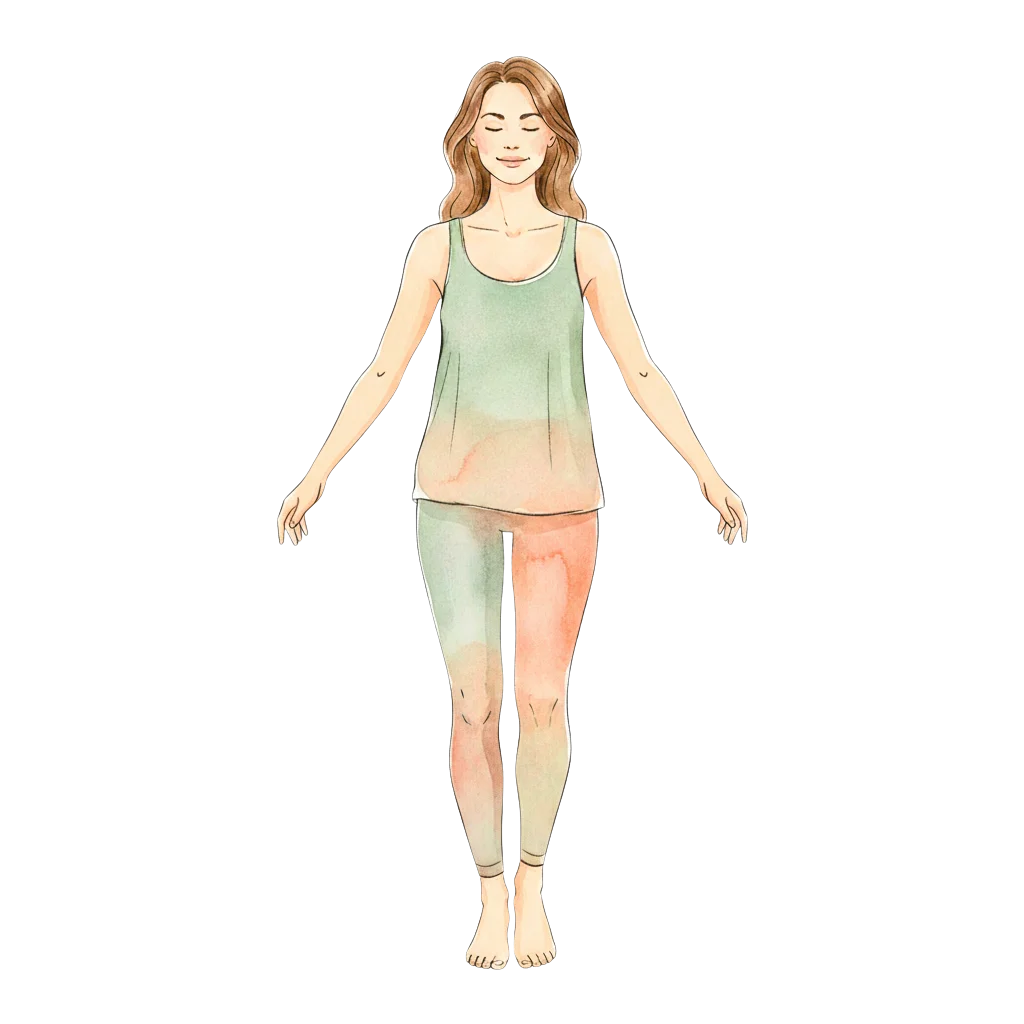
Start your protocolHow Constipation affects your body
Tap body zones to discover connected symptoms and related conditions.
Join 68+ women discussing constipation
Real experiences shared across Reddit, TikTok, and health forums
To whoever recommended chia for constipation
To whoever recommended chia for constipation THANK YOU from the bottom of my...well, bottom! Between iron pills and perimenopause, I haven't pooped this well in literally months.
#greenscreen my gut is obsessed w these and so are my doctors #guthealing #digestion #constipation
#greenscreen my gut is obsessed w these and so are my doctors #guthealing #digestion #constipation #guthealth
I’ve been recommending them for a year! I put 3T in my cottage cheese with blueberries. I’ve never been more regular.
Reading others' stories is the first step. Join to share yours.
Community
A safe space for women navigating constipation
Frequently asked questions
Common questions about Constipation
How we research and fact-check
Every article on Wellls is researched using peer-reviewed medical literature, clinical guidelines, and real patient experiences from 29 online discussions.
Sources: We reference 48 PubMed-indexed studies, ACOG/NAMS clinical guidelines, and validated screening tools.
Review: Content is written by our editorial team, enriched from a medical knowledge base of 15,000+ sources. Evidence standards and clinical methodology guided by our Medical Advisory Board: Dr. Alexandra Rybakova and Dr. Alexander Rybakov, Lifestyle Medicine Physicians with 35+ years combined clinical practice.
This content is for informational purposes only and does not constitute medical advice. Our editorial standards · Medical advisory board
References
48 sources reviewed for this constipation guide
- 1.Impact of progesterone on the gastrointestinal tract: a comprehensive literature review
- 2.Sex Differences, Menses-Related Symptoms and Menopause in Disorders of Gut-Brain Interaction
- 3.Role of progesterone signaling in the regulation of G-protein levels in female chronic constipation
- 4.Digestive health and menopause - Women's Health Concern factsheet
- 5.Digestive Health Issues More Common During Perimenopause and Menopause - The Menopause Society
- 6.Menopause Constipation | How Estrogen Affects Digestion
- 7.Menopause Monday: Menopause related flatulence, bloating and constipation
- 8.Can perimenopause cause digestive issues? Yes, it can!
- 9.Gut Check: Digestive Issues During Menopause - Joylux
- 10.The Gut-Brain Connection in Menopause: Hormones, Health, and Digestion
History of updates
Current version (March 11, 2026) — Content reviewed and updated based on latest research
First published (March 1, 2026)
Explore related problems
Women who experience constipation often also deal with these
Your personalized plan is ready
Your constipation is not a fiber deficiency. It's a hormonal event, and 54% of perimenopausal women are experiencing it right now. Your personalized gut protocol, built from clinical research and the real experiences of women in our community who reported the same symptoms, includes specific interventions matched to whether your constipation is hormone-driven, medication-induced, or both.
1,800+ women explored their gut health plan this month
Free assessment · Takes 2 minutes · No account required
Medical disclaimer: This content is for informational purposes only and does not constitute medical advice, diagnosis, or treatment. Always consult a qualified healthcare provider for personal medical decisions. Content is based on peer-reviewed research and updated regularly. Learn about our editorial standards.