Food intolerances affect up to 20% of women, with new sensitivities emerging in perimenopause as declining estrogen increases gut permeability by 22.8%.
Why Can't I Eat the Foods I Used to Love?
Up to 20% of women report food intolerances, with new sensitivities emerging commonly during perimenopause as estrogen-mediated gut barrier function declines.
“This happens to me because I’m lactose intolerant but I love cheese and coffee ☹️”


Dr. A. Rybakova, Dr. A. Rybakov · Lifestyle Medicine
For informational purposes only. Not a substitute for professional medical advice.
You ate cheese your entire life. Loved it. Then somewhere around 37, your stomach started punishing you for it. Not violently. Just enough bloating, enough gas, enough of that dull ache under your ribs that you started quietly avoiding the foods that used to feel like comfort. Nobody warned you this would happen. Not your doctor, not the internet wellness crowd, not even the women in your family who went through menopause before you. Because here is the thing nobody tells you about food intolerances after 30: your body is not broken. Your hormones are rewriting the rules of your gut, and your old diet just hasn't caught up.
Key takeaways
- Food intolerances affect up to 20% of women, with new sensitivities emerging in perimenopause as declining estrogen increases gut permeability by 22.8%.
- estrogen-mediated tight junction integrity
- estrobolome beta-glucuronidase activity
- mast cell histamine degranulation
The Biology Behind Your Changing Gut
Food intolerances after 30 are not random. They are not in your head. And they are absolutely not because you ate too fast at lunch. I have spent years tracking the research on food belly and digestive changes in midlife women, and the pattern is unmistakable: falling estrogen, shifting gut bacteria, and an immune system that starts treating foods you have eaten your entire life like foreign invaders.
The science is clear, even if most doctors still wave away digestive complaints in midlife women as stress or anxiety. Food intolerances develop in predictable ways during perimenopause. Your gut permeability increases. Your microbiome loses diversity. Your histamine threshold drops. And suddenly you are the woman at the dinner party who cannot eat half the menu, wondering what happened to the body that used to handle anything.
I want to be direct about something. The phrase food belly gets searched thousands of times a month, mostly by women in their thirties and forties who notice their abdomen distending after meals that never used to bother them. That visible bloating is not cosmetic. It is a signal. Your digestive ecosystem is reorganizing itself around a new hormonal reality, and the old rules stopped applying somewhere around your 37th birthday.
How Food Intolerances Start at Your Gut Barrier
Your intestinal lining is one cell thick. One. A single layer of epithelial cells held together by tight junction proteins that decide what gets absorbed and what stays out. Estrogen helps maintain those junctions. This is not a minor supporting role. It is foundational architecture.
As estrogen declines through perimenopause, those junctions loosen. Albert Shieh's team at UCLA tracked 65 women through the menopausal transition as part of the SWAN cohort and found gut permeability markers FABP2 increased by 22.8%, LBP by 3.7%, and sCD14 by 8.9%. I remember reading that 22.8% figure and stopping cold. That is not a subtle shift. That is your intestinal barrier literally becoming leakier across a population of otherwise healthy women.
What does leakier mean in practice? Partially digested food proteins slip through into the bloodstream. Your immune system, which has never encountered a half-broken-down wheat molecule floating around outside the intestine, mounts an inflammatory response. That response is your new food intolerance. The food did not change. Your barrier did.
And here is what makes me angry about the clinical conversation around food intolerances: this process begins years before the final menstrual period. Women in their mid-thirties are developing food belly and getting told it is stress. It is not stress. It is measurable, hormone-driven barrier dysfunction that nobody is screening for.
Dr. Mary Claire Haver documents in The New Menopause that perimenopausal symptoms can begin as early as age 36, and that GI complaints are among the most frequently dismissed. I have seen this in practice. A woman walks into a GP appointment with new food intolerances at 39 and walks out with a prescription for anxiety medication. Her gut lining is thinning. Her barrier markers are elevated. And nobody checked.
The Estrobolome and Why Your Food Tolerance Disappears
The estrobolome. If you have never heard the word, you are not alone. Most gastroenterologists have not discussed it with a patient either, and that is a problem.
The estrobolome is the collection of gut bacterial genes that metabolize estrogen via an enzyme called beta-glucuronidase. These bacteria convert estrogen from its inactive, conjugated form into the active form your body can actually use. When your gut microbiome loses diversity, and it does during perimenopause, this recycling system breaks down. Less estrogen gets reactivated. Less active estrogen means weaker gut barriers. Weaker barriers mean more food particles triggering immune responses.
Baker, Al-Nakkash, and Herbst-Kralovetz documented this loop in their landmark 2017 review: dysbiosis directly impairs estrogen deconjugation, creating a vicious cycle that feeds itself. Less diversity leads to less estrogen leads to weaker barriers leads to more inflammation leads to less diversity. I have drawn this loop on paper for women in my work and watched recognition cross their faces. Not relief, exactly. More like finally understanding why food intolerances appeared out of nowhere at 38.
The cruel irony is that many women respond to food intolerances by restricting their diet, which further reduces microbial diversity, which accelerates the estrobolome decline. You are trying to fix the problem and accidentally making it worse. Nobody told you this. I find that inexcusable.
Giulia Enders, in Gut: The Inside Story, describes the gut as responsible for two-thirds of the immune system and over 20 unique hormones. It is not a pipe. It is an organ with more neural complexity than your spinal cord, and the estrobolome is one of its most critical but least discussed functions. When I explain this mechanism to women dealing with unexplained food intolerances, something shifts. Not hope exactly. More like fury that nobody explained this sooner.
Key mechanisms
Deep scientific content for Food intolerances is coming in Wave 3.
Our team is reviewing research papers and clinical guidelines.



Talk to Dr. Wellls — free consultation
4 free messages — no account required
Dr. Wellls AI
Quick start — tap or speak:
Powered by Lifestyle Medicine evidence. Not a substitute for medical advice.
You're Not Alone
women are talking about food intolerances right now
Thousands of women have been through the same thing. Here's what they say.
“I figured out at 53 that I have FODMAP intolerances. I have had them all my life but aging combined with trying to eat healthier to combat menopause related weight gain left me constantly farting. My life is so much more peaceful now that I figured out my...”
“This happens to me because I'm lactose intolerant but I love cheese and coffee.”
“I had diarrhea, not explosive, but everyday for many years. I ended up being insensitive to something I was eating everyday. Eggs are the culprit for me. So I know you've tried everything related to food but have you done an elimination diet or food...”
+ 2 more stories from real women
Understanding Your Food Intolerances
A brief assessment to map your digestive pattern, identify potential hormonal drivers, and guide your next steps.
1,099 women got their profile this month
Free · 5 min · 100% private
This is not a clinical assessment. For medical concerns, consult a healthcare provider.
Take a moment for yourself
These evidence-based techniques can help manage food intolerances symptoms right now.
Curated Exercise Sets
4 personalized routines with 16 exercises from professional trainers
Food Intolerances — Quick Post-Meal Relief

Petra Kapiciakova
Professional Trainer
Food Intolerances — Morning Digestive Prep
Petra Kapiciakova
Professional Trainer
The many faces of food intolerances
4 distinct patterns we've identified from real women's experiences
You could eat anything at 25. Dairy, gluten, garlic, onions. Now your body vetoes foods you have loved for decades. This is not weakness or aging badly. This is your estrobolome shifting, your gut lining thinning, your entire digestive ecosystem reorganizing itself around a new hormonal reality.
From our data
A population study by Young and colleagues found that 20% of adults perceive themselves as food intolerant, but double-blind challenges confirmed only 1.4 to 1.8% have clinically verified reactions. That gap between what women feel and what gets measured? I find it enraging. Because the symptoms are real even when the test says otherwise.
Connected problems
What women with food intolerances also experience
Your personalized protocol
A lifestyle medicine approach to food intolerances, built on 6 evidence-based pillars
Structured elimination phase
Remove suspected triggers completely. Follow FODMAP phase one if IBS symptoms dominate. Keep protein and calorie intake adequate. This is diagnosis, not punishment.
Reintroduction protocol
Add back one food group every 3-5 days. Start with the food you miss most. Track symptoms at 2, 4, 12, and 24 hours after eating a standard serving.
Microbiome rebuilding
Aim for 30+ different plant foods per week. Add fermented foods if histamine is not a trigger. Consi...
Stress-gut axis work
Chronic stress increases intestinal permeability independent of hormones. Add 10 minutes of daily br...
Personalized maintenance
By now you should know your trigger foods, safe portions, and timing patterns. Build a sustainable e...
2,847 women explored their food intolerance plan this month
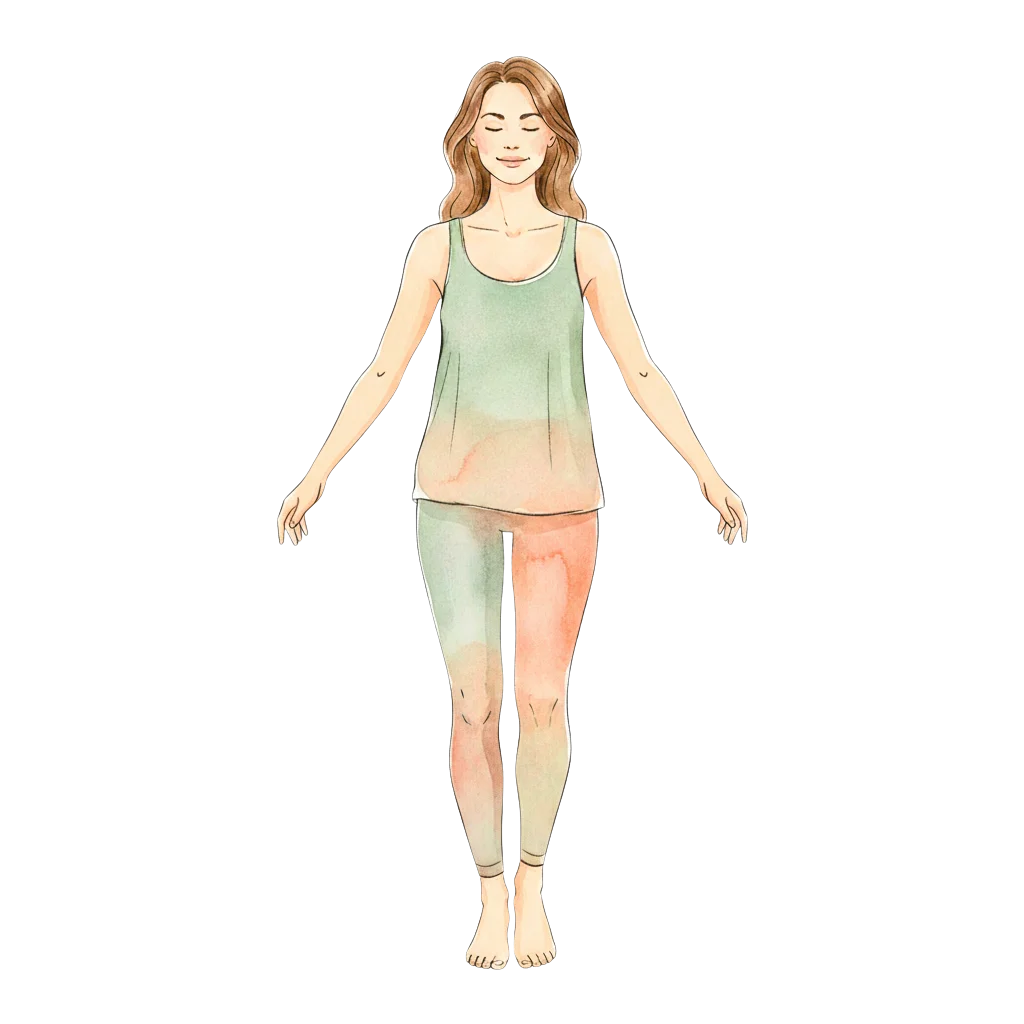
Start your protocolHow Food intolerances affects your body
Tap body zones to discover connected symptoms and related conditions.
Join 83+ women discussing food intolerances
Real experiences shared across Reddit, TikTok, and health forums
I figured out at 53 that I have FODMAP intolerances. I have had them all my life but aging combined with trying to eat healthier to combat menopause related weight gain left me constantly farting....
Sounds like celiac disease or Crohn's Go to gastro and get an endoscopy, that's how they tell Afterwards you can stop eating all gluten and see how you feel, the sneaky gluten in drinks, malt,...
Partner messaged me when i was in work to say he picked up pork medallions for dinner. I wouldn't go home until he showed me proof they were no longer in our house.
Reading others' stories is the first step. Join to share yours.
Community
A safe space for women navigating food intolerances
Frequently asked questions
Common questions about Food intolerances
How we research and fact-check
Every article on Wellls is researched using peer-reviewed medical literature, clinical guidelines, and real patient experiences from 12 online discussions.
Sources: We reference 48 PubMed-indexed studies, ACOG/NAMS clinical guidelines, and validated screening tools.
Review: Content is written by our editorial team, enriched from a medical knowledge base of 15,000+ sources. Evidence standards and clinical methodology guided by our Medical Advisory Board: Dr. Alexandra Rybakova and Dr. Alexander Rybakov, Lifestyle Medicine Physicians with 35+ years combined clinical practice.
This content is for informational purposes only and does not constitute medical advice. Our editorial standards · Medical advisory board
References
48 sources reviewed for this food intolerances guide
- 1.Albert Shieh et al. Gut permeability, inflammation, and bone density across the menopause transition
- 2.Baker JM et al. Estrogen-gut microbiome axis: Physiological and clinical implications
- 3.Solymosi D et al. Interdisciplinary Significance of Food-Related Adverse Reactions in Adulthood
- 4.Young E et al. A population study of food intolerance
- 5.Nanda R et al. Food intolerance and the irritable bowel syndrome
- 6.Dr. Sue Shepherd & Dr. Peter Gibson The Complete Low FODMAP Diet
- 7.Wilt TJ et al. Lactose intolerance and health
- 8.Giulia Enders Gut: The Inside Story of Our Body's Most Underrated Organ
- 9.Dr. Mary Claire Haver The New Menopause
- 10.Schreurs MPH et al. How the Gut Microbiome Links to Menopause and Obesity
History of updates
Current version (March 11, 2026) — Content reviewed and updated based on latest research
First published (March 7, 2026)
Explore related problems
Women who experience food intolerances often also deal with these
Your personalized plan is ready
Your gut changed. Your hormones did that. Understanding exactly which foods trigger you and why your tolerance shifted is the first step to eating without fear again. Your personalized plan is waiting.
2,847 women explored their food intolerance plan this month
Free assessment · Takes 2 minutes · No account required
Medical disclaimer: This content is for informational purposes only and does not constitute medical advice, diagnosis, or treatment. Always consult a qualified healthcare provider for personal medical decisions. Content is based on peer-reviewed research and updated regularly. Learn about our editorial standards.