Hashimoto symptoms women experience include fatigue, brain fog, weight gain, and hair loss. Diagnosis requires TPO antibody testing, not just TSH.
Is It Hashimoto's or Perimenopause? Why Your Thyroid Is the First Thing to Check
Affects 5-10% of women globally, 17.5% of adult women in some populations. 7-10x more common in women than men. Peak onset ages 30-50.
“I have Hypothyroidism and Hashimotos disease. Im aiming to improve energy levels.”


Dr. A. Rybakova, Dr. A. Rybakov · Lifestyle Medicine
For informational purposes only. Not a substitute for professional medical advice.
Sana stopped trusting her body at 41. Not all at once. It was the exhaustion that hit first, around the time her periods started spacing out. Then the fog. She'd forget mid-sentence what she was saying, mid-aisle what she'd come to the supermarket for, mid-meeting what project she was supposed to be presenting. Her GP ran bloods. FSH was borderline. 'Classic perimenopause,' he said. 'Totally normal at your age.' So she bought magnesium. She tried ashwagandha. She cut sugar for six weeks. She still felt like she was disappearing into her own body.
Key takeaways
- Hashimoto symptoms women experience include fatigue, brain fog, weight gain, and hair loss.
- Diagnosis requires TPO antibody testing, not just TSH.
- TPO and Tg antibody-mediated thyrocyte destruction
- Estrogen-immune modulation: perimenopause destabilises tolerance
The Science Behind Hashimoto's in Perimenopause
The Hashimoto symptoms women bring to their GPs, fatigue, brain fog, weight gain, hair loss, depression, look exactly like perimenopause. That's not a coincidence. It's a diagnostic trap. Hashimoto's thyroiditis affects 5-10% of women globally and is the leading cause of hypothyroidism in developed countries. It develops when the immune system produces antibodies against thyroid peroxidase (TPO) and thyroglobulin, destroying thyroid tissue over months to years. The disease overwhelmingly affects women at a 7-10:1 ratio. The highest-risk window for new onset is ages 35-50, precisely overlapping perimenopause.
I've lost count of how many women have told me they were treated for perimenopause for two, three, even five years before someone thought to check their antibodies. The overlap is so complete that even experienced clinicians miss it. And here's what makes me genuinely angry: the test that catches Hashimoto's, the anti-TPO antibody test, costs less than $30 in most labs. It's simple. It's definitive. And it's almost never ordered for women in their late thirties or forties who present with 'perimenopause symptoms.'
If you've been told everything you're feeling is just perimenopause, and the standard interventions aren't helping, this is the test that could rewrite your entire treatment plan. Hashimoto symptoms women describe are distinctive, not because any single symptom is unique, but because the combination and severity don't respond to the usual perimenopause approaches. The Klubo-Gwiezdzinska and Wartofsky detailed review (2022) described Hashimoto's as 'the most common organ-specific autoimmune disorder,' yet acknowledged that diagnostic delays remain the norm. I find that contradiction reveals everything wrong with how we screen women for autoimmune disease.
Why perimenopause triggers Hashimoto's
Estrogen receptors are expressed on virtually all immune cells, including T cells, B cells, macrophages, and natural killer cells. Stable estrogen levels promote immune tolerance. During perimenopause, chaotic estrogen fluctuations destabilise immune regulation, potentially triggering autoimmune disease in genetically susceptible women.
Desai and Brinton documented a bimodal autoimmune onset pattern: puberty and ages 35-50. Both are windows of massive hormonal instability. Both are windows where estrogen's immunomodulatory protection falters. The 2024 Stanford Xist study (Chang et al., Cell) showed that the Xist RNA-protein complex creates antigens the immune system can attack, providing a molecular explanation for the 78% female predominance in autoimmune diseases.
I want to be specific about what this means for Hashimoto's in perimenopause. The EMAS Position Statement on thyroid management in menopause (2024) confirmed that thyroid function changes across the menopausal transition, with TSH rising and free T4 falling even in women without pre-existing thyroid disease. For women who already have Hashimoto's, perimenopause creates a double hit: the disease process accelerates while the hormonal environment that was partially containing it destabilises. The SWAN Study tracked thyroid function across the menopause transition and documented this shift in real time.
It's not your imagination. The worsening that many women notice in their late thirties and forties has a measurable hormonal driver. And if your endocrinologist hasn't discussed how perimenopause affects your Hashimoto's management, that's a conversation worth demanding. The UK Biobank data shows autoimmune conditions are more frequently diagnosed in women during the perimenopausal window than at any other life stage. That pattern alone should make perimenopause a standard screening trigger for thyroid antibodies. It isn't. Not yet.
The selenium evidence is stronger than you think
A 2024 meta-analysis of 35 randomised controlled trials encompassing 2,358 participants found that selenium supplementation significantly reduces TPO antibody levels in Hashimoto's patients (standardised mean difference -0.96). Selenomethionine was the most effective form. Meaningful reductions appeared at 3-4 months and deepened at 6 months. Adverse effects were comparable to placebo.
I find the selenium data compelling in a way that most supplement evidence isn't. Thirty-five RCTs is a substantial body of evidence. The effect size on antibody reduction is real. But, and this is critical, antibody reduction did not consistently translate to improved thyroid function tests. That means selenium modulates the autoimmune process without necessarily restoring thyroid hormone production. It's slowing the attack on your thyroid. It's not rebuilding the tissue that's already been destroyed.
The practical question is: should you take selenium? If your TPO antibodies are elevated and you're not yet on levothyroxine, 200 micrograms of selenomethionine daily has the evidence behind it. If you're already on levothyroxine and stable, the benefit is less clear. And I want to be careful about the supplement trap here, because I've talked to women spending $200 a month on Hashimoto's supplement stacks with evidence behind exactly one ingredient. Selenium at 200mcg is evidence-based. Most of the rest is marketing.
That includes iodine, which is contraindicated in many Hashimoto's patients and can actually worsen the autoimmune process. The supplement industry doesn't distinguish between 'good for thyroid' and 'good for Hashimoto's.' Those are not the same thing. Zinc has modest supporting evidence. Vitamin D deficiency is common in Hashimoto's patients and worth correcting. But the list of supplements with genuine RCT evidence for Hashimoto's specifically is short: selenium, vitamin D, and arguably omega-3 fatty acids. Everything else is extrapolation from general autoimmune research or marketing. I'd rather you spend the money on a doctor who orders the right tests.
Key mechanisms
Deep scientific content for Hashimotos is coming in Wave 3.
Our team is reviewing research papers and clinical guidelines.


Talk to Dr. Wellls — free consultation
4 free messages — no account required
Dr. Wellls AI
Quick start — tap or speak:
Powered by Lifestyle Medicine evidence. Not a substitute for medical advice.
You're Not Alone
women are talking about hashimotos right now
Thousands of women have been through the same thing. Here's what they say.
“I suffered from devastating chronic fatigue and randomly my doctor noticed my enlarged thyroid and diagnosed me with Hashimotos.”
“32-year-old with Hashimoto's taking levothyroxine for years, is relieved to find her triggers and find a solution”
“Being a mom with Hashimoto's + hypothyroidism means low energy, mood swings, and a metabolism that moves sloooow.”
+ 2 more stories from real women
Understanding Your Hashimoto's Risk
A brief assessment to understand whether your symptoms point toward autoimmune thyroid disease, how it overlaps with perimenopause, and what testing you should ask for.
2,816 women got their profile this month
Free · 5 min · 100% private
This is not a clinical assessment. For medical concerns, consult a healthcare provider.
Take a moment for yourself
These evidence-based techniques can help manage hashimotos symptoms right now.
Curated Exercise Sets
4 personalized routines with 16 exercises from professional trainers


The many faces of hashimotos
4 distinct patterns we've identified from real women's experiences
Hashimoto's thyroiditis is called the great mimicker for a reason. Every single core symptom of perimenopause, fatigue, brain fog, mood shifts, weight changes, hair loss, irregular periods, is also a symptom of autoimmune thyroid disease. The question is not whether the symptoms overlap. It's whether anyone bothered to check.
From our data
A 2022 study screening 148 healthy perimenopausal women (ages 46-55) found thyroid dysfunction in a significant proportion, with the researchers explicitly concluding that thyroid disease represents 'an alternate plausibility in perimenopausal women' that clinicians routinely miss. In a 2024 Scientific Reports study, Hashimoto's patients with normal hormone levels still experienced significantly more fatigue, forgetfulness, anxiety, depression, dry skin, and hair loss than healthy controls. The disease causes symptoms before the bloodwork catches up.
Connected problems
What women with hashimotos also experience
Your personalized protocol
A lifestyle medicine approach to hashimotos, built on 6 evidence-based pillars
Diagnosis and baseline
Complete full thyroid panel. Record baseline TSH, free T4, free T3, TPO antibodies. Begin symptom diary. Start selenomethionine 200mcg daily. Begin stress management practice (10 min/day).
Medication optimisation
If diagnosed, work with your doctor on levothyroxine dosing. Take LT4 on an empty stomach, 30-60 minutes before food. Separate from calcium, iron, and coffee by 4 hours. If already on LT4, discuss whether your dose matches current thyroid function.
Anti-inflammatory foundation
Focus on consistent sleep schedule (same wake time daily), Mediterranean-style anti-inflammatory eat...
Immune support deepening
Retest thyroid panel at 3 months. If symptoms persist despite optimal TSH, discuss free T3 levels an...
2,847 women explored their Hashimoto's plan this month
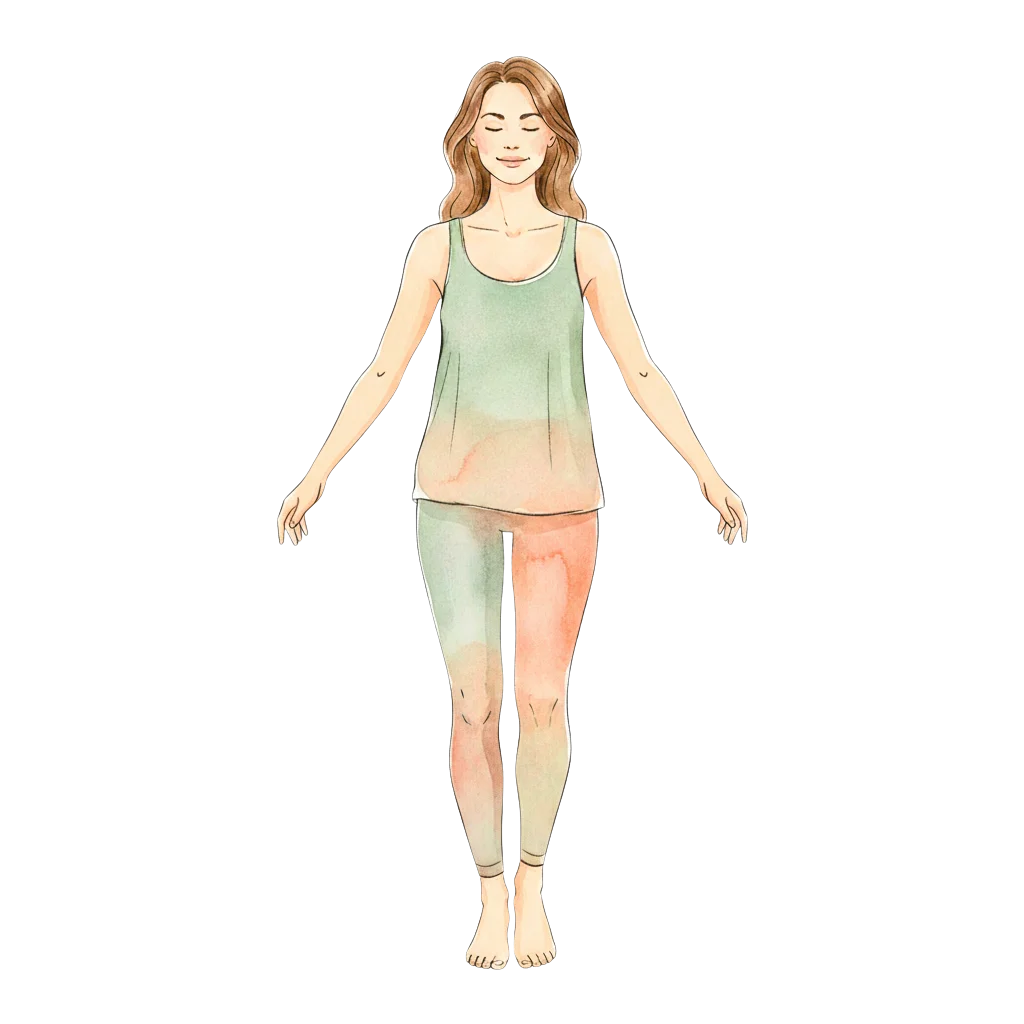
Start your protocolHow Hashimotos affects your body
Tap body zones to discover connected symptoms and related conditions.
Join 62+ women discussing hashimotos
Real experiences shared across Reddit, TikTok, and health forums
Doctor explains 8 SKIN SIGNS linked with HYPOTHYROIDISM (aka underactive thyroid)
foreign medicine Made Easy in today's video we're going to be covering eight important clinical signs that are associated with an underactive thyroid which is also...
Being a mom with Hashimoto’s + hypothyroidism means low energy, mood swings, and a metabolism that m
Being a mom with Hashimoto’s + hypothyroidism means low energy, mood swings, and a metabolism that moves sloooow. This is one thing I’m actually sticking with because it supports my energy, mood, and...
I was diagnosed with Hashimotos but my TSH never went past 2.5 so docs kept saying its not going to
I was diagnosed with Hashimotos but my TSH never went past 2.5 so docs kept saying its not going to cause any issues. But it did! If I waited for TSH to go higher then 4.5 idk where id be right now....
Reading others' stories is the first step. Join to share yours.
Community
A safe space for women navigating hashimotos
Frequently asked questions
Common questions about Hashimotos
How we research and fact-check
Every article on Wellls is researched using peer-reviewed medical literature, clinical guidelines, and real patient experiences from 19 online discussions.
Sources: We reference 47 PubMed-indexed studies, ACOG/NAMS clinical guidelines, and validated screening tools.
Review: Content is written by our editorial team, enriched from a medical knowledge base of 15,000+ sources. Evidence standards and clinical methodology guided by our Medical Advisory Board: Dr. Alexandra Rybakova and Dr. Alexander Rybakov, Lifestyle Medicine Physicians with 35+ years combined clinical practice.
This content is for informational purposes only and does not constitute medical advice. Our editorial standards · Medical advisory board
References
47 sources reviewed for this hashimotos guide
- 1.Klubo-Gwiezdzinska & Wartofsky (2022). Hashimoto thyroiditis: an evidence-based guide
- 2.Klubo-Gwiezdzinska & Wartofsky (2022). Hashimoto thyroiditis: evidence-based guide (full text)
- 3.Frank-Raue & Raue (2022). Thyroid Dysfunction in Peri- and Postmenopausal Women - Cumulative Risks
- 4.Uygur et al. (2019). Thyroid disease in the perimenopause and postmenopause period
- 5.Motta et al. (2024). The Impact of Menopause on Autoimmune and Rheumatic Diseases
- 6.Kim et al. (2025). Understanding Sex Differences in Autoimmune Diseases
- 7.MiraKind (2025). Why Are Autoimmune Diseases More Common in Women?
- 8.Markomanolaki et al. (2019). Stress Management in Women with Hashimoto's: A Randomized Controlled Trial
- 9.Abbott et al. (2019). Efficacy of the Autoimmune Protocol Diet for Hashimoto's Thyroiditis
- 10.Dr. Sara Gottfried (2024). The Autoimmune Cure (AIP dietary protocol)
History of updates
Current version (March 11, 2026) — Content reviewed and updated based on latest research
First published (March 9, 2026)
Explore related problems
Women who experience hashimotos often also deal with these
Your personalized plan is ready
You've been told your thyroid is fine. You've blamed perimenopause. You've tried magnesium and ashwagandha. But the fatigue hasn't lifted, the weight won't shift, and nobody's ordered the one test that could explain everything. Our programme walks you through exactly what to test, what the results mean, and what to do next, backed by the research your doctor probably hasn't read.
2,847 women explored their Hashimoto's plan this month
Free assessment · Takes 2 minutes · No account required
Medical disclaimer: This content is for informational purposes only and does not constitute medical advice, diagnosis, or treatment. Always consult a qualified healthcare provider for personal medical decisions. Content is based on peer-reviewed research and updated regularly. Learn about our editorial standards.