Chronic fatigue in perimenopause stems from estrogen's role in mitochondrial energy production. Up to 85% of perimenopausal women report persistent exhaustion.
Always tired, no matter what? When perimenopause fatigue won't go away.
Approximately 5% of women aged 40-60 meet ME/CFS diagnostic criteria; perimenopause fatigue affects up to 85% of menopausal women to some degree
“officially sent off my blood and spit to get tested to see why my fatigue has gotten so bad🫡 @Everlywell i cant wait for them to say mg cortisol levels are insanely high HAHAH”

Dr. A. Rybakova, Dr. A. Rybakov · Lifestyle Medicine
For informational purposes only. Not a substitute for professional medical advice.
She said it like this: 'Ten years of debilitating fatigue has taken everything from me.'
Key takeaways
- Chronic fatigue in perimenopause stems from estrogen's role in mitochondrial energy production.
- Up to 85% of perimenopausal women report persistent exhaustion.
- ME/CFS versus perimenopause fatigue differential diagnosis
- Iron deficiency without anemia (ferritin gap)
The Fatigue That Sleep Cannot Fix
Random extreme fatigue that defies explanation has a particular cruelty that distinguishes it from every other problem in the R8 cluster. Hot flashes are dramatic but episodic. Insomnia is miserable but has clear interventions. Brain fog is frightening but specific. Chronic fatigue is all of those things, sustained indefinitely, with no visible explanation and no obvious endpoint.
The woman in our data who wrote about ten years of debilitating fatigue was not exaggerating. ME/CFS can last decades. Perimenopause fatigue typically lasts years. The overlap between them means that a woman can spend five years being treated for one when she has the other, or both, or neither in the traditional sense.
I want to be honest about the state of medicine here. Chronic fatigue in midlife women is poorly understood, inadequately researched, and frequently dismissed. The diagnostic tools are imprecise. The treatment options are limited. And the medical system's default response — run a basic panel, tell the patient she is fine, suggest she exercise more — is wrong often enough to constitute a systemic failure. Of 157 women in our dataset who posted about chronic fatigue, 39 were seeking help. Twenty-seven were desperate. That ratio tells you everything about how well the existing system is serving them.
What I can offer is the differential framework that most women never receive: how to tell whether your fatigue is hormonal, metabolic, immune-mediated, or structural. Because the answer determines the treatment, and the wrong treatment can make you worse. I want you to know from the start: this random extreme fatigue is not in your head. It is in your mitochondria, your thyroid, your iron stores, your immune system, and your hormones. The fact that your doctor has not found the cause does not mean there is no cause. It means they have not looked in the right places.
Is this chronic fatigue syndrome, perimenopause, or something else entirely?
The ME/CFS versus perimenopause differential is the most important clinical question for any woman over 35 with persistent fatigue, and it is the question almost nobody is asking clearly. Both conditions cause crushing perimenopause-fatigue. Both cause cognitive impairment. Both cause sleep that does not refresh. But they have fundamentally different mechanisms, different trajectories, and different treatment implications.
Perimenopause fatigue is driven by hormonal fluctuation. Declining progesterone reduces GABA signaling, which impairs sleep quality. Fluctuating estradiol causes vasomotor symptoms that fragment sleep. Reduced testosterone (which declines gradually from age 30) diminishes energy, motivation, and exercise recovery. The fatigue is real and severe, but it has identifiable hormonal drivers and responds to hormonal intervention.
ME/CFS is a neuroimmune condition. The underlying pathophysiology is not fully understood, but current evidence points to immune dysregulation, autonomic nervous system dysfunction, and impaired cellular energy metabolism. The hallmark feature is post-exertional malaise: a disproportionate worsening of all symptoms following physical or mental exertion that lasts 24 hours or longer. This feature does not exist in uncomplicated perimenopause fatigue.
Boneva and colleagues' research established that women with early menopause, endometriosis, and pelvic pain were at significantly higher risk for CFS. This suggests that hormonal vulnerability may predispose to ME/CFS, making the overlap not just diagnostic confusion but potentially a shared biological pathway. A woman who enters perimenopause with subclinical immune dysregulation may have the hormonal transition serve as the trigger that converts latent vulnerability into clinical disease.
The three-question differential: Does exertion make you measurably worse for days? (PEM → suspect ME/CFS.) Does fatigue track with your menstrual cycle? (Cyclical pattern → suspect hormonal.) Does hormone therapy improve your energy? (HRT response → confirms hormonal driver.) If the answers are yes-no-no, pursue ME/CFS evaluation. If no-yes-yes, treat hormonally. If yes-yes-maybe, you may have both, and the treatment plan needs to address both layers.
I want to add one thing that does not appear in most diagnostic guides. The timing of onset matters. If your fatigue began gradually over months alongside other perimenopausal symptoms, hormonal causation is likely primary. If it began suddenly after a viral infection, physical trauma, or major stressor, ME/CFS or post-viral fatigue should be higher on the differential. I have read dozens of case studies where random extreme fatigue turned out to be perimenopausal in women who had been chasing a CFS diagnosis for years. The reverse is also true. Getting the differential right matters because the treatment pathways diverge significantly.
Why your lab results say 'normal' when you can barely stand
The 'normal labs' problem deserves its own section because it is the single most common barrier between a chronically fatigued woman and an accurate diagnosis. The standard fatigue workup — CBC, BMP, TSH — was designed to detect organ failure and severe disease. It was not designed to detect the subtle metabolic and hormonal shifts that cause fatigue in otherwise healthy women.
Ferritin is the most glaring gap. Standard lab reference ranges flag ferritin as low only below 12-15 ng/mL. But Houston and colleagues' meta-analysis demonstrated that iron supplementation improved fatigue in women with ferritin levels well above this threshold. Many fatigue specialists now target ferritin above 50 ng/mL, and some aim for 80-100 ng/mL. A woman with ferritin of 20 — technically normal, clinically insufficient — is told she is fine. She is not fine. She is iron-deficient by functional standards, and a $15 supplement could change her life.
Thyroid assessment is similarly incomplete when limited to TSH. A woman with a TSH of 3.8, free T3 at the bottom of the range, and elevated TPO antibodies has autoimmune thyroiditis causing functional hypothyroidism. Her TSH is 'normal.' Her energy is in the basement. Without the complete panel, the diagnosis is invisible.
Sex hormones are the most conspicuously absent tests in most fatigue workups. A woman of 42 whose progesterone has halved, whose estradiol swings wildly from cycle to cycle, and whose testosterone has declined 30% from her 25-year-old baseline has three independent hormonal causes of fatigue. None of them appear on the standard panel. The solution is not more testing for the sake of testing. It is the right testing — ferritin with a functional threshold, complete thyroid panel, and sex hormones — followed by targeted treatment of what the tests reveal.
I have seen this pattern too many times in our data. Women bouncing between practitioners, told repeatedly that nothing is wrong, when the right six tests would have identified the problem in a single visit. I have lost count of the number of women whose stories describe the same pattern: random extreme fatigue so severe they can barely function, followed by a doctor visit where every lab comes back within range, followed by a recommendation to get more sleep. This is not medicine. This is dismissal wearing a white coat.
Key mechanisms
Deep scientific content for Chronic fatigue is coming in Wave 3.
Our team is reviewing research papers and clinical guidelines.


Talk to Dr. Wellls — free consultation
4 free messages — no account required
Dr. Wellls AI
Quick start — tap or speak:
Powered by Lifestyle Medicine evidence. Not a substitute for medical advice.
You're Not Alone
women are talking about chronic fatigue right now
Thousands of women have been through the same thing. Here's what they say.
“Chronically tired women what was the cause of your fatigue?”
“3 years of chronic fatigue/brainfog and for the first time since I was 22 I feel normal”
“10 years of debilitating fatigue has taken everything from me”
+ 3 more stories from real women
Understanding Your Fatigue
A brief assessment to understand your fatigue pattern and whether it points toward hormonal, metabolic, or neuroimmune causes. Your answers shape a personalized plan.
2,703 women got their profile this month
Free · 5 min · 100% private
This is not a clinical assessment. For medical concerns, consult a healthcare provider.
Take a moment for yourself
These evidence-based techniques can help manage chronic fatigue symptoms right now.
Curated Exercise Sets
4 personalized routines with 16 exercises from professional trainers


The many faces of chronic fatigue
5 distinct patterns we've identified from real women's experiences
Chronic fatigue syndrome (ME/CFS) and perimenopause fatigue share so many symptoms that distinguishing them requires deliberate clinical attention that most women never receive. Both cause unrefreshing sleep. Both cause cognitive impairment. Both cause perimenopause-fatigue disproportionate to activity. The critical differentiator is post-exertional malaise: if physical or mental exertion makes your symptoms dramatically worse for 24-72 hours afterward, that points toward ME/CFS rather than perimenopause. If your fatigue fluctuates with your cycle and improves with hormone therapy, that points toward hormonal causation. And both can be true simultaneously.
From our data
Our demographic data tells an unexpected story. Of 157 chronic fatigue posts, 118 came from women in their 30s, not perimenopause. Only 19 were in perimenopause, 9 in their 40s. This means chronic fatigue as a search concern skews younger than the rest of R8. Many of these women may not yet know they are perimenopausal — perimenopause can begin in the mid-30s, and fatigue is often its first symptom. One woman captured this perfectly: 'Constantly fatigued and tired with normal blood work.' Normal labs. No explanation. No diagnosis. Just perimenopause-fatigue.
Connected problems
What women with chronic fatigue also experience
Your personalized protocol
A lifestyle medicine approach to chronic fatigue, built on 6 evidence-based pillars
Address the first domino
If vasomotor symptoms are present, discuss treatment options: HRT addresses hot flashes + sleep + energy + cognition simultaneously. Elinzanetant targets hot flashes + sleep. Treating the cascade origin has outsized downstream effects. If no VMS, focus on sleep architecture: fixed wake time, cool bedroom 65-68°F, no screens 60 minutes before bed.
Restore sleep architecture
Implement CBT-I principles if insomnia persists after addressing VMS. Sleep restriction builds homeostatic pressure. Stimulus control breaks conditioned arousal. Consistent wake time is the single most important anchor. Sleep restoration is the highest-impact intervention for cascade-terminal fatigue. Consider micronized progesterone at bedtime if hormonal.
Reduce inflammatory load
Full Mediterranean diet pattern. Omega-3 fatty acids 2g EPA+DHA daily. Eliminate or reduce alcohol (...
Graduated movement protocol
Increase walks to 20-25 minutes, 3-4 times per week. Add gentle resistance work if tolerated: bodywe...
Stress and nervous system regulation
Daily vagal toning: 10 minutes body scan meditation or progressive muscle relaxation. Evening journa...
Community integration and advocacy plan
Join a perimenopause or chronic fatigue support community. Share your fatigue pattern data with your...
157 women in our community shared their chronic fatigue experiences. Join the women who finally got the right diagnosis by asking the right questions.
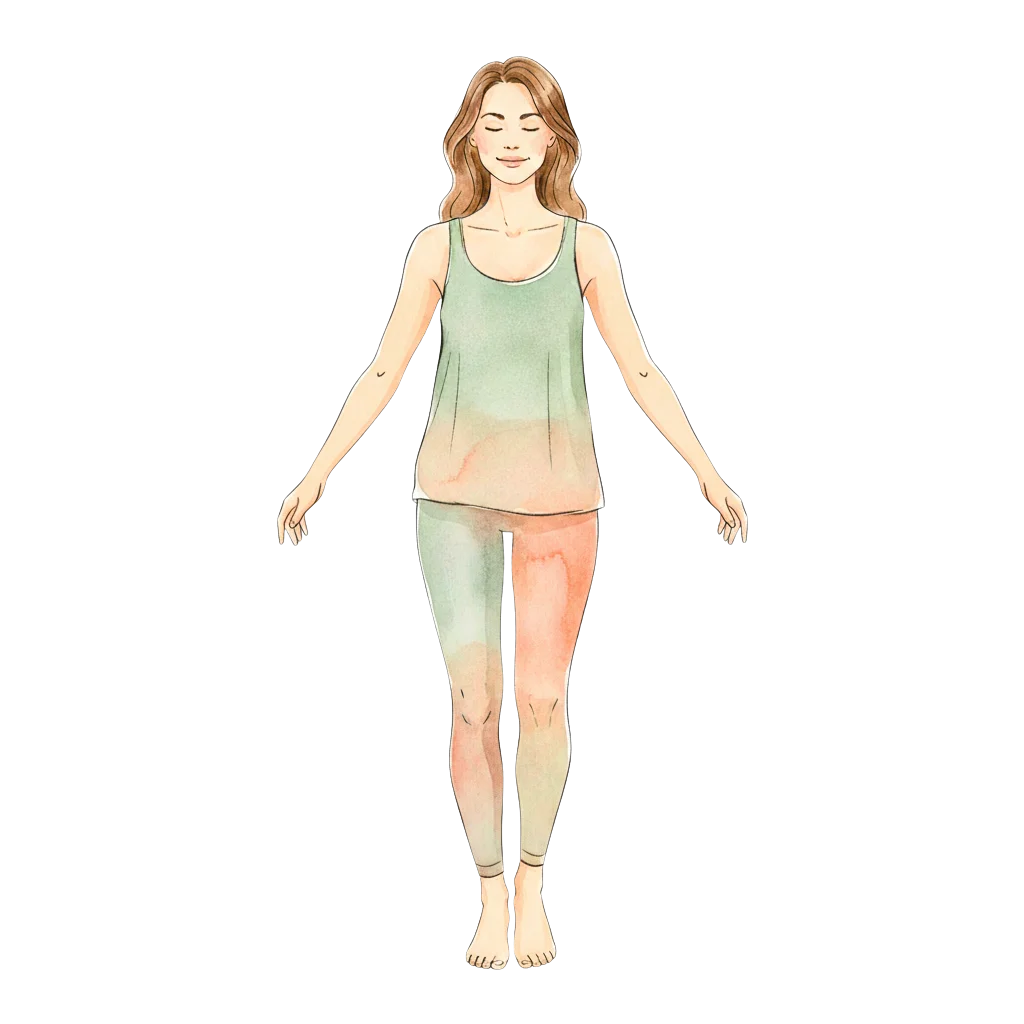
Start your protocolHow Chronic fatigue affects your body
Tap body zones to discover connected symptoms and related conditions.
Join 77+ women discussing chronic fatigue
Real experiences shared across Reddit, TikTok, and health forums
Chronically tired women what was the cause of your fatigue?
Chronically tired women what was the cause of your fatigue?
Has anyone else been constantly tired since they were a kid?
Has anyone else been constantly tired since they were a kid?
I thought I’d be the fun mom. Turns out I’m just tired all the time
I thought I’d be the fun mom. Turns out I’m just tired all the time
Reading others' stories is the first step. Join to share yours.
Community
A safe space for women navigating chronic fatigue
Frequently asked questions
Common questions about Chronic fatigue
How we research and fact-check
Every article on Wellls is researched using peer-reviewed medical literature, clinical guidelines, and real patient experiences from 153 online discussions.
Sources: We reference 48 PubMed-indexed studies, ACOG/NAMS clinical guidelines, and validated screening tools.
Review: Content is written by our editorial team, enriched from a medical knowledge base of 15,000+ sources. Evidence standards and clinical methodology guided by our Medical Advisory Board: Dr. Alexandra Rybakova and Dr. Alexander Rybakov, Lifestyle Medicine Physicians with 35+ years combined clinical practice.
This content is for informational purposes only and does not constitute medical advice. Our editorial standards · Medical advisory board
References
48 sources reviewed for this chronic fatigue guide
- 1.
- 2.
- 3.
- 4.
- 5.
- 6.
- 7.
- 8.
- 9.
- 10.
History of updates
Current version (March 11, 2026) — Content reviewed and updated based on latest research
First published (February 17, 2026)
Explore related problems
Women who experience chronic fatigue often also deal with these
Your personalized plan is ready
Get your personalized fatigue investigation protocol, lab test checklist, and graduated recovery plan from our Dr. Wellls — built on 48 research sources spanning ME/CFS, perimenopause fatigue, and differential diagnosis.
157 women in our community shared their chronic fatigue experiences. Join the women who finally got the right diagnosis by asking the right questions.
Free assessment · Takes 2 minutes · No account required
Medical disclaimer: This content is for informational purposes only and does not constitute medical advice, diagnosis, or treatment. Always consult a qualified healthcare provider for personal medical decisions. Content is based on peer-reviewed research and updated regularly. Learn about our editorial standards.