Women lose 3-8% of muscle per decade after 30. To build muscle and lose fat after 40, do resistance training 2-3x/week with 1.2-1.6g protein/kg/day.
Your muscles are disappearing. Here's the science of getting them back.
Women lose 3-8% muscle mass per decade after 30
“Your metabolism after 40 isn’t slowing down — you just stopped speeding it up. 💪 Every year without muscle → slower burn, less energy, more frustration. Stop starving yourself. Start building again.”
For informational purposes only. Not a substitute for professional medical advice.
Think of your muscles as a savings account you opened in your twenties. For a while the deposits were automatic. You moved, you ate, your body built. But sometime around thirty-five, the bank changed the rules. The interest rate dropped. Then dropped again. Now the balance shrinks every month and nobody sent you the memo. The jar lid that used to twist right off now requires a towel and a silent prayer. This isn't laziness. This is sarcopenia, and it has been stealing from you for years. The question of whether you can still build muscle and lose fat after 40 has a real answer. It just requires a different strategy.
Key takeaways
- Women lose 3-8% of muscle per decade after 30.
- To build muscle and lose fat after 40, do resistance training 2-3x/week with 1.2-1.6g protein/kg/day.
- Estrogen decline reduces growth hormone potentiation, weakening muscle repair signaling
- Anabolic resistance: muscles become less responsive to protein and exercise stimulus with age
The Science of Muscle Loss in Perimenopause: Why It Happens and How to Fight Back
Sarcopenia is the age-related progressive loss of muscle mass, strength, and function. The term comes from Greek: 'sarx' (flesh) and 'penia' (poverty). I think the etymology is poetically apt because what sarcopenia does is impoverish your body's most metabolically active tissue. The EWGSOP2 consensus published in 2019 defines it as low muscle strength plus low muscle quantity or quality. It begins as early as age 30, with losses of 3-8% of muscle mass per decade, accelerating sharply after menopause. About 8.85% of people aged 40-64 already have sarcopenia, though many remain undiagnosed because screening simply is not routine in this age group. I find that statistic staggering. Nearly one in eleven. And most of them have no idea. If you are over 40 and trying to build muscle and lose fat simultaneously, understanding sarcopenia is not optional. It is the starting point, because you cannot design a program to overcome something you do not know exists. The muscle you lose is disproportionately type II fast-twitch fibers, the ones responsible for power, speed, and the rapid force production that prevents falls. Type II fibers decline 10-40% faster than type I. That matters today because it affects strength. It matters in twenty years because it affects whether you can catch yourself on a step. The good news buried in all of this science is that sarcopenia is not destiny. Muscle responds to stimulus at every age. A meta-analysis of 24 studies examining resistance training exclusively in women found large effect sizes for strength improvements regardless of age. The tissue can grow. It just demands a louder signal than it used to.
The Estrogen-Muscle Connection You Were Never Told About
Estrogen potentiates growth hormone secretion, which is a key anabolic signal for muscle repair and growth. During perimenopause, declining estrogen reduces this potentiation, resulting in decreased muscle protein synthesis response to exercise. The numbers are stark: postmenopausal women lose approximately 3 kilograms of fat-free mass compared to 0.5 kilograms in premenopausal women over equivalent timeframes. I remember reading that comparison in the Sipila review and doing the math. Six times more muscle loss. For the same amount of time passing. Interleukin-1 production, which normally increases during the luteal phase and parallels resting energy expenditure, ceases after menopause. This contributes to the shift from muscle to fat tissue that women describe as 'everything changed.' Estrogen also has direct receptors on skeletal muscle cells, promoting satellite cell proliferation and supporting the MyoD and myogenin signaling pathways that drive muscle fiber growth. When I explain this to women who are struggling to build muscle and lose fat after 40, the reaction is usually a mixture of relief and frustration. Relief because they finally understand why the gym stopped working. Frustration because nobody mentioned any of this during the ten years they spent blaming themselves. A JAMA Network Open meta-analysis of 28 randomized controlled trials involving over 6,000 postmenopausal women found that hormone therapy was associated with preservation of lean body mass, confirming that the estrogen-muscle connection is not theoretical. It is measurable and, in many cases, addressable.
Anabolic Resistance: Why the Old Protein Rules No Longer Apply
Anabolic resistance means your muscles are less responsive to the two primary muscle-building signals: exercise and protein. For anyone trying to build muscle and lose fat after 40, this is the hidden barrier that explains why effort alone is not enough. A younger woman can trigger muscle protein synthesis with 20 grams of protein per meal and moderate exercise. After 40, the threshold rises to 35-40 grams of protein per meal, and exercise intensity needs to be higher, 70-85% of one-rep max versus the 50-60% that worked before. The leucine threshold, which is the specific amino acid concentration that flips the muscle protein synthesis switch, shifts from 1.5-2 grams per meal to 2.5-3 grams. A 2024 study in the Journal of Applied Physiology made this viscerally clear: 15 grams of whey protein produced zero measurable muscle protein synthesis in postmenopausal women. The identical dose worked fine in younger women. I've cited this study in every article I've written since reading it because it is the clearest evidence I have seen that the rules genuinely changed. Daily protein needs increase from the RDA of 0.8 grams per kilogram to 1.2-1.6 grams per kilogram for muscle maintenance during perimenopause. At 70 kilograms, that is 84-112 grams daily, distributed across meals. What I tell every woman processing this information: do not let the numbers discourage you. They are not barriers. They are specifications. Once you know the threshold is 35-40 grams per meal and 70-85% of your max, you can hit those numbers deliberately. The women who struggle are the ones still operating under the old rules without knowing they changed.
Key mechanisms
Deep scientific content for Muscle loss is coming in Wave 3.
Our team is reviewing research papers and clinical guidelines.


Talk to Dr. Wellls — free consultation
4 free messages — no account required
Dr. Wellls AI
Quick start — tap or speak:
Powered by Lifestyle Medicine evidence. Not a substitute for medical advice.
You're Not Alone
women are talking about muscle loss right now
Thousands of women have been through the same thing. Here's what they say.
“For 3 years not one doctor took me seriously when I suggested peri because I was in my early 40s and still had a regular period. Hair falling out, dry skin, joints that felt like I was 91 instead of 41, muscle loss, brain fog. Finally, after 3 years I found a...”
“I strength train regularly and stuff as much protein as I can in my body, so on the surface it seems like I've bought into these trends fully. But I dislike how these are offered as easy solutions that once again force the burden of health onto the individual...”
“I ditched endless cardio and started strength training. Building muscle changed my body way more than just burning calories. I still walk and do light cardio, but lifting made the biggest difference.”
+ 3 more stories from real women
Understanding Your Muscle Loss
A brief assessment to understand how muscle loss is showing up in your body and what your muscles actually need right now.
3,208 women got their profile this month
Free · 5 min · 100% private
This is not a clinical assessment. For medical concerns, consult a healthcare provider.
Take a moment for yourself
These evidence-based techniques can help manage muscle loss symptoms right now.
Curated Exercise Sets
4 personalized routines with 16 exercises from professional trainers
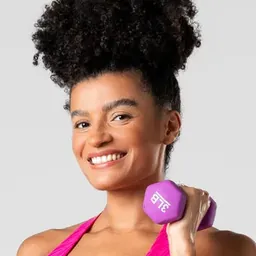
The many faces of muscle loss
5 distinct patterns we've identified from real women's experiences
You don't notice muscle loss the way you notice a bruise or a grey hair. It shows up sideways. You grab the railing on stairs you used to bound up. Your grocery bags feel heavier but you're buying the same stuff. Your posture slumps in photos. By the time most women clock what's happening, they've already lost enough muscle to fill a Thanksgiving turkey. I'm not exaggerating. The average woman loses 5 to 10 pounds of lean muscle between age 30 and 50. That's tissue your body needed for standing, walking, opening things, carrying kids, staying upright when you trip on the sidewalk. And this is just the quiet part, the part before perimenopause turns the volume up.
From our data
In our dataset of 64 muscle loss posts across 4 platforms, the highest-engagement content came from women who described a specific moment of realization. Not a gradual awareness but a sharp one. One woman on Reddit (833 upvotes) described feeling amazing after losing 32 pounds through strength training and tirzepatide, only to confront the gap between her body and her face in the mirror. Another (77 upvotes) listed muscle loss alongside hair falling out and joints feeling like she was 91 instead of 41. The pattern is clear: muscle loss becomes real when something fails you. The jar. The stairs. The reflection.
Connected problems
What women with muscle loss also experience
Your personalized protocol
A lifestyle medicine approach to muscle loss, built on 6 evidence-based pillars
Build the Foundation
Start with bodyweight and light dumbbells, 2x per week. Learn the 6 compound movements (squat, deadlift, lunge, row, press, hinge). Focus on form not weight. Increase protein to 1.2g/kg daily. Consider starting creatine at 3-5g/day.
Progressive Overload Phase
Move to 3x per week. Start tracking weights and reps. Increase load by 5-10% when you can complete all reps with good form. Protein target: 1.4g/kg daily. Your muscles should feel worked after each session, not destroyed.
Intensity and Integration
Working at 70-80% of estimated 1RM for 8-12 reps. Add one higher-intensity session per week. Discuss...
The Maintenance Commitment
Resistance training is not a 12-week fix. It's a permanent part of your health architecture. 2-3 ses...
6 real stories from women who reversed muscle loss through targeted strength training
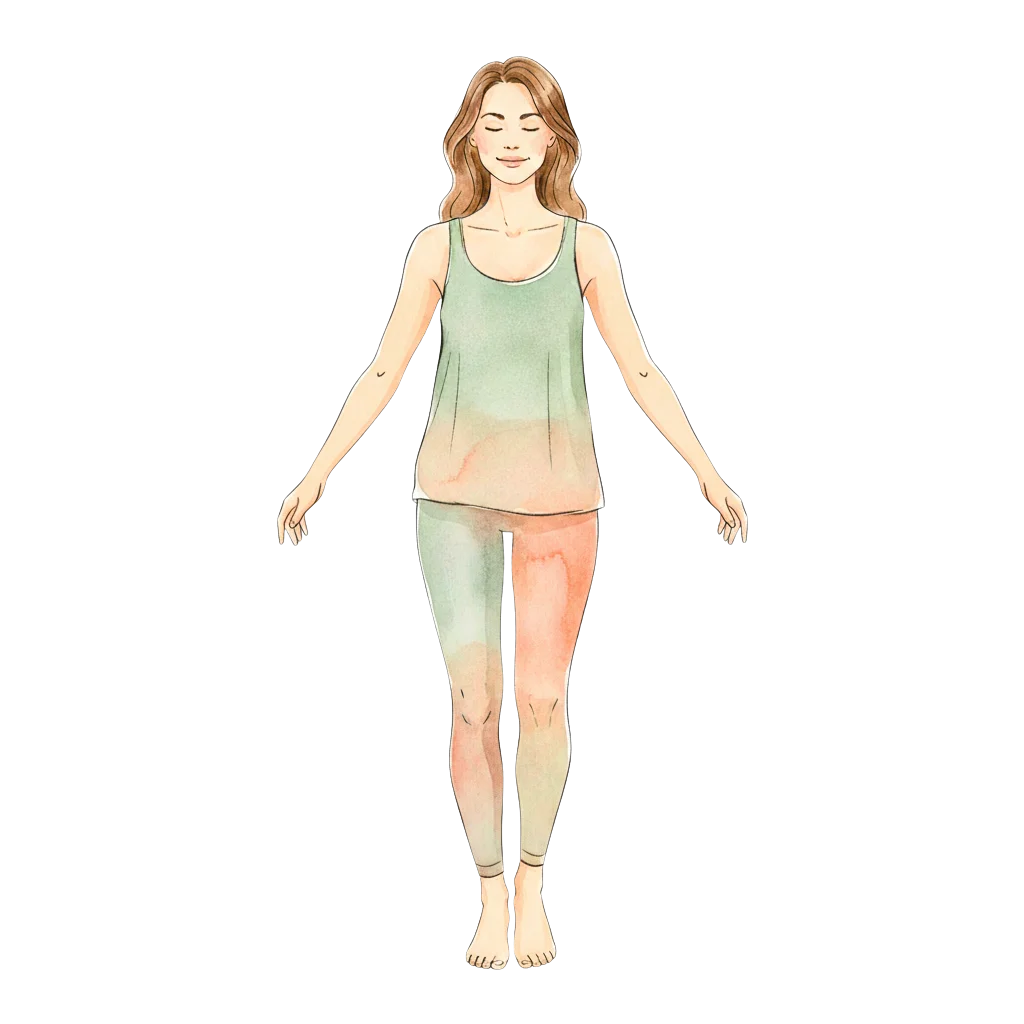
Start your protocolHow Muscle loss affects your body
Tap body zones to discover connected symptoms and related conditions.
Join 65+ women discussing muscle loss
Real experiences shared across Reddit, TikTok, and health forums
Do This to Lose Fat & Build Muscle at the Same Time | Dr. Gabrielle Lyon’s Fat Loss Keys
doing the impossible losing fat building muscle at the same time the bottom line is it is entirely possible protein seems to be at the Forefront of it but I have an...
Did your body go to mush after 40 too? 😫
Did your body go to mush after 40 too? 😫
I am mid 50s and have been using creatine and lifting heavy weights for over two decades (pre-to-post menopause transition). I’m also an autistic science nerd and love the chemistry behind creatine...
Reading others' stories is the first step. Join to share yours.
Community
A safe space for women navigating muscle loss
Frequently asked questions
Common questions about Muscle loss
How we research and fact-check
Every article on Wellls is researched using peer-reviewed medical literature, clinical guidelines, and real patient experiences from 64 online discussions.
Sources: We reference 48 PubMed-indexed studies, ACOG/NAMS clinical guidelines, and validated screening tools.
Review: Content is written by our editorial team, enriched from a medical knowledge base of 15,000+ sources. All content follows our evidence-based editorial standards and is cross-referenced with clinical guidelines.
This content is for informational purposes only and does not constitute medical advice. Our editorial standards · Medical advisory board
References
48 sources reviewed for this muscle loss guide
- 1.Postmenopausal muscle loss: mechanisms and exercise countermeasures [PubMed]
- 2.The role of resistance training in preventing age-related muscle loss (sarcopenia) [PubMed]
- 3.Sarcopenia in women: prevalence, mechanisms, and exercise countermeasures [PubMed]
- 4.Postmenopausal women and protein requirements for exercise: updated recommendations [PubMed]
- 5.Post-exercise protein ingestion: systematic review of timing and dose [PubMed]
- 6.Higher volume resistance training enhances whole-body muscle hypertrophy in postmenopausal women [PubMed]
- 7.Exercise interventions for weight management during the menopause transition [PubMed]
- 8.Creatine supplementation and muscle function in women: a systematic review [PubMed]
- 9.Progressive Resistance Training for Improving Health-Related Outcomes in People with Chronic Conditions [PubMed]
- 10.Progressive Resistance Training for Concomitant Increases in Muscle Strength and Bone Mineral Density [PubMed]
History of updates
Current version (March 11, 2026) — Content reviewed and updated based on latest research
First published (March 2, 2026)
Explore related problems
Women who experience muscle loss often also deal with these
Your personalized plan is ready
Your muscles have been withdrawing from an account you didn't know was shrinking. The 12-Week Muscle Reclamation Program inside gives you the exact exercises, protein targets, and weekly progression plan built from the research on this page. 535 women in a 5-year trial proved this approach works.
6 real stories from women who reversed muscle loss through targeted strength training
Free assessment · Takes 2 minutes · No account required
Medical disclaimer: This content is for informational purposes only and does not constitute medical advice, diagnosis, or treatment. Always consult a qualified healthcare provider for personal medical decisions. Content is based on peer-reviewed research and updated regularly. Learn about our editorial standards.