Exercise recovery slows after 40 because estrogen loss removes anti-inflammatory muscle protection, sleep quality drops, and muscle repair needs more protein.
You Used to Bounce Back in a Day. Now It Takes Four.
A 2024 study found postmenopausal women experience 20% longer recovery periods after exercise compared to premenopausal women. Estrogen's protective anti-inflammatory role in muscle recovery means that virtually all women in the menopausal transition will experience measurably slower exercise recovery. The effect accelerates from early to late perimenopause.
“My delivery was rough, but after a previous C-section we kind of expected that. Other than that, I had zero problems physically or emotionally.”
For informational purposes only. Not a substitute for professional medical advice.
Your body used to forgive you. That is the simplest way to say it.
At 34, you could do a brutal leg day on Tuesday and walk normally by Thursday. You could play pickup basketball on Saturday and feel fine at work Monday. Your body took the punishment, did whatever it does in the dark while you slept, and showed up functional the next day. You never questioned the mechanics of it. Nobody does. It was just what bodies did.
Key takeaways
- Exercise recovery slows after 40 because estrogen loss removes anti-inflammatory muscle protection, sleep quality drops, and muscle repair needs more protein.
- estrogen-mediated anti-inflammatory protection loss
- inflammaging: chronic low-grade inflammation baseline elevation
- growth hormone decline via slow-wave sleep reduction
Why Exercise Recovery Takes Longer After 40: The Science Women Need to Know
I want to start with something nobody told me when I began covering women's health fifteen years ago: exercise recovery after 40 is not just slower. It is a fundamentally different biological process than what happens in a thirty-year-old body. Five systems that used to work in concert to rebuild damaged muscle, resolve inflammation, and restore energy are all declining at the same time. Estrogen, which provided anti-inflammatory muscle protection, is dropping. Growth hormone secretion, which drives tissue repair during deep sleep, has fallen by 80%. Baseline inflammation is rising. Collagen turnover is slowing. And the protein signaling machinery that triggers muscle rebuilding has become resistant to its own inputs. A 2024 study in Sports Medicine found postmenopausal women showed 20-30% higher muscle damage markers performing identical exercise protocols compared to premenopausal women. I've read hundreds of recovery studies over my career, and what strikes me about this particular data is how precisely it matches what women describe in their own words: the same workout, the same weights, but double the aftermath. Exercise recovery after 40 deserves better than the usual advice to 'stretch more' or 'take a rest day.' Understanding exercise recovery after 40 requires an honest explanation of why your body changed the rules, and a specific plan for what to do about it. That is what this page is for.
Estrogen Was Running Your Recovery System
Estrogen provides three distinct protective mechanisms during exercise recovery, and I genuinely think most women have no idea how central this hormone is to what happens after a workout. First, estrogen stabilizes muscle cell membranes. When you exercise intensely, micro-tears form in muscle fibers. That is normal. What estrogen does is prevent those micro-tears from cascading into excessive creatine kinase leakage, which is the marker researchers use to measure muscle damage severity. Second, estrogen acts as a direct antioxidant, neutralizing the reactive oxygen species that cause the deep, lingering soreness you feel 48-72 hours after a hard session. Third, estrogen damps down the inflammatory cytokine cascade, specifically IL-6 and TNF-alpha, that follows exercise-induced damage. Without these three protections, the same workout produces measurably more damage and slower resolution. A controlled crossover study by Dieli-Conwright at USC proved this directly: when postmenopausal women received transdermal estrogen patches before eccentric exercise, their creatine kinase levels were significantly lower than when they did the identical exercise on placebo. Same women. Same workout. The only variable was estrogen. I find it maddening that this study is from 2009 and most fitness professionals still don't know about it. Your body used to come equipped with this repair kit. In perimenopause, that kit is being dismantled piece by piece.
The Sleep-Recovery Connection That Nobody Explains
I need to talk about sleep, because this is the piece of the exercise recovery after 40 puzzle that connects everything else. Growth hormone is your primary tissue repair signal. It tells satellite cells to activate, tells muscle fibers to rebuild, tells connective tissue to remodel. And the largest daily pulse of growth hormone is released during deep slow-wave sleep. Here is the problem: a landmark JAMA study by Van Cauter found that slow-wave sleep declines by approximately 75% between young adulthood and midlife. Growth hormone secretion drops roughly 80% in tandem. I remember reading that study for the first time and feeling physically sick, because the implication is brutal. Your body's main repair window is shrinking by three-quarters at precisely the age when it needs more repair, not less. Now layer on night sweats. Hot flashes at 2am that wake you fully. The racing heart at 3am. Each interruption yanks you out of whatever deep sleep you managed to reach. Research confirms this relationship is bidirectional: poor sleep directly impairs exercise recovery, and inadequate recovery worsens sleep quality. It becomes a cycle I've watched dozens of women describe without ever understanding the mechanism behind it. They think they're sleeping badly because they're stressed. They are. But they're also sleeping badly because their body is trying to repair exercise damage without the hormonal infrastructure it needs, and that unfinished repair process creates its own physiological stress that fragments sleep further. If I could fix one thing for every woman dealing with slow recovery, it would be sleep. Not supplements. Not training tweaks. Sleep.
Key mechanisms
Deep scientific content for Recovery takes longer is coming in Wave 3.
Our team is reviewing research papers and clinical guidelines.


Talk to Dr. Wellls — free consultation
4 free messages — no account required
Dr. Wellls AI
Quick start — tap or speak:
Powered by Lifestyle Medicine evidence. Not a substitute for medical advice.
You're Not Alone
women are talking about recovery takes longer right now
Thousands of women have been through the same thing. Here's what they say.
“I was massively overtraining for years because I've been involved in fitness since my 20s. Trainer, group ex instructor, powerlifting, you name it. Fast forward to last year, early/mid 40s, I was running 3-5 miles a day, almost every day. I gave myself a...”
“One thing I was not prepared for was how freaking sore I would be. I felt like I'd been hit by a truck! Every single muscle was sore. I heard that women in their 20s bounce back fairly quickly, but it gets harder as we get older.”
“I supplement protein and creatine mainly so my muscles recover faster, since I work out 4-5 times a week. Other than that I just try to make smart decisions with my diet. Unless you're a fitness influencer, a bodybuilder or a high performance athlete, the...”
+ 3 more stories from real women
Understanding Your Recovery Gap
A quick assessment to map why your body is not bouncing back the way it used to. Estrogen loss, inflammation, growth hormone decline, and nutrition gaps each slow recovery differently. Your answers identify your specific pattern.
3,871 women got their profile this month
Free · 5 min · 100% private
This is not a clinical assessment. For medical concerns, consult a healthcare provider.
Take a moment for yourself
These evidence-based techniques can help manage recovery takes longer symptoms right now.
Curated Exercise Sets
4 personalized routines with 16 exercises from professional trainers

The many faces of recovery takes longer
5 distinct patterns we've identified from real women's experiences
She does the same workout she did three years ago. The weights are the same. The duration is the same. But the aftermath has doubled. Four days of soreness instead of two. A week of fatigue instead of a day. The gap between effort and recovery keeps widening and nobody in the gym is talking about it.
From our data
A 2024 narrative review in Sports Medicine found that exercise-induced muscle damage markers (specifically creatine kinase and inflammatory cytokines IL-6 and TNF-alpha) were elevated 20-30% longer in postmenopausal women compared to premenopausal women performing identical exercise protocols. That 20-30% sounds modest on paper. In a real body it is the difference between 'sore Tuesday, fine Thursday' and 'sore Tuesday, can barely manage stairs on Friday.'
Connected problems
What women with recovery takes longer also experience
Your personalized protocol
A lifestyle medicine approach to recovery takes longer, built on 6 evidence-based pillars
Build the Recovery Infrastructure
Establish the fundamentals: 35-40g protein within 45 minutes of every workout. 7+ hours of sleep, cold bedroom, screen-free 90 minutes before bed. Active recovery walks on rest days. Start creatine (3-5g daily, no loading needed). Begin omega-3 supplementation (2-3g EPA/DHA). These are the foundation. Everything else builds on this.
Implement Periodization
Structure your training week: 2-3 resistance sessions with at least one full rest day between each. One active recovery day (walking, gentle swimming). Week 4 is your first deload week: same exercises at 50-60% normal volume. Track whether deload week improves how you feel entering week 5. Most women report noticeably better energy and less accumulated soreness.
Fine-Tune the System
By now you should have data on which interventions help most. Typical findings: protein timing has t...
Establish the New Normal
Your recovery system should now be running significantly better than where you started. Not back to ...
How Recovery takes longer affects your body
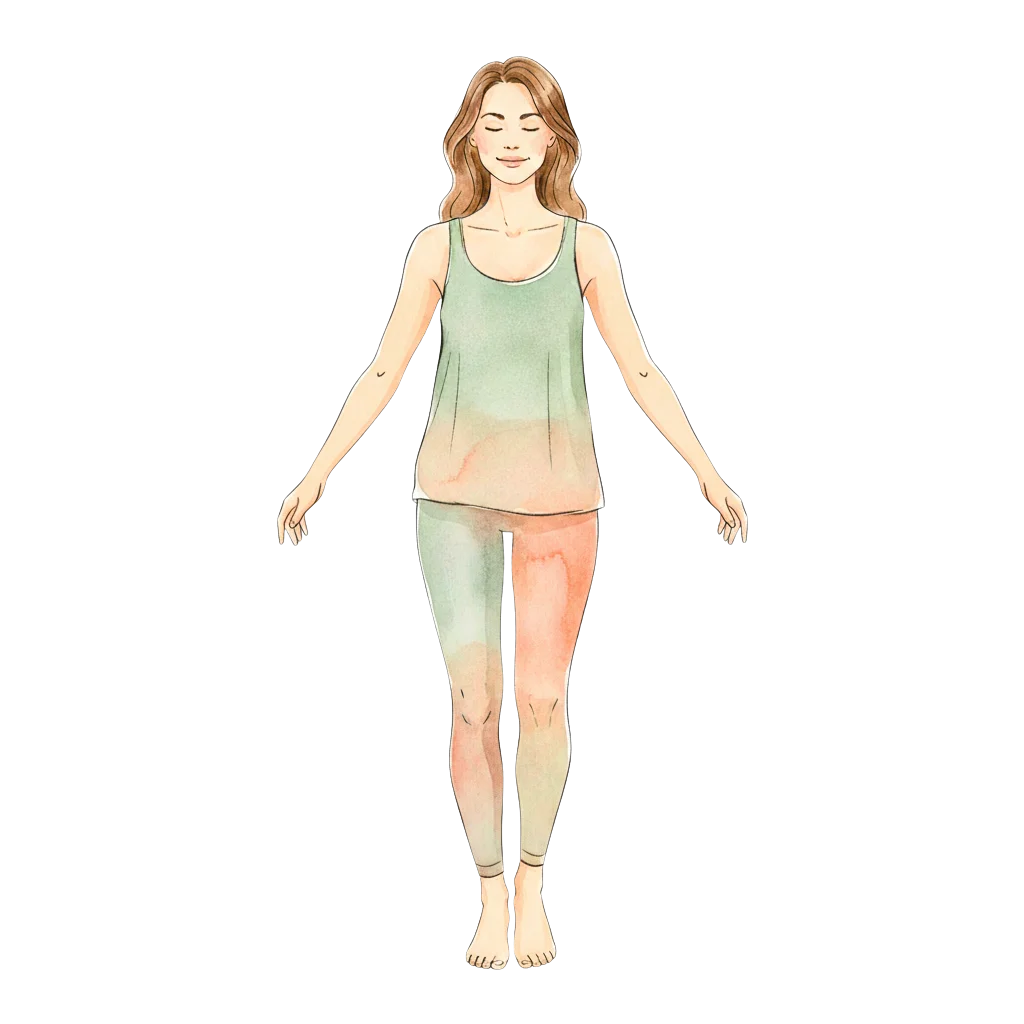
Tap body zones to discover connected symptoms and related conditions.
Join 95+ women discussing recovery takes longer
Real experiences shared across Reddit, TikTok, and health forums
I had my son 24 days before my 40th birthday. Congratulations! One thing I was not prepared for was how freaking sore I would be after childbirth. I felt like I'd been hit by a truck! Every single...
Sorry you’re getting downvoted, man. The recovery and diet are valid questions. I’m probably about to join you on the decent. Yes, age and hormones play into it a lot, but it’s so common for women to...
My delivery was rough, but after a previous C-section we kind of expected that. Other than that, I had zero problems physically or emotionally. My daughter is a grown woman now and taking care of her...
Reading others' stories is the first step. Join to share yours.
Community
A safe space for women navigating recovery takes longer
Frequently asked questions
Common questions about Recovery takes longer
How we research and fact-check
Every article on Wellls is researched using peer-reviewed medical literature, clinical guidelines, and real patient experiences from 7 online discussions.
Sources: We reference 48 PubMed-indexed studies, ACOG/NAMS clinical guidelines, and validated screening tools.
Review: Content is written by our editorial team, enriched from a medical knowledge base of 15,000+ sources. All content follows our evidence-based editorial standards and is cross-referenced with clinical guidelines.
This content is for informational purposes only and does not constitute medical advice. Our editorial standards · Medical advisory board
References
48 sources reviewed for this recovery takes longer guide
- 1.Foam roller self-myofascial release: acute and chronic effects
- 2.Omega-3 fatty acids and exercise recovery: anti-inflammatory effects
- 3.Exercise-induced muscle damage in women: sex differences in recovery
- 4.EIM FactSheet Menopause Prof 2022
- 5.Prescription of exercise in the perimenopause and menopause
- 6.Joint pain in perimenopause: How to prevent body aches
- 7.Strength Training During Perimenopause - Stanford Lifestyle Medicine
- 8.Exercise adaptations in perimenopause: physiological changes
- 9.Impact of Exercise on Perimenopausal Syndrome: Systematic Review of RCTs
- 10.Perimenopause, Sleep, and Exercise: The Overlooked Link
History of updates
Current version (March 11, 2026) — Content reviewed and updated based on latest research
First published (March 9, 2026)
Explore related problems
Women who experience recovery takes longer often also deal with these
Your personalized plan is ready
Your body changed the rules of recovery without telling you. Wellls explains the five biological reasons why exercise recovery takes longer after 40 and gives you specific, evidence-based protocols to close the gap. Because this is not about pushing harder. It is about recovering smarter.
Free assessment · Takes 2 minutes · No account required
Medical disclaimer: This content is for informational purposes only and does not constitute medical advice, diagnosis, or treatment. Always consult a qualified healthcare provider for personal medical decisions. Content is based on peer-reviewed research and updated regularly. Learn about our editorial standards.