Building muscle after 40 requires heavier loads (70-85% 1RM), more protein (35-40g/meal), and longer timelines due to anabolic resistance and estrogen decline.
You Are Lifting the Same Weights and Getting Weaker. Here Is Why.
Sarcopenia affects 3-8% of muscle mass per decade after 30, accelerating during the menopausal transition. Women in late perimenopause have 10% less limb muscle mass than early perimenopause. Anabolic resistance means standard protein and exercise doses that built muscle in younger women become insufficient during midlife.
“I struggle to gain and put in muscle so eat at a surplus . I track my calories for a while until I can estimate pretty well what I’m having.”
For informational purposes only. Not a substitute for professional medical advice.
When did you first notice?
Was it the dumbbells that stopped feeling lighter? You had been pressing the 15s for months, reliably, three sets of twelve, and then one Tuesday in October the third set died at eight. Not because you were tired. Not because you skipped meals. Something in the signal between your brain saying push and your muscles saying okay had gone fuzzy.
Key takeaways
- Building muscle after 40 requires heavier loads (70-85% 1RM), more protein (35-40g/meal), and longer timelines due to anabolic resistance and estrogen decline.
- sarcopenia: accelerated type II fiber loss during menopause
- anabolic resistance: elevated leucine threshold for MPS
- estrogen withdrawal: satellite cell proliferation decline
Why Building Muscle Gets Harder After 40 and How to Fix It
If you are searching for how to rebuild muscle mass in your forties, I want to start by telling you something most fitness content skips: the reason you are struggling is not effort. It is biology. Three systems that used to cooperate for muscle growth are now working against you simultaneously, and understanding all three is the only way to overcome all three. Sarcopenia is stealing 3-8% of your muscle per decade, with type II fast-twitch fibers losing 10-40% more than type I, and the losses accelerate sharply during the menopausal transition. Anabolic resistance means the protein and exercise signals that used to trigger muscle rebuilding now barely register. A 2024 study in the Journal of Applied Physiology found that 15 grams of whey protein produced zero measurable myofibrillar protein synthesis in postmenopausal women. Zero. The identical dose worked fine in younger women. And estrogen withdrawal has dismantled the satellite cell proliferation system your muscles relied on for repair and growth. I've covered women's fitness for over a decade, and I find it genuinely infuriating that most gym advice still pretends muscle building works the same way at 44 as it did at 24. The Instagram trainer telling you to 'lift heavy' without explaining anabolic resistance. The nutritionist suggesting 60 grams of protein per day when you need 100. The well-meaning friend who says 'just be consistent' as though consistency alone can overcome a protein synthesis pathway that has gone partially deaf. It does not. The question of how to rebuild muscle mass after 40 requires a fundamentally different answer.
Anabolic Resistance: Why Your Muscles Stopped Listening
Anabolic resistance is the term researchers use for the age-related blunting of muscle protein synthesis response to both protein ingestion and resistance exercise. In plain language: the same workout and the same protein shake that built visible muscle at 30 may produce no measurable growth at 45. I remember the first time I understood the mechanism properly, reading Burd's 2013 paper, and my reaction was anger on behalf of every midlife woman being told she just needs to 'work harder.' The leucine threshold, which is the amino acid concentration that triggers muscle protein synthesis, rises with age. Younger women can trigger growth with 20 grams of protein and 2 grams of leucine. Perimenopausal and postmenopausal women need 35-40 grams of protein containing 2.5-3 grams of leucine per meal to achieve the same signal. The PROT-AGE international consensus, which I consider the gold standard on this question, recommends 1.2-1.6 grams of protein per kilogram of body weight daily for aging adults, distributed across meals in 30-40 gram servings. That means a 70-kilogram woman needs 84-112 grams of protein daily. Not on workout days. Every day. Because muscle protein synthesis does not clock in and out on a training schedule. Understanding how to rebuild muscle mass starts with accepting this: your muscles still respond to signals. They just need louder ones. And the timing matters more than anyone told you. Dr. Stacy Sims' research shows women's metabolism returns to baseline within 30-40 minutes post-exercise, compared to 2-18 hours for men. That narrow window means your post-workout protein simply cannot wait until dinner.
Progressive Overload: The Non-Negotiable Stimulus
Progressive overload means systematically increasing training demands over time. It is the fundamental stimulus for muscle growth at any age, but it becomes absolutely critical when anabolic resistance is in play. Here is my blunt take: the fitness industry has done midlife women a disservice by steering them toward light weights and high repetitions. A meta-analysis exclusively examining female populations found large effect sizes for strength and moderate effects for hypertrophy from resistance training, with training volume and intensity as key moderating variables. The data is clear. For a woman learning how to rebuild muscle mass after 40, the NSCA recommends 2-3 sets at 70-85% of one-rep maximum, performed 2-3 times per week, targeting 10-20 sets per muscle group per week. Those 3-pound dumbbells? They provide insufficient mechanical stimulus to trigger hypertrophy in the presence of anabolic resistance. I know that sounds harsh. But I'd rather be honest than watch another woman spend twelve weeks on a 'toning' program and see nothing change. The compound movements produce the strongest response: squats, deadlifts, rows, presses. They recruit multiple muscle groups simultaneously, they allow the heaviest loads, and they create the metabolic stress that signals growth. Progressive overload does not mean adding weight every session. It means that across weeks and months, something progresses: weight, reps, sets, or time under tension. Without that progression, your muscles have no reason to rebuild larger. Track your workouts. Record the weight, the reps, the sets. If next month's log looks identical to this month's, your program is maintenance, not growth. And maintenance in the presence of sarcopenia means slow decline.
Key mechanisms
Deep scientific content for Cant build muscle is coming in Wave 3.
Our team is reviewing research papers and clinical guidelines.


Talk to Dr. Wellls — free consultation
4 free messages — no account required
Dr. Wellls AI
Quick start — tap or speak:
Powered by Lifestyle Medicine evidence. Not a substitute for medical advice.
You're Not Alone
women are talking about cant build muscle right now
Thousands of women have been through the same thing. Here's what they say.
“It's like so hard to gain a lot of muscle. Just because you've got muscle doesn't mean that it's actually strong and powerful and what's going to support us to have that strength and have that power. I think that's the single most important supplement for...”
“In our 20s we could build muscle with hormones. We didn't have to have our nutrition nailed. We didn't have to hit it specifically perfect with our resistance training. Your margin for error goes out the window. 40s, it's really out.”
“I don't want to ever have to call my husband and go could you get me up off the toilet. People who are excited about aging live 7 and a half years longer than people who aren't. Let's get stronger in life.”
+ 3 more stories from real women
Understanding Your Muscle Building Barriers
A quick assessment of what is actually blocking your muscle gains and what to adjust. Takes 2-3 minutes.
3,830 women got their profile this month
Free · 5 min · 100% private
This is not a clinical assessment. For medical concerns, consult a healthcare provider.
Take a moment for yourself
These evidence-based techniques can help manage cant build muscle symptoms right now.
Curated Exercise Sets
4 personalized routines with 16 exercises from professional trainers
The many faces of cant build muscle
5 distinct patterns we've identified from real women's experiences
By the time most women realize they are losing muscle, they have already lost years of it. Sarcopenia does not announce itself. It takes incrementally, like a bank account with silent withdrawals, until the balance drops below what daily life requires.
From our data
The numbers on this are specific and they stopped me. Women lose 3-8% of muscle mass per decade after 30. But during the menopausal transition, muscle loss accelerates sharply: women in late perimenopause had 10% less limb muscle mass than women in early perimenopause. That is not a decade of gradual loss. That is a cliff.
Connected problems
What women with cant build muscle also experience
Your personalized protocol
A lifestyle medicine approach to cant build muscle, built on 6 evidence-based pillars
Establish the Foundation
Two resistance sessions per week, 4-6 compound exercises per session, 2-3 sets of 8-12 reps at a weight where the last 2 reps are challenging. Post-workout: 35-40g protein within 45 minutes. Daily protein target: 1.2-1.6 g/kg. Start creatine (3-5g daily). Track every workout: exercises, weight, reps. This log is essential for progressive overload.
Begin Progressive Overload
Review training log. For any exercise where you completed 12 reps on all sets, increase weight by 5-10%. If you cannot add weight, slow the eccentric phase to 3-4 seconds per rep. Add a third training session if recovery allows (no soreness lasting beyond 72 hours). Continue protein optimization. Consider adding omega-3s (2-3g daily) and collagen peptides (15g before training).
Optimize for Hypertrophy
Target 10-20 sets per major muscle group per week (the dose-response sweet spot). Ensure progressive...
Evaluate Results and Adjust
By week 12: measurable strength increases should be clear. Body composition changes (measurements, h...
How Cant build muscle affects your body
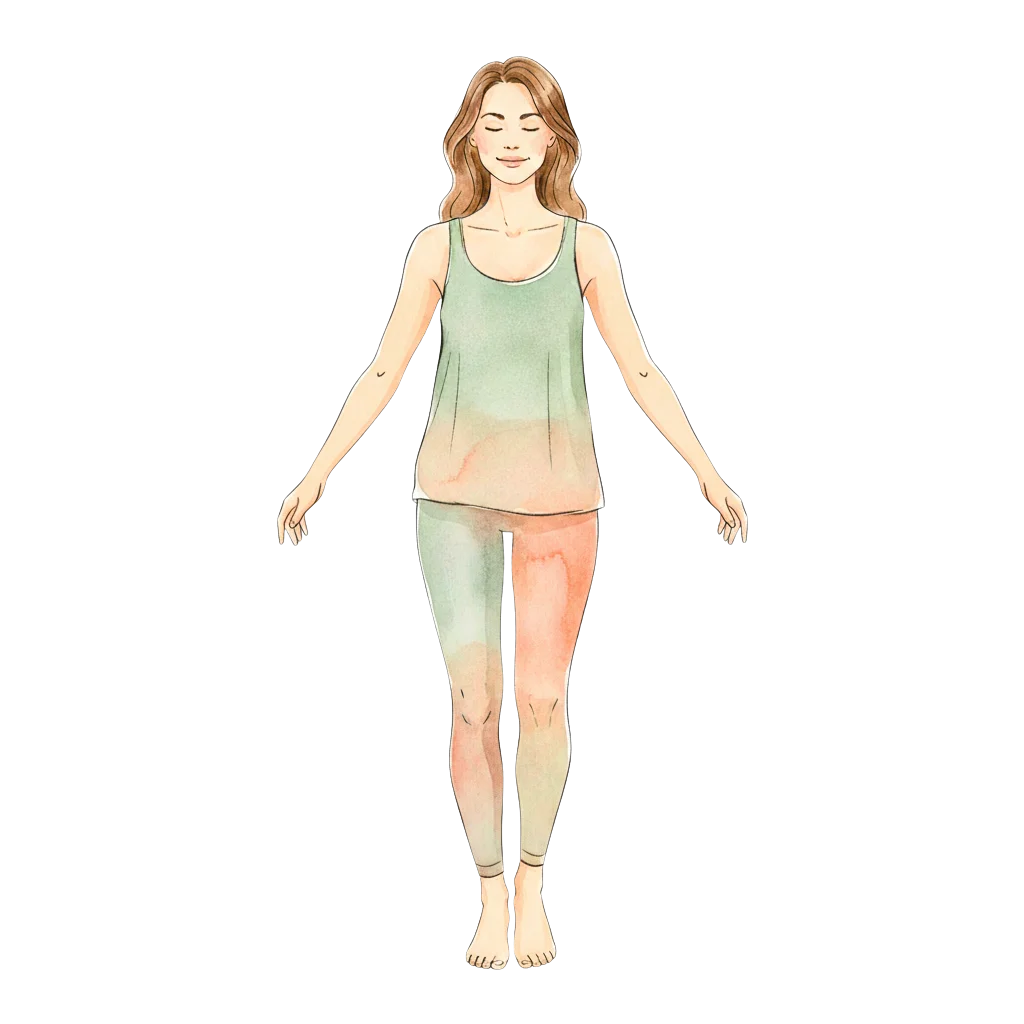
Tap body zones to discover connected symptoms and related conditions.
Join 83+ women discussing cant build muscle
Real experiences shared across Reddit, TikTok, and health forums
BEST Anti-Aging Advice for Women Over 40 (Wish I Knew Sooner)
I don't want to ever have to call my husband and go could you get me up off the toilet people who are excited about aging live 7 and 1 half years longer than...
I struggle to gain and put in muscle so eat at a surplus . I track my calories for a while until I can estimate pretty well what I’m having. In not super strict but aim to be at Surplus most days…...
Lifting weights and eating more regularly.
Community
A safe space for women navigating cant build muscle
Frequently asked questions
Common questions about Cant build muscle
How we research and fact-check
Every article on Wellls is researched using peer-reviewed medical literature, clinical guidelines, and real patient experiences from 3 online discussions.
Sources: We reference 48 PubMed-indexed studies, ACOG/NAMS clinical guidelines, and validated screening tools.
Review: Content is written by our editorial team, enriched from a medical knowledge base of 15,000+ sources. All content follows our evidence-based editorial standards and is cross-referenced with clinical guidelines.
This content is for informational purposes only and does not constitute medical advice. Our editorial standards · Medical advisory board
References
48 sources reviewed for this cant build muscle guide
- 1.Postmenopausal muscle loss: mechanisms and exercise countermeasures
- 2.Sarcopenia in women: prevalence, mechanisms, and exercise countermeasures
- 3.Prescription of exercise in the perimenopause and menopause
- 4.The role of estrogen in female skeletal muscle aging: systematic review
- 5.The Effect of Resistance Training in Women on Dynamic Strength and Muscle Mass
- 6.Training volume and muscle hypertrophy in women: dose-response meta-analysis
- 7.Higher volume resistance training enhances whole-body muscle hypertrophy
- 8.Progressive overload without progressing load
- 9.NSCA Essentials of Strength Training and Conditioning, 4th Edition
- 10.Neural adaptations to strength training: mechanisms of early strength gains
History of updates
Current version (March 11, 2026) — Content reviewed and updated based on latest research
First published (March 9, 2026)
Explore related problems
Women who experience cant build muscle often also deal with these
Your personalized plan is ready
You have been doing the work. The weights, the protein shakes, the early mornings. And your body is not responding the way it used to. Wellls explains the three biological reasons why rebuilding muscle mass after 40 requires a completely different approach, and gives you the specific program that the evidence supports.
Free assessment · Takes 2 minutes · No account required
Medical disclaimer: This content is for informational purposes only and does not constitute medical advice, diagnosis, or treatment. Always consult a qualified healthcare provider for personal medical decisions. Content is based on peer-reviewed research and updated regularly. Learn about our editorial standards.