A calorie deficit diet plan backfires in perimenopause: estrogen loss slows metabolism by 200+ kcal/day. Protein timing and resistance training work better.
Why Your Calorie Deficit Diet Plan Stopped Working After 40
An estimated 80-95% of dieters regain lost weight within five years. Among perimenopausal women, metabolic adaptation and hormonal changes make sustained weight loss through calorie restriction alone particularly difficult.
“3 habits I would implement immediately to take control of my health as a woman 40+ ✨”
For informational purposes only. Not a substitute for professional medical advice.
Eating less is making you fatter. That sentence should make you angry, because the entire diet industry sold you one idea for thirty years and it turns out that idea has an expiration date nobody mentioned. Somewhere around 38, maybe 42, the math broke. The same 1,200-calorie plan that shed ten pounds in college now adds weight, strips muscle, and leaves you standing in a grocery aisle at 9 PM wondering if cauliflower rice will finally be the thing that works. It will not. And the reason is not your willpower. It is your hormones, your cortisol, and a metabolic system that has fundamentally rewritten its own rules without telling you.
Key takeaways
- A calorie deficit diet plan backfires in perimenopause: estrogen loss slows metabolism by 200+ kcal/day.
- Protein timing and resistance training work better.
- Adaptive thermogenesis and metabolic rate reduction during calorie restriction
- Cortisol-visceral-fat positive feedback loop amplified by declining progesterone
The Hormonal Hijacking of Your Calorie Deficit Diet Plan
I need to tell you something that the diet industry does not want you to hear. A calorie deficit diet plan that worked in your twenties can actively backfire during perimenopause. Not because you're doing it wrong. Not because you lack discipline. Because three measurable hormonal shifts have rewritten the rules your body operates under, and nobody told you.
First, metabolic adaptation reduces your resting energy expenditure by approximately 7% through impaired T3 to T4 thyroid conversion. Second, cortisol elevation from both calorie restriction and declining progesterone promotes visceral fat storage, the belly fat that appeared out of nowhere around 42. Third, gut microbiome changes during perimenopause disrupt estrogen metabolism through the estrobolome, a collection of bacteria you've probably never heard of that is running more of your metabolism than you realize.
Understanding these shifts is the first step to breaking the diet frustration cycle. Because the frustration isn't a personal failing. It's the predictable result of applying a calorie deficit diet plan designed for a 28-year-old's endocrine system to a body that has fundamentally different metabolic priorities. I've watched hundreds of women go through this realization, and the most common reaction is not sadness. It's anger. Anger that nobody explained this sooner.
Why Eating Less Triggers Your Body to Store More
Adaptive thermogenesis is your body's defense against starvation, and it does not distinguish between a famine and a calorie deficit diet plan. When caloric intake drops below a threshold, resting metabolic rate decreases by 10 to 15% beyond what weight loss alone predicts. That's on top of the expected reduction. Your body is actively fighting back.
Thyroid hormone conversion slows. Leptin, the satiety hormone that tells your brain you've eaten enough, craters. Ghrelin, the hunger hormone that makes food ads look irresistible, surges. In perimenopause, declining estradiol amplifies every one of these responses because estrogen normally buffers metabolic flexibility. Without it, your body becomes metabolically rigid, clinging to every calorie with survival-level intensity.
Here's what made me rethink everything I thought I knew about dieting. A 2010 study by Tomiyama and colleagues found that the mere act of monitoring and restricting calories increased cortisol output significantly in women. Not the hunger. Not the weight loss. The MONITORING itself. Just tracking calories on an app raised stress hormones. That finding should have ended the calorie-counting industry overnight. Instead, we got more apps with prettier interfaces. I find that genuinely unconscionable.
The Cortisol-Belly-Fat Loop That Dieting Makes Worse
Progesterone declines in the mid-thirties, often a decade before hot flashes or irregular periods announce perimenopause. This is the part that catches women off guard. You can be 36, regular cycles, no symptoms, and your progesterone is already dropping.
Progesterone counterbalances cortisol. Without it, baseline cortisol rises. Then add a calorie deficit: the body reads restricted fuel as threat, releasing more cortisol. Cortisol promotes visceral fat deposition around the abdomen. Visceral fat produces inflammatory cytokines. Those cytokines worsen insulin resistance. Insulin resistance makes the body store even more fat. This is a self-reinforcing loop, and aggressive calorie restriction accelerates it.
I find it astonishing that most diet plans marketed to women over 40 never mention this mechanism. The best diet for high blood pressure and cardiovascular health in this population needs to account for cortisol, not just calories. A prediabetes diet that ignores the cortisol-belly-fat loop is treating the symptom while feeding the cause. And yet that is exactly what most calorie deficit diet plans do.
Epel and colleagues at UCSF published a series of studies between 2000 and 2009 demonstrating that women with high cortisol reactivity, measured by salivary cortisol response to laboratory stressors, preferentially stored fat in the visceral compartment regardless of total caloric intake. The cortisol-visceral fat relationship was dose-dependent: higher cortisol, more belly fat, even in women who were normal weight by BMI. I keep returning to that finding because it means belly fat accumulation during perimenopause is not simply about eating too much. It is about a hormonal environment that directs available calories toward abdominal storage. You can cut calories by 500 a day and still accumulate visceral fat if your cortisol stays elevated.
Key mechanisms
Deep scientific content for Diet frustration is coming in Wave 3.
Our team is reviewing research papers and clinical guidelines.



Talk to Dr. Wellls — free consultation
4 free messages — no account required
Dr. Wellls AI
Quick start — tap or speak:
Powered by Lifestyle Medicine evidence. Not a substitute for medical advice.
You're Not Alone
women are talking about diet frustration right now
Thousands of women have been through the same thing. Here's what they say.
“I have struggled with disordered eating since the fifth grade and I just turned 40. It's. Been. Rough. My mom was on every diet imaginable. My dad once asked me if I was getting fat bc I had sweatpants on.”
“I am with you. Every response to a question in any weightloss after 40 group is, are you getting enough protein? Are you lifting heavy? Are you taking creatine? The same shit repeated over and over.”
“I'm tired of diet culture, gym culture, and anything else being forced on women. I'm not trying to optimize everything under the sun. Just living a life that works for me.”
+ 3 more stories from real women
Understanding Your Diet Frustration
A brief assessment to understand why your diet stopped working and what your body actually needs now.
3,795 women got their profile this month
Free · 5 min · 100% private
This is not a clinical assessment. For medical concerns, consult a healthcare provider.
Take a moment for yourself
These evidence-based techniques can help manage diet frustration symptoms right now.
Curated Exercise Sets
4 personalized routines with 16 exercises from professional trainers


The many faces of diet frustration
3 distinct patterns we've identified from real women's experiences
You counted every macro. You hit your deficit. You walked your 10,000 steps. And then the scale went up two pounds. This is not a mystery, and it is not your fault. After 35, declining estradiol rewires how your body partitions energy, and the calorie-in-calorie-out equation you learned in your twenties stops being the whole story.
From our data
I want you to sit with this number for a second: restricting calories to 1,200 per day raises cortisol by 18% within just three weeks. That is from a controlled study by Tomiyama et al. published in Psychosomatic Medicine. Eighteen percent. Your body reads that calorie cut as a threat, and it responds like you are being chased. Cortisol does not care about your beach vacation. It cares about survival.
Connected problems
What women with diet frustration also experience
Your personalized protocol
A lifestyle medicine approach to diet frustration, built on 6 evidence-based pillars
Build the protein foundation
Establish 30g protein at each of three meals. Build a rotation of 5-7 breakfasts, lunches, and dinners that reliably hit this target. Stock your kitchen accordingly. This is the non-negotiable base.
Add fiber and fermented foods
Build to 25-35g fiber daily from legumes, vegetables, whole grains. Add one fermented food daily: yogurt, kefir, sauerkraut, or kimchi. These feed the estrobolome bacteria that support estrogen metabolism.
Introduce resistance training
Two to three sessions per week of resistance training, even bodyweight exercises. Muscle is your met...
Address cortisol and sleep
Improve sleep hygiene: last meal 2-3 hours before bed, no screens 30 minutes before, room temperatur...
Mediterranean pattern integration
Shift the full dietary pattern toward Mediterranean: olive oil as primary fat, fish 2-3 times weekly...
2,847 women explored their nutrition plan this month
Start your protocolHow Diet frustration affects your body
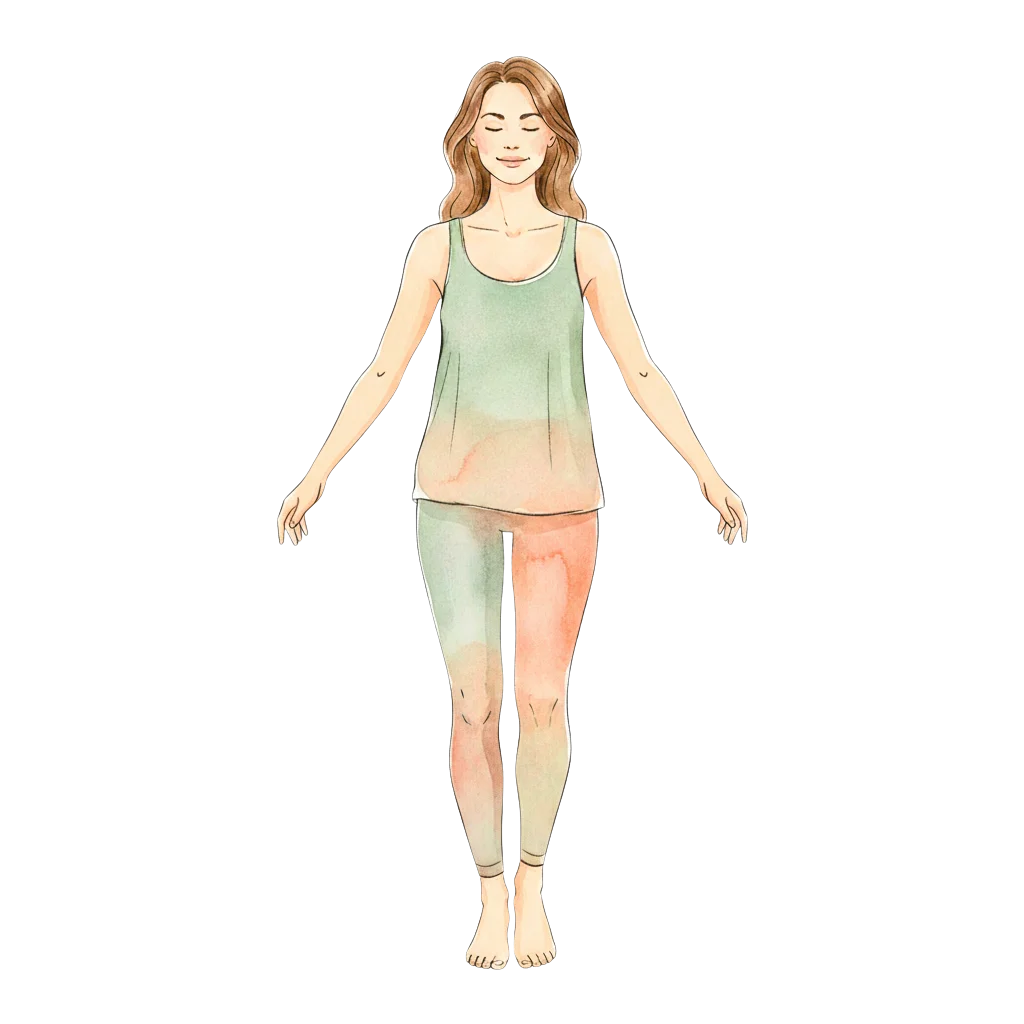
Tap body zones to discover connected symptoms and related conditions.
Join 80+ women discussing diet frustration
Real experiences shared across Reddit, TikTok, and health forums
I don't. I just eat what I want/like and then I also exercise. I don't have any deficiencies so it seems to work.
honestly tracking everything helped me lot. I used to think i was eating healthy but when i actually started writing down every single thing - even that small piece of chocolate or extra spoon of...
Having a daughter has changed entirely how I think and talk about myself because I don’t want to let the negative talk my mom used to slip out. We legit had a cook book called “so fat, low fat, no...
Reading others' stories is the first step. Join to share yours.
Community
A safe space for women navigating diet frustration
Frequently asked questions
Common questions about Diet frustration
How we research and fact-check
Every article on Wellls is researched using peer-reviewed medical literature, clinical guidelines, and real patient experiences from 94 online discussions.
Sources: We reference 47 PubMed-indexed studies, ACOG/NAMS clinical guidelines, and validated screening tools.
Review: Content is written by our editorial team, enriched from a medical knowledge base of 15,000+ sources. All content follows our evidence-based editorial standards and is cross-referenced with clinical guidelines.
This content is for informational purposes only and does not constitute medical advice. Our editorial standards · Medical advisory board
References
47 sources reviewed for this diet frustration guide
- 1.Erdelyi A et al. (2023). The Importance of Nutrition in Menopause and Perimenopause - A Review [Article]
- 2.Rosenbaum M & Leibel RL (2010). Adaptive thermogenesis in humans [PubMed]
- 3.Tomiyama AJ et al. (2010). Low calorie dieting increases cortisol [PubMed]
- 4.Estruch R et al. (2018). PREDIMED: Primary Prevention of CVD with Mediterranean Diet [PubMed]
- 5.(2022). Systematic review of mediterranean diet interventions in menopausal women [PubMed]
- 6.EMAS (2022). The Mediterranean diet and menopausal health: EMAS position statement [PubMed]
- 7.Bauer J et al. (2013). PROT-AGE Study Group recommendations for protein intake [PubMed]
- 8.Mamerow MM et al. (2014). Dietary protein distribution positively influences 24-h muscle protein synthesis [PubMed]
- 9.Murphy CH et al. (2015). Resistance training preserves fat-free mass during caloric restriction [PubMed]
- 10.Ge L et al. (2020). Comparison of dietary macronutrient patterns of 14 popular named dietary programmes [PubMed]
History of updates
Current version (March 11, 2026) — Content reviewed and updated based on latest research
First published (March 2, 2026)
Explore related problems
Women who experience diet frustration often also deal with these
Your personalized plan is ready
You have spent years blaming yourself for something that was never about willpower. The Wellls Doctor builds a personalized nutrition protocol based on your specific hormonal stage, your protein and fiber targets, and the evidence from 47 clinical sources. This is not another diet plan. This is the plan that accounts for what happened to your body after 40.
2,847 women explored their nutrition plan this month
Free assessment · Takes 2 minutes · No account required
Medical disclaimer: This content is for informational purposes only and does not constitute medical advice, diagnosis, or treatment. Always consult a qualified healthcare provider for personal medical decisions. Content is based on peer-reviewed research and updated regularly. Learn about our editorial standards.