A weak pelvic floor affects 1 in 3 women by midlife, driven by estrogen decline reducing collagen up to 75%. Supervised training improves symptoms in 92%.
Every Part of Your Body Has Changed. Let's Talk About the One Nobody Mentions.
Affects 1 in 3 women by age 50-59; 26.5% of women 40-59 have at least one pelvic floor disorder
“I wear pads for light bladder leakage. They have set off the alarms twice.”
For informational purposes only. Not a substitute for professional medical advice.
Take inventory. Your hair is thinner than it was five years ago. Your skin bruises more easily. Your joints ache in weather they never used to notice. Your waistline shifted without your permission. Your sleep fractured into pieces sometime around forty-two and never reassembled. You have catalogued every single one of these changes, talked about some of them with your doctor, Googled the rest at midnight. But there is one change you have not mentioned to anyone. Not your partner, not your best friend, not your doctor. You leaked urine the last time you laughed too hard. Or sneezed. Or tried to run for the bus. And you told yourself it was nothing. A weak pelvic floor is not nothing. One in three women live with it by midlife. You are not broken. You were never given the information you needed.
Key takeaways
- A weak pelvic floor affects 1 in 3 women by midlife, driven by estrogen decline reducing collagen up to 75%.
- Supervised training improves symptoms in 92%.
- estrogen_receptor_mediated_tissue_degradation
- collagen_I_loss_pelvic_fascia
The Architecture Nobody Taught You About: How Your Pelvic Floor Actually Works
A weak pelvic floor affects approximately one in three women by midlife and one in four U.S. women overall, according to the NICHD. The condition involves weakening of the layered muscle, ligament, and connective tissue system that supports the bladder, uterus, and rectum. Symptoms include urinary leaking during coughing or sneezing (stress incontinence), urgency, pelvic heaviness, and reduced sexual sensation. Despite affecting millions, pelvic floor dysfunction remains underdiagnosed: only 25-61% of symptomatic women ever seek medical help, largely due to stigma and normalisation of symptoms as just part of ageing. Women who never had children develop a weak pelvic floor too, because estrogen withdrawal does not care about your obstetric history.
I want to sit with that statistic about who seeks help because it tells the real story of this condition. Between 25 and 61 percent. That range itself reveals the problem. It means somewhere between 39 and 75 percent of women with pelvic floor symptoms never tell a healthcare provider. They buy pads in bulk. They map public restrooms on every route. They stop running, stop jumping, stop dancing. They decline trampolines with their kids. They stop having sex. They withdraw from the activities that made them feel alive, one silent concession at a time.
Nygaard et al.'s epidemiological data paints the progression in numbers that should be on the front page of every women's health publication. Pelvic floor disorders affect 9.7% of women aged 20-39, 26.5% of women aged 40-59, and 36.8% of women aged 60-79. That near-tripling between the twenties and the fifties is not driven by childbirth alone. It is driven by the hormonal transition that removes the estrogen scaffolding that held the entire structure together. If childbirth were the primary driver, the prevalence would spike in the twenties and thirties and plateau. Instead, it accelerates through perimenopause and beyond. That acceleration is estrogen withdrawal at work, and recognising this changes both the treatment approach and the conversation about who a weak pelvic floor happens to.
Why Estrogen Loss Weakens Your Pelvic Floor
Estrogen receptors are densely concentrated throughout the urogenital tract, including the levator ani muscles, urethral sphincter, vaginal walls, and supporting fascia. During perimenopause, declining estrogen triggers measurable tissue changes: collagen I, the primary structural protein responsible for tensile strength, decreases by up to 75% in menopausal compared with premenopausal tissue. Blood supply to the vulva and clitoris reduces. The vaginal epithelium thins. The urethral mucosa atrophies. These changes collectively weaken all three of DeLancey's levels of pelvic support simultaneously, explaining why women with no recent pregnancy or injury develop new-onset pelvic floor symptoms in their forties and fifties. I have read Tinelli's histological data multiple times, and each time the scale of collagen loss surprises me. It is not a subtle decline. It is a structural transformation. This is the primary mechanism behind a weak pelvic floor in perimenopause, and it receives almost no public attention.
I need to explain DeLancey's three levels because they are the anatomical framework that makes every treatment decision make sense. Level I is the cardinal and uterosacral ligament complex that suspends the uterus and upper vagina from the sacrum. Level II is the lateral attachment of the vagina to the arcus tendineus fasciae pelvis, the connective tissue 'clothesline' that supports the mid-vagina. Level III is the fusion of the vagina with the urethra anteriorly and the perineal body posteriorly. When estrogen withdraws, all three levels weaken simultaneously because estrogen receptors are present in all three. This is why a weak pelvic floor in perimenopause often presents with multiple symptoms at once, not just leaking, but also heaviness, bulging, reduced sensation, and bowel changes.
Tinelli et al.'s 2010 histological analysis quantified what clinicians had observed for decades. Comparing tissue biopsies from premenopausal and postmenopausal women, they found a 75% decrease in collagen I, the fibrous protein that provides tensile strength. They also documented significant increases in collagen III, which is more elastic and less resistant to deformation. The net effect is a support structure that stretches more easily and recovers less completely after strain. Think of it as replacing steel cables with rubber bands. The structure still holds under minimal load. But add a sneeze, a jump, a heavy grocery bag, and it gives way.
The Pressure System: Diaphragm, Core, and Pelvic Floor
The pelvic floor functions as the base of a pressurised cylinder coordinating with the diaphragm, transversus abdominis, and multifidus muscles. During inhalation, the diaphragm descends and the pelvic floor reflexively lengthens. During exhalation, both contract together, maintaining intra-abdominal pressure balance. This unconscious coordination degrades with chronic constipation, chronic coughing, obesity, ageing, and poor breathing patterns. When the system loses its timing, the pelvic floor absorbs excessive downward forces during activities like sneezing, jumping, or lifting, resulting in stress urinary incontinence. Bo, Driusso and Jorge's 2023 systematic review in Neurourology and Urodynamics explored this breathing-pelvic floor relationship and found that retraining the coordination between these muscle groups can reduce symptoms independently of pelvic floor strength alone. This is why I keep saying that Kegels in isolation are not enough. If you have a weak pelvic floor but your diaphragm-core coordination is also compromised, strengthening the floor without fixing the pressure system above it is like reinforcing a dam while leaving the floodgates open.
The concept that matters here is intra-abdominal pressure management, and it is the piece most women are never taught. Every breath you take involves a pressure exchange between your thoracic and abdominal cavities. The diaphragm descends, compressing abdominal contents downward. In a healthy system, the pelvic floor anticipates this and engages reflexively, absorbing the downward force and maintaining continence. This happens in milliseconds, below conscious awareness. When the pelvic floor cannot match the speed or magnitude of the diaphragm's force, urine escapes. This is the reflex timing failure I mentioned. It is not just about how strong the pelvic floor is. It is about how fast it responds.
Santoro Katz and colleagues' 2024 systematic review of hypopressive exercises adds another dimension to the pressure management conversation. Hypopressive exercise involves creating negative pressure in the abdominal cavity through specific breathing techniques that reflexively engage the pelvic floor and transversus abdominis without bearing down. Their review of randomised controlled trials found hypopressive exercises produced significant improvements in pelvic floor function as a complement to standard PFMT. For women with a weak pelvic floor who find that Kegels alone are not resolving their symptoms, hypopressive training addresses the pressure system rather than the floor in isolation.
Key mechanisms
Deep scientific content for Pelvic floor weakness is coming in Wave 3.
Our team is reviewing research papers and clinical guidelines.


Talk to Dr. Wellls — free consultation
4 free messages — no account required
Dr. Wellls AI
Quick start — tap or speak:
Powered by Lifestyle Medicine evidence. Not a substitute for medical advice.
You're Not Alone
women are talking about pelvic floor weakness right now
Thousands of women have been through the same thing. Here's what they say.
“I wear pads for light bladder leakage. They have set off the alarms twice. So embarrassing.”
“Every single time I try to lift heavy it also made my pelvic floor issues (prolapse) worse, despite doing the contracting the pelvic floor while exerting technique you're supposed to do. I'm tired of being told how good it is for me when I'm always feeling...”
“From what I've read, the issues mostly stem from estrogen decline that contributes to the deterioration of our pelvic floor muscles. With vaginal estrogen plus activity that helps to strengthen the pelvic floor, you will be okay.”
+ 3 more stories from real women
Understanding Your Pelvic Floor
A brief, private assessment to understand what is happening with your pelvic floor and what actually helps.
3,815 women got their profile this month
Free · 5 min · 100% private
This is not a clinical assessment. For medical concerns, consult a healthcare provider.
Take a moment for yourself
These evidence-based techniques can help manage pelvic floor weakness symptoms right now.
Curated Exercise Sets
4 personalized routines with 16 exercises from professional trainers


The many faces of pelvic floor weakness
4 distinct patterns we've identified from real women's experiences
A woman I'll call Margot, 43, from Brisbane, told me she stopped going to her Thursday morning bootcamp class. Not because she was tired. Not because she didn't enjoy it. Because the last time she did jumping jacks, she felt warmth running down her inner thigh, and she spent the next forty minutes pretending she'd spilled her water bottle. She hasn't been back in seven months.
From our data
I want you to sit with this number for a moment: over 50% of women will experience urinary incontinence at some point in their lives, but only a quarter to two-thirds of them will ever mention it to a doctor. Not because the treatments don't exist. Because the shame is that effective at keeping women quiet.
Connected problems
What women with pelvic floor weakness also experience
Your personalized protocol
A lifestyle medicine approach to pelvic floor weakness, built on 6 evidence-based pillars
Build the Foundation
Begin supervised PFMT with a pelvic floor physiotherapist. Establish correct technique before progressing intensity. Target: 3 sessions per week, 8-10 contractions held 5-10 seconds each. Continue diaphragmatic breathing daily.
Layer the System
Add hypopressive exercises 2-3 times per week alongside PFMT. These reduce intra-abdominal pressure while strengthening the deep core-pelvic floor unit. If perimenopausal, discuss vaginal estrogen with your GP or gynaecologist.
Stress-Proof Your Floor
Gradually reintroduce impact activities: walking, light jogging, fitness classes. Use The Knack befo...
Maintain and Monitor
Continue PFMT 3 times weekly as maintenance. Address modifiable risk factors: manage weight, treat c...
2,847 women explored their pelvic floor plan this month
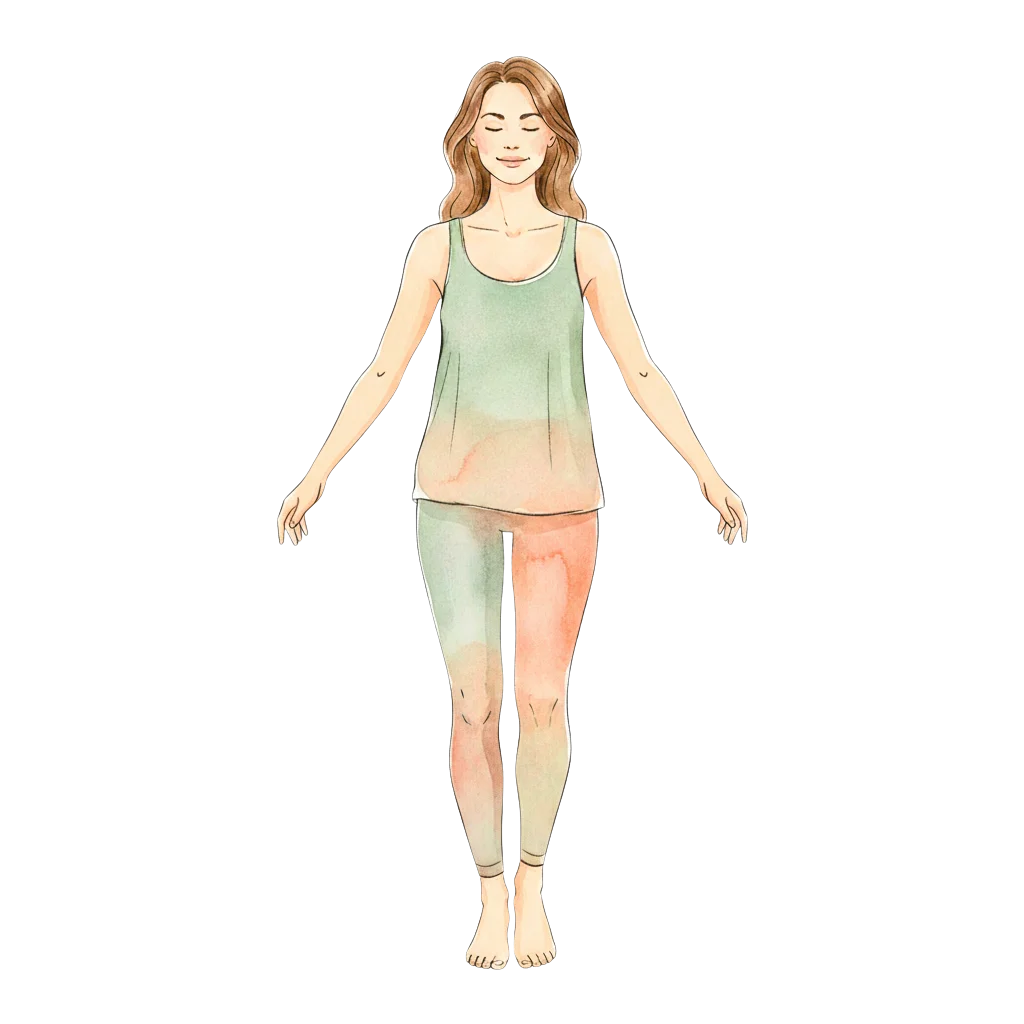
Start your protocolHow Pelvic floor weakness affects your body
Tap body zones to discover connected symptoms and related conditions.
Join 95+ women discussing pelvic floor weakness
Real experiences shared across Reddit, TikTok, and health forums
Kegels Exercises for Women - Complete BEGINNERS Guide
Do you think this exercise will strengthen your pelvic floor? Unfortunately, the answer is no. While this exercise is really great for strengthening your buttock muscles, it won't strengthen...
Top 5 Pelvic Floor Exercises
hey everybody it's Doctor Jo, and today I'm going to show you my top 5 pelvic floor exercises. so let's get started. So before we get started, if you haven't already, make sure and click on that...
Yoga For Pelvic Floor | Yoga With Adriene
- Hey everyone and welcome to Yoga With Adriene. I'm Adriene and this is Benji and today we have an awesome yoga for the pelvic floor. So this is a great practice for anyone that's wanting to explore...
Reading others' stories is the first step. Join to share yours.
Community
A safe space for women navigating pelvic floor weakness
Frequently asked questions
Common questions about Pelvic floor weakness
How we research and fact-check
Every article on Wellls is researched using peer-reviewed medical literature, clinical guidelines, and real patient experiences from 52 online discussions.
Sources: We reference 48 PubMed-indexed studies, ACOG/NAMS clinical guidelines, and validated screening tools.
Review: Content is written by our editorial team, enriched from a medical knowledge base of 15,000+ sources. All content follows our evidence-based editorial standards and is cross-referenced with clinical guidelines.
This content is for informational purposes only and does not constitute medical advice. Our editorial standards · Medical advisory board
References
48 sources reviewed for this pelvic floor weakness guide
- 1.Effect of PFMT on UI in postmenopausal women: systematic review
- 2.Diastasis recti and pelvic floor dysfunction in peri/postmenopausal women
- 3.Pelvic floor dysfunction: does menopause duration matter?
- 4.Pelvic floor muscle strength and sexual function in postmenopausal women
- 5.Age-related pelvic floor modifications and prolapse risk factors
- 6.Pelvic floor function and sexual function in perimenopausal women
- 7.ICI-RS 2024: perinatal and perimenopausal PFD management tools
- 8.Pelvic floor dysfunction in menopause: screening, evaluation, management
- 9.Yoga for treating urinary incontinence in women (Cochrane)
- 10.Pelvic floor rehabilitation for GSM: why, how and when?
History of updates
Current version (March 11, 2026) — Content reviewed and updated based on latest research
First published (March 2, 2026)
Explore related problems
Women who experience pelvic floor weakness often also deal with these
Your personalized plan is ready
You've been managing this alone. Buying pads instead of getting answers. Avoiding exercise instead of understanding why your body changed. Wellls gives you the tools to understand what's happening with your pelvic floor and a clear path to reclaiming what you've lost.
2,847 women explored their pelvic floor plan this month
Free assessment · Takes 2 minutes · No account required
Medical disclaimer: This content is for informational purposes only and does not constitute medical advice, diagnosis, or treatment. Always consult a qualified healthcare provider for personal medical decisions. Content is based on peer-reviewed research and updated regularly. Learn about our editorial standards.