Urinary problems affect 1 in 3 women over 30 due to estrogen decline. Pelvic floor training and vaginal estrogen are first-line treatments.
Why Am I Peeing a Little Every Time I Sneeze?
Affects 25-45% of women over 30; prevalence increases with each decade of life
“I need sleep and to pee less! I’m on all the hormones. Recently started having to pee 2-4 times a night. Even if it’s once, I can’t fall back asleep. What do I do? I’m a sleepy cranky mess.”
For informational purposes only. Not a substitute for professional medical advice.
You sneezed in a meeting and crossed your legs so fast your coworker asked if you were okay. You laughed it off. But in the bathroom three minutes later, changing the liner you now carry everywhere, you weren't laughing. One in three women over thirty knows exactly what that moment feels like, and most of us spend years believing it's just something we have to accept. It is not.
Key takeaways
- Urinary problems affect 1 in 3 women over 30 due to estrogen decline.
- Pelvic floor training and vaginal estrogen are first-line treatments.
- estrogen_decline_urethral_thinning
- pelvic_floor_reflex_timing_loss
The Science Behind Urinary Problems in Midlife Women
Your pelvic floor did not fail you. The system that was supposed to support it did. The version most women receive about urinary problems, 'just do your Kegels,' leaves out 95% of the relevant biology. The missing 95% is the difference between managing a symptom and understanding why your body changed.
I want to lay out what that missing 95% actually contains because once you understand the full picture, the conventional advice you have received will look as incomplete as it is. Urinary problems in women over 30 are not a single condition. They are a spectrum encompassing stress incontinence (leaking with coughing, sneezing, or jumping), urge incontinence (sudden, overwhelming need to urinate), mixed incontinence (both), overactive bladder (frequency and urgency without necessarily leaking), nocturia (waking to urinate at night), and voiding dysfunction (difficulty emptying completely). Each has different drivers, different risk factors, and different treatments. Lumping them all under 'bladder problems' and prescribing Kegels is like telling someone with chest pain to take a walk.
The prevalence data is staggering and underreported. A systematic review in the International Urogynecology Journal found that 25-45% of women experience some form of urinary incontinence, with prevalence increasing sharply during the menopausal transition. The Stockholm epidemiological study tracked 7,800 women and found that those in perimenopause had 2.3 times the odds of developing stress incontinence compared to premenopausal women of the same age and BMI. A 2019 survey found that 60% of women with urinary problems wait more than a year before mentioning it to a healthcare provider. Most never mention it at all. That silence is not about embarrassment alone. It is about a medical culture that has normalised urinary problems as an inevitable consequence of ageing, giving women the message that there is nothing to be done, so why bring it up.
Why estrogen loss rewires your bladder
Estrogen maintains the collagen density, blood flow, and nerve sensitivity in the tissues surrounding the urethra and bladder. Between ages 35 and 50, estrogen levels can drop by 60% or more. Urethral tissue thins. Collagen weakens. The mucosal seal that helps the urethra close under pressure loses its integrity. Johnston documented that the pelvic floor tissues share a common hormone responsiveness and respond collectively to midlife estrogen loss. The bladder wall becomes hypersensitive, with smaller volumes triggering urgency and the circadian regulation of antidiuretic hormone shifting to produce more urine at night.
I want to be precise about what 'thinning' means because the clinical shorthand hides the mechanism that matters. The urethral lining is estrogen-dependent epithelium. In premenopausal women, it is thick, well-vascularised, and resistant to pressure changes. After menopause, this tissue can lose up to 50% of its thickness within three to five years. Dr. Risa Kagan at Sutter Health published data showing that urethral closure pressure, the force that keeps urine from leaking, drops by roughly 15% per decade after age 30. By your late forties, coughing, laughing, or jumping can overwhelm what remains of that closure mechanism.
The bladder itself changes in ways that most women are never told about. The detrusor muscle, the smooth muscle layer that contracts to expel urine, becomes less compliant as estrogen declines. It loses its ability to stretch comfortably during filling, triggering urgency at smaller volumes. Simultaneously, the sensory neurons in the bladder wall become hyperexcitable, lowering the threshold at which fullness signals reach conscious awareness. This is why urinary problems in perimenopause often present as urgency before they present as leaking: the sensory system becomes overactive before the structural support fails. The woman who suddenly needs to urinate every 90 minutes when she used to go comfortably for three hours is experiencing estrogen-mediated neural changes, not a 'small bladder' or a 'weak bladder' as she is often told.
The nocturia piece deserves separate attention because it is the most disruptive and least discussed urinary problem. Antidiuretic hormone (ADH), which normally suppresses urine production overnight, loses its circadian pattern during perimenopause. The result is that the kidneys produce more urine at night, filling the bladder at times when the estrogen-depleted detrusor is least able to accommodate volume changes. Waking once per night is common. Waking two to three times is a medical concern that warrants evaluation, not acceptance.
The reflex timing problem nobody explains
When you sneeze, fast-twitch pelvic floor fibers should contract reflexively, closing the urethra before the abdominal pressure wave reaches it. That timing is measured in milliseconds. Estrogen decline slows this reflex. Collagen loss in the urethral wall reduces the seal. This is why a woman who was continent at 35 starts leaking at 42 without any obvious injury or event. It is not weakness alone. It is a timing failure compounded by tissue change. A Cochrane review of 63 RCTs found that direct supervision of PFMT produced better outcomes because it corrected the technique and timing that self-directed Kegels miss.
I want to explain why supervised training makes such a difference because it goes beyond 'do it correctly.' The pelvic floor contains two types of muscle fibres. Type I (slow-twitch) provide sustained support during standing, walking, and holding. Type II (fast-twitch) provide rapid, reflexive contraction during sudden pressure events like sneezing, coughing, or jumping. Most women who self-teach Kegels focus on sustained holds, training Type I fibres while neglecting the fast-twitch Type II fibres that are responsible for the millisecond-level reflex that prevents stress incontinence.
A pelvic floor physiotherapist assesses both fibre types separately. They test how quickly you can contract, how strong the contraction is, and how long you can sustain it. They also test whether you can correctly relax after contraction, because hypertonicity, excessive tension in the pelvic floor, is itself a cause of urinary problems that Kegels would worsen rather than help. Approximately 30% of women with pelvic floor dysfunction have hypertonic rather than hypotonic patterns, and prescribing strengthening exercises for a muscle that is already too tight is counterproductive.
The Cochrane review's finding that supervised PFMT outperforms self-directed exercise is not about motivation. It is about precision. The reflex that prevents leaking operates in milliseconds, involves specific fibre types, requires coordination with the diaphragm and transversus abdominis, and degrades through mechanisms that a generic 'squeeze and hold' exercise does not address. If you have been doing Kegels for months without improvement in your urinary problems, the issue is probably not effort. It is probably technique, fibre type, or an underlying hypertonic pattern that needs professional assessment.
Key mechanisms
Deep scientific content for Urinary incontinence is coming in Wave 3.
Our team is reviewing research papers and clinical guidelines.



Talk to Dr. Wellls — free consultation
4 free messages — no account required
Dr. Wellls AI
Quick start — tap or speak:
Powered by Lifestyle Medicine evidence. Not a substitute for medical advice.
You're Not Alone
women are talking about urinary incontinence right now
Thousands of women have been through the same thing. Here's what they say.
“I started seeing a NP through Midi for perimenopause symptoms, including leaking when I jump/cough/sneeze/breathe/whatever. I was prescribed an estrogen cream to apply topically. After 2 weeks of using it as prescribed, I found that I no longer leak when I do...”
“I need sleep and to pee less! I'm on all the hormones. Recently started having to pee 2-4 times a night. Even if it's once, I can't fall back asleep. What do I do? I'm a sleepy cranky mess.”
“I also don't care to wear pants with elastic waist... that's really useful when you go to pee 18 times a day”
+ 2 more stories from real women
Understanding Your Bladder Changes
A brief assessment to understand your bladder symptoms, what type of incontinence may be involved, and what the evidence says about regaining control.
3,507 women got their profile this month
Free · 5 min · 100% private
This is not a clinical assessment. For medical concerns, consult a healthcare provider.
Take a moment for yourself
These evidence-based techniques can help manage urinary incontinence symptoms right now.
Curated Exercise Sets
4 personalized routines with 16 exercises from professional trainers
Urinary Incontinence — Morning Activation

Petra Kapiciakova
Professional Trainer
The many faces of urinary incontinence
4 distinct patterns we've identified from real women's experiences
Stress incontinence is when physical pressure overwhelms your pelvic floor. A cough, a laugh, lifting groceries, picking up a toddler. The urethral sphincter can't hold against the force. It is the most common type of urinary incontinence in women under 60, and it gets worse during perimenopause because estrogen loss thins the tissue that helps the sphincter seal.
From our data
I want this number to make you angry: 32% of women who do CrossFit report regular urinary leakage during workouts. That's from a systematic review by Alvarez-Garcia covering 2,187 women. One in three. And the most common response? They wear dark pants. They don't seek help. They just manage around it.
Connected problems
What women with urinary incontinence also experience
Your personalized protocol
A lifestyle medicine approach to urinary incontinence, built on 6 evidence-based pillars
Foundation Training
Begin supervised pelvic floor muscle training. If you can't access a physio, use a biofeedback device at home. Establish the 3-times-daily Kegel routine with both slow holds and fast flicks.
Bladder Retraining
Start extending the time between bathroom visits by 15 minutes. Use urge suppression techniques to ride out the urgency wave. Reduce caffeine, alcohol, and carbonated drinks.
Integrated Movement
Add core-pelvic floor integration exercises: bridges with pelvic floor engagement, Pilates-style leg...
Medical Evaluation
If symptoms have not improved by 50% or more, discuss vaginal estrogen therapy with your doctor. Con...
Maintenance and Monitoring
Continue pelvic floor exercises 3 times weekly as maintenance. Track symptoms monthly. Engage in reg...
2,400+ women explored their urinary health plan this month
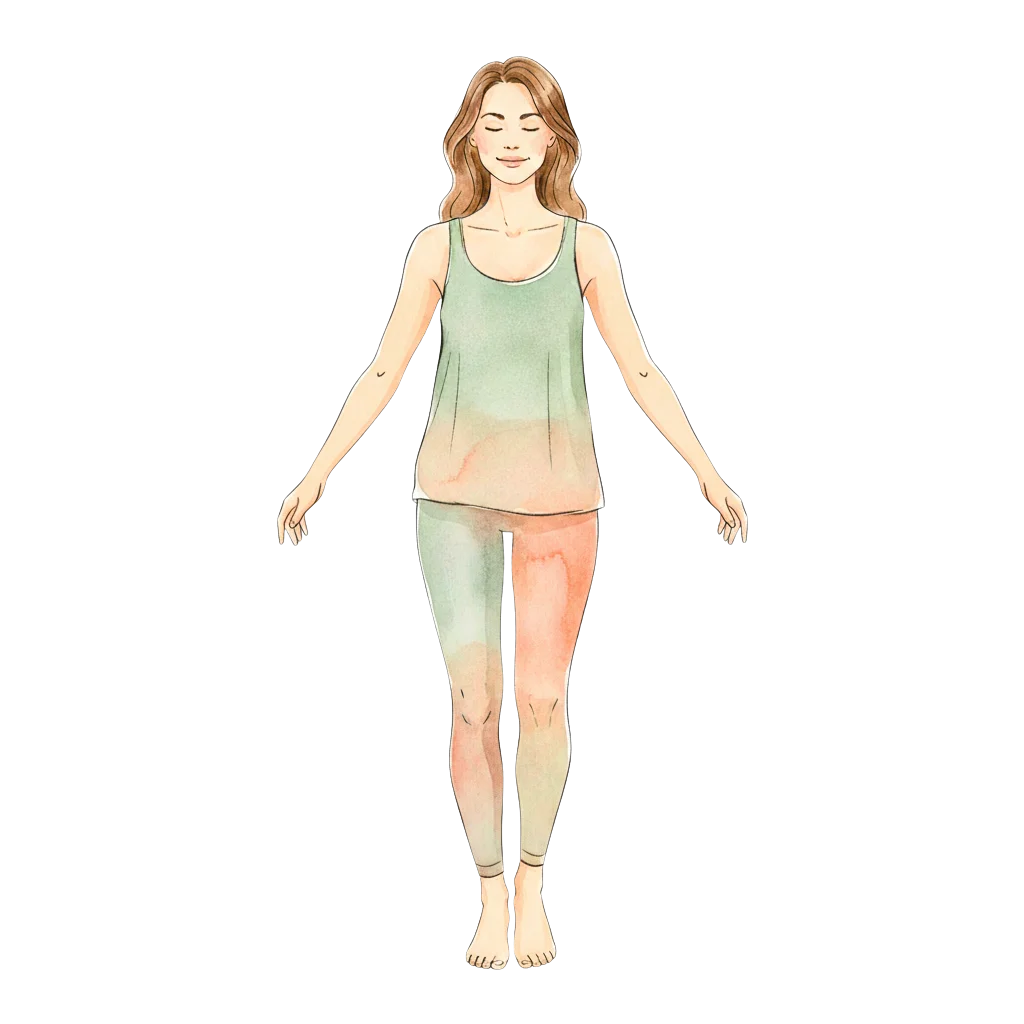
Start your protocolHow Urinary incontinence affects your body
Tap body zones to discover connected symptoms and related conditions.
Join 92+ women discussing urinary incontinence
Real experiences shared across Reddit, TikTok, and health forums
[link] [[link]]([link]) Looks like they have the same patterns as these ones, so maybe ?
How to do pelvic floor exercises | NHS
How to do pelvic floor exercises The pelvic floor is a group of muscles and ligaments that surround the openings at the bottom of the pelvis. If your pelvic floor muscles aren't working well then...
Pelvic Floor Exercises for Women | Nuffield Health
My name is Rachel Brammley and I'm the clinical specialist lead physiootherapist for women's health and continents within Nfield Health. Urinary stress incontinents is...
Reading others' stories is the first step. Join to share yours.
Community
A safe space for women navigating urinary incontinence
Frequently asked questions
Common questions about Urinary incontinence
How we research and fact-check
Every article on Wellls is researched using peer-reviewed medical literature, clinical guidelines, and real patient experiences from 18 online discussions.
Sources: We reference 50 PubMed-indexed studies, ACOG/NAMS clinical guidelines, and validated screening tools.
Review: Content is written by our editorial team, enriched from a medical knowledge base of 15,000+ sources. All content follows our evidence-based editorial standards and is cross-referenced with clinical guidelines.
This content is for informational purposes only and does not constitute medical advice. Our editorial standards · Medical advisory board
References
50 sources reviewed for this urinary incontinence guide
- 1.Pelvic Floor Muscle Exercises as a Treatment for Urinary Incontinence
- 2.Rohna Kearney et al. Personalisation of Pelvic Floor Health (ICI-RS 2024)
- 3.Karaahmet et al. Perinatal PFME and Urinary Incontinence: Systematic Review
- 4.Telehealth PT for Postmenopausal Women with UI
- 5.Alouini et al. PFMT for UI with or without Biofeedback
- 6.How Pelvic Floor Therapy Can Help with Menopause
- 7.Cacciari et al. PFMT vs No Treatment: Cochrane Review
- 8.Effectiveness of PFME in UI: Systematic Review
- 9.Comparisons of Approaches to PFMT: Cochrane (63 RCTs)
- 10.MUSA Trial: Midurethral Sling vs Botox
History of updates
Current version (March 11, 2026) — Content reviewed and updated based on latest research
First published (March 7, 2026)
Explore related problems
Women who experience urinary incontinence often also deal with these
Your personalized plan is ready
You have been carrying extra underwear and mapping bathrooms for long enough. Inside, your personalized plan includes targeted pelvic floor protocols, the exact bladder retraining steps that clinical trials show work, and a conversation with Dr. Wellls about whether vaginal estrogen is right for your situation.
2,400+ women explored their urinary health plan this month
Free assessment · Takes 2 minutes · No account required
Medical disclaimer: This content is for informational purposes only and does not constitute medical advice, diagnosis, or treatment. Always consult a qualified healthcare provider for personal medical decisions. Content is based on peer-reviewed research and updated regularly. Learn about our editorial standards.