Frog Pose: How-to, Benefits & Variations
Frog pose stretches both inner thighs and adductors simultaneously. Kneel wide, align feet with knees at 90 degrees, lower onto forearms, hold 60+ seconds. Supports pelvic floor and hip mobility.
Frog Pose: How-to, Benefits & Variations
Five years ago, frog pose barely appeared in mainstream fitness classes. It was a yoga-studio-only move, something an instructor might tuck into the last ten minutes of a hip-focused flow. Most people had never heard of mandukasana.
Now it shows up in 44 segments across our workout library. Stretching, Pilates, HIIT cool-downs, mobility work, strength training warm-ups. Five different trainers teach it. It crossed over because it does something almost no other single position can do: it opens both hips simultaneously through bilateral abduction and external rotation.
I first understood frog pose when I watched Yasmin Masri spend seven straight minutes in it during her Mobility series. She didn't rush. She showed eight variations in one session. Hands, elbows, pelvic tilts, diamond, extended. That's when it clicked. This isn't one pose. It's a family of positions, each accessing a slightly different angle of the hip socket.
The frog pose is the deepest bilateral hip opener in yoga. Where pigeon works one hip at a time, frog works both. Where butterfly gives you a gentle adductor stretch, frog loads the inner thighs under your full body weight. It's not comfortable. It's not supposed to be comfortable. But if your hips are tight from sitting, from stress, from the connective tissue changes that come with hormonal shifts, this is the pose that meets you where you actually are.
Daily Stretching: Workout 4
Mish Naidoo
How to Do Frog Pose
Start on your hands and knees in a tabletop position. Place a folded blanket or mat under your knees for cushioning. This matters more than you think. Sophie Jones begins every frog pose with this setup, and she teaches it in 22 different workout segments.
Begin to walk your knees wider apart, keeping them bent at roughly ninety degrees. Mish Naidoo cues it specifically: align your feet with your knees at a ninety-degree angle, keeping your feet flexed and toes pointing outward. The feet-to-knee alignment is non-negotiable. If your feet drift inward, the stretch hits your knee ligaments instead of your inner thighs.
Lower down onto your forearms or keep your hands on the floor with arms straight, depending on your level. Maintain a long spine from the top of your head to your tailbone. Mish cues: maintain a long, straight spine from the top of your head all the way down to your tailbone. Think length, not depth.
Gently sink your hips back toward your heels. You'll feel the stretch intensify through your inner thighs and groin. If the intensity is too much, back off. Don't push through sharp sensation. Mish's safety cue: if the stretch feels too intense, breathe deeply and back off slightly rather than holding your breath.
Once you've found your position, rock your hips gently forward and back to explore the stretch. Mish describes this as: gently rock your hips forward and back to find the deepest point of the stretch, then hold. The rocking isn't fidgeting. It's how you find the angle that your hips need today.
Hold for 60 seconds to 2 minutes. Focus on your breath. Every exhale is an opportunity to release a fraction deeper. Sophie Jones uses frog pose as a cool-down hold in her Peach Project and Core Sweat series, typically 20 to 35 seconds per round. For a dedicated flexibility session, go longer.
Muscles Worked
Primary
Hip adductors (adductor longus, brevis, and magnus)
The frog pose muscles worked start with the adductors. These inner thigh muscles are responsible for pulling your legs together. In frog pose, both legs are abducted simultaneously under gravity, creating a sustained bilateral stretch across the entire adductor group. A systematic review on stretching dose found that static stretches held for 60+ seconds produce the most significant ROM improvements. Frog pose delivers exactly this kind of sustained load.
Gracilis
This thin muscle runs from the pubic bone to the inner tibia, crossing both the hip and knee joints. Because frog pose positions the knee at ninety degrees with the hip abducted, the gracilis gets a deep stretch that most other hip openers miss. Tight gracilis contributes to inner knee discomfort, which is why this pose sometimes produces sensation near the knee before the inner thigh.
Pelvic floor muscles
The wide-kneed position of frog pose creates a gentle opening through the pelvic floor. This isn't about strengthening (that's Kegels). It's about releasing. A hypertonic pelvic floor contributes to pain, urgency, and tension. Three of our trainers list pelvic floor as a targeted body part in their frog pose segments. Mish Naidoo cues: focus on your breath to help the pelvic floor and inner thighs relax into the floor.
Secondary
Hip flexors (iliopsoas)
The pelvic tilting variations that Mish Naidoo and Yasmin Masri teach incorporate anterior and posterior pelvic movement, which gently mobilizes the hip flexor complex. It's not a primary hip flexor stretch, but the tilts create a secondary mobilization that complements the adductor work.
Lower back (erector spinae, quadratus lumborum)
When you add the arch variation, extending through the spine while in frog position, the lower back muscles activate and stretch in a gentle extension pattern. Yasmin Masri's Frog Pose Arch (Straight Arms) specifically targets this.
Glutes (gluteus medius and maximus)
The external rotation component at the hip engages and stretches the glute complex. In the internal rotation lift variation (also Yasmin Masri), the glutes work concentrically to lift the lower leg while the hip stays in the frog position.
Why this matters in perimenopause
Here's what nobody tells you about hip tightness during perimenopause. It's not just about sitting too much. Estrogen directly influences connective tissue hydration and elasticity. When levels fluctuate and drop, the fascia surrounding your hip adductors loses some of its pliability. A systematic review and meta-analysis found that mind-body exercises like yoga produced significant improvements in menopausal symptoms and quality of life. The researchers specifically highlighted hip-focused stretching protocols. Then there's the cortisol problem. Disrupted sleep raises cortisol. Elevated cortisol tightens muscles. The adductors and hip flexors are stress-responsive muscles. They clench. They stay clenched. Your hips get progressively stiffer, and you blame it on getting older. But it's the hormones talking, and the solution is targeted stretching, not resignation. Mish Naidoo includes frog pose in four of her stretching classes. Sophie Jones programs it into 22 workout segments across everything from warm-ups to cool-downs. Yasmin Masri dedicates entire mobility sequences to it. They're all responding to the same signal: their clients' hips need this.
Coach's Tips
"Align your feet with your knees at a ninety-degree angle, keeping your feet flexed and toes pointing outward." Mish Naidoo teaches this as the foundation of every frog pose, and she's right. When the feet collapse inward or drift narrower than the knees, the stretch migrates from the inner thighs to the knee joint. That ninety-degree angle isn't a suggestion. It's structural protection.
Mish Naidoo
"Keep your hips in direct alignment with your knees rather than letting them slide too far forward." This cue catches the most common compensation. People push their hips forward past their knees because it feels like deeper progress. It's not. It shifts the load into the lumbar spine. Hips stacked over knees is where the adductors actually stretch. Mish cues this alignment consistently.
Mish Naidoo
"Gently rock your hips forward and back to find the deepest point of the stretch, then hold." This dynamic exploration before the static hold is what separates effective frog pose from just sitting in discomfort. The rocking lets you find where YOUR hips need the stretch today. It changes day to day. Mish teaches this in her Daily Stretching series.
Mish Naidoo
"Press your elbows gently into the inside of your knees to further open the hips." When you're on your forearms, your elbows become pressure points. Light force inward creates an assisted stretch that gravity alone can't reach. Don't force it. Think nudge, not shove.
Mish Naidoo
"If the stretch feels too intense, breathe deeply and back off slightly rather than holding your breath." Holding your breath in frog pose is your body's panic response to the intensity. The moment you stop breathing, your muscles guard harder and the stretch becomes counterproductive. If you can't breathe smoothly, you've gone too deep. Back up two inches and find the breath again.
Mish Naidoo
"Engage a slight posterior pelvic tilt by squeezing the glutes to protect the lower back." This cue from Mish is especially important for people with anterior pelvic tilt or lower back sensitivity. The posterior tilt takes the lumbar curve out of extension and shifts the stretch more cleanly into the adductors. Squeeze the glutes, tuck slightly, feel the difference.
Mish Naidoo
"If it is uncomfortable, you can just bring those knees a little bit closer together." The width of your knees is the intensity dial. Wider equals deeper. If the full frog pose for beginners is too much, narrow the stance by a few inches. You're still in the pose. You're still getting the stretch. Jessica Casalegno gives this cue in her Yogalates and Restore & Reset classes.
Jessica Casalegno
"If your heels cannot touch the floor in the squat variation, stay on your toes or use a block for support." Not every body has the dorsiflexion to get heels flat. Don't wrestle your ankles into submission. A block under the hips or staying on the balls of the feet gives you the hip opening without forcing ankle range that doesn't exist yet.
Why This Matters for You
I want to talk about why frog pose matters more during perimenopause than it did ten years ago.
Three things converge. First: connective tissue changes. Estrogen modulates collagen turnover. As levels drop, the fascia wrapping your adductors, your hip capsule, your pelvic floor all lose some of their natural give. A review of exercise adaptations in perimenopause found that physiological shifts during this stage alter exercise response and require specific training adjustments. Stretching isn't exempt from that. The dose, the hold time, the frequency all need to match what your tissue can handle now. Not what it could handle at 28.
Second: the pelvic floor connection. A study specifically examining pelvic floor stretching in postmenopausal women found improved myofascial pain and quality of life. The wide-kneed position of frog pose is one of the most-prescribed positions in pelvic floor physical therapy because it creates passive release through the pelvic floor musculature. If you're dealing with urgency, tightness, or discomfort, this matters.
Third: stress-related hip tension. Disrupted sleep raises cortisol. Cortisol tightens the hip complex. The adductors and hip flexors are particularly stress-responsive. You wake up stiffer than you went to bed, and it's not arthritis. It's your nervous system clamping down. A meta-analysis of mind-body exercises found significant reductions in perimenopausal and postmenopausal symptoms. Frog pose combines the physical stretch with the slow, intentional breathing that calms the stress response.
Yasmin Masri spends seven minutes on frog pose variations in a single mobility session. That's not indulgence. That's clinical dosing.
Variations & Modifications
Tadpole Pose (Baby Frog)
lowBring your big toes together behind you and keep your knees closer together. This reduces the abduction angle and takes intensity down by roughly half. Jessica Casalegno teaches Tadpole in her Restore & Reset series as the entry point for anyone whose hips aren't ready for full frog. It's not a lesser version. It's the version that lets you actually breathe and hold for two minutes.
Frog Pose Hold (Hands Support)
mediumKeep your arms straight with hands on the floor instead of dropping to forearms. This elevates your torso and decreases the gravitational load on the hips. Yasmin Masri uses this as the first position in her progressive Mobility 5 sequence before layering in more intense variations. Good option when you want the hip opening without the full compression.
Frog Pose Hold (Elbows Support)
medium-highLower onto your forearms, bringing your chest closer to the floor. This deepens the stretch through the inner thighs and adds a gentle load to the groin. Mish Naidoo's default frog pose position in her stretching classes. Place your elbows on the ground and hold, she cues. Most people will live here for months before going deeper.
Dynamic Rocking (Pelvic Tilts)
mediumInstead of holding still, rock your pelvis forward (anterior tilt) and back (posterior tilt) while maintaining the wide-knee position. Mish Naidoo cues it as posterior, anterior, exaggerate the movement as much as your body allows you to. This targets different angles of the hip socket with each rep. Yasmin Masri dedicates entire segments to frog pose dynamic tilts and rocks in her Mobility series.
Extended Frog Pose (Pancake Prep)
highSlide your knees further apart and lower your chest all the way to the floor while keeping the feet wide. Yasmin Masri teaches this as a pancake stretch prerequisite in Mobility 5. It's the deepest frog pose variation in our library and requires months of consistent hip work to reach without forcing. Your inner thighs and groin will make their opinion known.
Diamond Frog Pose
mediumBring your feet close together behind you while keeping knees wide, creating a diamond shape with your legs. This shifts the stretch emphasis toward the lower back and outer hips while reducing adductor intensity. Yasmin Masri programs it as the final position in her frog pose sequence. Mish cues: get your feet together, only the feet, and hold it.
Frog Pose with Chest Opener
mediumFrom frog position, place one hand on the floor and rotate the opposite arm open toward the ceiling. Sophie Jones teaches this in Athlete Mode 8. It adds a thoracic rotation and pectoral stretch to the hip opening. Two stretches for the price of one position. Sophie cues: put one hand to the floor, just trying to open up the chest.
Benefits
Opens both hips at once
Most hip openers work one side at a time. The frog pose benefits start with bilateral access. Both adductor groups, both groins, both sides of the pelvic floor stretch simultaneously. A systematic review with meta-analysis found that static stretching of 60+ seconds optimizes flexibility gains. Frog pose naturally encourages holds of this duration because settling into the position takes time. You don't rush frog.
Releases chronic inner thigh tension from sitting
The adductors compress when you sit with knees together or crossed for hours. That compression becomes chronic tightness. Frog pose reverses it by placing the hips in maximum abduction under body weight. The position directly counters the seated pattern. Three of our trainers (Sophie, Mish, Jessica) use frog specifically in cool-downs after seated-heavy workout formats.
Supports pelvic floor health
An overactive pelvic floor contributes to urinary urgency, pain, and tension. A study on pelvic floor stretching found that sustained stretching improved pelvic floor myofascial pain and quality of life in postmenopausal women. Frog pose is one of the positions most commonly used in pelvic floor physical therapy because it encourages release without requiring conscious muscular control. Mish Naidoo tags pelvic floor as a target body part in her frog pose segments.
Improves hip mobility for squats and lunges
If your knees cave inward during squats or you can't get depth in a lunge, tight adductors are usually the culprit. Frog pose addresses this directly. Sophie Jones programs frog pose into her Strength Fundamentals warm-ups before squat-heavy sessions. The logic is simple: stretch the muscles that restrict your squat pattern before you load the pattern.
Reduces lower back compensation
When hips lack abduction range, the lumbar spine compensates during movements that require lateral hip mobility. Walking, climbing stairs, getting out of a car. Yoga for low back pain research consistently identifies hip-opening poses as effective because they address the mobility deficit that forces the back to overwork. Frog pose restores what sitting takes away.
Common Mistakes to Avoid
Letting the feet drift narrower than the knees
This is the most common frog pose form error and it sends the stretch into the knee joint instead of the inner thigh. Mish Naidoo repeats it in nearly every session: align your feet with your knees at ninety degrees. If your feet are narrower than your knees, your medial collateral ligament is absorbing what your adductors should handle. Widen the feet until they're directly in line with or slightly outside the knees.
Arching the lower back excessively
In an attempt to sink deeper, people hyperextend the lumbar spine. This isn't more stretch. It's lower back compression. Mish cues the fix: engage a slight posterior pelvic tilt by squeezing the glutes. A neutral to slightly tucked pelvis keeps the stretch in the hips where it belongs. If you feel your lower back complaining, you're arching.
Pushing through knee pain
Sharp or persistent knee discomfort in frog pose means something structural is wrong with your setup. Usually, the foot alignment is off or the surface is too hard. Place padding under both knees. Check that feet are flexed and toes point outward. If pain continues, narrow the stance or switch to butterfly pose, which gives a similar but gentler adductor stretch without any knee load.
Holding the breath and muscling through
Frog pose is intense enough to trigger a guarding response. Your muscles tense, you stop breathing, and you lose any chance of the tissue releasing. Sophie Jones keeps her frog pose segments short (20 to 35 seconds) in strength classes specifically so people can maintain breath control. If you're going for a longer hold, exhale audibly. Make it loud enough that you can hear yourself. That keeps the breath moving.
Workouts Featuring This Exercise
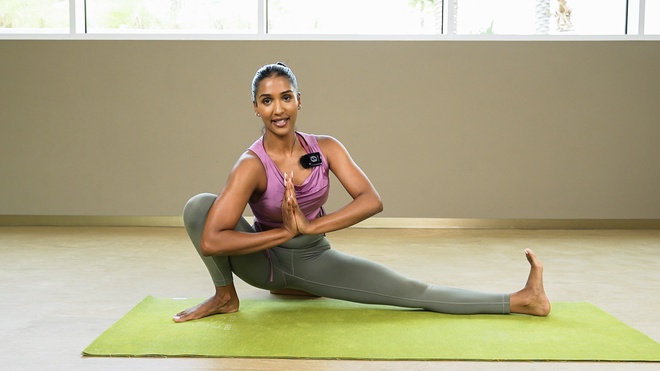
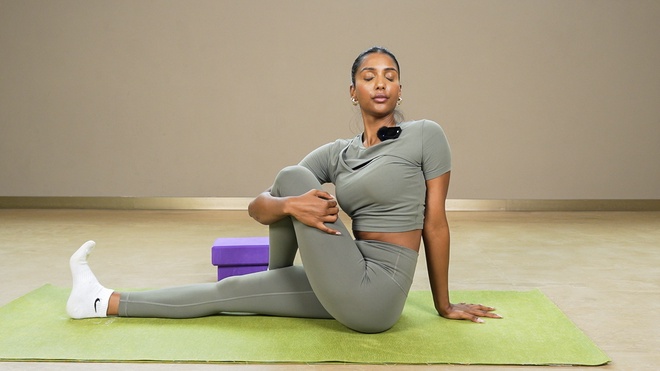
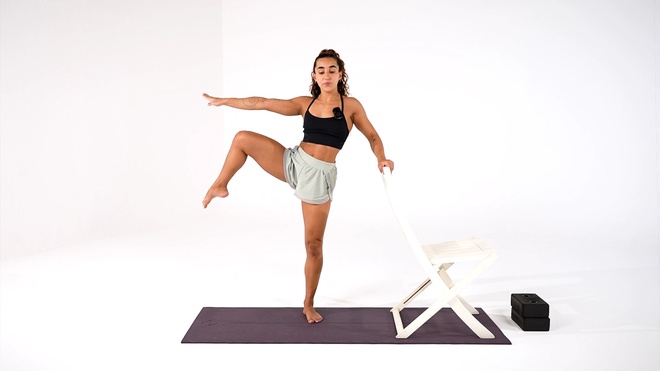
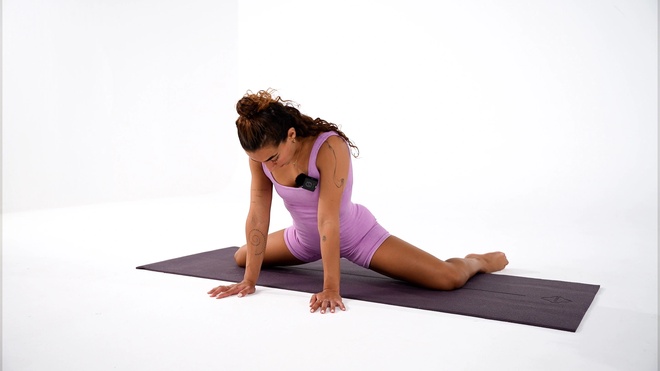
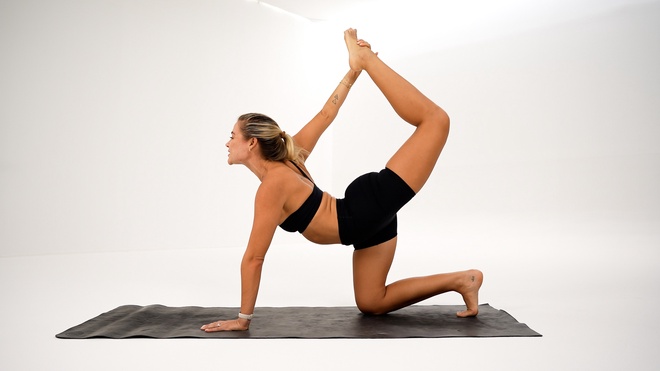
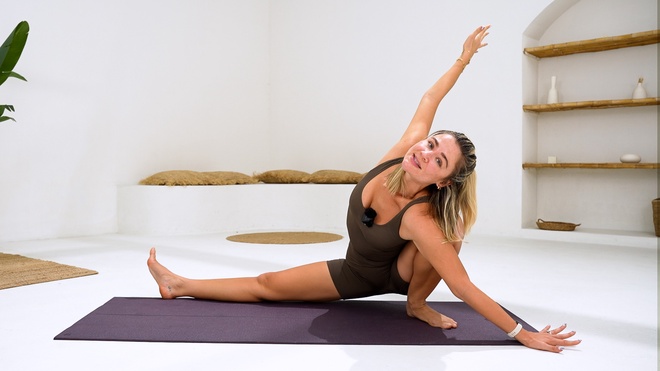
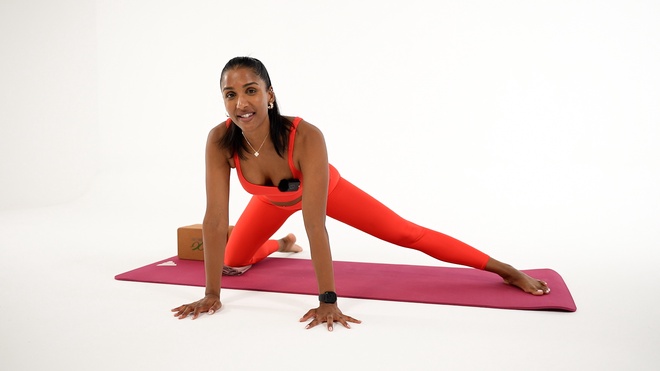
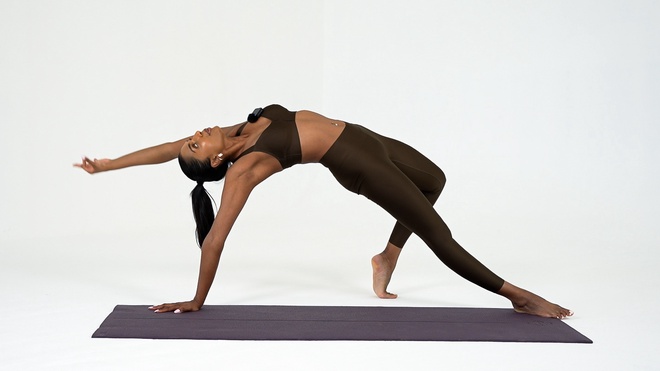
Join women opening their hips, releasing pelvic floor tension, and moving with less stiffness with certified trainers
Frequently Asked Questions
Related Exercises
Pigeon Pose
Targets the hip rotators and flexors where frog targets the adductors. Together they cover the entire hip complex.
Butterfly Pose
A gentler adductor stretch with an upright spine. Good stepping stone before the deeper intensity of frog.
Hip Flexor Stretch
Pairs with frog pose to address the other major hip mobility limitation: flexor tightness from sitting.
Happy Baby Pose
Similar bilateral hip opening from a supine position. Zero knee stress, fully supported by the floor.
Pancake Stretch
The seated version of the same adductor line. Yasmin Masri uses Extended Frog as a pancake prep in her mobility work.
This exercise helps with
Get frog pose in a guided workout
Access 10 workouts featuring this exercise, plus personalized plans from Dr. Wellls.
Join women opening their hips, releasing pelvic floor tension, and moving with less stiffness with certified trainers
Your membership funds independent women's health research