Pigeon Pose: How-to, Benefits & Variations
Pigeon pose stretches the piriformis, hip flexors, and glutes. Kneel, bring one knee forward, extend the back leg, fold forward. Relieves hip tightness, sciatic pain, and lower back tension.
Pigeon Pose: How-to, Benefits & Variations
She'd been sitting through eight-hour nursing shifts for fifteen years. Standing up at the end of each one felt like her lower back had fused into a single angry block. Her physio ran through the usual suspects. Tight hamstrings, weak core, blah blah blah. Then he watched her try to externally rotate her hip and said one word: pigeon.
Three weeks of pigeon pose before bed. That was the prescription. Not a surgery consult. Not a cortisone injection. A hip stretch on her bedroom floor. She called me six weeks later and said she'd cried during the second session. Not from pain. From something releasing that she didn't know she was holding.
That story isn't unusual. The pigeon stretch is the single most effective external hip rotator opener in yoga, and it accesses muscles that almost nothing else reaches. The piriformis, the deep lateral rotators, the psoas, the hip flexor complex. These are the muscles that lock down when you sit all day, clench through stress, or carry tension from years of doing too much for everyone else. Pigeon pose yoga practitioners have a saying: hips store emotions. Whether or not you buy the metaphor, the physical release is real and measurable.
7-Day Bodyweight Challenge: Workout 7
Beth Hannam
How to Do Pigeon Pose
Start in a tabletop position on your hands and knees, or in downward-facing dog. From here, draw your right knee forward toward your right wrist. Angle your right foot toward your left hand. Jessica Casalegno cues it simply: right knee towards the right wrist, right foot towards the left wrist.
Slide your left leg straight back behind you, keeping your toes untucked and the top of your foot pressing into the mat. Mish Naidoo adds: get long through the back leg. If that leg angles out to the side, you're compensating. Straighten it.
Lower your hips toward the floor. If your right hip lifts off the mat, place a block or folded blanket underneath it. This keeps your pelvis level and protects your lower back. Mish cues: if you are rocking, place a block under your glute so it keeps the body straight.
Square your hips as much as possible. Think about pressing your back hip bone down. Jessica Casalegno's cue: keep your hips as squared as possible, thinking about pushing left hip bone down toward the mat. This is where the stretch actually lives.
Inhale to lengthen your spine tall. Exhale and begin to walk your hands forward, lowering your chest toward your front shin. Go as far as feels right. Some days that's forearms. Some days that's forehead on the mat. Beth Hannam cues: if you wanna deepen the stretch, just come down onto those forearms a little bit more.
Hold for 60 to 90 seconds per side. Breathe slowly into the stretch. Sophie Jones cues: every deep breath out, just relax a little bit more. Don't force depth. Gravity and breathing do the work.
Muscles Worked
Primary
Piriformis and deep lateral rotators
The piriformis sits deep beneath the gluteus maximus and externally rotates the hip. In pigeon pose, the front leg's external rotation creates a sustained stretch across this muscle group. When the piriformis is chronically tight, it can compress the sciatic nerve. The pigeon stretch directly addresses this.
Hip flexors (psoas and iliacus)
The back leg in pigeon pose places the hip in full extension, stretching the entire hip flexor complex. A 2021 assessment of hip flexor tightness found that prolonged sitting shortens the psoas, contributing to anterior pelvic tilt and lower back pain. This pose is one of the few that reaches both the psoas and iliacus simultaneously.
Gluteus maximus and medius
The front leg's external rotation and flexion creates a deep glute stretch. The pigeon pose muscles worked include both the maximus (the large outer glute) and the medius (the side hip stabilizer). Multiple trainers in our library cue feeling this stretch in the glute of the front leg.
Secondary
Lower back (erector spinae, quadratus lumborum)
The forward fold component gently releases tension in the lumbar spine. Yoga for low back pain research consistently identifies hip-opening poses as effective because they reduce compensatory strain on the lower back.
Groin and inner thigh (adductors)
The front leg position creates a mild stretch through the inner thigh, particularly as you progress toward bringing the shin more parallel to the front of the mat.
Quadriceps (back leg)
When the back leg is fully extended, the rectus femoris receives a gentle stretch. In king pigeon variations where you bend the back knee and grab the foot, this becomes a deep quad stretch.
Why this matters in perimenopause
Hip tightness accelerates during perimenopause for reasons that aren't always obvious. Declining estrogen affects connective tissue elasticity. Cortisol from disrupted sleep tightens the psoas. Reduced activity from fatigue compounds everything. A randomized controlled trial found Hatha yoga practice decreased menopause symptoms and improved quality of life in menopausal women. The pigeon pose is the centerpiece of most hip-focused yoga sequences because it accesses the deep rotators, flexors, and glutes in a single position. I've watched women go from barely getting into this pose to resting their forehead on the mat in eight weeks. The tissue responds when you give it consistent attention.
Coach's Tips
"Keep your hips as squared as possible, thinking about pushing the back hip bone down toward the mat." Jessica Casalegno teaches this in her Restore & Reset series and it's the single most important cue for pigeon pose form. When your back hip lifts and rotates open, you're twisting your lower back instead of stretching your hip. That squared pelvis is everything. Push the back hip bone down until both hip points face the front of your mat.
Jessica Casalegno
"Drive your back leg straight behind you, lengthening through the toes to ensure the leg isn't angling out to the side." This cue from the merged coaching database catches a mistake I see constantly. People let their back leg drift outward because it feels easier. It is easier. It also means the hip flexor stretch vanishes. Straighten that line from hip to toes.
"If this position causes any knee pain, transition to your back for a reclined figure-four stretch instead." No negotiation on this one. Knee pain in pigeon pose means your front knee is taking load it shouldn't. The reclined version (lying on your back, crossing one ankle over the opposite knee, pulling toward your chest) gives you 80% of the same hip stretch with zero knee risk. Petra Kapiciakova teaches both versions in her Yoga Before Bedtime classes.
Petra Kapiciakova
"Flex your front foot slightly to help protect the knee joint while in the pose." This small detail prevents the ankle from collapsing and transfers load away from the knee ligaments. I don't care how deep you go. I care that your front foot is gently flexed. Every time.
"For a less intense stretch, pull your front heel closer toward your hip; for more intensity, move the shin closer to parallel with the top of the mat." Jessica Casalegno gives her students this intensity dial and it's brilliant. You don't need a different exercise for different levels. You just slide your front foot. Heel near hip = gentle. Shin parallel = deep. Find where your body is today.
Jessica Casalegno
"If your hip is lifting off the floor, place a block or folded blanket under your glute to keep your pelvis level." Mish Naidoo teaches this prop setup in her Daily Stretching series and it transforms the pose for tight hips. Without the block, your pelvis tilts and your back compensates. With it, you can actually relax into the stretch. No shame in the block. Most people need it.
Mish Naidoo
"Take a deep breath in to lengthen your spine, and exhale to slowly lower your chest down toward your leg or forearms." The breath is the only tool that deepens this pose safely. Pushing with your arms forces it. Breathing surrenders into it. Sophie Jones cues it beautifully in her sessions: every deep breath out, just relax a little bit more. I've never found a better instruction for pigeon.
Sophie Jones
Why This Matters for You
I want to talk about why pigeon pose matters more now than it did in your twenties. Three things are happening in perimenopause that make hip mobility a priority, not a luxury.
First: your connective tissue is changing. Estrogen directly affects collagen synthesis. As levels fluctuate and decline, fascia and ligaments lose some of their natural elasticity. A randomized controlled trial published in BMC found that Hatha yoga practice decreased menopause symptoms and improved quality of life. The researchers didn't isolate which poses drove the benefit, but hip-opening sequences were central to every protocol tested.
Second: cortisol is wrecking your psoas. When sleep gets disrupted (and it does for most women in perimenopause), cortisol stays elevated longer. The psoas is a stress-responsive muscle. It contracts. It stays contracted. Then your hips tighten, your back compensates, and you wake up stiff. The pigeon stretch directly targets the psoas on the back leg side.
Third: the emotional load sits in your body. This isn't mystical. Chronic stress creates muscular holding patterns, particularly in the hip flexors and pelvic floor. A meta-analysis of 17 RCTs found yoga significantly reduced anxiety symptoms in adults. The women in our classes who report crying during pigeon aren't being dramatic. They're releasing tension that has been accumulating for years.
Mish Naidoo includes pigeon in almost all of her stretching classes. Jessica Casalegno builds it into Yogalates. Petra Kapiciakova closes her bedtime yoga sessions with it. Nine different trainers in our library teach this pose. That's not coincidence. It's consensus.
Variations & Modifications
Basic Pigeon Pose (upright)
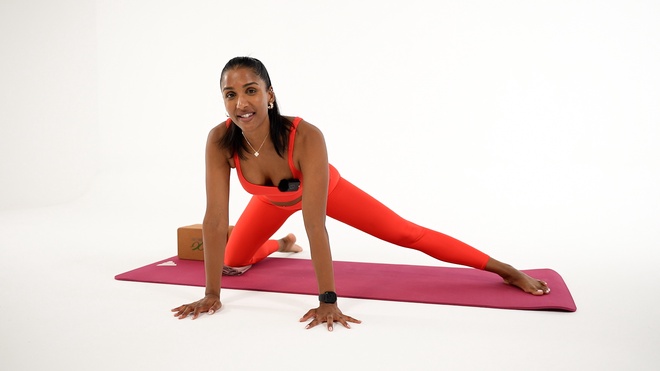
lowThe foundation of all pigeon pose variations. Stay upright on your hands with arms straight. Don't fold forward at all. This is where everyone starts, and it's where you stay until your hips open enough to go deeper without your pelvis twisting. Jessica Casalegno uses this as the default in her prenatal classes because it keeps the chest open and the belly free.
Pigeon Forward Fold (Sleeping Swan)
mediumFrom basic pigeon, walk your hands forward and lower your chest toward the mat. Rest on your forearms or extend your arms all the way out with your forehead on the floor. This is where the deep release happens. The pigeon stretch intensifies dramatically in the forward fold because your body weight adds passive load to the hip. Mish Naidoo cues: try to aim to stay in this posture for at least one minute.
King Pigeon (Quad Stretch)
highFrom pigeon, bend your back knee and reach one or both hands behind you to capture the foot. Pull the heel toward your hip for a deep quad and hip flexor stretch. Jessica Casalegno guides students through this progression: if that's available, you can challenge yourself to reach the right arm back, taking king pigeon. This is advanced. Your hips need to be open and squared before attempting it.
Pigeon with Twist
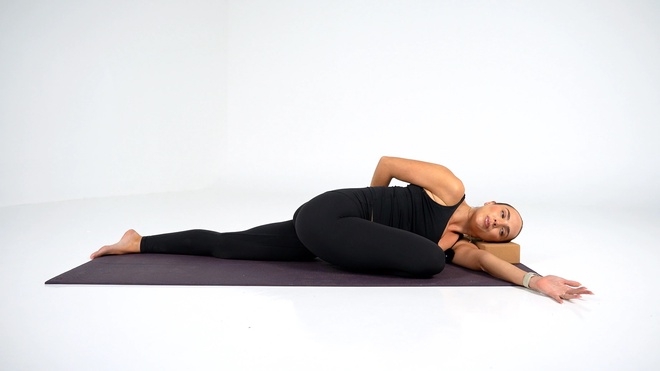
mediumFrom the forward fold, thread one arm underneath your chest toward the opposite side, dropping your shoulder to the mat. This adds a spinal rotation that stretches the upper back and shoulders while maintaining the hip opening. Appears across 7 different workout sessions in our library.
Mermaid Pose
highA king pigeon progression where you hook the back foot into the crook of your elbow and reach overhead to clasp hands, creating a deep backbend with quad stretch. Mish Naidoo teaches this in her Tone & Stretch series. Beautiful to look at, but it demands open hips, flexible quads, and a mobile thoracic spine. Work up to it over months, not days.
Reclined Pigeon (Figure Four)
lowLie on your back, cross one ankle over the opposite knee, and pull the bottom thigh toward your chest. This is the pigeon pose alternative for anyone with knee sensitivity, and it's the version Petra Kapiciakova recommends if the traditional pose causes any discomfort. Same muscles, zero knee stress, no balance required. I send every beginner here first.
Pigeon Pose Flow
mediumRather than holding pigeon statically, move through it dynamically. Inhale to lift your chest, exhale to fold forward. Rock gently side to side. Mish Naidoo: maybe you rock side to side with it, or maybe you extend out and we fold. This variation works well as a warm-up before holding the static version.
Propped Pigeon (with block)
lowPlace a block or folded blanket under the hip of the front leg. This levels the pelvis for people whose hips don't reach the floor. It's not a cheat. It's proper alignment. Most people doing pigeon pose for the first time need this, and skipping it means their lower back absorbs what their hips can't handle.
Benefits
Opens hips that sitting has locked shut
The pigeon pose benefits start with the hips. Sitting shortens your hip flexors, tightens your piriformis, and glues your deep rotators into a compressed position. This single pose stretches all of them simultaneously. A review of hip flexor tightness protocols found that sustained stretching of 60+ seconds produces measurable improvements in hip extension range. Pigeon holds typically last 60 to 90 seconds per side.
Relieves sciatic nerve compression
When the piriformis muscle spasms or tightens, it can compress the sciatic nerve that runs beneath it. The pigeon stretch is one of the most commonly prescribed physical therapy interventions for piriformis syndrome because it directly lengthens the muscle creating the compression. Three of our trainers include it in workouts labeled for sciatica relief.
Reduces lower back pain from hip immobility
Tight hips force the lumbar spine to compensate during walking, bending, and even sitting. A systematic review of yoga for low back pain found significant improvements in both pain and function. The mechanism isn't mysterious: when your hips move freely, your back stops doing their job. Pigeon pose restores that mobility.
Calms the nervous system through the psoas
The psoas connects your spine to your legs and is sometimes called the fight-or-flight muscle because it contracts during stress responses. Releasing it through sustained stretching activates the parasympathetic nervous system. A meta-analysis of yoga and anxiety found significant reductions in anxiety symptoms. Whether that's the psoas or the breathing or both, the pigeon pose is where people consistently report feeling calmer afterward.
Supports pelvic floor relaxation
A hypertonic (overactive) pelvic floor contributes to pain, urgency, and tension. Pigeon pose encourages release rather than contraction. For women in perimenopause dealing with pelvic floor dysfunction, learning to relax these muscles is as important as strengthening them. This pose teaches the body to let go.
Common Mistakes to Avoid
Letting the back hip lift and rotate open
This is the most common pigeon pose form error and it turns a hip stretch into a lower back twist. If your back hip lifts, you haven't found the stretch yet. Place a block under the front hip to level the pelvis, or pull your front heel closer to your body to reduce the angle. Jessica Casalegno hammers this in every class: push that back hip bone down.
Forcing depth before the hips are ready
Pushing your chest to the floor when your hips haven't opened enough puts all the pressure into your knee and lower back. Linda Chambers tells her students: flexibility is actually part of strength training, because your muscles need to be able to adapt. Depth comes from weeks of consistent practice, not from one aggressive session. If you can only get to your forearms today, that's your pigeon today.
Collapsing into the front knee
If you feel pressure or sharp sensation in your front knee, something is wrong. Flex your front foot to engage the muscles around the joint. If that doesn't fix it, the pose is too deep for your current mobility. Switch to reclined pigeon on your back. Sophie Jones warns: be careful of your knees. She doesn't elaborate because she doesn't need to. Knee pain means stop.
Holding the breath or clenching through the stretch
The pigeon pose only deepens through relaxation, never through force. When you hold your breath, your muscles guard against the stretch. Beth Hannam's approach: pay attention to that breath, slowing it down. Slow exhales signal safety to your nervous system. The tissues respond by releasing. Every breath out is an invitation, not a demand.
Workouts Featuring This Exercise
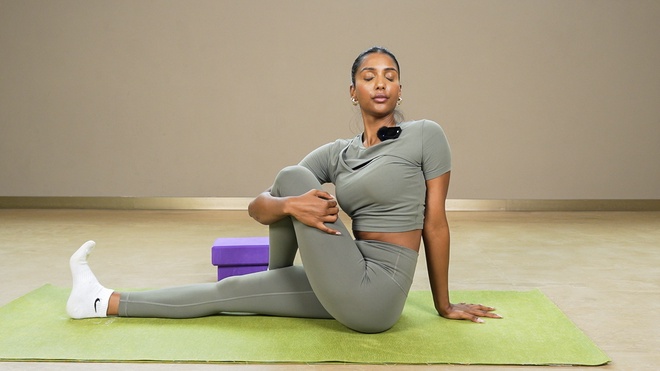
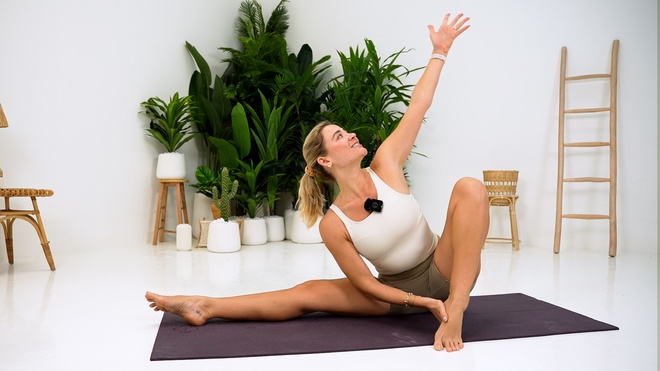
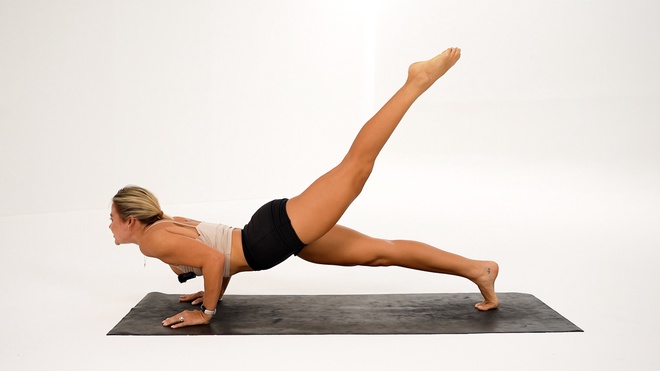
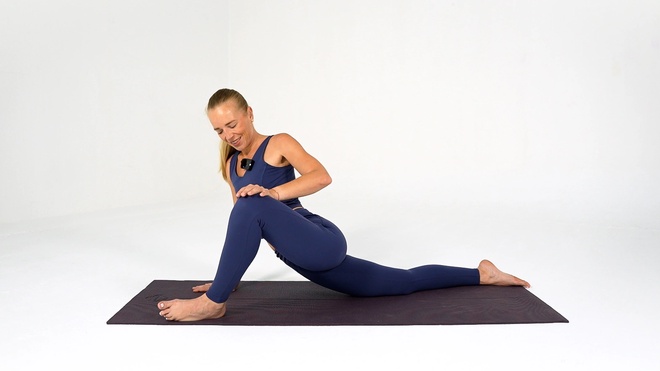
Join women unlocking hip mobility, reducing back pain, and releasing stored tension with certified trainers
Frequently Asked Questions
Related Exercises
Child's Pose
Gentle hip flexion and lower back release. Pairs beautifully with pigeon as a resting position between sides.
Bird Dog
Trains hip extension and core stability from a similar starting position. Strengthens what pigeon stretches.
Dead Bug
Core and hip flexor coordination from a supine position. A good active complement to the passive pigeon stretch.
Hip Flexor Stretch
Targets the same hip flexor complex from a kneeling lunge position. Less intense than pigeon, easier to control depth.
Cat-Cow Stretch
Warms up the spine and pelvis before deeper hip work. Many of our trainers sequence cat-cow before pigeon.
This exercise helps with
Get pigeon pose in a guided workout
Access 7 workouts featuring this exercise, plus personalized plans from Dr. Wellls.
Join women unlocking hip mobility, reducing back pain, and releasing stored tension with certified trainers
Your membership funds independent women's health research