Bird Dog Exercise: How-to, Benefits & Variations
The bird dog targets core, lower back, and glutes. From all fours, extend opposite arm and leg, hold, then crunch elbow to knee. Builds spinal stability and reduces back pain.
Bird Dog Exercise: How-to, Benefits & Variations
The bird dog is the exercise I trust most for backs that have been through something. Pregnancy. A desk job that turned chronic. A disc bulge that still whispers. It's not flashy. There's no heavy weight, no jumping, no sweat dripping off your chin. And that's exactly why it works.
Dr. Stuart McGill studied this move for decades. His research showed that the bird dog activates the multifidus and erector spinae while keeping spinal compression remarkably low. A 2022 systematic review of core therapeutic exercises confirmed it: the bird dog produced high levels of deep core activation with minimal lumbar load. That combination barely exists in other exercises. I come back to it every single week, and I've been training for fifteen years.
Peach Project: Workout 1
Sophie Jones
How to Do Bird Dog
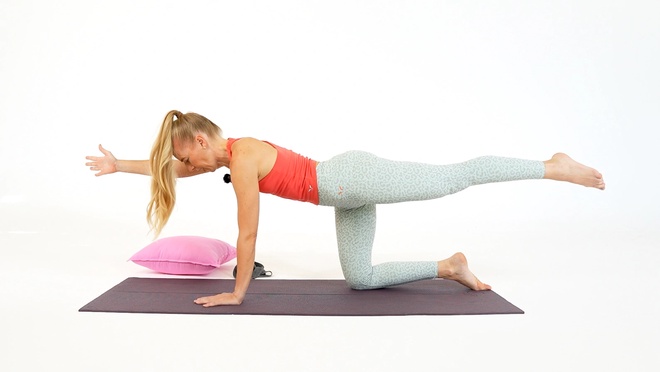
Start on all fours in a tabletop position. Hands directly under shoulders, knees under hips. Spread your fingers wide. Sophie Jones cues: opposite arm to opposite leg, have yourself in a nice quad style position.
Draw your belly button toward your spine and tuck your tailbone slightly. You should feel your deep core switch on before anything moves. Linda Chambers cues: make sure the spine is long, no excessive arching through that lower back.
Simultaneously extend your right arm forward and your left leg straight back. Flex the foot and push through the heel, as if pressing your sole against a wall behind you. Keep your hips level with the floor.
Hold for 2-3 seconds at the top. Imagine a straight line running from your fingertips through your spine and out through your extended heel. Squeeze the glute of the extended leg.
Exhale as you draw your elbow and knee together under your body, rounding your spine slightly. Jessica Casalegno cues: exhale, pull knee and elbow all the way in. Inhale to lengthen all the way back out.
Complete all reps on one side, then switch. Or alternate sides. Sophie cues: try and really keep it nice and symmetrical. Don't rush the switch.
Muscles Worked
Primary
Multifidus and erector spinae (lower back)
Stabilize the lumbar spine against rotation and extension forces. McGill's research specifically identified the bird dog as one of three exercises (the "Big 3") that activate these deep spinal stabilizers while keeping compressive loads low. This is why it's a first-line rehab exercise for disc injuries.
Transverse abdominis and rectus abdominis (core)
Prevent the torso from rotating or sagging during limb extension. A 2022 systematic review of core therapeutic exercises found the bird dog produced high activation of the deep anterior core, particularly when performed with the elbow-to-knee crunch variation.
Gluteus maximus (extended leg)
Drive hip extension and hold the leg parallel to the floor. Sophie Jones cues: really squeeze that butt, glutes are tight at the top. The isometric hold at full extension is what builds endurance in the glute, not speed.
Secondary
Deltoids and rotator cuff (extended arm)
Stabilize the shoulder joint as the arm reaches forward. The supporting shoulder also works hard to prevent collapse.
Hip flexors (supporting leg)
Anchor the kneeling leg to the ground and stabilize the pelvis from underneath.
Scapular stabilizers (rhomboids, serratus anterior)
Keep the shoulder blade flat against the ribcage on the supporting side. Jessica Casalegno cues: push the floor away with your supporting hand to stay active through the shoulder.
Why this matters in perimenopause
The deep spinal stabilizers (multifidus, transverse abdominis) are among the first muscles to atrophy with hormonal changes and sedentary behavior. A meta-analysis of 27 RCTs found resistance training improved lean body mass and functional capacity in menopausal women, but the bird dog targets muscles that standard strength training often misses. The multifidus doesn't respond to deadlifts or squats the way it responds to anti-rotation stability work. That's what makes this exercise irreplaceable.
Coach's Tips
"Abs tight, glutes tight." That's Sophie Jones, and she says it every time she programs bird dogs. Two words that fix most problems. If your core is braced and your glute is firing on the extended leg, your spine stays where it should. The moment either one lets go, your lower back takes over.
Sophie Jones
"Exhale, pull knee and elbow all the way in. Inhale, big long lengthening." Jessica Casalegno teaches the bird dog crunch as a breathing exercise. The exhale on the crunch engages your pelvic floor and deep core simultaneously. The inhale on the extension creates length. I've stolen this cue for my own classes because it works better than counting reps.
Jessica Casalegno
"It's not about height here, it's all about length." Bonnie Lyall nails this. Everyone wants to lift their arm and leg as high as possible. That's the wrong goal. Reach long. The further you extend through your fingertips and heel, the more your stabilizers have to work. Height just means you're arching your back.
Bonnie Lyall
"I don't wanna see arched backs like this. Engage that core." Sophie demonstrates the wrong way on purpose so you can see the difference. When your lower back dips into a sway, the load transfers from your core muscles to your spinal ligaments. That's pain waiting to happen. If you catch yourself arching, reset completely.
Sophie Jones
"Make sure that the hands are under the shoulders, and we're not excessively arched through that lumbar spine." Linda Chambers teaches this in every Back Health class. Setup matters more than the movement itself. Wrists under shoulders, knees under hips. Get that right and the exercise almost does itself.
Linda Chambers
"If you want to challenge your balance, close your eyes." Petra Kapiciakova drops this in her Yoga for Back Relief classes. Sounds simple. It's brutal. Removing visual feedback forces your proprioceptors to work overtime. Only try this after you can hold the standard bird dog for 10 seconds without wobbling.
Petra Kapiciakova
"Exhale to crunch in, bird dog. Inhale to lengthen out." Jessica's breathing pattern turns a static hold into a moving meditation. The exhale compresses your ribcage and tightens your core for the crunch. The inhale opens your chest and extends your spine. Match the breath to the movement, not the other way around.
Jessica Casalegno
Why This Matters for You
I keep programming bird dogs for women going through perimenopause because the exercise hits three problems at the same time. Back pain, balance decline, and core atrophy. All three accelerate during the hormonal transition, and all three respond to this one movement.
Here's the research. A 2025 meta-analysis of core training for chronic low back pain (57 RCTs, 7,705 participants) found that stabilization exercises reduced pain intensity and improved functional disability more effectively than general exercise. The bird dog is the poster child for spinal stabilization. A separate 2023 meta-analysis of 27 RCTs in menopausal women showed resistance training improved lean body mass, grip strength, and knee extension strength. Three sessions weekly, 20-90 minutes, minimum six weeks.
What I tell clients: the bird dog isn't going to give you abs you can see. But it will give you a spine you can trust. That matters more at this stage.
Variations & Modifications
Leg-Only Bird Dog
lowKeep both hands on the floor and only extend one leg at a time. This strips away the balance challenge so you can focus entirely on core bracing and glute activation. I start every beginner here. Linda Chambers programs this as the first progression in her Back Health series.
Bird Dog Crunch
mediumThe standard bird dog plus an elbow-to-knee crunch under your body between each extension. Jessica Casalegno teaches this in seven different Pilates workouts. The crunch phase fires your rectus abdominis and obliques while the extension phase targets the posterior chain. Two movements, one exercise, zero wasted time. 880 people search for bird dog crunch every month.
Bird Dog with Abduction
medium-highAfter extending arm and leg, sweep both out to the side and back to center before crunching. Bonnie Lyall cues: open your leg out and your arm out to the side slightly, then pull everything back to the midline. This challenges the gluteus medius and lateral stabilizers that the standard version barely touches.
Bird Dog Tricep Kickback
highHold a light dumbbell in the extending hand. At the top of the extension, bend your elbow and press the weight back in a tricep kickback. Jessica Casalegno programs this in her Strong Pilates classes. It turns a stability exercise into a full upper-body challenge. Your core has to work double to prevent rotation from the added weight.
Bird Dog with External Pull
highInstead of crunching elbow to knee under the body, pull both elbow and knee outward to the side. Linda Chambers created this variation for her Back Health 4 class. It challenges lateral stability and anti-rotation in a way the standard bird dog doesn't. The hardest bird dog variation in our library, bar none.
Benefits
Protects your lower back without loading the spine
McGill's research is clear on this: the bird dog activates the spinal stabilizers (multifidus, erector spinae) while keeping compressive forces low. A 2022 systematic review confirmed high deep core activation with minimal lumbar load. That combination makes it safe for disc injuries, postpartum recovery, and anyone whose back won't tolerate deadlifts or rows yet.
Teaches anti-rotation stability
Every time you extend one arm and the opposite leg, gravity tries to twist your torso. Resisting that rotation is the definition of functional core strength. You need it to carry groceries, pick up a child, walk on uneven ground. The bird dog trains this pattern better than any crunch or sit-up because it forces your stabilizers to fire in the exact sequence they use in real life.
Builds the muscles menopause erodes first
The deep spinal stabilizers and gluteus maximus are among the first muscles affected by declining estrogen. A 2023 meta-analysis of 27 RCTs (1,989 participants) showed that resistance and stability training improved lean body mass and functional strength in menopausal women. The bird dog targets both groups in a single movement, and you can do it in your living room.
Improves balance and coordination
Extending opposite limbs from an unstable base requires your brain and body to communicate precisely. Petra Kapiciakova takes this further by having students close their eyes during the hold. Balance declines with age and hormonal changes. Training it now prevents falls later. Simple math.
Three minutes, any floor, anywhere
A mat. A carpet. A hotel room floor. Ten reps per side takes under three minutes. The bird dog exercise benefits stack up fast because there's nothing standing between you and doing it. I've done them in airport lounges between flights. The barrier isn't equipment. It's starting.
Common Mistakes to Avoid
Lower back arching into a swayback
The single most common error. Sophie cues: I don't wanna see arched backs like this. Engage that core. If your belly drops toward the floor, the load shifts from your core to your spinal ligaments. Draw your navel toward your spine before you extend anything. If you can't maintain a flat back, go back to the leg-only variation.
Hips rotating or dropping to one side
Linda Chambers watches for this constantly: keep your hips level with the floor, avoid letting one hip drop or rotate. Place a water bottle on your lower back during practice. If it falls, you're rotating. The goal is zero movement in the pelvis.
Lifting the arm and leg too high
Bonnie Lyall says it best: it's not about height, it's all about length. Raising your arm above shoulder level or your leg above hip level forces your spine to hyperextend. Reach long instead. Parallel to the floor is the ceiling.
Holding your breath
People freeze when they concentrate. Jessica cues rhythmic breathing throughout: exhale on the crunch, inhale on the extension. Holding your breath spikes intra-abdominal pressure and can trigger pelvic floor strain. Breathe. The exercise works better with oxygen.
Workouts Featuring This Exercise

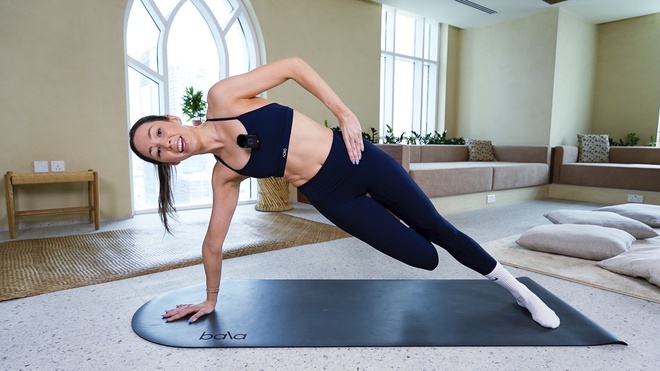
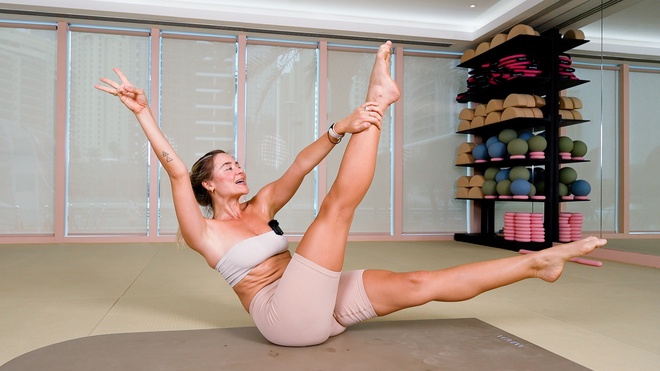
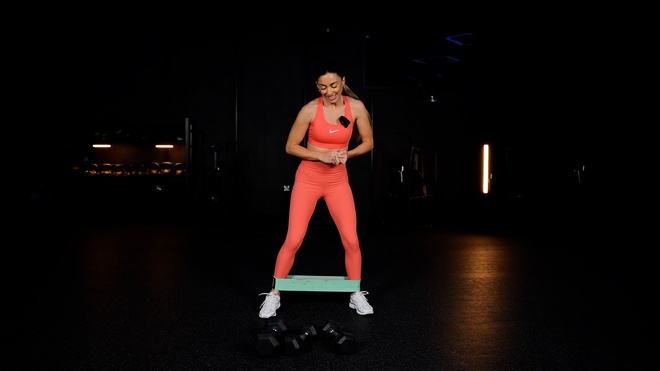
Join women building spinal stability and core strength with certified trainers
Frequently Asked Questions
Related Exercises
Dead Bug
Same core stability pattern, but on your back. Easier for beginners, same anti-rotation demand.
Plank
Another McGill Big 3 exercise. Pairs with bird dog for a complete spinal stability routine.
Cat Cow Stretch
Perfect warm-up before bird dogs. Mobilizes the spine through flexion and extension.
Glute Bridge
Targets the same glutes and lower back from a supine position. Great superset partner.
Superman Hold
Prone back extension that complements the quadruped bird dog pattern.
Get bird dog in a guided workout
Access 5 workouts featuring this exercise, plus personalized plans from Dr. Wellls.
Join women building spinal stability and core strength with certified trainers
Your membership funds independent women's health research