Plank: How-to, Benefits & Variations
The plank targets your entire core: transversus abdominis, rectus abdominis, obliques, and erector spinae. Hold a straight body on hands or forearms. Builds spinal stability and prevents back pain.
Plank: How-to, Benefits & Variations
Your core is not a six-pack muscle. It is a cylinder of muscles wrapping your entire midsection, and the plank is the only exercise that trains all of them at once without moving your spine.
That matters because the plank teaches your body to be rigid under load — picking up a suitcase, carrying a toddler, bracing when you trip on a curb. A 2025 meta-analysis of 57 RCTs (7,705 participants) found core training reduced chronic low back pain with an effect size of 0.70. That is a large clinical effect. The plank showed up in multiple study protocols because it activates the transversus abdominis, rectus abdominis, external obliques, and erector spinae simultaneously. No crunch does that. No sit-up comes close.
Full Body HIIT: Workout 1
Aylar Fetrati
How to Do Plank
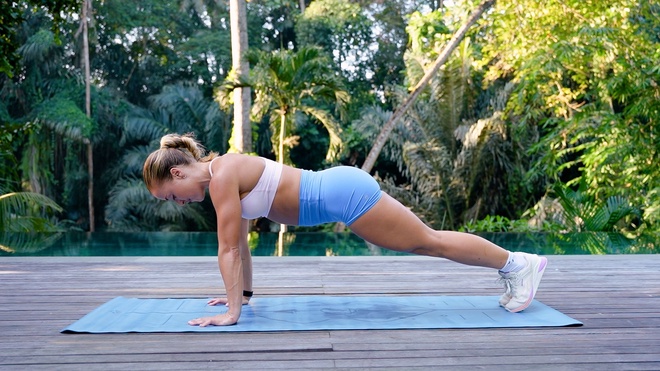
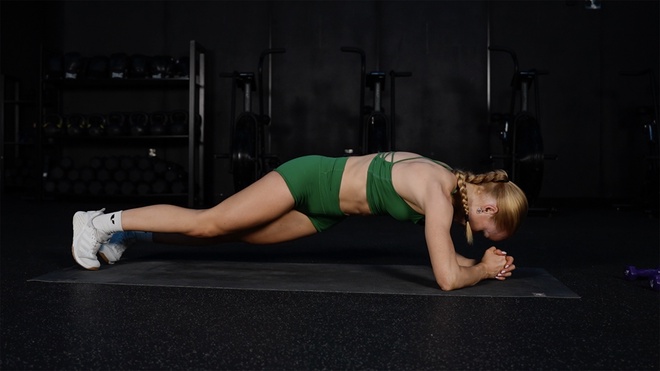
Start on all fours, then place your hands or forearms on the floor directly underneath your shoulders. Step your feet back until your body forms one straight line from head to heels. Think ruler, not rainbow.
Tuck your pelvis slightly under. Aylar Fetrati cues this as drawing your belly button toward your spine. If your lower back dips, you have already lost the exercise. This pelvic tuck is the non-negotiable part.
Squeeze your glutes and quads. Sophie Jones cues: push from the floor, do not let your hips sink. Most people only think about their abs during a plank. Wrong. Your glutes and thighs do half the stabilization work.
Keep your neck neutral by looking at the floor about six inches ahead of your hands. Linda Chambers cues: imagine you are wearing a belt that gets tighter and tighter around your midsection.
Breathe. This sounds obvious, but people hold their breath. Sophie cues: every time you breathe out, push the air out of your tummy to deepen the abdominal engagement. Exhale hard. Feel the difference.
Hold for 20-45 seconds if you are starting out. Quality of position matters far more than duration. A 20-second plank with perfect form beats a 90-second plank with a sagging back every single time.
Muscles Worked
Primary
Transversus abdominis
The deepest core muscle. Acts like a natural weight belt, compressing the abdominal contents and stabilizing the lumbar spine. A systematic review of EMG studies found the plank produces sustained activation of this muscle throughout the hold, unlike crunches which only activate it intermittently.
Rectus abdominis
The superficial 'six-pack' muscle. During a plank, it works isometrically to resist spinal extension (your back arching). This anti-extension role is how the rectus abdominis actually functions in real life, not the crunching motion most people associate with it.
External and internal obliques
Wrap diagonally around your torso. During a standard plank, they co-contract to prevent rotation. During a side plank, one side fires at high intensity to resist lateral flexion. A 2024 study found experienced practitioners showed significantly greater external oblique EMG activity.
Secondary
Erector spinae (lower back muscles)
Maintain spinal extension from behind while the abs work from the front. The co-contraction between anterior and posterior muscles creates the stiffness that protects your spine.
Deltoids and scapular stabilizers
Your shoulders hold your upper body off the floor. During a high plank, the anterior deltoids and serratus anterior work constantly. That is why your shoulders burn before your abs sometimes.
Glutes and quadriceps
Lock your pelvis and knees in position. Sophie and Aylar both cue squeezing the glutes. Without this, the pelvis drops, the lower back arches, and you are loading your spine instead of training your core.
Why this matters in perimenopause
Estrogen plays a direct role in muscle protein synthesis. As levels fluctuate during perimenopause, the deep stabilizing muscles around your spine and pelvis are among the first to weaken. A 2023 international expert position statement on resistance training for menopausal women specifically recommended exercises that develop core stability and spinal support. The plank trains every muscle in that chain without compressing the spine. No barbell required.
Coach's Tips
"Elbows directly underneath the shoulders... Belly button toward the spine. I don't wanna see any arched backs." That is Sophie Jones, and she is right. The most common plank mistake is letting the lower back sag. If your belly button is pulling toward the floor instead of toward your spine, you are loading your lumbar discs, not your core.
Sophie Jones
"Back is as if you have a ruler on it." Aylar Fetrati's cue is dead simple and it works. I tell people to have someone lay a broomstick on their back. It should touch your head, upper back, and tailbone simultaneously. If there is a gap at your lower back, tuck your pelvis harder.
Aylar Fetrati
"Imagine you're wearing a belt, and that belt is getting tighter and tighter." Linda Chambers teaches deep core engagement without using anatomy jargon. This cue activates the transversus abdominis, which most people cannot feel until they learn to brace intentionally.
Linda Chambers
"We are trying to stabilize those hips, so we're trying to keep our hips as still as we can." Beth Hannam cues this during shoulder tap planks, but it applies to every plank variation. The moment your hips start rocking side to side, your obliques have checked out.
Beth Hannam
"Every time you breathe out, try and push the air out of the tummy." Sophie Jones's breathing cue changed how I teach planks. Most people hold their breath during isometric exercises. Bad idea. Exhaling hard engages the diaphragm and pelvic floor as co-contractors, which a 2023 systematic review confirmed is the mechanism linking breathing to core stability.
Sophie Jones
"You can either hold a high plank... or if that's a little too much for you, you can come down onto the forearms." Linda Chambers gives permission without making it feel like a downgrade. Forearm plank actually increases core demand in some EMG studies because you lose the arm lock. It is not easier. It is different.
Linda Chambers
"I'm starting to feel like as I'm getting tired, my lower back is sinking, so I have to consciously readjust myself." Aylar Fetrati said this mid-workout, on camera, during a set. That honesty matters. When your form breaks, stop. Rest 10 seconds. Reset. A 30-second plank done in two 15-second holds with good form is better than a 30-second hold with a collapsed spine.
Aylar Fetrati
Why This Matters for You
The plank is one of those rare exercises that addresses three perimenopause priorities at once, without needing a gym.
First, core stability. Estrogen supports muscle protein synthesis. When estrogen fluctuates, the deep stabilizers around your spine and pelvis weaken before the big movers do. You do not notice losing transversus abdominis strength the way you notice losing quad strength. But your lower back notices. A 2023 international expert position statement recommended core stability training as foundational for menopausal women precisely because these muscles atrophy silently.
Second, pelvic floor integration. The diaphragm-pelvic floor connection is real, and it weakens during hormonal transitions. Every exhale during a plank trains that connection. A systematic review confirmed that diaphragmatic breathing patterns directly support intra-abdominal pressure regulation and pelvic floor engagement. If you are dealing with stress incontinence or early prolapse symptoms, the plank's breathing pattern is therapeutic.
Third, posture. Hours at a desk plus weakening stabilizers equals forward head posture and rounded shoulders. The plank counteracts both by demanding scapular protraction, thoracic extension, and cervical neutrality. All of this from one exercise, on the floor, with zero equipment.
Variations & Modifications
Forearm Plank
low-mediumElbows on the floor instead of hands. Takes wrist pressure out of the equation entirely. Some EMG research shows the forearm position increases demand on the rectus abdominis because you lose the mechanical advantage of locked arms. Linda Chambers defaults to this for beginners, and I do the same.
Side Plank
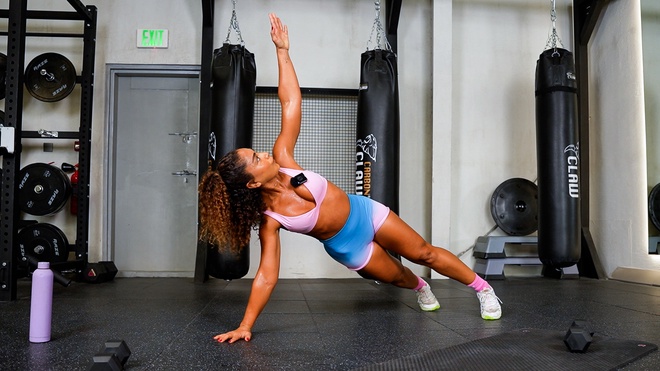
mediumStack your feet and prop yourself on one forearm or hand. The side plank exercise isolates the obliques and gluteus medius in ways no other core exercise matches. Stuart McGill includes it in his 'Big 3' for spine health. Sophie Jones cues squeezing through the side of the core and keeping the hips lifted. If you can hold 30 seconds per side with good form, your lateral stability is solid.
Plank Shoulder Taps
medium-highFrom a high plank, lift one hand to tap the opposite shoulder, then switch. Natalia Gunnlaugs cues: try to keep the hips completely still. The anti-rotation demand skyrockets. Beth Hannam adds: alternating left hand to right shoulder, right hand to left shoulder, minimal movement as possible. If your hips are swinging, widen your feet.
Plank Leg Lifts
medium-highHold a plank and lift one leg at a time, squeezing the glute of the working leg. Sophie Jones cues leading with the heel rather than pointing the toe. Danielle Harrison programs these in her boxing workouts for the posterior chain crossover. The added instability from three contact points forces your deep core to work harder than a standard hold.
Plank Hip Dips
mediumFrom a forearm plank, rotate your hips to one side, dip toward the floor, return to center, then dip to the other side. Sophie Jones cues it as a rainbow with your hips. Targets the obliques dynamically. Anastasia Zavistovskaya programs these in her barre-Pilates workouts. Keep the movement controlled. If your back arches during the rotation, you have gone too far.
Plank Knee Taps
low-mediumFrom a high plank, tap one knee to the floor, then drive it back up. Jessica Casalegno cues: inhale, tap one knee down to the mat, exhale, lift up. This is a great bridge between a modified knee plank and a full plank. It teaches the core to re-engage after a brief moment of reduced load, which is closer to how your abs work in daily life.
Benefits
Trains anti-extension, the core's real job
Your core exists to prevent your spine from moving when it should not. The plank trains anti-extension specifically. A systematic review of core muscle activation found that isometric exercises like the plank produced consistent co-contraction of anterior and posterior trunk muscles, the exact pattern needed for spinal protection during lifting, carrying, and falling.
Zero spinal compression
Unlike crunches and sit-ups, the plank loads your core without repeatedly flexing your lumbar spine. Stuart McGill's research demonstrated that repeated spinal flexion under load is a primary mechanism for disc herniation. The plank avoids this entirely. Your spine stays neutral. Your discs stay happy.
Pelvic floor co-contraction
A 2023 systematic review confirmed the link between diaphragmatic breathing, intra-abdominal pressure, and core stability. When you exhale during a plank (as Sophie Jones cues), your diaphragm rises, your pelvic floor contracts, and your transversus abdominis engages. This trio is exactly what weakens during perimenopause, and the plank retrains all three simultaneously.
Back pain prevention with strong evidence
The 2025 meta-analysis of 57 RCTs found core training produced a pooled effect size of 0.70 for pain relief in chronic nonspecific low back pain. That is a clinically meaningful improvement. The plank appeared in study protocols for core stability training, Pilates training, and core resistance training. All three reduced pain. Three to four sessions per week for at least six weeks was the minimum dose.
Scales infinitely with no equipment
A 20-second knee plank. A 45-second forearm plank. A 60-second high plank with shoulder taps. Plank leg lifts. Side plank variations. You can progress this exercise for years without ever buying a single piece of equipment. The only variable is creativity and willingness to shake.
Common Mistakes to Avoid
Hips sagging toward the floor
This is the big one. Aylar Fetrati caught herself doing it on camera and immediately corrected. Squeeze your glutes, tuck your pelvis, draw your belly button toward your spine. If you cannot maintain a straight line, drop to your knees. No shame in that.
Butt piking up toward the ceiling
The opposite problem, and equally common. Aylar cues: make sure you're never sinking too much, or you don't have your butt up too high. In the middle, neutral. If your butt is up, you have turned a plank into a downward dog, and your core is barely working.
Holding your breath
Happens constantly during isometric holds. Sophie Jones fixes this with a specific cue: exhale and push the air out of your tummy. This is not just about oxygen. The exhale drives deeper core engagement and pelvic floor contraction. Breathe out hard. Breathe in gently. Repeat.
Elbows or wrists too far forward
Sophie cues elbows directly underneath the shoulders. When your base shifts forward, your shoulders take the entire load and your core gets a free pass. Check your position in a mirror from the side. Hands or elbows should be directly below the shoulder joint.
Workouts Featuring This Exercise
Join women building core strength and stability with certified trainers
Frequently Asked Questions
Related Exercises
Side Plank
Targets the obliques and gluteus medius. Natural progression from the standard plank.
Bird Dog
Another McGill Big 3 exercise. Trains anti-rotation and anti-extension with limb movement.
Dead Bug
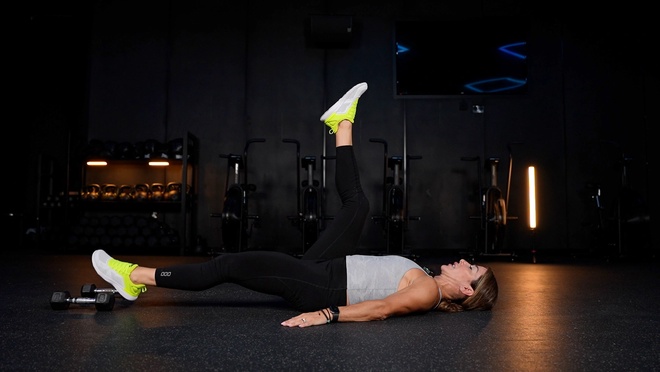
Supine anti-extension exercise. Easier starting point for those who find planks too demanding.
Mountain Climbers
Dynamic plank variation. Adds cardio while maintaining core bracing.
Russian Twist
Rotational core exercise. Complements the anti-rotation training of the plank.
This exercise helps with
Get plank in a guided workout
Access 5 workouts featuring this exercise, plus personalized plans from Dr. Wellls.
Join women building core strength and stability with certified trainers
Your membership funds independent women's health research