Childs Pose (Balasana): Benefits, Form & Variations
Childs pose (balasana) stretches the lower back, hips, and lats. Kneel, sit hips to heels, fold forward, arms extended. Decompresses spine and activates parasympathetic nervous system.
Childs Pose (Balasana): Benefits, Form & Variations
Lie face down on a yoga mat in a room full of people moving through sun salutations. Someone cues child's pose as a rest. You fold back, forehead on the floor, and for the first time in the entire class your nervous system exhales. Your jaw unclenches. The low-grade buzz behind your eyes fades. You think: this is the only part I actually needed.
You're not wrong. And you're not alone.
The childs pose is the single most programmed exercise in our entire library. 199 appearances across 149 workouts. Fourteen different trainers. Yoga, Pilates, HIIT, boxing cool-downs, back pain rehabilitation, prenatal fitness, morning flows, muscle tone sessions. Sophie Jones uses it in 48 workouts. Natalia Gunnlaugs drops it into HIIT recovery. Jessica Casalegno builds entire flexibility sequences around it. Linda Chambers prescribes it for back pain. Danielle Harrison parks her boxing athletes here between rounds.
Balasana. That's the Sanskrit name. It translates to "child's pose" because the shape mimics a resting infant. But the physiology behind it is anything but childish. This position decompresses the lumbar spine, stretches the hips and ankles, releases the paraspinal muscles, and activates the parasympathetic nervous system through forward flexion and deep breathing. A 2024 meta-analysis of yoga and menopausal symptoms found the protocols that included restorative poses like childs pose produced significant improvements in both physical symptoms and quality of life.
Restore & Reset: Workout 4
Jessica Casalegno
How to Do Childs Pose
Kneel on the floor with your big toes touching behind you. Separate your knees about hip-width apart. If your knees are sensitive, fold a blanket under them before you start. Jessica Casalegno cues it: big toes together, knees apart. This is your base.
Sit your hips back toward your heels. If your sit bones don't reach your heels, that's fine. Place a folded towel or pillow between your thighs and calves to fill the gap. The goal is hips moving backward, not perfection of contact.
Walk your hands forward along the mat, reaching your fingertips as far in front of you as they'll go. Lower your forehead to the floor. If your forehead doesn't reach, stack your fists or use a yoga block. Your head needs support. Don't let it hang.
Let your chest melt toward the floor between your thighs. Breathe into your lower back. Literally feel your back ribs expand on the inhale. Exhale and let your body sink deeper. Multiple trainers cue this: inhale to widen the lower back, exhale to release tension and sink deeper into the floor.
Hold for 30 seconds to 2 minutes. To exit, walk your hands back toward your body and slowly roll up through your spine, stacking one vertebra at a time. Don't rush the exit. The transition out matters as much as the hold.
Muscles Worked
Primary
Erector spinae and paraspinal muscles (lower back)
The childs pose puts the entire posterior chain of the spine into gentle flexion. Gravity assists the stretch rather than fighting it. The erector spinae lengthens passively, which is why this pose relieves compression-based back pain so effectively. A systematic review of yoga for chronic low back pain found consistent improvements across randomized trials, with forward-flexion poses like balasana featuring in every protocol.
Hip flexors and adductors
Your hips fold deeply in childs pose, creating sustained passive flexion. The wider your knees, the more the inner thighs and adductors release. This is why the wide-knee variation exists: it creates space for the torso to drop between the legs and deepens the hip opening. When trainers cue bring your knees apart so you can let yourself sink forward, they're targeting this group specifically.
Latissimus dorsi and teres major
Walking your fingertips forward in extended childs pose pulls the lats into a sustained overhead stretch. This is the same muscle group that gets short and tight from desk work, driving, and carrying bags. Jessica Casalegno cues drag those fingertips as far forward as you can. That last inch of reach is where the lat stretch really opens up.
Secondary
Quadriceps and tibialis anterior (ankles)
Sitting back on your heels stretches the tops of the feet and the quads simultaneously. If ankle stiffness prevents you from sitting back, a rolled towel under the ankles reduces the extension angle. This is one of the few exercises that passively stretches the anterior ankle.
Intercostal muscles (rib cage)
Breathing into the back body in this compressed position forces the intercostal muscles between your ribs to expand. Over time, this improves respiratory capacity. The childs pose with side stretch variation amplifies this by adding a lateral reach that targets the intercostals on one side specifically.
Shoulder girdle (deltoids, rotator cuff)
In the extended version with arms reaching forward, the shoulders move into flexion while under gentle load from gravity. This is a low-intensity shoulder opener that's safe for sensitive rotator cuffs because the arms bear no weight.
Why this matters in perimenopause
Fluctuating estrogen affects connective tissue throughout the body. The fascia around the lumbar spine, hips, and shoulders loses some of its natural give. A 2024 umbrella review found yoga significantly improved vasomotor symptoms, psychological symptoms, and quality of life in peri- and post-menopausal women. The researchers examined 12 systematic reviews covering thousands of participants. Childs pose appeared in virtually every yoga protocol tested. Separately, a 2022 RCT found that 12 weeks of Iyengar yoga reduced the bio-functional age of postmenopausal women. That study included restorative poses as a core component. Your body isn't failing. The tissue is changing. Childs pose meets that change by working with gravity instead of against it.
Coach's Tips
"Big toes together, knees apart, walking your hands to the front." This is the most common cue across our 199 childs pose instances. Toes touching creates a stable base for the pelvis. Knees apart creates space for the torso to drop. If you only remember one setup instruction, it's this one. The hand walk is what transforms a passive fold into an active lat stretch.
Multiple trainers (Jessica Casalegno, Sophie Jones, Petra Kapiciakova)
"Sink your hips all the way down toward your heels, feeling the stretch through your lower back and glutes." The hip position is what separates a real childs pose from just flopping forward. If your hips hover above your heels, you're holding tension in your quads and hip flexors. Let them go. Use a prop between your legs if needed. The hips need to be heavy.
Jessica Casalegno
"Walk both hands to the right side and place your left hand on top of your right to deepen the stretch along your side body." This transforms standard childs pose into a child's pose with side stretch. You'll feel it in the intercostal muscles, the lats, and the QL on the lengthened side. Hold 20-30 seconds per side. Multiple trainers use this variation for oblique release after core-heavy work.
Jessica Casalegno
"If you have a larger belly or are pregnant, keep your thighs wide apart to support your torso and create space." This isn't a limitation. It's better mechanics. Wide knees accommodate the body and actually deepen the hip stretch. Jessica Casalegno uses this modification in her prenatal Pilates series. It works for anyone whose standard knee position feels restrictive.
Jessica Casalegno
"Inhale deeply to widen the lower back; exhale to release tension and sink deeper into the floor." The breathing in childs pose is doing more than you realize. The compressed front body forces breath into the posterior ribcage, expanding areas that rarely get ventilation during normal activity. This posterior rib expansion improves diaphragm function and activates the parasympathetic nervous system. A meta-analysis on yoga and stress-related physiological measures confirmed that breath-focused poses produce measurable cortisol reduction.
Multiple trainers
"Gently rock your hips from side to side to help relax the hip flexors and lower back." Static holds aren't the only option. Small oscillations release muscle guarding faster than holding still. Your nervous system lets go in waves, not all at once. Rock gently for 15-20 seconds, then settle into stillness. You'll sink deeper after the movement than you would have without it.
"Place a pillow or yoga block under your forehead if it doesn't comfortably reach the floor, or place a rolled towel behind your knees if your hips are tight." Props aren't cheating. They're precision. A supported forehead lets the neck relax completely. A knee bolster reduces the flexion demand on tight quads. Petra Kapiciakova and Yasmin Masri both use propped variations in their flexibility and mobility classes. The pose should feel restful. If it doesn't, you need a prop, not more flexibility.
Petra Kapiciakova, Yasmin Masri
Why This Matters for You
I keep coming back to one number: 199. That's how many times childs pose appears in our workout library. Not because it's trendy. Because every certified trainer we work with independently decided it belongs in their programming. And the reason connects directly to what's happening in your body during perimenopause.
Estrogen modulates pain perception. When it fluctuates, your pain threshold changes too. Some days your back feels fine. Other days the same chair, the same desk, the same mattress leaves you stiff and aching. An umbrella review of yoga interventions for menopausal symptoms found significant improvements in vasomotor symptoms, psychological symptoms, and quality of life across 12 systematic reviews. Childs pose was part of virtually every protocol tested.
Cortisol disrupts sleep. Disrupted sleep increases cortisol. It's a cycle. A meta-analysis confirmed yoga-based interventions produce measurable reductions in stress-related physiological markers including cortisol. The forward-flexion, head-supported position of childs pose specifically activates the parasympathetic system. It's a pharmacological-grade reset that costs nothing and takes sixty seconds.
Then there's the hip story. Your hip flexors shorten from sitting. Your pelvic floor tension increases from stress. Your lower back compensates for both. A single-center RCT found 12 weeks of yoga reduced the bio-functional age of postmenopausal women. The restorative poses in that protocol addressed exactly this cascade: hips, pelvic floor, lumbar spine, breath.
Fourteen trainers. 149 workouts. Yoga, Pilates, HIIT recovery, boxing cooldowns, prenatal fitness, back pain rehabilitation. The consensus isn't coincidence. This pose works.
Variations & Modifications
Child's Pose with Side Stretch
lowFrom standard childs pose, walk both hands to the right. Stack your left hand on top of your right. Hold for 20-30 seconds, feeling the stretch along the left side of your body. Switch sides. This child's pose with side stretch targets the intercostal muscles, the quadratus lumborum, and the lateral line of fascia from hip to armpit. Multiple trainers program this after core work or lateral exercises. Sophie Jones uses it in 5+ different workout series as a cooldown staple.
Wide-Knee Child's Pose
lowTake the knees wider than hip-width, toes still touching. The wider stance lets the torso drop deeper between the thighs, intensifying the hip and inner-thigh stretch. Nuni Soriano uses this variation in her Vinyasa Flow series. It also works well for anyone with a larger torso or during pregnancy. More space, deeper fold, same restoration.
Extended Child's Pose (arms forward)
lowWalk your fingertips as far forward as possible with palms flat. Keep reaching. That extra two inches of reach is what pulls the lats into a true stretch. This is the childs pose yoga variation you see most in vinyasa classes. Jessica Casalegno cues it: walk your fingertips as far forward as possible to engage the lats and lengthen the spine. It transforms a resting position into an active stretch.
Embryo Pose (arms back)
lowInstead of reaching forward, bring your arms back alongside your body with palms facing up. This fully relaxes the shoulders, letting them round forward naturally. There's zero effort in the upper body. Pure surrender. This is the version you use when you need complete nervous system downregulation. Bonnie Lyall uses it at the end of her Booty & Core Pilates sessions. When the work is done, this is where you go.
Child's Pose to Cobra Flow
low-mediumFrom childs pose, slide your chest forward along the floor and press up into cobra. Reverse the movement back to childs pose. This flowing transition alternates between spinal flexion and extension, mobilizing the entire spine in both directions. It warms up the lower back better than either pose alone. Multiple trainers use this as a warm-up sequence in flexibility and mobility classes.
Benefits
The nervous system reset your body is begging for
Forward flexion with supported head contact activates the vagus nerve. The compressed chest forces breath into the back body, stimulating the parasympathetic branch of your nervous system. A meta-analysis of yoga-based stress interventions found significant cortisol reduction across multiple controlled trials. This is why 14 of our trainers use childs pose as a recovery position. It's not passive rest. It's active nervous system regulation.
Lumbar decompression without equipment
Sitting compresses your lumbar discs. Standing compresses them less, but still compresses them. Childs pose reverses the load direction entirely. Gravity gently tractors the spine apart rather than pushing it together. A systematic review of yoga for chronic low back pain found forward-flexion poses produced consistent relief across randomized trials. No inversion table. No hanging. Just your body weight and gravity working in your favor.
Hip opening that works with tight bodies
Most hip stretches demand flexibility you don't have yet. Childs pose works in reverse: it uses gravity and your own body weight to progressively open the hips without forcing range of motion. The wide-knee version deepens the adductor stretch. The standard version releases the hip flexors and quadriceps. Both versions are self-limiting. You can only go as deep as your body allows, which makes injury nearly impossible.
Breathing capacity you didn't know you were missing
Compressed in this position, your front ribs can't expand. Breath has to go somewhere. It goes into your back ribs, side ribs, the spaces between your intercostals that never get ventilated during chest-dominant breathing. Over time, this expands respiratory capacity. A systematic review confirmed that diaphragmatic breathing patterns improve with targeted breathing exercises. Childs pose is one of the few positions that forces posterior breathing without any conscious effort.
Common Mistakes to Avoid
Letting the hips float above the heels
If your hips hover instead of resting, you're not getting the low-back release. The whole point of childs pose is gravity pulling the pelvis down and back. If tightness prevents contact, place a pillow or folded blanket between your thighs and calves. Don't just hover there thinking you'll sink eventually. Give your body something to rest on.
Holding the forehead off the floor
Your neck muscles will fight you if your head has no support. Forehead down. On the mat, on a block, on your stacked fists. It doesn't matter what supports it. It matters that it's supported. An unsupported head means your neck extensors are working, which defeats the purpose of a restorative pose.
Collapsing the chest without reaching the arms
There's a difference between folding forward and reaching forward. The arm reach is what engages the lats and creates length through the spine. Without it, you're just compressing. Drag your fingertips forward even after you think you've reached far enough. That extra stretch separates resting from restoring.
Holding your breath or breathing shallow
The position compresses the front body, so shallow chest breathing feels natural. Fight that instinct. Direct your breath into your lower back. Feel your back ribs expand sideways on each inhale. If you can hear your own exhale, good. That audible release is your diaphragm actually working. Multiple trainers cue: nice, big, deep breaths, in through the nose, out through the mouth.
Workouts Featuring This Exercise
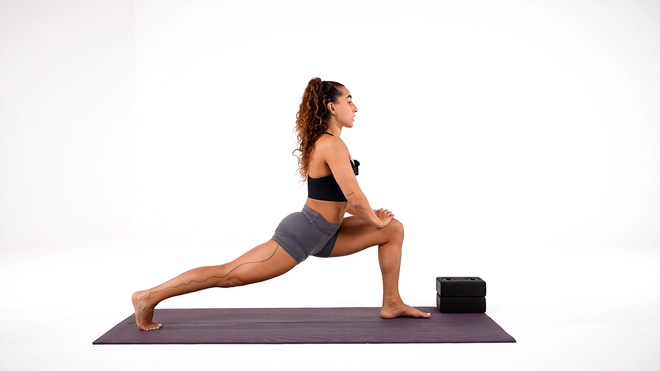
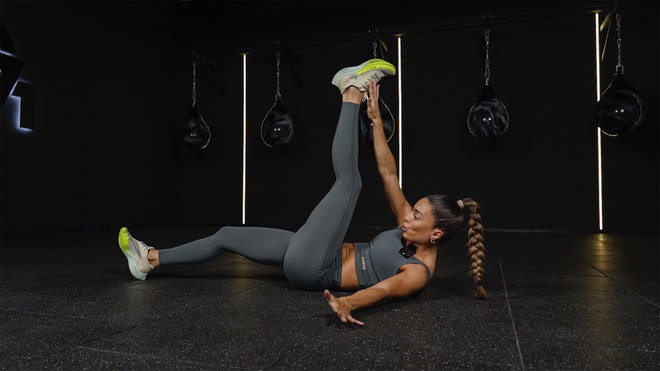
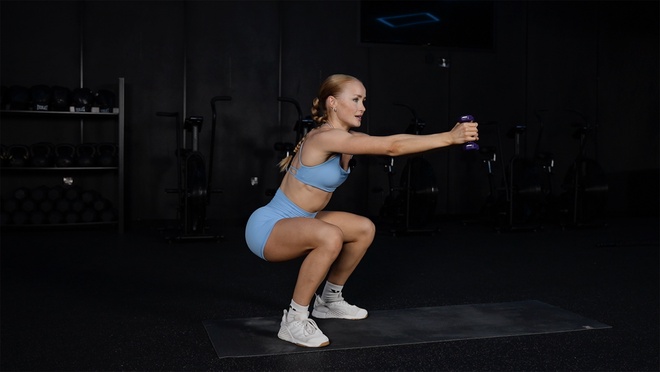
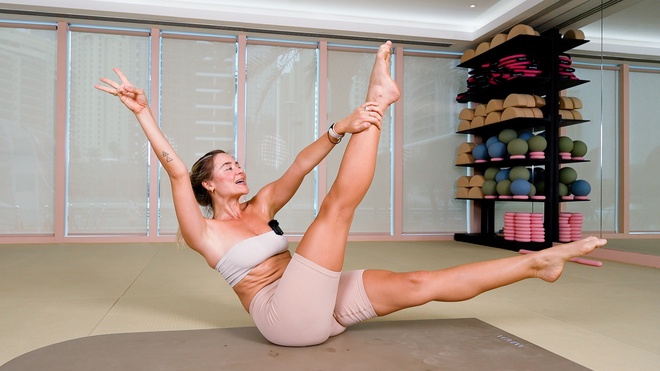
Join women decompressing their spines, releasing their hips, and calming their nervous systems with 14 certified trainers
Frequently Asked Questions
Related Exercises
Downward Dog
The active counterpart to childs pose. Both start from the same kneeling position. Downward dog adds load and inversion. Childs pose removes it. Trainers alternate between the two constantly.
Cat-Cow Stretch
Often sequenced directly before or after childs pose. Cat-cow mobilizes the spine through flexion and extension. Childs pose holds the flexion end of that range. Together they warm up the entire back.
Pigeon Pose
Deeper hip opener that often follows childs pose in yoga sequences. If childs pose opens the door, pigeon walks through it. Same hip region, more intensity.
Thread the Needle Stretch
Adds a spinal twist from a similar kneeling position. Several trainers transition from childs pose directly into thread the needle for a combined stretch of the back and shoulders.
Puppy Pose
A hybrid between childs pose and downward dog. Hips stay stacked over knees while the chest drops toward the floor. Targets the thoracic spine and shoulders more aggressively than childs pose.
This exercise helps with
Get childs pose in a guided workout
Access 10 workouts featuring this exercise, plus personalized plans from Dr. Wellls.
Join women decompressing their spines, releasing their hips, and calming their nervous systems with 14 certified trainers
Your membership funds independent women's health research