Downward Dog: How-to, Benefits & Variations
Downward dog stretches hamstrings, calves, shoulders, and spine. Form an inverted V on hands and feet, hips high, spine long. Builds shoulder strength and decompresses the spine.
Downward Dog: How-to, Benefits & Variations
Your upper back rounds. Your hamstrings scream. Your wrists ache after ten seconds. You look nothing like the person next to you in class and you're secretly convinced your body just wasn't built for this shape.
I hear this every single week. And every single time, the problem isn't anatomy. It's setup.
The downward dog is arguably the most recognized yoga pose on the planet, and it's also the one people suffer through most unnecessarily. It shows up in sun salutations, vinyasa transitions, HIIT recovery positions, Pilates warm-ups, and boxing cooldowns. Jessica Casalegno uses it in her Full Body Pilates series. Danielle Harrison drops it into boxing sessions as active rest. Sophie Jones threads it into upper-body muscle tone classes. It's everywhere because it does everything: decompresses the spine, opens the shoulders, lengthens the hamstrings, stretches the calves, and sends blood to your brain through mild inversion.
But none of those benefits show up if your form is off. And for most people, it is. So let's fix that.
Restore & Reset: Workout 4
Jessica Casalegno
How to Do Downward Dog
Start on your hands and knees in a tabletop position. Place your hands shoulder-width apart, fingers spread wide. Jessica Casalegno cues it: spread your fingers wide and press firmly through your palms. Your middle fingers should point straight forward. This hand position protects your wrists from the start.
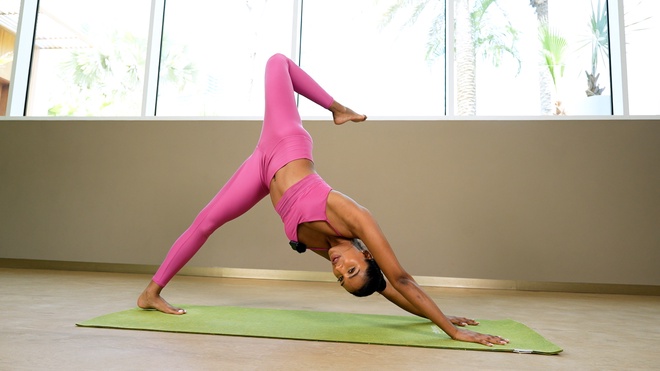
Tuck your toes under, exhale, and lift your knees off the floor. Push your hips up and back toward the ceiling. You're aiming for an upside-down V shape. Don't worry about straight legs yet. Bent knees are fine. Better than fine. Bent knees let you focus on getting your spine long first.
Press your chest gently back toward your thighs. Lift your sit bones high toward the ceiling to lengthen your spine. Your ears should line up with your upper arms. If your head is hanging like a dead weight or craning forward, adjust until your neck feels like a natural extension of your spine.
Start to straighten your legs only as much as your hamstrings allow. Press your heels toward the floor. They don't need to touch. Focus on the stretch through your calves and the back of your legs as you press the heels down. If your lower back rounds when you straighten your legs, bend the knees again. Flat back beats straight legs every time.
Breathe. Inhale deeply as you open your chest forward. Exhale as you push your hips back. Hold for 30 to 60 seconds. To exit, bend your knees and lower back to tabletop, or walk your feet toward your hands for a forward fold.
Muscles Worked
Primary
Hamstrings (biceps femoris, semitendinosus, semimembranosus)
The hamstrings bear the most intense stretch in downward dog. The hip flexion combined with knee extension creates a sustained lengthening along the entire posterior thigh. A 2023 systematic review found that chronic stretching produces measurable ROM improvements, with holds of 30-60 seconds showing the strongest effects. This is exactly the window most trainers use for the downward dog hold.
Deltoids and rotator cuff (shoulders)
Your shoulders are load-bearing in this position. The deltoids work to keep your arms stable while the rotator cuff muscles maintain proper positioning. The overhead angle with full flexion also stretches the latissimus dorsi and teres major. This makes the downward dog yoga pose both a shoulder strengthener and a shoulder opener simultaneously.
Gastrocnemius and soleus (calves)
Pressing the heels toward the floor stretches both calf muscles. The gastrocnemius gets more stretch with straight knees; the soleus engages more with a slight bend. Multiple trainers cue focusing on the stretch through your calves as you press your heels down, and this is where most people feel it first.
Secondary
Erector spinae and spinal extensors
The spine decompresses in downward dog because gravity pulls the torso away from the pelvis. This creates traction through the lumbar and thoracic vertebrae. For anyone who sits all day and feels compressed by evening, this mild inversion reverses hours of spinal loading.
Core (transverse abdominis, obliques)
The core engages to stabilize the torso and prevent the lower back from collapsing. Jessica Casalegno cues it directly: engage your core as you transition your body weight forward. Without core activation, the lower back sags and the shoulders take excessive load.
Wrist extensors and forearm muscles
Your wrists bear significant load in downward dog, which is both a strength benefit and the number one complaint people have. Spreading the fingers and pressing through the entire palm distributes force across the hand rather than concentrating it at the heel of the wrist.
Why this matters in perimenopause
Here's what changes during perimenopause that makes downward dog worth doing daily. Your connective tissue elasticity declines as estrogen fluctuates. A 2022 RCT found yoga improved menopausal symptoms and sleep quality across menopause statuses. The researchers tested programs that included downward dog as a foundational pose in every session. Separately, a 2025 umbrella review of yoga and chronic diseases confirmed broad benefits for musculoskeletal health, anxiety, and sleep. Your hamstrings get tighter. Your shoulders round forward. Your spine compresses from a combination of sitting, stress, and the slow loss of intervertebral disc hydration. Downward dog addresses all three in a single position. Five of our trainers use it in warm-ups for exactly this reason.
Coach's Tips
"Lift your sit bones high toward the ceiling to lengthen your spine." This cue from our coaching database is the single most important instruction for downward dog. People fixate on straight legs and heels touching the floor. Forget both. If your sit bones aren't reaching up, your spine is rounding and the pose collapses. Hips high, spine long. Everything else is secondary.
Jessica Casalegno
"Keep your neck relaxed and ears aligned with your upper arms to avoid shoulder tension." I watch people clench their necks in this pose like they're bracing for impact. Your head hangs naturally. Not limp, not rigid. Just aligned with your spine. If someone stood across the room and looked at your back, they should see one clean line from your tailbone through the crown of your head.
"Spread your fingers wide and press firmly through your palms to protect your wrists." Wrist pain is the reason most people abandon downward dog. The fix isn't avoiding the pose. It's distributing load. Imagine trying to grip the mat with your fingertips. That engagement shifts weight from the heel of the wrist (where nerves get compressed) across the entire hand. If it still hurts, elevate your hands on yoga blocks to reduce the wrist angle.
Jessica Casalegno
"Maintain a soft bend in the elbows to avoid hyperextension." If your elbows lock out and push backward, you're dumping load into the joint instead of distributing it through the muscles. A micro-bend in the elbows keeps the triceps and forearms engaged. This is especially relevant if you're hypermobile, which becomes more common as connective tissue changes during perimenopause.
"Bend your knees slightly if your hamstrings feel tight or if your lower back is rounding." This is not a beginner modification. This is correct form for tight hamstrings. Period. I'd rather see bent knees with a flat back than straight legs with a hunched spine. The spine length is the pose. The hamstring stretch comes with time. Natalia Gunnlaugs uses this variation in her HIIT warm-ups because her athletes need spinal decompression, not a hamstring contest.
"Place your hands on yoga blocks or a stable chair to reduce the angle and pressure on your shoulders." Elevated downward dog changes the game for tight shoulders and wrist sensitivity. Jessica Casalegno teaches an elevated down dog to plank wave using blocks in her Full Body Pilates series. The higher your hands, the less weight goes through your wrists and the gentler the shoulder angle. Start elevated. Work toward the floor over weeks.
Jessica Casalegno
"Inhale deeply as you open your chest forward; exhale as you push your hips back." The breath pattern in downward dog isn't decorative. The inhale creates space through the front body. The exhale deepens the stretch along the back body. If you're holding your breath, you're fighting the pose. Slow breathing activates the parasympathetic nervous system, which is why a 60-second downward dog hold can genuinely lower your heart rate and quiet your mind.
Why This Matters for You
I teach downward dog differently to women in perimenopause than I did five years ago. Not because the pose changed. Because I understand what's happening in the body.
Estrogen affects connective tissue. As it fluctuates and declines, tendons and ligaments lose some elasticity. Your hamstrings feel tighter. Your shoulders feel stiffer. That's not aging. That's hormones. A 2024 meta-analysis on yoga and menopausal symptoms found significant improvements in both physical symptoms and quality of life across multiple RCTs. Downward dog was a staple pose in every protocol tested.
Bone density starts declining. The controlled weight-bearing through your hands and arms in downward dog provides stimulus to the wrist, forearm, and shoulder bones. A 2022 systematic review found yoga has positive effects on bone mineral density. You're not going to build bone with one pose. But you're providing mechanical loading that your skeleton needs.
Sleep disruption raises cortisol. Elevated cortisol tightens muscles. The parasympathetic activation from a 60-second downward dog hold works as a nervous system reset. A 2023 meta-analysis found yoga effective for stress reduction in adults. Five of our trainers place downward dog at the transition point between intense work and cooldown, and the reason is physiological, not aesthetic.
Jessica Casalegno, Natalia Gunnlaugs, Danielle Harrison, Linda Chambers, Sophie Jones. Five different trainers across Pilates, HIIT, boxing, muscle tone, and flexibility classes. All of them use downward dog. Different contexts, same foundational position. That kind of cross-discipline consensus isn't coincidence.
Variations & Modifications
Downward Dog to Plank Flow
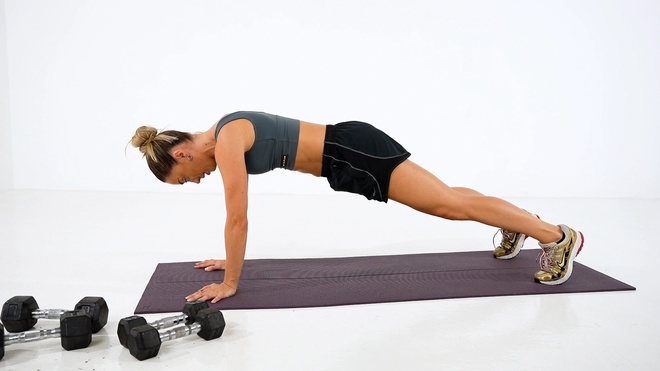
mediumFrom downward dog, shift your weight forward into a high plank position. Pause. Push back to downward dog. Repeat. This downward dog to plank flow builds shoulder stability and core endurance while maintaining the stretch benefits. Linda Chambers uses it in her Abs & Glutes series, and Natalia Gunnlaugs drops it into HIIT warm-ups. The transition demands core engagement that the static hold doesn't.
Downward Dog to Forward Fold
lowFrom downward dog, walk your feet slowly toward your hands until you arrive in a standing forward fold. Sophie Jones cues this as a cool-down transition in her Bringing Sexy Back series. The downward dog to forward fold sequence is a complete posterior chain release that moves from inverted stretching to gravity-assisted hamstring lengthening. Walk slowly. Let each step deepen the stretch.
Elevated Downward Dog (hands on blocks)
lowPlace your hands on blocks, a sturdy chair, or a wall. This reduces the wrist angle and shoulder load while preserving the spinal decompression and hamstring stretch. Jessica Casalegno teaches an elevated down dog to plank wave in her Full Body Pilates course. If wrists are your barrier, this is your entry point. No shame. Same pose, different angle.
Downward Dog with Cross-Body Reach
mediumFrom downward dog, reach your opposite hand toward your opposite calf or ankle. This adds a spinal twist and challenges balance. The DB cues describe it as reaching for the opposite leg with the opposite hand. You'll feel a stretch through the mid-back and obliques that the standard downward dog doesn't reach. Return to center between sides.
Benefits
Full-body stretch in a single position
No other exercise stretches the hamstrings, calves, shoulders, spine, and chest simultaneously. The downward dog yoga pose is a whole posterior chain release stacked on top of a shoulder opener. A 2024 meta-analysis on stretching optimization found that sustained holds of 30-60 seconds produce the best flexibility gains. That's exactly one downward dog hold.
Spinal decompression through mild inversion
Your spine compresses all day from gravity, sitting, and standing. Downward dog reverses that. The inverted V position uses gravity to create traction through the vertebrae, separating discs that have been squeezed together for hours. This is why so many trainers use it as a reset between exercises. It's not rest. It's decompression.
Shoulder strength and mobility together
Most exercises either strengthen shoulders or stretch them. Downward dog does both. Your deltoids and rotator cuff work to support your body weight while the overhead position opens the chest and lats. A 2022 study on yoga and biomechanics found measurable improvements in trapezius and hamstring elasticity among regular practitioners.
Wrist conditioning for long-term joint health
The wrist loading in downward dog is a feature, not a bug. Controlled weight-bearing through the hands strengthens the small bones, tendons, and ligaments of the wrist. This matters during perimenopause when bone density starts declining. The key is proper hand placement: fingers spread, pressing through the entire palm, not just the heel of the hand.
Calms the nervous system
The head-below-heart position combined with slow breathing activates parasympathetic tone. A meta-analysis of yoga and anxiety found significant reductions across 17+ randomized controlled trials. Trainers in our library use downward dog as active recovery precisely because it lowers heart rate while still working muscles. Danielle Harrison parks her boxing athletes here between rounds for exactly that reason.
Common Mistakes to Avoid
Rounding the upper back instead of lengthening the spine
The most common downward dog error. When the upper back rounds, the shoulders bunch toward the ears and the spine loses its long line. Fix: bend your knees as much as you need to. Push your chest back toward your thighs. Think about lifting your tailbone, not straightening your legs. The goal is a flat back, not flat hamstrings.
Dumping weight into the wrists
If your wrists scream after ten seconds, the weight distribution is wrong. Press through your fingertips like you're trying to grip the floor. Engage your forearms. Spread the load across the entire hand. If that still doesn't help, elevate your hands on blocks. Wrist pain is a setup problem, not a strength problem.
Locking the elbows
Hyperextended elbows look straight but they transfer load from muscles to joints. Maintain a micro-bend. You won't see it from the outside, but you'll feel the difference in your forearms and triceps. This is especially critical if you're hypermobile.
Letting the head hang or crane forward
Your head should be a neutral extension of your spine. Not dangling toward the floor. Not looking up at your hands. Ears between your upper arms. That's it. When the head is misaligned, your neck muscles compensate and you leave downward dog with a headache instead of relief.
Workouts Featuring This Exercise
Join women building flexibility, decompressing their spines, and strengthening their shoulders with certified trainers
Frequently Asked Questions
Related Exercises
Cat-Cow Stretch
Warms up the spine before loading it in downward dog. Many trainers sequence cat-cow immediately before the first downward dog of a session.
Child's Pose
The natural resting counterpart to downward dog. Same starting position, opposite direction. Use it when downward dog feels too intense.
Plank
The front end of the downward dog to plank flow. Shares the same hand position and core engagement. Strengthens what downward dog stretches.
Cobra Pose
The counterpose to downward dog in sun salutation sequences. Extends the spine in the opposite direction while opening the chest.
Pigeon Pose
Often sequenced from downward dog (draw knee to wrist). Targets hips while downward dog targets hamstrings and shoulders.
This exercise helps with
Get downward dog in a guided workout
Access 8 workouts featuring this exercise, plus personalized plans from Dr. Wellls.
Join women building flexibility, decompressing their spines, and strengthening their shoulders with certified trainers
Your membership funds independent women's health research