Cobra Pose: How-to, Benefits & Variations
Cobra pose stretches the abs, hip flexors, and chest while strengthening the spinal extensors. Lie face down, press through hands to lift chest, hips stay on floor. Key for posture and back health.
Cobra Pose: How-to, Benefits & Variations
If you sit for more than four hours a day, your spine is curving forward right now. Not dramatically. Not visibly. But vertebra by vertebra, your thoracic spine rounds, your chest collapses, and your hip flexors shorten into a permanent half-crouch. The body adapts to the shape you give it most often. And most of us give it a slump.
The cobra pose reverses that pattern. It's one of the oldest backbends in yoga, known in Sanskrit as bhujangasana, and it does something no amount of sitting-up-straighter will accomplish: it physically extends the spine in the opposite direction, opens the chest, and lengthens the abdominal wall and hip flexors that have been compressed for hours.
I use the cobra stretch in nearly every cool-down I teach. Sophie Jones programs it into 32 workouts across strength, conditioning, Pilates, and weight loss series. Natalia Gunnlaugs drops it into HIIT recovery. Linda Chambers uses it after her core-focused Abs & Glutes classes. Jessica Casalegno weaves it into spinal wave sequences. When seven different certified trainers from seven different disciplines all reach for the same stretch at the end of a session, the exercise isn't optional. It's essential.
Athlete Mode: Workout 7
Sophie Jones
How to Do Cobra Pose
Lie face down on your mat with your legs extended behind you. Place your hands directly under your shoulders, fingers spread, elbows tucked close to your body. Your forehead or chin rests on the floor. Petra Kapiciakova cues it: keeping your elbows close to your upper body. This starting position matters because wide elbows shift the stretch away from the spine and into the shoulders.
Press gently through your palms and begin to lift your chest off the floor. Move slowly. Sophie Jones teaches it as a peel: walk it forward, drop the hips down, and just let that core stretch out slightly. You're not pushing yourself to full arm extension yet. The lift comes from your back muscles first, hands second.
Roll your shoulders back and down, away from your ears. Pull your shoulder blades together to open the chest wide. Natalia Gunnlaugs cues: shoulders away from the ears, open up the chest. Let your hips sink heavily into the mat. The heavier your pelvis feels against the floor, the deeper the stretch through your abdominals and hip flexors.
Lift your chin slightly and lengthen through the front of your body from pubic bone to collarbone. Breathe. Deep, steady inhales expand the chest further. Slow exhales let you settle deeper into the stretch. Sophie cues: nice deep breaths here. Hold for 20 to 30 seconds. To release, slowly lower your chest back to the floor on an exhale.
Muscles Worked
Primary
Erector spinae (spinal extensors)
The erector spinae group runs the length of your spine and does the actual lifting in cobra pose. These muscles contract to extend the thoracic and lumbar vertebrae backward, counteracting the forward-rounded posture that sitting creates. A 2022 study on thoracic spine mobility found that extension exercises significantly improve both posture and shoulder function. The cobra stretch is spinal extension in its purest form.
Rectus abdominis and obliques (stretched, not contracted)
Your abdominal muscles are on the receiving end of the cobra stretch. As the spine extends, the front body lengthens. Every trainer in our library cues this directly. Sophie Jones: stretch out those abs, because you would have got that nice, tight squeeze from the core work. After crunches, planks, or any anterior core work, the abs need this release. Tight, shortened abs pull the ribcage down and contribute to that hunched look.
Iliopsoas and hip flexors (stretched)
The hip flexors shorten when you sit. They shorten further when you sleep in fetal position. By the time you stand up in the morning, they're pulling your pelvis into an anterior tilt that loads your lower back. The cobra pose, with hips pressed into the floor and spine extending, creates a sustained hip flexor stretch. A 2022 review on hip flexor tightness confirmed that prolonged sitting creates measurable shortening that targeted stretching can reverse.
Secondary
Pectoralis major and anterior deltoids (stretched)
As you pull your shoulder blades together in cobra, your chest opens. The pec muscles, which get chronically short from desk work and phone scrolling, receive a passive stretch. Mish Naidoo cues: cactus your arms, roll the shoulders back. That shoulder blade squeeze targets the exact tissue that forward shoulder posture compresses.
Gluteus maximus
Jessica Casalegno and Petra Kapiciakova both cue a gentle glute squeeze during cobra. Squeezing your glutes to protect your lower back. The glutes stabilize the pelvis and prevent the lumbar spine from over-arching. This is not a glute strengthener. It is a safety mechanism.
Why this matters in perimenopause
Spinal mobility declines with hormonal shifts. Connective tissue throughout the spine, including the intervertebral discs and spinal ligaments, contains estrogen receptors. As estrogen fluctuates during perimenopause, these tissues lose hydration and elasticity. A 2013 systematic review of yoga for low back pain found consistent improvements across multiple RCTs. A separate 2014 study specifically in premenopausal women with chronic low back pain found yoga increased brain-derived neurotrophic factor and serotonin, both of which decline during perimenopause. The cobra stretch targets the exact structures that hormonal changes affect most: the lumbar spine, the thoracic curve, and the abdominal fascia.
Coach's Tips
"Let them hips just relax into the floor now. Pull them shoulder blades back." Sophie Jones repeats this sequence in almost every cobra stretch she teaches. The two actions work together. Heavy hips anchor the stretch. Retracted shoulder blades open the chest. If you're holding tension in your glutes or gripping the floor with your toes, the stretch stays superficial. Let go from the waist down. Work from the waist up.
Sophie Jones
"Press the palms down, arms straight. Roll the shoulders back and down. Look up." Natalia Gunnlaugs teaches cobra pose in her Strong Pilates series with clean, stacked cues. The order matters. Hands press first to create the lift. Shoulders roll second to open the chest. Eyes look up last to complete the spinal extension through the cervical vertebrae. Reversing the order compresses the neck.
Natalia Gunnlaugs
"Inhale, lift the chest up to a cobra. See if you can lift the thighs off your mat." Mish Naidoo teaches a high cobra variation where the glutes engage enough to lift the legs slightly. This is an advanced cue. If your lower back complains, keep the thighs down. But for those ready, the leg lift turns a passive stretch into an active spinal extension that strengthens the erectors, not just stretches the abs.
Mish Naidoo
"Squeeze your glutes to protect your lower back." Jessica Casalegno and Petra Kapiciakova both cue this, and it is the single most important safety instruction for cobra pose. Without glute engagement, the lumbar spine bears the entire extension load. With glutes active, the pelvis stabilizes and the extension distributes across more vertebrae. If you feel a pinch in your lower back, squeeze harder and lift less.
Jessica Casalegno
"If you feel sensitivity in your lower back, keep a slight bend in your elbows rather than locking them out." Straight arms create maximum extension. Not every spine is ready for that. A soft elbow bend reduces the arc and keeps the stretch in a range your back can tolerate. Natalia Gunnlaugs teaches this modification in her HIIT classes where athletes are fatigued and more vulnerable to over-extension.
Natalia Gunnlaugs
"Instead of pressing into your hands, try to engage your back more." Petra Kapiciakova teaches a hands-light cobra in her Yoga for Back Relief series. The idea: if your arms do the lifting, your back muscles coast. By reducing arm pressure, the erector spinae work harder, which builds the actual strength you need for better posture. It is a subtler stretch but a stronger exercise.
Petra Kapiciakova
"Look over the right shoulder as much as you can. And then look over the left." Mish Naidoo adds a rotational element to the cobra hold. This twist through the thoracic spine targets the intercostal muscles and the deep rotators that a straight cobra misses entirely. Do it slowly. The twist should come from your mid-back, not your neck.
Mish Naidoo
"Take a full breath in to lift, to open, to look up. Take a full breath out to bend your elbows and come down." Mish Naidoo links every cobra repetition to the breath cycle. The inhale creates space through the ribcage, which naturally assists the spinal extension. The exhale releases tension and lowers you with control. Breathing through cobra is not decorative. It determines how deep and how safe the stretch becomes.
Mish Naidoo
Why This Matters for You
I pay more attention to cobra pose now than I did five years ago. Not because the stretch changed. Because I understand what happens to the spine when hormones shift.
Intervertebral discs contain estrogen receptors. As estrogen fluctuates, those discs lose hydration. The spaces between vertebrae compress. Your back feels stiffer in the morning. Your range of motion shrinks. You reach for something on a high shelf and feel a pull you didn't feel three years ago. A 2013 systematic review of yoga for low back pain found consistent pain reduction across RCTs. The protocols all included prone extension, which is exactly what cobra provides.
A 2014 study in premenopausal women with chronic low back pain found that yoga increased both BDNF and serotonin. Both of those decline during perimenopause. Both contribute to pain sensitivity. The cobra stretch specifically targets the lumbar extensors and thoracic spine, the two regions most affected by posture-related pain from sitting.
Then there is the breathing connection. Perimenopause disrupts sleep. Disrupted sleep raises cortisol. Elevated cortisol tightens muscles and shortens connective tissue. A 2023 meta-analysis on yoga for stress management found significant reductions across multiple RCTs. The deep breathing that Mish Naidoo cues during cobra activates parasympathetic tone, which directly lowers cortisol. It is not a stretch for your abs. It is a reset for your nervous system.
Seven trainers across our library use cobra pose. Sophie Jones. Natalia Gunnlaugs. Jessica Casalegno. Mish Naidoo. Linda Chambers. Danielle Harrison. Petra Kapiciakova. Strength coaches, yoga instructors, Pilates specialists, boxing trainers. When professionals from that many disciplines agree on a single stretch, the evidence is in the programming, not just the papers.
Variations & Modifications
Sphinx Pose (forearm cobra)
lowRest on your forearms instead of your hands. Elbows under shoulders, forearms parallel. This is the gentler entry point for anyone whose lower back protests at full cobra. The extension arc is shorter, the load on the lumbar spine is lighter, but the abdominal and hip flexor stretch remains. Natalia Gunnlaugs teaches it as the default cobra modification in her HIIT cool-downs. If full cobra pose feels like too much, sphinx is where you start.
High Cobra (full extension)
low-mediumStraighten your arms fully and walk your hands slightly closer to your hips. Squeeze the glutes. The deeper backbend intensifies the stretch through the entire anterior chain. Jessica Casalegno cues: rise as high as you can manage into high cobra, squeeze through the glutes. Mish Naidoo takes it further: see if you can lift the thighs off your mat. This variation demands genuine back strength and is best attempted after several weeks of standard cobra practice.
Cobra with Rotation
low-mediumHold the cobra position and slowly turn your head and upper body to look over one shoulder, then the other. Mish Naidoo: try to look over the right shoulder as much as you can. Petra Kapiciakova teaches it as: as you exhale, you twist slightly to the right side, looking behind. The rotation adds a thoracic twist that standard cobra misses. It targets the intercostal muscles and the small rotator muscles between vertebrae. Excellent for anyone whose mid-back feels locked after desk work.
Cobra Rolls (dynamic flow)
low-mediumInstead of holding the stretch, flow in and out of cobra with your breath. Inhale to lift, exhale to lower. Mish Naidoo programs cobra rolls as chest openers: taking your hands wide, we take three cobra rolls, big roll to open up the upper back. Jessica Casalegno uses a similar wave pattern: shift your weight forward, round through the spine, drop the hips, lift the chest. The dynamic version warms the spine through its full range rather than parking at one position.
Benefits
Undoes hours of sitting in seconds
The cobra pose is a direct antidote to the flexed-forward posture that desks, cars, and phones create. Spinal extension opens what sitting closes. A 2022 study on thoracic spine mobility found that extension exercises improve both posture and shoulder function. One cobra stretch won't erase a decade of desk work, but 30 seconds after every workout begins reversing the pattern. Sophie Jones programs it at the end of 32 different workouts for this exact reason.
Releases the abdominal wall after core work
Every trainer in our library uses cobra stretch as a core cool-down. After crunches, planks, mountain climbers, or any exercise that contracts the anterior core, the abs need to lengthen. Shortened abs pull the ribcage down and contribute to thoracic kyphosis. Sophie Jones says it plainly: stretch out those abs, because you would have got that nice, tight squeeze. Cobra returns the abdominal muscles to their resting length.
Stretches hip flexors without a lunge
Lunges stretch hip flexors standing. Cobra stretches them lying down, which eliminates the balance challenge and knee load that some people can not tolerate. With hips pressed into the floor and spine extending upward, the iliopsoas gets a sustained, gravity-assisted stretch. For anyone with knee sensitivity or poor balance, this is the hip flexor stretch that actually works.
Opens the chest and improves breathing depth
Rounded shoulders compress the ribcage. Compressed ribcage limits lung expansion. Limited lung expansion means shallower breaths, higher resting heart rate, and a nervous system stuck in low-grade stress mode. Cobra pose physically reverses this chain. The shoulder retraction and spinal extension open the thoracic cavity. Mish Naidoo cues deep breathing during cobra for a reason. The position itself creates the space for deeper breath.
Accessible backbend for any level
Camel pose demands kneeling. Wheel pose demands wrist and shoulder flexibility most people lack. Cobra pose demands a floor and two hands. The entry point is sphinx (forearms down). The progression is high cobra (arms straight). The advanced version adds rotation or dynamic flow. Seven trainers across our library teach it to beginners and intermediates alike. No other backbend scales this gracefully from day one to year ten.
Common Mistakes to Avoid
Shrugging the shoulders up toward the ears
The most common error in cobra. When the shoulders creep up, the neck compresses and the chest stays closed. Every trainer cues the same fix. Natalia Gunnlaugs: shoulders away from the ears. Sophie Jones: pull those shoulder blades back. Mish Naidoo: roll the shoulders back. Actively draw your shoulders down and together before you lift. If you can feel your traps bunching at your neck, lower them.
Pushing too high with the arms instead of the back
Cobra is a back extension, not a push-up. If your arms are doing all the work, your spinal muscles are coasting. Petra Kapiciakova teaches: instead of pressing into your hands, try to engage your back more. Test it. Hover your palms a centimeter off the floor. However high you stay is your back strength. Use your hands to assist, not to power.
Clenching the glutes too hard and flattening the lower back curve
Gentle glute engagement protects the lumbar spine. Gripping the glutes until your lower back goes rigid defeats the purpose. Sophie Jones cues: just letting them hips relax, stretch through them abs. The glutes should be active enough to stabilize, not so tense that they prevent movement. Think 30% contraction, not 100%.
Cranking the neck backward to look at the ceiling
The spinal extension should be distributed across the entire spine, not concentrated in the cervical vertebrae. Linda Chambers cues a gentle approach: take a little look over the shoulders once or twice. Your gaze should drift slightly upward, not straight at the ceiling. If your neck aches after cobra, you're overextending at the top and underextending through the mid-back.
Workouts Featuring This Exercise
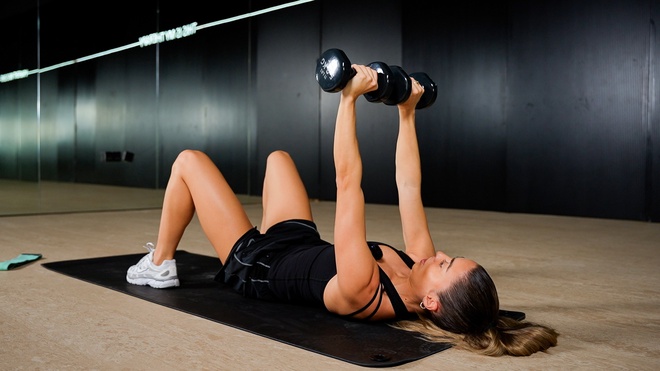
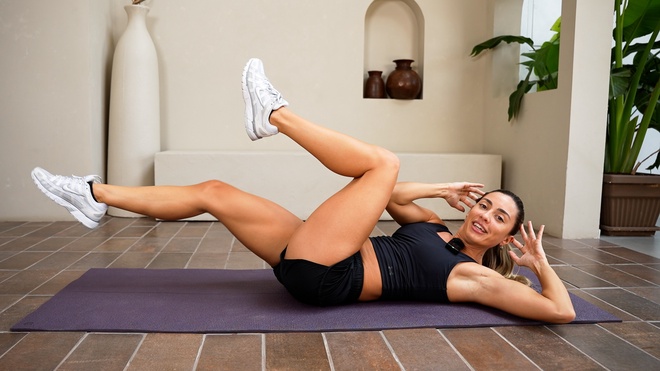
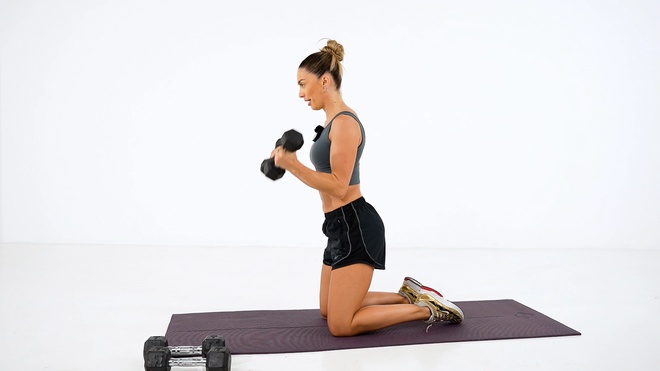
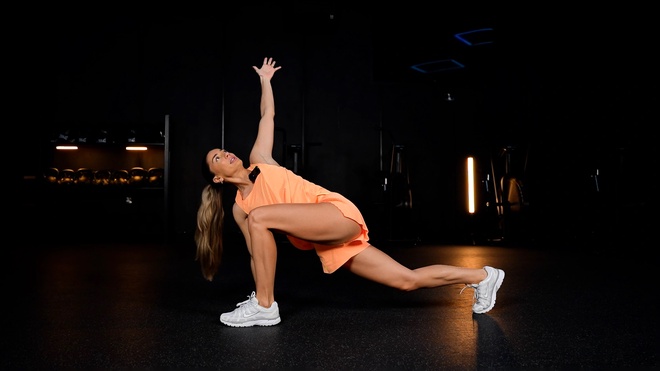
Join women reversing desk posture, releasing tight hip flexors, and restoring spinal mobility with certified trainers
Frequently Asked Questions
Related Exercises
Child's Pose
The natural counterpose to cobra. Flexion after extension. Sophie Jones sequences cobra directly into child's pose in nearly every cool-down. The two stretches together cover the full range of spinal motion.
Cat-Cow Stretch
Alternates between spinal flexion and extension rhythmically. If cobra feels too static, cat-cow provides the same extension benefit in a dynamic, breath-linked flow.
Downward Dog
Often sequenced with cobra in sun salutations and vinyasa flows. Downward dog decompresses the spine through inversion while cobra extends it through backbend. Complementary directions.
Pigeon Pose
Targets the hip flexors from a different angle. If cobra stretch addresses the front of the hip from a prone position, pigeon opens the hip rotators and deep flexors from a kneeling position.
Sphinx Pose
The gentler version of cobra. Same spinal extension on forearms instead of hands. The entry point for anyone whose lower back is not ready for full cobra pose.
This exercise helps with
Get cobra pose in a guided workout
Access 10 workouts featuring this exercise, plus personalized plans from Dr. Wellls.
Join women reversing desk posture, releasing tight hip flexors, and restoring spinal mobility with certified trainers
Your membership funds independent women's health research