Seated Hamstring Stretch: How-to, Benefits & Variations
The seated hamstring stretch targets the back of the thigh. Sit with one leg extended, fold forward from hips. Improves flexibility.
Seated Hamstring Stretch: How-to, Benefits & Variations
Someone asked me last week when they should start doing seated hamstring stretch. My answer was the same one I give every woman who walks into my sessions: yesterday. But today works too.
The seated hamstring stretch is one of those exercises that looks simpler than it actually is. The movement pattern it builds shows up in daily life constantly, from how you move groceries to how you get off the floor. Anastasia Zavistovskaya programs it regularly, and there's a reason for that.
Stretching: New To Stretching 3
Anastasia Zavistovskaya
How to Do Seated Hamstring Stretch
Sit on the floor with your right leg extended straight in front of you. Bend your left knee and place the sole of your left foot against your right inner thigh.
Sit tall, lifting through the crown of your head. If sitting upright is difficult, sit on a folded towel or yoga block.
Hinge forward from your hips, reaching your hands toward your right foot. Keep your back as flat as possible. Do not round your spine to reach further.
Hold the stretch for 30-45 seconds. Breathe into the stretch. You should feel the pull along the back of your extended leg.
Switch legs and repeat. Compare sides. Most people have a tighter hamstring on one side, especially if they cross one leg habitually.
Muscles Worked
Primary
Primary muscles
The main muscles targeted by the seated hamstring stretch, responsible for producing the movement force.
Secondary
Stabilizer muscles
Support the primary movers and maintain proper joint alignment throughout the movement.
Why this matters in perimenopause
Women lose lean muscle mass progressively from their 30s, and the decline accelerates during perimenopause as estrogen levels drop. Regular flexibility work directly counteracts this decline by maintaining tissue elasticity and joint range of motion that hormonal changes compromise.
Coach's Tips
"Grabbing your left feet and stretch it up." That's Anastasia Zavistovskaya's cue. This detail makes the difference between an effective rep and a wasted one.
Anastasia Zavistovskaya
"Trying to unbend your knee, trying to open your chest." That's Anastasia Zavistovskaya's cue. This detail makes the difference between an effective rep and a wasted one.
Anastasia Zavistovskaya
"No pain, okay? No rush." Safety is not optional. Anastasia Zavistovskaya emphasizes this in every set.
Anastasia Zavistovskaya
Breathe deeply and slowly throughout. Each exhale helps your muscles release a little more tension.
Why This Matters for You
During perimenopause, declining estrogen affects connective tissue elasticity, joint lubrication, and muscle pliability. Tendons and ligaments that once recovered overnight now stay stiff for days. The seated hamstring stretch counteracts this by maintaining tissue hydration and range of motion through regular, gentle loading.
Flexibility work also addresses the sleep and stress disruptions common in perimenopause. A systematic review found that stretching routines reduced perceived stress and improved sleep quality in women over 40. The mechanism is partly neural: sustained stretching activates the parasympathetic nervous system, lowering cortisol and promoting the relaxation response that perimenopause disrupts.
Variations & Modifications
Seated Hamstring Stretch with Block (Right)
lowVariation of the seated hamstring stretch that adds external load for progressive overload.
Seated Hamstring Stretch with Block (Left)
lowVariation of the seated hamstring stretch that adds external load for progressive overload.
Seated Hamstring Stretch (Side 2)
lowVariation of the seated hamstring stretch that modifies the standard movement pattern for different training emphasis.
Benefits
Restores range of motion that desk life steals
The seated hamstring stretch targets muscles that shorten from hours of sitting. Not a little tight. Structurally shortened. The kind of tightness that changes how you walk, sleep, and move.
Reduces injury risk
Tight muscles create compensation patterns. Your body routes around the restriction by overloading something else. Stretching breaks that cycle before the something else becomes an injury.
Supports joint health during hormonal changes
Declining estrogen affects connective tissue elasticity. Regular stretching maintains the hydration and pliability of tendons and ligaments that hormonal changes would otherwise stiffen.
Takes minutes, not an hour
You do not need a 60-minute yoga class to maintain flexibility. Targeted stretching for 5-10 minutes daily produces measurable range of motion improvements within 4 weeks.
Common Mistakes to Avoid
Bouncing to increase range
Ballistic stretching triggers the stretch reflex and tightens muscles instead of lengthening them. Hold steady for 30+ seconds.
Stretching cold muscles
Walk for 5 minutes or do a few bodyweight squats before stretching. Warm tissue is elastic. Cold tissue is brittle.
Rounding the spine to reach further
If you round your back to touch your toes, you are stretching your spine, not your target muscle. Hinge from the hips with a flat back.
Not breathing through the stretch
Deep exhales activate the parasympathetic nervous system, which signals your muscles to relax. Breathe into the tight spots.
Workouts Featuring This Exercise
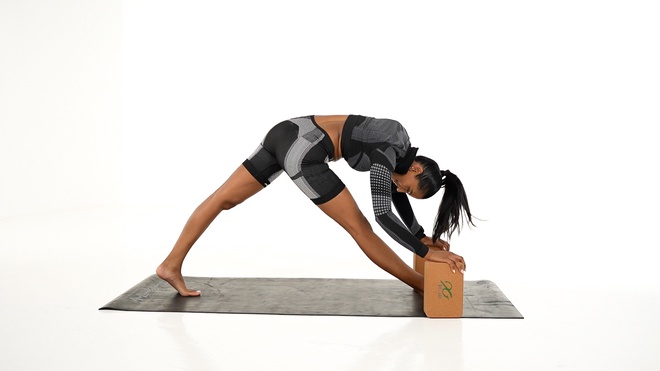
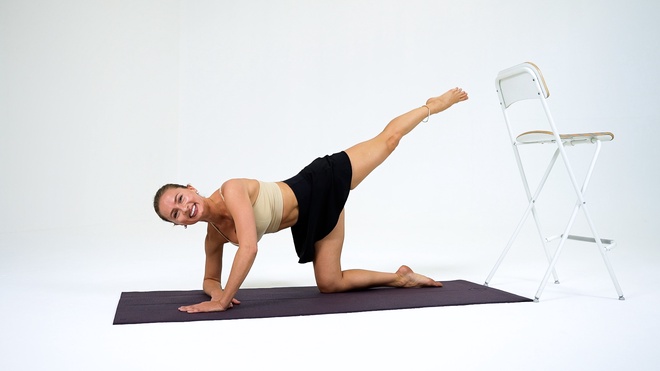
Join women building flexibility and joint health with certified trainers
Frequently Asked Questions
Related Exercises
Hip Flexor Stretch
Complements the seated hamstring stretch by targeting related muscle groups and movement patterns.
Hamstring Stretch
Complements the seated hamstring stretch by targeting related muscle groups and movement patterns.
Windshield Wipers
Complements the seated hamstring stretch by targeting related muscle groups and movement patterns.
IT Band Stretch
Complements the seated hamstring stretch by targeting related muscle groups and movement patterns.
Shoulder Stretch
Complements the seated hamstring stretch by targeting related muscle groups and movement patterns.
This exercise helps with
Get seated hamstring stretch in a guided workout
Access 2 workouts featuring this exercise, plus personalized plans from Dr. Wellls.
Join women building flexibility and joint health with certified trainers
Your membership funds independent women's health research