Shoulder Taps: How-to, Benefits & Variations
Shoulder taps build core anti-rotation strength from a plank position. Tap each shoulder alternately while keeping hips still.
Shoulder Taps: How-to, Benefits & Variations
Your body adapts to what you do most. Sit all day, and it molds to a sitting shape. The ${name.toLowerCase()} reverses that mold.
This is why Sophie Jones programs the shoulder taps in multiple Wellls workouts. It's not flashy. It's corrective. And during perimenopause, corrective wins.
Muscle Tone: Bringing Sexy Back 1
Sophie Jones
How to Do Shoulder Taps
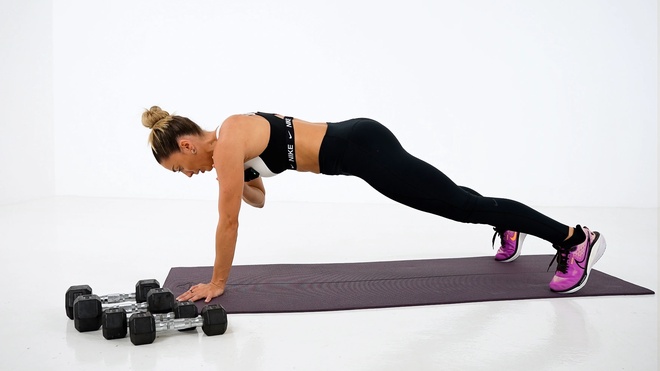
Start in a high plank position. Hands directly under shoulders, body in a straight line from head to heels.
Lift your right hand off the floor and tap your left shoulder. Keep your hips still. They should not rock side to side.
Return your right hand to the floor and lift your left hand to tap your right shoulder.
Alternate sides with control. The wider your feet, the easier it is to maintain stability. Start wide and narrow as you get stronger.
Keep your core tight throughout. If your hips sway with each tap, slow down or widen your stance.
Muscles Worked
Primary
Primary muscles
The main muscles targeted by the shoulder taps, responsible for producing the movement force.
Secondary
Stabilizer muscles
Support the primary movers and maintain proper joint alignment throughout the movement.
Why this matters in perimenopause
Women lose lean muscle mass progressively from their 30s, and the decline accelerates during perimenopause as estrogen levels drop. Regular resistance training directly counteracts this decline by stimulating muscle protein synthesis and providing mechanical loading for bone health.
Coach's Tips
"tuck the pelvis underneath, and we're gonna slowly tap shoulder to shoulder" That's Sophie Jones's cue. This detail makes the difference between an effective rep and a wasted one.
Sophie Jones
"I don't want the bum up here. No bums in the air" That's Sophie Jones's cue. This detail makes the difference between an effective rep and a wasted one.
Sophie Jones
If anything feels sharp rather than challenging, stop immediately. Drop the weight and check your form. Discomfort is fine. Pain is a message.
Start with bodyweight only until the movement feels natural. Add resistance gradually.
Why This Matters for You
The shoulder taps directly addresses three perimenopause priorities: muscle preservation, bone loading, and metabolic health. Estrogen decline after 40 accelerates sarcopenia, the age-related loss of lean muscle that changes body composition, weakens joints, and slows metabolism. Resistance training is the strongest evidence-backed countermeasure.
A 2023 network meta-analysis of 19 RCTs involving 919 postmenopausal women found moderate-intensity resistance training 3 days per week significantly improved lumbar spine and femoral neck bone mineral density. The effect was most pronounced during the first 48 weeks, meaning early adoption matters. The shoulder taps loads the exact skeletal sites and muscle groups that perimenopause targets first.
Variations & Modifications
Quad Shoulder Taps
mediumVariation of the shoulder taps that modifies the standard movement pattern for different training emphasis.
Fast Shoulder Taps
mediumVariation of the shoulder taps that modifies the standard movement pattern for different training emphasis.
T-Position Shoulder Taps
mediumVariation of the shoulder taps that modifies the standard movement pattern for different training emphasis.
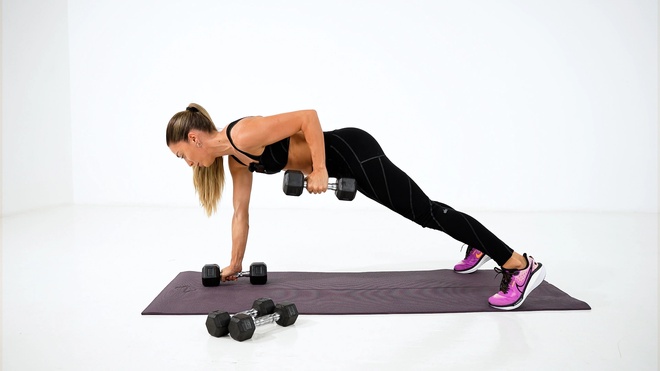
Warm-up: Shoulder Taps and Mountain Climbers
mediumVariation of the shoulder taps that modifies the standard movement pattern for different training emphasis.
Benefits
Builds muscle where it matters most
The shoulder taps targets muscles that daily life either neglects or actively weakens. Desk work, driving, and couch sitting all create specific weakness patterns that this exercise reverses.
Strengthens bones at critical sites
Resistance training is the single most effective non-pharmaceutical intervention for bone density. A 2023 meta-analysis of 17 RCTs confirmed significant BMD improvements at the lumbar spine and femoral neck with regular strength training.
Fights perimenopause muscle loss
Women lose 3-5% of lean muscle mass per decade after 30. During perimenopause, estrogen decline accelerates the process. Resistance exercises directly counteract this by stimulating muscle protein synthesis.
No gym required
This exercise needs minimal or no equipment. A dumbbell, a resistance band, or nothing at all. The barrier to entry is low, which means the consistency of doing it stays high.
Common Mistakes to Avoid
Using momentum instead of muscle control
If you need to swing or jerk the weight, it is too heavy. Drop 20% and control every inch of the movement.
Inconsistent range of motion
Every rep should look the same. Full range from start to finish. Partial reps build partial strength.
Holding your breath throughout
Exhale on the exertion phase, inhale on the return. Breath-holding spikes blood pressure and reduces core stability.
Ignoring the eccentric (lowering) phase
The lowering phase builds more muscle than the lifting phase. Take 2-3 seconds to lower. Do not let gravity do the work.
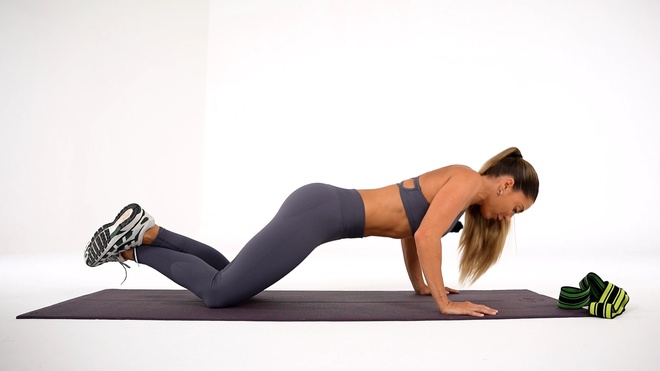
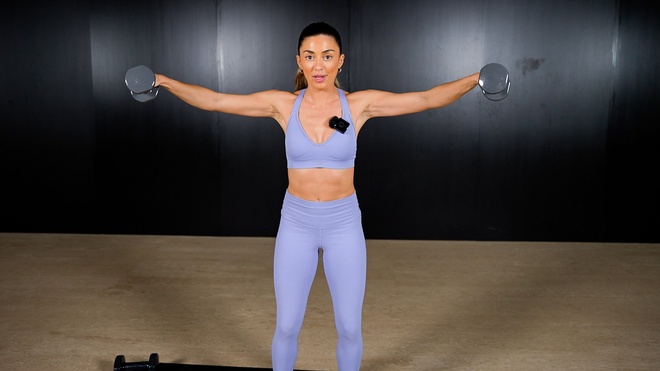
Workouts Featuring This Exercise
Join women building strength and bone density with certified trainers
Frequently Asked Questions
Related Exercises
Lateral Raise
Complements the shoulder taps by targeting related muscle groups and movement patterns.
Shoulder Stretch
Complements the shoulder taps by targeting related muscle groups and movement patterns.
Standing Shoulder Press
Complements the shoulder taps by targeting related muscle groups and movement patterns.
Arm Rotation
Complements the shoulder taps by targeting related muscle groups and movement patterns.
Standing Shoulder Stretch
Complements the shoulder taps by targeting related muscle groups and movement patterns.
This exercise helps with
Get shoulder taps in a guided workout
Access 4 workouts featuring this exercise, plus personalized plans from Dr. Wellls.
Join women building strength and bone density with certified trainers
Your membership funds independent women's health research