Cool Down Stretch: Your Complete Post Workout Guide
A cool down stretch is a 3-5 minute post workout stretch routine. Include spinal twists, hamstring stretches, hip openers, and deep breathing. Lowers cortisol, prevents stiffness, aids recovery.
Cool Down Stretch: Your Complete Post Workout Guide
You finished the workout. Your heart rate is dropping. And the voice in your head says: skip it. Just grab your stuff and go.
That voice is lying to you. The cool down stretch is not a bonus round tacked onto the end for people with extra time. It is the part of the workout where your body actually consolidates what it just did. Muscles that fired hard for 20, 30, 45 minutes are sitting in a contracted, shortened, inflamed state. Walking away in that state is how stiffness becomes chronic. How tight hips become back pain. How a good workout becomes the reason you cannot move the next morning.
Seventy-five cool down stretch sequences live in our workout library. Thirty-six different workouts, ten trainers. Danielle Harrison programs cool down stretches after boxing and HIIT sessions 36 times across her programs. Jessica Casalegno closes every Pilates session with a stretch flow. Linda Chambers puts them in back health and muscle tone work. Sophie Jones uses them in weight loss circuits and glow-up challenges. When every trainer across every discipline ends the same way, that is not a coincidence. That is biomechanical necessity.
Boxing Full Body Burn: Workout 1
Danielle Harrison
How to Do Cool Down Stretch
Find a mat or soft surface and lower yourself to the floor. Your workout is done. The cool down stretch begins on the ground because your nervous system needs the signal that effort is over. Danielle Harrison: let's lay back. Let's take the knee across. The floor position drops your heart rate faster than standing stretches. Lie on your back, arms relaxed at your sides.
Start with a lying spinal twist. Pull one knee across your body toward the opposite side, keeping the opposite shoulder grounded. Danielle Harrison: try not to lift that opposite shoulder. Hold for 20-30 seconds each side. This post workout stretch decompresses the lumbar spine and releases the obliques, glutes, and lower back muscles that worked during every standing exercise.
Hug both knees into your chest. Rock gently side to side. This releases the paraspinal muscles along your lower back and creates gentle traction through the spine. Linda Chambers programs this in her back health cool down stretches after workout. The rocking motion massages the sacral area against the floor.
Extend one leg toward the ceiling for a hamstring stretch. Keep a slight bend in the knee. Danielle Harrison: extend your right leg up towards the ceiling, pull down on that straight right leg. If you cannot reach your leg comfortably, loop a towel around your foot. Hold 20-30 seconds each side. Your hamstrings shortened during every squat, lunge, and deadlift you just performed.
Roll onto your front and flow between cobra and a kneeling stretch. Danielle Harrison: snake the head down and up, lower the hips. Take the hips back. This alternation stretches the hip flexors and abdominals (cobra) then the lower back and shoulders (kneeling position). Three to four slow repetitions.
Come to standing through a deep squat. Danielle Harrison: take a big, deep breath in. As you breathe out, down into that squat. Slowly roll up to standing, head comes up last. The full cool down stretch sequence takes 3-5 minutes. That is all.
Muscles Worked
Primary
Hamstrings (biceps femoris, semitendinosus, semimembranosus)
Every cool down stretch sequence in our library includes at least one hamstring stretch. Danielle Harrison programs lying hamstring pulls. Jessica Casalegno uses seated forward folds. The hamstrings contract during squats, lunges, deadlifts, and running. A 2024 meta-analysis found that 30-60 seconds of static stretching optimizes flexibility gains. The cool down window is when your muscle temperature is highest and tissue is most pliable for lengthening.
Hip flexors (iliopsoas, rectus femoris)
Tight hip flexors are the hidden cost of every workout that involves standing, lunging, or running. During exercise, the hip flexors contract repeatedly. During the cool down stretch, low lunge positions and cobra variations open the front of the hip. Danielle Harrison: take it into a lunge, lift up, have a little rock through your hips. The rocking motion moves the stretch through different angles of the hip capsule.
Erector spinae and lumbar extensors
Spinal twists, knees-to-chest, and forward folds all target the muscles running alongside the spine. These muscles brace during every loaded exercise. The cool down stretch gives them permission to release. Linda Chambers programs spinal decompression in every back health workout cool down because the erector spinae need active unwinding after they have been stabilizing under load.
Secondary
Gluteus maximus and medius
The lying spinal twist stretches the glutes through rotation. Figure-four stretches target the deep external rotators. Jessica Casalegno: lying hamstring stretch, figure four glute stretch, and seated forward fold. The glutes fire during almost every lower body exercise and carry residual tension into the next day if not stretched.
Shoulders, neck, and upper trapezius
Danielle Harrison: bend it at the elbow, grab it, and drop that hand down between your shoulder blades. Overhead triceps stretches with a side lean open the shoulders and lateral neck. The upper body cool down stretches release tension from pushing, pulling, and holding dumbbells.
Calves (gastrocnemius and soleus)
Downward dog pedals and standing forward folds stretch the calves. Sophie Jones programs calf stretches within cool down sequences after weight loss circuits. The calves absorb impact during jumping, running, and any exercise performed standing.
Why this matters in perimenopause
A 2024 systematic review found that yoga and stretching protocols improved flexibility, vasomotor symptoms, and overall quality of life in menopausal women. During perimenopause, declining estrogen reduces collagen turnover in tendons and ligaments. The post workout stretch window matters more because connective tissue is slower to recover. A 2023 study found that exercise including stretching managed the cortisol stress response in menopausal women. Cortisol stays elevated longer after exercise during perimenopause. The cool down stretch is where you bring it back down.
Coach's Tips
"Let's lay back. Let's take the knee across. Try not to lift that opposite shoulder." Danielle Harrison cues this in her boxing cool downs. The spinal twist only works when the opposite shoulder stays pinned to the floor. Lift that shoulder and you lose the rotation that decompresses the lumbar spine. Use your body weight to anchor it. The twist happens between your hips and your chest, not through your shoulder blade peeling off the mat.
Danielle Harrison
"Snake the head down and up, lower the hips. Take the hips back." This cobra-to-kneeling flow from Danielle Harrison is one of the most efficient two-for-one stretches in any cool down. The cobra opens hip flexors and abdominals. Taking the hips back stretches the lower back and lats. Three to four cycles. Slow. The transition itself is part of the stretch.
Danielle Harrison
"Grab your elbows, we just take a little swing side to side." The ragdoll sway appears in cool down stretches across Danielle Harrison, Jessica Casalegno, and Sophie Jones. Bend your knees slightly, fold forward, hold opposite elbows, and sway. The lateral rocking decompresses the lower back while gravity stretches the hamstrings. Two stretches in one position.
Multiple trainers
"Take a big, deep breath in. As you breathe out, down into that squat." Danielle Harrison uses this breath-to-movement pattern to close every session. The exhale activates the parasympathetic nervous system. A 2023 systematic review on exercise and cortisol found that the cool-down phase specifically helps manage the stress hormone response. Breathe in for four counts. Out for six. Every exhale during your cool down stretches is shifting you from fight-or-flight to rest-and-recover.
Danielle Harrison
"If you can't reach your toes and you need a towel to act as an extension, do that." This is the only modification cue in our cool-down database, and it is the most important one. Forcing depth in a post workout stretch when your muscles are fatigued is how strains happen. Towels, straps, blocks, bent knees. Whatever brings the stretch to you instead of you fighting your way to the stretch.
Danielle Harrison
Head comes up last when you roll to standing from a forward fold. Blood pools in your upper body during inverted stretches. Standing quickly causes lightheadedness, and this is more common during perimenopause when vasomotor instability can make blood pressure slower to adjust. Danielle Harrison: deep breath in, down into that squat, slowly roll up to standing. Vertebra by vertebra. Give your circulation five seconds to catch up.
Danielle Harrison
If lying on the floor is not an option, every cool down stretch has a seated or standing alternative. Spinal twists work from a chair. Hamstring stretches work with a foot propped on a step. Hip flexor stretches work standing with one foot on a bench behind you. Lianna Brice programs seated cool-down breathing for barre sessions where the floor transition takes too long. The stretch matters. The position is flexible.
Multiple trainers
Shorten the sequence when you are pressed for time, but do not skip it entirely. A two-minute cool down stretch is better than nothing. Pick the three stretches that match what you just worked: lower body workout gets hamstring stretch, spinal twist, hip flexor opener. Upper body gets shoulder stretch, chest opener, neck rolls. Linda Chambers fits cool down stretches into 50-second segments in her muscle tone workouts. You do not need ten minutes.
Linda Chambers
Why This Matters for You
Here is the thing nobody tells you about exercise during perimenopause: the workout is only half the equation. The other half is what happens after.
Estrogen regulates inflammation. As it declines, the inflammatory response to exercise becomes more pronounced. The same workout that barely made you sore five years ago now leaves you creaking for two days. A 2024 systematic review found that yoga and stretching protocols improved flexibility, vasomotor symptoms, and overall quality of life in menopausal women. The cool down stretch is where you intervene in that inflammatory cascade while your body is still warm enough to respond.
Cortisol is the other piece. A 2023 study found that exercise including stretching managed the cortisol stress response in menopausal women. During perimenopause, cortisol clearance slows. Your body takes longer to come down from the stress of exercise. A five-minute post workout stretch is not luxury. It is hormonal management. Danielle Harrison's breath cues during cool down are physiologically shifting the autonomic nervous system from sympathetic (fight) to parasympathetic (recovery).
Then there is the connective tissue angle. Declining estrogen reduces collagen synthesis in tendons, ligaments, and fascia. The same tissues that used to bounce back from a hard session now hold onto stiffness. Consistent cool down stretching counteracts this. Not in one session. Over weeks and months. Linda Chambers programs cool down stretches in her back health series specifically because the women doing those workouts cannot afford to skip the recovery component.
The evidence lines up. A 2022 randomized trial found restorative stretching positions reduced inflammatory markers. A 2023 systematic review confirmed the dose-response relationship between stretching and cortisol management. This is not folklore. It is physiology.
Variations & Modifications
Full-Body Floor Cool Down (Lying Sequence)
lowThe most common cool down stretch format in our library. Lie on your back and move through spinal twist, knees to chest, hamstring pull, figure-four glute stretch, then roll to cobra. Danielle Harrison programs this sequence across all 36 of her cool-down segments. The floor gives you stability so fatigued muscles do not have to balance and stretch at the same time.
Pilates Cool Down Flow
lowJessica Casalegno's approach: roll like a ball, transition through cobra, press to downward dog, walk feet to hands, roll up to standing. This cool down flow links each stretch to the next through movement rather than holding static positions. It maintains body warmth while lengthening the spine, hamstrings, and hip flexors in one continuous sequence.
Seated Cool Down with Breathing
lowAnastasia Zavistovskaya programs seated cool down breathing at the end of barre sessions. Sit cross-legged, take deep breaths, shake out the arms. For anyone who cannot easily get to the floor or has limited time, a two-minute seated cool down with deep breathing still activates the parasympathetic response that brings cortisol down post-exercise.
Post-Cardio Cool Down (Standing to Floor)
lowDanielle Harrison's boxing and HIIT cool downs start standing (ragdoll sway, deep breath squat) then transition to the floor. The standing start keeps blood from pooling in the legs too quickly after high-intensity work. Sophie Jones uses a similar standing-to-floor transition in core sweat sessions. Important after any workout that had your heart rate above 75% max.
Yoga-Based Cool Down
lowMish Naidoo and the yoga body balance series end with seated neck rolls, torso circles, and a brief meditation. This variation emphasizes the nervous system reset more than the muscular stretch. A 2024 study on yoga and menopause found improvements in vasomotor symptoms and quality of life. The yoga cool down prioritizes breath and stillness over range of motion.
Quick Two-Minute Cool Down
lowLinda Chambers fits cool down stretches into 50-second segments when workout time is limited. Pick three: one spinal twist, one hamstring or hip flexor stretch, one chest or shoulder opener. Hold each for 20-30 seconds. Done. Not ideal, but infinitely better than skipping. Bonnie Lyall uses a similarly brief cool down in booty and core Pilates sessions.
Benefits
The cortisol off-ramp your body is waiting for
Your workout spiked cortisol. That is normal and necessary. But cortisol that stays elevated drives inflammation, disrupts sleep, and stores belly fat. A 2023 systematic review found that exercise including stretching managed the cortisol stress response in menopausal women. The cool down stretch is not just about muscles. It is your nervous system's transition from stress to recovery. Danielle Harrison's breath cues during cool down stretches after workout are doing double duty: lengthening tissue and lowering cortisol at the same time.
Muscle recovery starts in the cool down, not the next morning
Blood is already flowing to the muscles you just worked. A post workout stretch takes advantage of that elevated blood flow to deliver oxygen and clear metabolic waste while tissue temperature is still high. Muscles are at their most pliable immediately after exercise. A 2024 meta-analysis found 30-60 seconds of static stretching produces optimal flexibility gains. Cool down stretches use the body's own post-exercise state to maximize this window.
Stiffness prevention that compounds over months
Skip one cool down and you feel fine the next day. Skip fifty and your hips are tighter, your back aches after workouts, and your range of motion has quietly shrunk. Chronic stiffness builds so gradually you blame aging instead of the habit gap. Danielle Harrison programs cool down stretches in every single one of her 36 workout sessions. That consistency is the difference between a body that stays mobile across years and one that slowly locks up.
Mental transition between effort and the rest of your life
You cannot go from all-out boxing rounds to answering emails without a buffer. The cool down stretch is that buffer. The parasympathetic nervous system needs a physical signal that effort is over. Lying on the floor, breathing slowly, stretching gently. Your body reads these cues and downregulates accordingly. Anastasia Zavistovskaya's seated cool down breathing is explicitly designed for this nervous system reset.
Common Mistakes to Avoid
Skipping the cool down stretch entirely
The most common mistake by a mile. Everyone knows they should stretch after a workout. Almost nobody does. The fix is not motivation. It is design. Build the cool down into the workout time, not after it. If you have 30 minutes, your workout is 25 and your cool down stretches are 5. Danielle Harrison structures her sessions this way: the cool down is part of the workout video, not a separate section you opt into.
Bouncing or forcing stretches on fatigued muscles
Muscles that just worked hard are vulnerable. Ballistic bouncing in a post workout stretch overrides the stretch reflex and risks microtears in already-stressed tissue. Every cool down cue in our library uses slow, sustained holds. Danielle Harrison: gently pull back, just lean over slightly. The word gently matters. This is not the time to chase new flexibility records.
Stretching cold muscles and calling it a cool down
If you sit around for 20 minutes after your workout then try to stretch, your muscles have already cooled and contracted. The cool down stretch should start within two minutes of finishing your last working set. Walk for 30 seconds to transition, then begin the stretch sequence. The window when your tissue is warm and pliable does not last long.
Holding stretches for only 5-10 seconds
Too short to produce actual tissue change. A 2024 meta-analysis on static stretching found that 30-60 seconds per position optimizes flexibility gains. Count to 20 at minimum. Better yet, use breath counts: 5-8 slow breaths per stretch. Our trainers hold longer than most YouTube tutorials recommend. Jessica Casalegno's Pilates cool down sequences hold each position for at least 30 seconds.
Workouts Featuring This Exercise
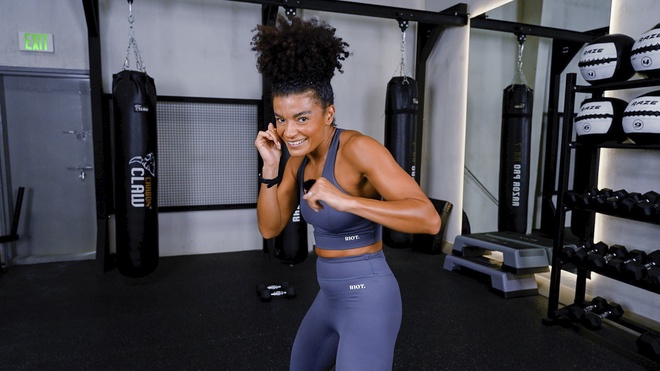
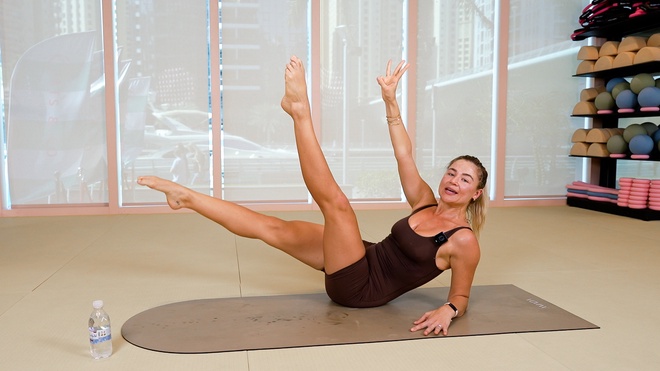
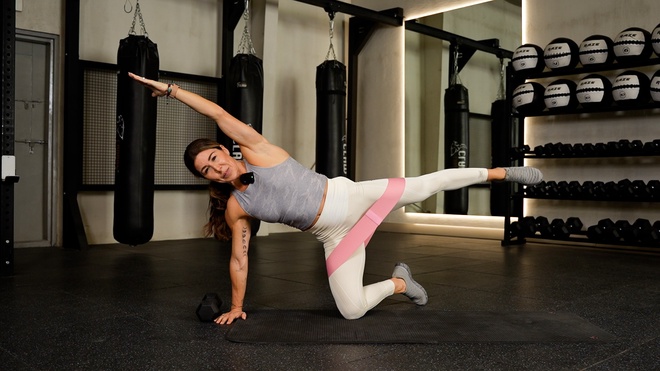
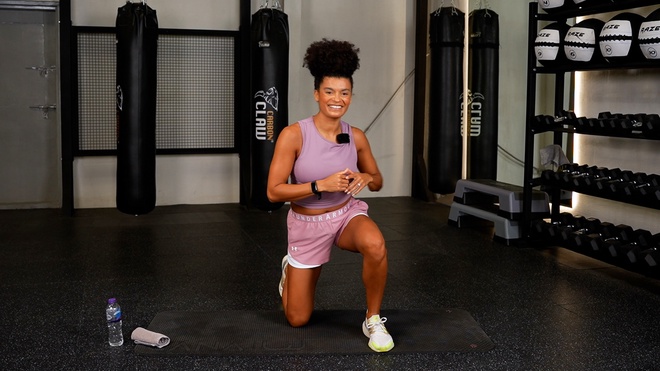
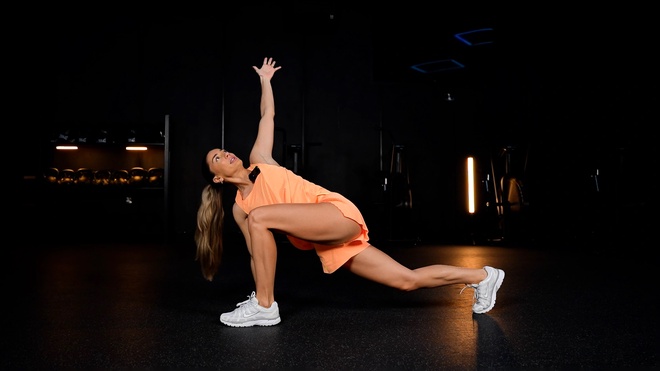

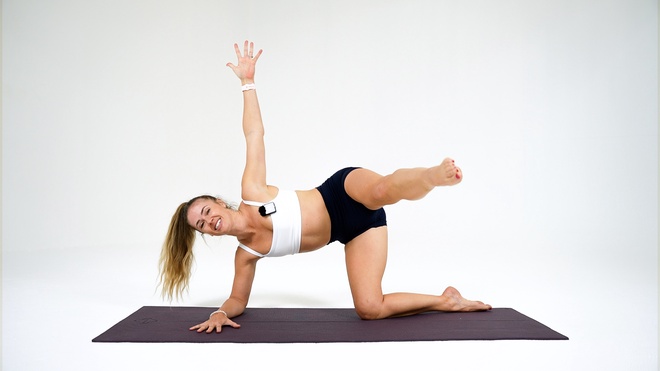
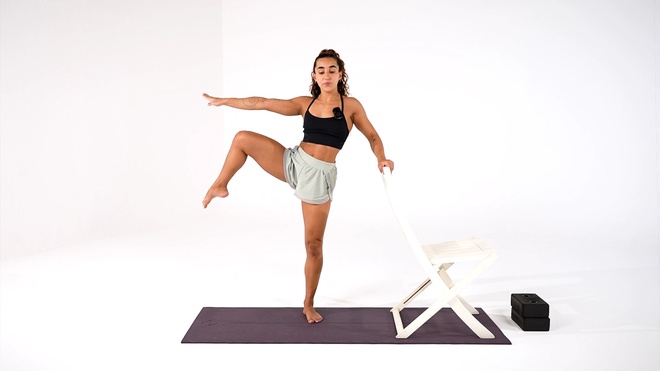
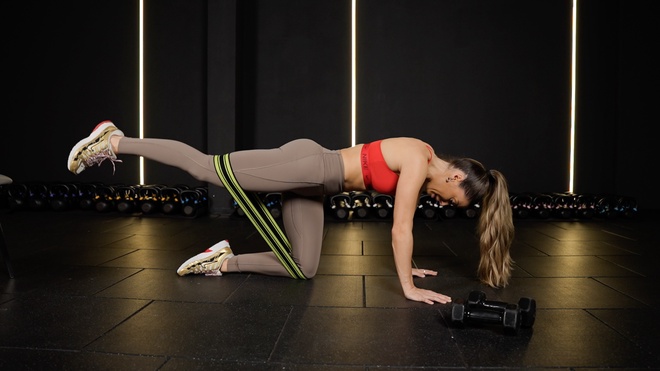
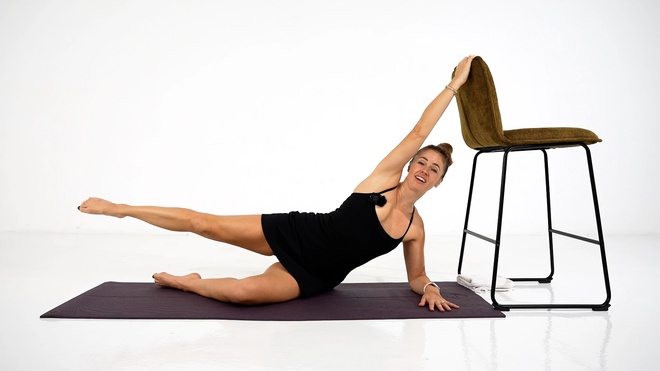
Join women recovering smarter with 10 certified trainers across 36 workouts featuring guided cool down stretches
Frequently Asked Questions
Related Exercises
Cat Cow
Cat cow appears inside many cool down sequences. The spinal flexion and extension mobilizes the entire vertebral column. Jessica Casalegno uses it as a transition within Pilates cool down flows.
Forward Fold
The standing forward fold is one of the most common individual stretches within a cool down stretch sequence. It targets the hamstrings, calves, and lower back simultaneously. Appears in 152 segments across our library.
Knees to Chest
Knees to chest is the classic lower back release that appears in nearly every lying cool down sequence. Danielle Harrison and Linda Chambers both use it as the first floor stretch after exercise.
Figure Four Stretch
The lying figure-four targets the glutes and deep hip rotators. It is one of the most effective hip stretches for post-leg-day cool downs. Jessica Casalegno: lying hamstring stretch, figure four glute stretch.
Neck Stretch
Upper body cool downs include neck and shoulder work. Seated neck rolls and lateral stretches release tension from holding weights and bracing the core during exercise.
Get cool down stretch in a guided workout
Access 10 workouts featuring this exercise, plus personalized plans from Dr. Wellls.
Join women recovering smarter with 10 certified trainers across 36 workouts featuring guided cool down stretches
Your membership funds independent women's health research