How to balance hormones in perimenopause: NAMS recommends hormone therapy as first-line. Only 31% of OB-GYN programs teach menopause.
Why Can't I Find a Doctor Who Understands Menopause?
Only 1,300 NAMS-certified practitioners for 54 million menopausal women in North America. 80% of OB/GYNs lack adequate menopause training.
“Omg! I'll be 38 next week and im experiencing the same thing!”
For informational purposes only. Not a substitute for professional medical advice.
Ninety-two percent. That's the percentage of OB-GYN residency programs in the United States that have no dedicated menopause curriculum. I need you to sit with that number. The doctor you trusted through your pregnancies, through your annual exams, through your PAP smears, was statistically never taught to manage what's happening to you right now. There are roughly 1,300 NAMS-certified menopause practitioners in North America. For 54 million menopausal women. You do the math. Then you understand why you can't find one.
Key takeaways
- How to balance hormones in perimenopause: NAMS recommends hormone therapy as first-line.
- Only 31% of OB-GYN programs teach menopause.
- medical_education_gap
- progesterone_estrogen_testosterone_sequence
Why No Menopause Specialist Is Available and How to Balance Hormones in Perimenopause Despite That
Only 31.3 percent of US OB-GYN residency programs have any menopause curriculum. There are roughly 1,300 NAMS-certified practitioners for 54 million menopausal women in the United States. If you have been trying to figure out how to balance hormones in perimenopause and cannot find a specialist who actually understands the hormonal transition you are living through, you are not failing at healthcare. Healthcare is failing you. I spent months reading the research on menopause specialist availability, and the numbers paint a picture of structural abandonment. Most women navigating perimenopause will never see a provider trained specifically in menopausal hormone management. They will see a general practitioner who received fewer than three hours of menopause education across four years of medical school. And that GP, through no malice of their own, will not know how to balance hormones in perimenopause because nobody taught them. The women I hear from most often are not uneducated. They are not passive. They are women who have done their own research, identified their symptoms, and come to their appointments with specific questions about how to balance hormones in perimenopause, only to encounter a provider who knows less about the topic than they do. That mismatch between patient knowledge and provider training is the central crisis, and it will not resolve itself through individual advocacy alone.
The training gap nobody told you about
A 2022 survey of US OB-GYN residency program directors found 92 percent lacked dedicated menopause curriculum. Of those with any menopause teaching, 71 percent offered two or fewer lectures per year. A separate study found OB-GYN graduates failed to meet basic competency thresholds for menopause management on standardized assessments. I want to emphasize: this is not a fringe finding. This is the norm. The doctors most women turn to for hormonal questions are the ones with the least training in hormonal transitions. I have read the syllabi. I have looked at the CME requirements. In no US state is menopause-specific continuing education mandatory for OB-GYNs, the very specialists patients assume would know how to balance hormones in perimenopause. The assumption is reasonable. The reality is not. A 2019 Mayo Clinic survey found 58 percent of medical residents reported lacking confidence in managing menopausal patients. These residents become the attendings who write the prescriptions, or more accurately, who decline to write them because they do not feel competent to manage what they were never taught to manage. That is how training gaps become care gaps become health outcome gaps.
How perimenopause actually changes your hormones
Perimenopause is not a single hormone dropping. It is an orchestra losing its musicians one by one, in no particular order, while the audience wonders why the music sounds wrong. Progesterone declines first as ovulation becomes irregular, and this is the detail that changes everything about understanding how to balance hormones in perimenopause. Progesterone modulates GABA receptors in the brain, and GABA is your primary inhibitory neurotransmitter, the one responsible for calm, sleep, and emotional steadiness. When progesterone drops, GABA signaling weakens. Anxiety arrives before hot flashes do. Insomnia precedes any change in menstrual patterns. Meanwhile estrogen does not simply decline. It fluctuates wildly, sometimes spiking to levels higher than peak reproductive years before crashing to postmenopausal levels within the same month. These erratic fluctuations disrupt serotonin receptor sensitivity in the dorsal raphe nuclei and destabilize the thermoneutral zone in the hypothalamus. The clinical result is a woman who feels anxious, cannot sleep, has unpredictable hot flashes, and is told by her untrained GP that her labs look normal. The labs look normal because a single blood draw captures one moment in a hormonal rollercoaster that changes direction daily. Understanding these mechanisms is not optional for anyone figuring out how to balance hormones in perimenopause. It is the foundation. Without it, you are treating symptoms in the dark, reaching for supplements or medications without knowing which hormone is actually driving the problem.
Key mechanisms
Deep scientific content for No menopause specialist available is coming in Wave 3.
Our team is reviewing research papers and clinical guidelines.
Talk to Dr. Wellls — free consultation
4 free messages — no account required
Dr. Wellls AI
Quick start — tap or speak:
Powered by Lifestyle Medicine evidence. Not a substitute for medical advice.
You're Not Alone
women are talking about no menopause specialist available right now
Thousands of women have been through the same thing. Here's what they say.
“My doc is female. She flat out told me 'I'm doing all I can to learn about this but there is just nothing studied on women. So know I'm trying.' I believe she is. But she's overwhelmed and frustrated she can't help.”
“The only specialist in town. The doc is thinking 'Don't like it? Go to another specialist. Oops, there isn't one!'”
“I dream of us having our own healthcare system. Telehealth clinics are the closest we can get, but honestly, we need our own systems. We cannot trust the existing ones to take care of us any more.”
+ 3 more stories from real women
Understanding Your Menopause Care Gap
A brief assessment to understand what barriers are standing between you and the menopause care you deserve.
2,527 women got their profile this month
Free · 5 min · 100% private
This is not a clinical assessment. For medical concerns, consult a healthcare provider.
Take a moment for yourself
These evidence-based techniques can help manage no menopause specialist available symptoms right now.
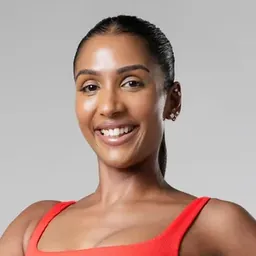
Curated Exercise Sets
4 personalized routines with 16 exercises from professional trainers
The many faces of no menopause specialist available
4 distinct patterns we've identified from real women's experiences
A 2022 survey of 145 US OB-GYN residency programs found that only 31.3% had any menopause curriculum. Of those, 71% offered two or fewer lectures per year. A woman in our data wrote: 'My doc is female. She flat out told me I'm doing all I can to learn about this but there is just nothing studied on women.' That doctor was being honest. And that honesty should make you furious at the system, not at her.
From our data
In our community data, 16 posts across 2 platforms directly addressed the inability to find a menopause specialist. The emotional tone distribution is telling: frustrated (7 posts), seeking_help (3), angry (1), confused (1), desperate (1), sharing_experience (2). The most common life stage was menopause and perimenopause equally (6 posts each). These are women who KNOW something is wrong and can't find someone qualified to help.
Connected problems
What women with no menopause specialist available also experience
Your personalized protocol
A lifestyle medicine approach to no menopause specialist available, built on 6 evidence-based pillars
Track Symptoms + Request Blood Work
Log symptoms daily. Schedule a GP appointment with your prepared list. Request: FSH, estradiol, progesterone, full thyroid panel, vitamin D, B12. Begin lifestyle interventions: 20-minute daily walk, Mediterranean-leaning meals, magnesium glycinate 200-400mg at bedtime.
Specialist Search + Strength Training
If blood work indicates perimenopause and your GP isn't comfortable managing it, book a telehealth menopause consultation. Add resistance training 2-3 times per week (bodyweight squats, planks, resistance bands). This directly supports bone density, insulin sensitivity, and estrogen metabolism during the transition.
Evaluate Treatment Options
With blood work results and specialist input (telehealth or in-person), discuss: MHT (transdermal es...
Build Your Support Network
Share your experience with one trusted person. Identify a secondary medical provider for when your p...
Stabilize + Advocate
By this point you should have blood work data, a treatment plan (hormonal or lifestyle-based), and a...
1,892 women built their perimenopause advocacy plan this month
Start your protocolJoin 131+ women discussing no menopause specialist available
Real experiences shared across Reddit, TikTok, and health forums
“The only specialist in town” sheds light on this issue. The doc is thinking “Don’t like it? Go to another specialist. Oops, there isn’t one!” I bet you’re not the only person upset with this place,...
The fact that your doctor predicted the timeline is just out there. You need a new doctor. It does sound like perimenopause, you probably have even more symptoms that you don't even realize are...
Is there really not a nearby town you can go to without too much of a hassle? This sounds like some sort of discrimination to me. But without knowing more about you vs other patients...
Reading others' stories is the first step. Join to share yours.
Community
A safe space for women navigating no menopause specialist available
Frequently asked questions
Common questions about No menopause specialist available
How we research and fact-check
Every article on Wellls is researched using peer-reviewed medical literature, clinical guidelines, and real patient experiences from 16 online discussions.
Sources: We reference 44 PubMed-indexed studies, ACOG/NAMS clinical guidelines, and validated screening tools.
Review: Content is written by our editorial team, enriched from a medical knowledge base of 15,000+ sources. All content follows our evidence-based editorial standards and is cross-referenced with clinical guidelines.
This content is for informational purposes only and does not constitute medical advice. Our editorial standards · Medical advisory board
References
44 sources reviewed for this no menopause specialist available guide
- 1.Lack of menopause education for residents PDF
- 2.Uncovering gaps in management of vasomotor symptoms
- 3.Swedish physicians' knowledge of menopause prescribing
- 4.Unspoken and Untaught: Addressing the Gap in Menopause Education
- 5.Menopause Management Knowledge in Postgraduate Residency
- 6.Survey shows menopause curriculums lacking in residency programs
- 7.Bridging the Gap in Menopause Education for Medical Professionals
- 8.Needs assessment of menopause education in US OB-GYN residency
- 9.92% of Ob-Gyn Programs Lack Menopause Curriculum
- 10.The Menopause Brain
History of updates
Current version (March 11, 2026) — Content reviewed and updated based on latest research
First published (March 7, 2026)
Explore related problems
Women who experience no menopause specialist available often also deal with these
Your personalized plan is ready
You've spent months searching for a menopause specialist. Our Dr. Wellls doesn't replace one. But she can help you prepare for that appointment, interpret your symptoms, build an evidence-based lifestyle protocol while you wait, and give you the language to advocate for the care you deserve. She knows the NAMS guidelines, the blood tests to request, and the questions that change the conversation.
1,892 women built their perimenopause advocacy plan this month
Free assessment · Takes 2 minutes · No account required
Medical disclaimer: This content is for informational purposes only and does not constitute medical advice, diagnosis, or treatment. Always consult a qualified healthcare provider for personal medical decisions. Content is based on peer-reviewed research and updated regularly. Learn about our editorial standards.