Drop Squat: How-to, Benefits & Variations
Drop squats build reactive leg power. Jump feet wide into a deep squat, jump back together. Trains quick muscle response.
Drop Squat: How-to, Benefits & Variations
Women lose 3-5% of lean muscle mass per decade after 30. By perimenopause, the drop accelerates because estrogen directly influences muscle protein synthesis. The drop squat is one of the most effective exercises for fighting this decline.
Danielle Harrison programs this movement because it targets the specific muscles and patterns that atrophy fastest. And the best part? You do not need a gym to do it.
Muscle Tone: 7 Day Bodyweight Challenge 6
Danielle Harrison
How to Do Drop Squats
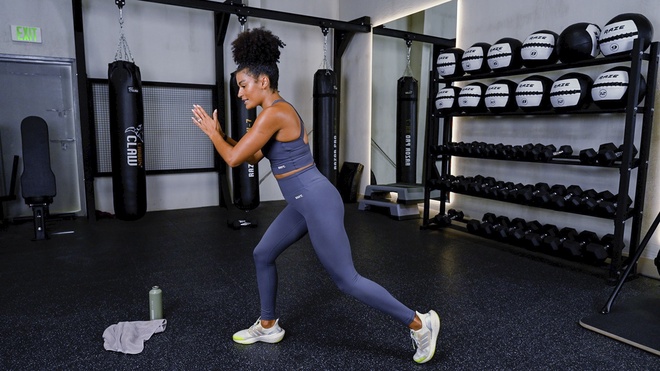
Stand with feet together, arms at your sides or in front of your chest.
Jump your feet out to a wide stance while simultaneously dropping into a deep squat. Land with soft knees.
Touch the floor between your feet if you can, or keep hands at chest height.
Jump your feet back together to the starting position. That is one rep.
The speed matters. This is an explosive, reactive movement. If the impact is too much, step out into the squat instead.
Muscles Worked
Primary
Primary muscles
Main muscles targeted by the drop squat.
Secondary
Stabilizer muscles
Support primary movers and maintain joint alignment.
Why this matters in perimenopause
Women lose lean muscle mass from their 30s, accelerating during perimenopause as estrogen drops. Regular cardio training counteracts this by preserving cardiovascular capacity and fast-twitch muscle fibers.
Coach's Tips
"Hinge, sending my hips back, similar to our RDL." That is Danielle Harrison's cue. This detail makes the difference between an effective rep and a wasted one.
Danielle Harrison
If anything feels sharp rather than challenging, stop immediately. Back off the depth and reassess your alignment. Discomfort is fine. Pain is a message.
Reduce speed or range of motion until your body adapts.
Match your breath to the movement. Steady breathing activates the parasympathetic nervous system.
Why This Matters for You
The drop squat directly addresses three perimenopause priorities: muscle preservation, bone loading, and metabolic health. Estrogen decline after 40 accelerates sarcopenia, the age-related loss of lean muscle that changes body composition, weakens joints, and slows metabolism. Resistance training is the strongest evidence-backed countermeasure.
A 2023 network meta-analysis of 19 RCTs involving 919 postmenopausal women found moderate-intensity resistance training 3 days per week significantly improved lumbar spine and femoral neck bone mineral density. The drop squat loads the exact skeletal sites and muscle groups that perimenopause targets first.
Variations & Modifications
Benefits
Elevates heart rate without equipment
The drop squat gets your heart pumping using only bodyweight. No treadmill, no bike. Just your body and floor space.
Burns calories efficiently
High-intensity bodyweight exercises create an EPOC effect. You continue burning calories for hours afterward.
Preserves explosive power
Fast-twitch muscle fibers decline faster during perimenopause. Explosive movements keep those fibers active and responsive.
Improves cardiovascular fitness in minutes
Short bouts of high-intensity exercise produce cardiovascular benefits comparable to moderate exercise lasting twice as long.
Common Mistakes to Avoid
Sacrificing form for speed
Sloppy reps stress joints without training muscles. Slow down until form is automatic.
Landing with stiff legs
Every landing should be soft, with bent knees absorbing the impact.
Not breathing rhythmically
Match your breathing to the movement. If you cannot catch your breath, slow down.
Skipping the cooldown
Walk for 2-3 minutes after to bring your heart rate down gradually.
Workouts Featuring This Exercise

Join women building health and resilience with certified trainers
Frequently Asked Questions
Related Exercises
Burpee
Complements the drop squat by targeting related muscle groups and movement patterns.
Mountain Climbers
Complements the drop squat by targeting related muscle groups and movement patterns.
Jumping Jacks
Complements the drop squat by targeting related muscle groups and movement patterns.
Jump Squat
Complements the drop squat by targeting related muscle groups and movement patterns.
High Knees
Complements the drop squat by targeting related muscle groups and movement patterns.
This exercise helps with
Get drop squats in a guided workout
Access 3 workouts featuring this exercise, plus personalized plans from Dr. Wellls.
Join women building health and resilience with certified trainers
Your membership funds independent women's health research